Bitumen Blending: Techniques, Processes, and Applications in Asphalt
Published on: September 28, 2026 | Last Updated: April 14, 2025
Written By: George Voss
Bitumen blending combines different bitumen types or additives to create custom binders for asphalt mixes. Unlike asphalt—a mix of aggregates and bitumen—blending adjusts the bitumen’s viscosity, elasticity, and temperature resistance. This process uses modifiers like polymers, crumb rubber, or softening agents to meet specific project needs. Industries from road construction to roofing rely on blended bitumen for durable surfaces that handle heavy traffic, extreme weather, and UV exposure.
This article explains how bitumen blending works and why it matters. Learn key techniques like hard-bitumen methods for high-stress roads and polymer-modified blends for flexible pavements. Discover temperature control standards (typically 150-180°C) and equipment like dual-shaft mixers. See how blended bitumen cuts costs by 15-30% while boosting pavement lifespan. Up next: step-by-step processes, climate-specific formulas, and eco-friendly practices using recycled materials.
What is Bitumen Blending?
Bitumen blending combines different grades or types of bitumen with modifiers to produce tailored binders for specific construction needs. This process adjusts viscosity, elasticity, or temperature resistance, ensuring the final product meets project requirements. Common blends include mixing hard-grade bitumen with softer variants or integrating polymers for superior performance.
Definition and Core Principles
Bitumen blending refers to the systematic mixing of base bitumen with additives like polymers, crumb rubber, or chemical agents. Core principles focus on achieving uniform dispersion, maintaining precise temperature ranges (typically 150–180°C), and optimizing binder rheology. For example, polymer-modified bitumen blending requires controlled shear mixing to activate polymer networks without degrading bitumen’s integrity.
Difference Between Asphalt and Bitumen
Bitumen serves as the binding agent in asphalt, which combines aggregates (crushed stone, sand) with bitumen to form pavement. While bitumen blending targets binder properties like ductility or adhesion, asphalt blending focuses on integrating this binder with mineral components. The distinction lies in their roles: bitumen binds, while asphalt builds.
Key Distinctions in Composition and Use
Bitumen is a semi-solid hydrocarbon derived from crude oil refining. Asphalt, by contrast, is a composite material containing 4–7% bitumen by weight. Blending bitumen directly impacts asphalt’s performance—for instance, polymer-modified blends improve crack resistance in cold climates. Dual bitumen blending systems might pair high-viscosity bitumen with recycled oils to balance stiffness without compromising workability.
Grasping these concepts sets the stage for exploring the technical steps behind the bitumen blending process.
Bitumen Blending Process
Bitumen blending transforms raw bitumen into customized binders suited for specific paving needs. Precise methods ensure optimal viscosity, stability, performance under varying loads.
Stages Of the Bitumen Mixing Process
The process involves three critical steps: heating base bitumen, introducing modifiers, homogenizing the blend. Each stage demands strict quality checks to meet PG binder specifications.
Heating and Temperature Control
Base bitumen heated between 150°C–180°C lowers viscosity for efficient mixing. Temperature sensors maintain limits, preventing thermal cracking. Exceeding 190°C degrades polymers reduces binding strength.
Incorporating Additives and Modifiers
Modifiers like crumb rubber (8–12%), styrene-butadiene-styrene (SBS) polymers (3–5%), or anti-strip agents blended into heated bitumen. High-shear mills mix components at 1,500–3,000 RPM for uniform dispersion. Testing ensures no phase separation occurs during storage.
Hot Bitumen Blending Techniques
Hot blending uses continuous or batch plants. Continuous systems feed bitumen additives through inline mixers at 165°C, producing 300–500 tons hourly. Batch plants blend smaller volumes (5–7 tons) with tighter control over modifier ratios. Both methods yield binders with penetration values between 60–70 dmm.
Polymer-modified Bitumen Blending
Polymer modification boosts bitumen’s elasticity temperature range. Blends withstand -20°C to 80°C without cracking or rutting. Used in high-traffic zones, airports, bridge decks.
Role of Polymers in Enhancing Performance
SBS polymers form cross-linked networks within bitumen, increasing elasticity by 40–60%. Ethylene-vinyl acetate (EVA) polymers improve UV resistance. Blends tested via elastic recovery (≥70%) force ductility (≥30 cm) ensure compliance with Superpave standards.
Mastering these methods prepares teams to explore advanced systems like dual bitumen blending for multi-layer pavements.

Primary Techniques in Bitumen Blending
Bitumen blending techniques form a foundation for producing asphalt with distinct traits. Mixing hard or soft grades, using dual systems, or adding modifiers tailors bitumen for roads, airports, or industrial lots.
Hard-bitumen Blending Methods
Hard-bitumen blending targets high-viscosity grades (penetration grades 15-30). Such grades withstand heavy loads but lack flexibility in cold conditions. Mixing soft binders or flux oils adjusts stiffness without sacrificing load capacity.
Steps for Combining High-Viscosity Bitumen
First, hard bitumen warms to 150-170°C in tanks. Vacuum distillation strips volatile parts. Soft binders (15-30% by mass) inject into molten bitumen. Homogenizing at 3000-4000 rpm for 45-60 minutes forms a uniform mix. Final penetration grades hit 40-60 for roads in warm climates.
Soft-bitumen Blending Methods
Soft-bitumen blending uses low-viscosity grades (penetration 100-300) as a base. Adding polymers or crumb rubber boosts strength. This works for cold regions needing crack resistance at sub-zero temps.
Use of Softening Agents and Proportions
Crumb rubber (18-22% by mass) or SBS polymers (3-5%) act as softening agents. Mixing occurs at 180-190°C in high-shear mills. This raises performance grades (PG) to 64-22, allowing asphalt to handle -22°C without cracking. Costs drop up to 20% vs. virgin polymer mixes.
Dual Bitumen Blending Systems
Dual systems merge hard and soft bitumen in ratios (60:40 common). Twin-shaft mixers blend at 165-175°C. Inline homogenizers apply 5-7 bar pressure to avoid separation. This balances stiffness (from hard bitumen) with flexibility (from soft), fitting high-traffic zones with shifting temps.
With bitumen blending techniques clarified, it’s vital to grasp how these methods apply in actual paving projects. From highways to airport runways, mix quality directly impacts structural longevity.
Also See: Bitumen in Asphalt Pavement Design: Key to Durability
Applications Of Bitumen Blending in Asphalt
Bitumen blending transforms raw materials into high-performance asphalt binders. These engineered solutions address specific construction challenges across multiple industries.
Role in Road and Pavement Construction
Blended bitumen forms the backbone of modern road networks. By adjusting ratios of hard and soft bitumen, engineers create binders tailored to traffic loads and regional climates. Polymer-modified blends like PG 76-22 withstand temperatures exceeding 140°F in sunbelt states, while dual bitumen blending systems prevent cracking in sub-zero environments. Airports employ high-stiffness blends for runway surfaces that resist jet fuel corrosion.
Enhancing Asphalt Durability and Flexibility
Strategic additive integration through bitumen blending techniques boosts pavement resilience. Styrene-butadiene-styrene (SBS) polymers increase elasticity by 300%, reducing low-temperature cracking. Crumb rubber from recycled tires improves fatigue resistance by 40% while diverting 12 million tires annually from landfills. Blends containing 4-6% plastomers maintain structural integrity under 18-wheel truck traffic.
| Property | Unblended Bitumen | Polymer-Modified Blend |
|---|---|---|
| Softening Point | 115°F | 185°F |
| Penetration at 77°F | 60 dmm | 45 dmm |
| Elastic Recovery | 15% | 85% |
Use Of Blended Bitumen in Hot Mix Asphalt
Hot mix asphalt plants rely on precisely blended binders for consistent production. Blending at 300-350°F optimizes coating of aggregates while meeting VOCs regulations. Warm-mix additives in blended bitumen allow compaction at 50°F lower temperatures, cutting fuel costs by $1.20 per ton. PG 64-28 blends dominate northern markets, withstanding 50+ annual freeze-thaw cycles without raveling.
The right blend directly impacts pavement performance—but how do these technical choices affect project budgets and environmental footprints?
Benefits Of Bitumen Blending
Blending bitumen transforms its core characteristics, creating tailored solutions for modern asphalt demands. This process elevates performance while addressing economic and environmental challenges in road construction.
Improved Rheological Properties
Bitumen blending techniques adjust viscosity and elasticity to meet PG binder specifications. Polymer-modified bitumen blending, for example, boosts high-temperature rut resistance by 40-60% while maintaining flexibility at sub-zero conditions. Dual bitumen blending systems merge hard and soft grades, achieving ideal penetration values between 60-80 dmm for balanced deformation resistance.
Cost Efficiency in Asphalt Production
Strategic asphalt binder blending slashes material costs by 15-25% through optimized bitumen-to-aggregate ratios. Hot bitumen blending at 150-175°C cuts energy use by 12-18% compared to traditional methods. Recycled asphalt pavement (RAP) integration in blending processes reduces virgin bitumen demand by 30-40%, trimming project budgets without compromising quality.
Customization for Climate-specific Needs
Blended bitumen adapts to thermal extremes through targeted formulations. Cold regions benefit from softer blends with 4-6% crumb rubber additives, preventing thermal cracking below -20°C. Hot climates use polymer blend bitumen containing 3-5% SBS modifiers to withstand temperatures exceeding 60°C. Coastal areas employ asphalt bitumen blending with anti-stripping agents, improving moisture resistance by 90%.
These advancements set the stage for exploring how specialized additives further enhance bitumen blending technologies. Next, we’ll break down the key components that make these tailored blends possible.
Key Additives in Bitumen Blending
Additives transform standard bitumen into high-performance binders. These materials target specific weaknesses like thermal cracking, rutting, or moisture damage. Three primary categories drive modern asphalt blending: polymers, chemical agents, and recycled rubber.
Polymeric Admixtures
Polymers boost bitumen’s elasticity and temperature resistance. Common in polymer-modified bitumen blending, they create flexible pavements that withstand heavy traffic and extreme weather. Performance-grade (PG) binders often rely on these admixtures to meet Superpave specifications.
Synthetic vs. Natural Polymers
| Type | Examples | Benefits | Limitations |
|---|---|---|---|
| Synthetic | SBS, EVA | +40°C to -20°C range | Higher cost |
| Natural | Natural rubber, lignin | Biodegradable | Lower durability |
Synthetic polymers like styrene-butadiene-styrene (SBS) dominate road projects needing superior strength. Natural alternatives gain traction in eco-conscious mixes but require higher maintenance cycles.
Chemical Admixtures and Their Functions
Chemical modifiers tackle specific performance gaps. Amine-based anti-stripping agents prevent water damage by strengthening aggregate adhesion. Antioxidants like hydrated lime slow oxidative hardening, extending pavement life by 3-5 years. Wax additives cut mixing temperatures by 20-30°C, lowering energy use during hot bitumen blending.
Crumb Rubber Integration
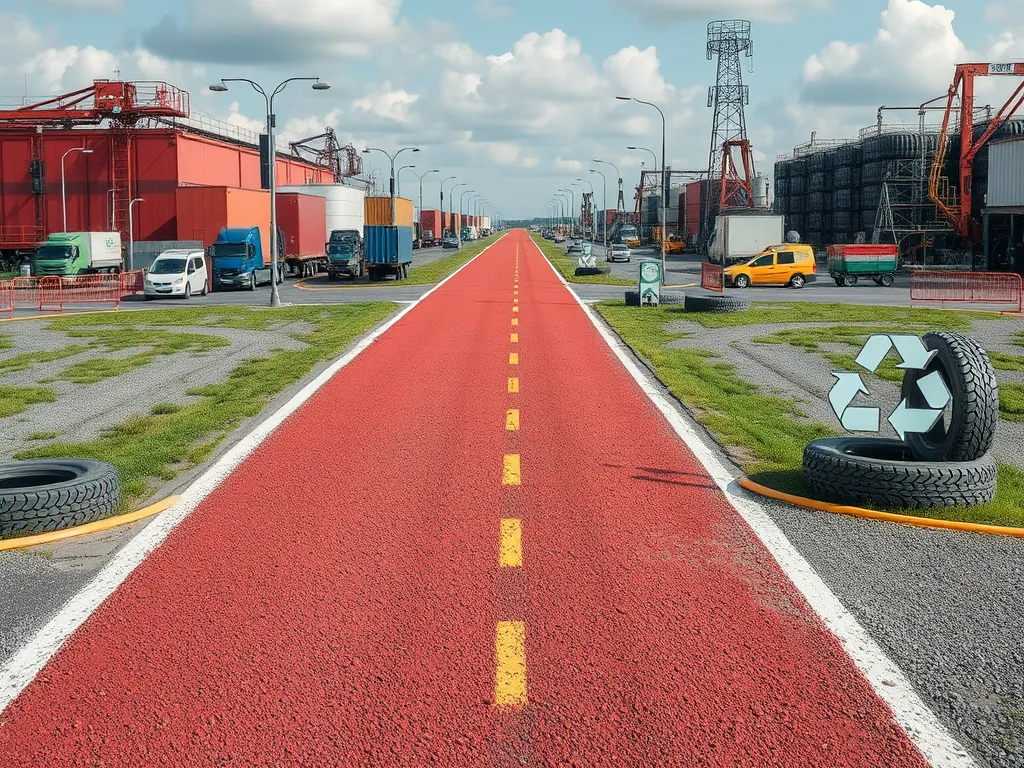
Recycled tire rubber replaces 15-22% of virgin bitumen in rubberized asphalt blends. The “wet process” mixes rubber with hot binder at 177-190°C for 45-60 minutes, creating a gel-like matrix. This method boosts fatigue resistance by 300% compared to conventional blends. Over 20 states now mandate crumb rubber in high-traffic pavements, diverting 12 million tires annually from landfills.
Selecting the right additives depends on climate, traffic loads, and sustainability goals. Next, we examine how these choices impact ecological footprints during production and application.
Environmental Considerations
Bitumen blending directly impacts ecological outcomes through material optimization and process efficiency. Strategic blending minimizes resource depletion while meeting performance standards for roads.
Reducing Waste Through Efficient Blending
Modern blending technologies reuse up to 30% reclaimed asphalt pavement (RAP) in mixes. High-precision equipment ensures exact ratios of virgin bitumen binder blending with recycled materials, cutting landfill contributions. Cold recycling techniques further reduce waste by 40% through lower-temperature processing of aged binders. The PG grading system allows refiners to tailor blends to exact project needs, preventing surplus production.
Energy Consumption in Blending Processes
Hot bitumen blending traditionally required heating to 320°F, consuming 15-20% of total project energy. Warm-mix technologies now lower temps to 250°F using surfactants or waxes, slashing fuel use by 35%. Solar thermal systems pre-heat aggregates in dual bitumen blending plants, reducing reliance on fossil fuels. Polymer-modified bitumen blending demands precise thermal control, with advanced reactors cutting energy waste by maintaining ±5°F tolerances during mixing.
These innovations set the stage for exploring material enhancements. Next, we examine how specialized additives elevate blended bitumen performance.
Frequently Asked Questions (FAQ)
What is Bitumen Mixing?
Bitumen mixing refers to the process of combining various grades of bitumen or incorporating additives to create a binder that meets specific requirements for paving or roofing applications. This process enhances the properties of the base bitumen, making it suitable for a variety of environments and uses.
What is Bitumen Used for?
Bitumen is primarily used as a binding agent in asphalt for road construction, roofing materials, and waterproofing applications. Its adhesive properties make it ideal for creating durable surfaces that can withstand heavy traffic and adverse weather conditions.
What Types Of Additives Are Commonly Used in Bitumen Blending?
Common additives in bitumen blending include polymers (like SBS and EVA), crumb rubber from recycled tires, and chemical admixtures that enhance specific properties such as adhesion and temperature resistance. These additives allow the bitumen to perform better under various environmental conditions and load stresses.
Can Bitumen Blending Improve Environmental Sustainability?
Yes, bitumen blending can enhance sustainability by incorporating recycled materials such as reclaimed asphalt pavement (RAP) and reducing waste. Efficient blending processes also lower energy consumption, making the overall impact on the environment less significant compared to traditional methods.
How Does Temperature Affect the Bitumen Blending Process?
Temperature plays a critical role in the bitumen blending process. Heating the bitumen to specific temperatures (typically between 150°C and 180°C) lowers its viscosity, allowing for better mixing with additives. Precise temperature control is essential to prevent degradation of the bitumen or additives during the blending process.
What Are Dual Bitumen Blending Systems?
Dual bitumen blending systems utilize a combination of hard and soft bitumen grades in fixed ratios to achieve a desirable balance of stiffness and flexibility. This approach allows engineers to tailor binders to meet the demands of high-traffic zones while accommodating varying temperature conditions.
How Does Bitumen Blending Affect Asphalt Performance?
Bitumen blending significantly enhances asphalt performance by improving its durability, flexibility, and resistance to cracking. Tailored blends can withstand extreme temperatures and heavy loads, resulting in longer-lasting and more resilient asphalt pavements.
Is Bitumen Blending Expensive?
While there may be initial costs associated with specialized equipment and additives, bitumen blending can ultimately lead to cost savings. The ability to use recycled materials and optimize performance characteristics often results in reduced material costs and longer life spans for asphalt, making it a cost-effective choice in the long run.
Closing Thoughts
Bitumen blending plays a vital role in enhancing the quality and performance of asphalt. Through various techniques, such as polymer modification and the use of quality additives, blending allows for tailored solutions that meet specific project needs. Understanding the blending process, from heating to the incorporation of modifiers, ensures optimal results in pavement durability and flexibility.
As asphalt technology continuously evolves, keeping pace with advancements in blending practices will help achieve cost-effective and sustainable construction. Bitumen blending not only augments asphalt’s rheological properties but also minimizes environmental impacts, signaling a forward-thinking approach in the industry.
For comprehensive insights and tools related to asphalt and bitumen blending, visit Asphalt Calculator USA.