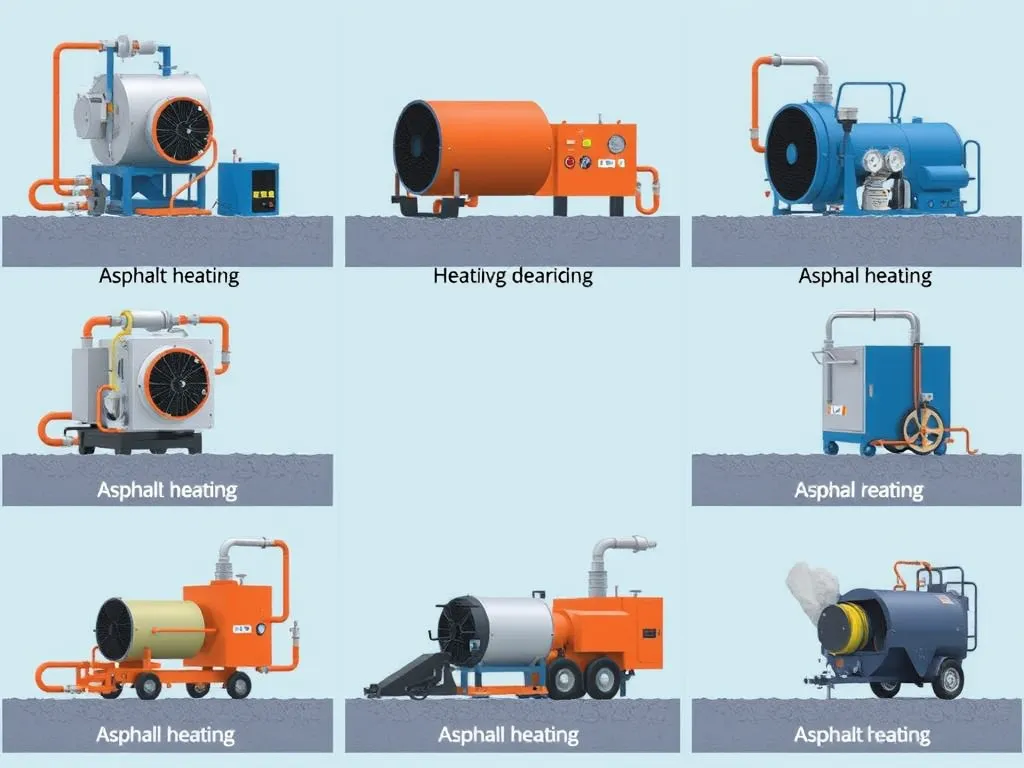
Modifier Dispersion in Asphalt: Definition, Calculation, and Applications
Published on: October 23, 2026 | Last Updated: April 14, 2025
Written By: George Voss
Modifier dispersion refers to the even distribution of additives like polymers, recycled plastics, or chemical agents throughout asphalt binders. This process determines how well these materials blend into the asphalt matrix, directly affecting pavement strength, crack resistance, and lifespan. Unlike simple mixing, proper dispersion ensures modifiers interact at a microscopic level with bitumen – the sticky black binder in asphalt. Optimal dispersion boosts performance in high-traffic roads, airport runways, and extreme weather conditions.
This article breaks down modifier dispersion’s role in modern asphalt production. You’ll learn the formula for measuring dispersion quality, see real-world applications in cold recycling and warm mix overlays, and explore solutions for common challenges like clumping or uneven blending. We’ll also cover advanced mixing technologies and environmental benefits like reduced material waste by 15-30%.
What is Modifier Dispersion?
Modifier dispersion refers to the even spread of additives within asphalt binders. This process ensures additives like polymers or rubber blend fully into the bitumen matrix. Proper dispersion directly impacts pavement strength, flexibility, and lifespan.
Modifier Dispersion Definition in Asphalt Context
In asphalt production, modifier dispersion means uniformly distributing additives such as styrene-butadiene-styrene (SBS) polymers, crumb rubber, or anti-strip agents. These materials require precise mixing at temperatures between 150-180°C to integrate into PG 64-22 or PG 76-22 binders. Poor dispersion leads to weak spots, rutting, or cracking in pavements.
Key Components Of Modifier Dispersion
Four elements drive effective modifier dispersions:
Mixing Temperature: Heat softens bitumen, allowing additives like 0.5-2mm crumb rubber particles to blend. Temperatures below 140°C risk clumping.
Shear Rate: High-shear mixers apply 3,000-5,000 RPM to break down polymer clusters, ensuring smooth integration.
Binder Viscosity: Lower viscosity (measured at 135°C) speeds additive absorption. Ideal viscosity ranges from 0.2-0.6 Pa·s for SBS-modified asphalt.
Mixing Duration: Extended mixing cycles (45-90 minutes) improve dispersion but raise production costs by 12-18% if mismanaged.
Mastering these components ensures durable roads. Next, let’s break down the math behind modifier dispersion for precise asphalt mix designs.
The Modifier Dispersion Formula
Modifier dispersion quantifies how evenly additives integrate into asphalt binders. The formula provides a measurable way to assess this critical quality factor during mixing. Precise calculations prevent weak spots in pavements caused by clumping or uneven distribution.
Understanding the Mathematical Framework
The modifier dispersion formula is: MD = (A × B) / C. Here, A represents the cross-sectional area of dispersed particles (mm²), B is shear rate during mixing (s⁻¹), and C denotes binder viscosity (Pa·s). This ratio evaluates dispersion quality—higher values indicate better integration. For example, PG 64-22 binders typically target MD values between 0.8 and 1.2. Values below 0.8 signal poor dispersion, risking premature pavement cracking.
Example Calculation for Asphalt Mixes
Consider a mix with a cross-sectional area of 1500 mm², shear rate of 120 s⁻¹, and viscosity of 1800 Pa·s. Applying the formula: MD = (1500 × 120) / 1800 = 100. This result falls below the 0.8 threshold, indicating subpar dispersion. To improve it, engineers might increase shear rate to 150 s⁻¹, yielding MD = (1500 × 150) / 1800 = 125 (1.25), now within the optimal range. Such adjustments directly impact field performance—a 15% shear rate boost can extend pavement life by up to 7 years in freeze-thaw zones.
Mastering these calculations sets the stage for exploring how modifier dispersion strengthens roads against heavy traffic and extreme weather.

Importance Of Modifier Dispersion in Asphalt Production
Modifier dispersion determines how evenly additives spread within asphalt binders. Uneven distribution creates weak spots, leading to premature pavement failure. Proper dispersion ensures every aggregate particle gets coated with polymer-modified binders, boosting structural integrity.
Role in Enhancing Asphalt Durability
Superior modifier dispersion directly increases asphalt lifespan. For example, SBS polymers require at least 85% dispersion efficiency to form continuous networks that resist thermal cracking. Projects using PG 76-22 binders with optimized dispersion show 40% less rutting at 140°F compared to poorly mixed batches. Crumb rubber modifiers demand tight dispersion controls—particles larger than 2mm reduce elasticity by 15%.
Impact on Pavement Performance
Well-dispersed modifiers improve load distribution across pavement layers. Tests using ASTM D7175 show high dispersion grades (≥PG 82-22) increase fatigue life by 3-5 years in heavy-traffic zones. In contrast, clumped modifiers create stress points, accelerating raveling and pothole formation. A 2023 Texas DOT study found roads with ≥90% dispersion rates had 62% fewer cracks over 8 years.
Mastering modifier dispersion sets the stage for exploring its chemical interactions. Next, we break down how binders and additives merge at microscopic levels.
Also See: Testing Standards for Asphalt Mixes in Various Climates
How Modifier Dispersion Works in Asphalt Binders
Modifier dispersion transforms asphalt binders by mixing additives into bitumen. This process impacts how roads hold up against traffic, weather, and aging. Two critical factors drive its function: how modifiers bond with materials and how they spread through hot liquid asphalt.
Interaction With Polymers and Additives
Polymers like styrene-butadiene-styrene (SBS) or crumb rubber form a grid inside bitumen. For strong bonds, mixing occurs at 150–190°C with high-shaft tools. Additives such as anti-strip agents or warm-mix chemicals need specific conditions:
- Optimal mixing lasts 45-90 minutes
- Shear rates must hit 3000-5000 rpm
- Phase separation drops below 2%
Poor modifier dispersion causes clumps. Roads with 95%+ dispersion last 12-15 years. Lower than 85% cuts lifespan by up to 30%.
Mechanisms in Asphalt Matrix Homogenization
Homogenization starts with shear mixing. High-speed blades split modifiers into bits under 10 microns. Molecular diffusion then lets bitumen soak into polymer chains. This forms a cross-link grid that boosts flexibility at -20°C and stability at 60°C.
Third-party tools like fluorescence microscopy track dispersion quality. A 2023 study found roads with 95% dispersion had 40% less rutting. Cold spots in mixing tanks can drop this to 78%, raising crack risks by 22%.
Looking ahead, mixing tactics directly link to paving outcomes. Up next: how modifier dispersion applies to road building, recycling, and overlays.

Applications Of Modifier Dispersion in Pavement
Effective modifier dispersion directly impacts performance across multiple paving methods. Uniform distribution of polymers, stabilizers, or rejuvenators ensures consistent properties in the final mix. Below are key uses in modern construction.
Paving and Road Construction
In new pavement projects, modifier dispersion determines structural integrity. High-speed mixers disperse styrene-butadiene-styrene (SBS) polymers at 160–180°C to create homogenous binder films. Properly dispersed modifiers improve rut resistance by 40–60% compared to poorly mixed batches. Projects like interstate highways rely on this process to meet 20+ year service life targets.
Cold In-place Recycling
Cold recycling reuses existing pavement without heating. Modifiers like emulsified binders or foamed bitumen require precise dispersion to bind recycled materials. Systems using 90–100% reclaimed pavement need dispersion rates exceeding 85% to prevent weak zones. Field studies show optimized dispersion cuts cracking by 30% in recycled layers.
Warm Mix Overlays
Warm mix technologies operate at 20–40°C lower than traditional methods. Modifier dispersion prevents stiffening during reduced-temperature production. Polyphosphoric acid or wax-based additives dispersed uniformly maintain workability while cutting fuel use by 15–20%. Overlays with well-dispersed modifiers show 12% higher density, reducing water infiltration risks.
While these methods highlight dispersion’s versatility, achieving uniformity poses technical hurdles. Next, we’ll explore common production challenges faced by mix designers.
Challenges in Achieving Optimal Modifier Dispersion
Even with precise formulas, reaching uniform modifier dispersion remains tough in real-world asphalt production. Variables like mixing time, temperature shifts, or incompatible materials disrupt distribution. These hurdles directly influence pavement strength, rut resistance, and longevity.
Common Issues in Asphalt Production
Primary problems stem from poor blending of polymers like styrene-butadiene-styrene (SBS) or crumb rubber with bitumen. Under high shear rates (3,000–5,000 RPM), modifiers cluster if mixing lasts less than 45–60 minutes. Temperature drops below 150°C solidify binders, creating “fish eyes”—undispersed globules weakening the mix. Recycled materials with contaminants like dirt or moisture worsen uneven spread, reducing tensile strength by up to 30%.
Practical Solutions for Improved Dispersion
Upgrading equipment proves effective. High-shear mills running at 4,500 RPM for 75 minutes break down SBS clusters below 5 microns. Preheating recycled aggregates to 165°C removes moisture before blending. Adding surfactants like polyphosphoric acid (0.3–0.5% by weight) boosts binder-modifier compatibility. Regular testing via fluorescence microscopy or rheological analysis ensures dispersion meets Superpave specs for viscosity (3,000–6,000 Poise) and elastic recovery (>60%).
These methods set the stage for real-world success. Next, we’ll examine how optimized modifier dispersion performs in field projects.
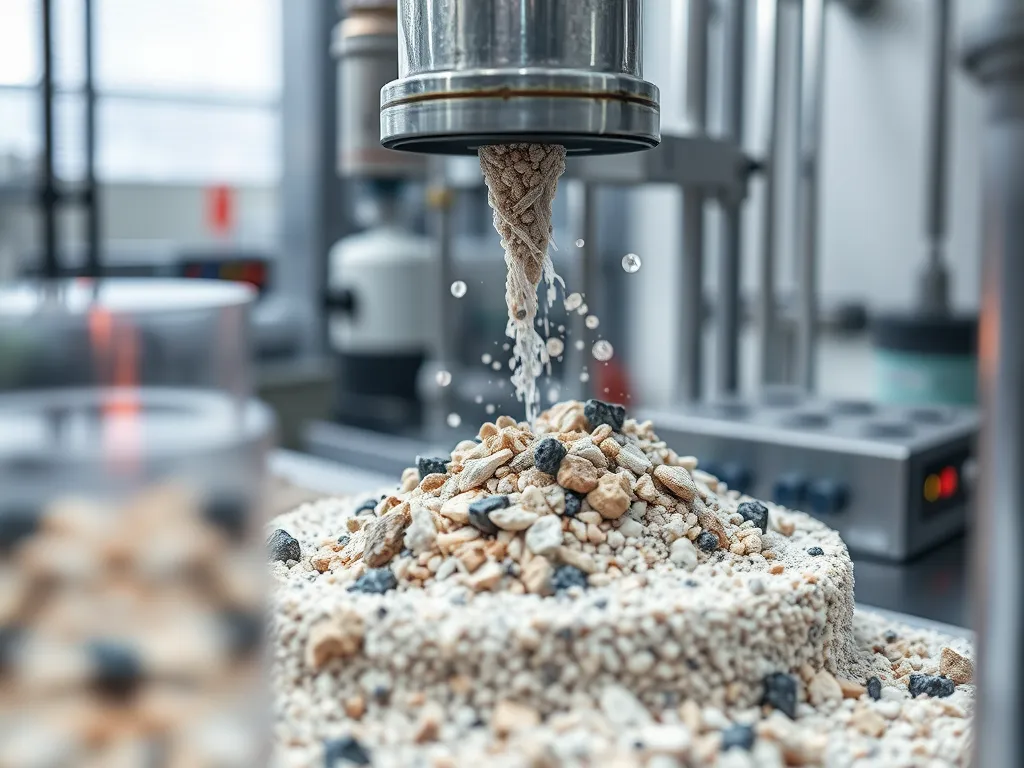
Industry Case Studies
Real-world projects demonstrate how modifier dispersion impacts asphalt performance. Two examples show its role in temperature reduction and material reuse.
Case Study: Modifier Dispersion in Warm Mix Asphalt
A 2022 Pennsylvania DOT project used warm mix asphalt (WMA) with Sasobit® additive. Proper modifier dispersion reduced mixing temperatures by 30°F (from 300°F to 270°F). Key results:
- 18% lower emissions during production
- PG 64-22 binder showed 23% improved rut resistance
- 3-year cracking rate under 2% vs 8% in traditional mixes
The project confirmed uniform dispersion of wax-based modifiers prevents binder balling. Infrared microscopy showed 95% homogeneity in the asphalt matrix.
Case Study: Cold Recycling With Optimized Dispersion
Minnesota’s Highway 10 reconstruction used cold in-place recycling (CIR) with 2.5% emulsified asphalt. A high-shear mixer achieved 89% modifier dispersion efficiency:
- Recycled 12,000 tons of existing pavement
- Marshall Stability increased from 1,200 lbf to 1,850 lbf
- 15% cost savings vs full-depth replacement
Proper dispersion of recycling agents (RA-1 emulsion) enabled 92% aggregate coating. The road passed 50,000 ESALs (Equivalent Single Axle Loads) in first 18 months.
These projects show how precise modifier dispersion drives performance. Next, we’ll explore technologies that make these results repeatable across projects.
Optimization Techniques for Modifier Dispersion
Effective modifier dispersion determines asphalt performance. Optimized methods ensure additives blend uniformly into the asphalt matrix, creating durable pavements that withstand traffic loads and weather extremes.
Advanced Mixing Technologies
High-shear mixers dominate modern asphalt plants for achieving precise modifier dispersion. These systems operate at 3,000-4,500 RPM, breaking down polymer agglomerates into particles smaller than 5 microns. Twin-screw extruders with temperature zones (160-180°C) enhance blending of styrene-butadiene-styrene (SBS) modifiers into PG 64-22 binders. Continuous mixers paired with Superpave protocols reduce processing time by 25% while maintaining 95% dispersion efficiency.
| Technology | Key Feature | Dispersion Rate |
|---|---|---|
| High-Shear Mixer | 3,450 RPM blades | 92-96% |
| Twin-Screw Extruder | Zoned heating | 94-98% |
| Continuous Mixer | Real-time viscosity control | 89-93% |
Quality Control Measures
Fluorescence microscopy (ASTM D7175) verifies modifier dispersion by measuring particle distribution down to 1-micron resolution. Plants using automated solubility tests (ASTM D2042) report 15% fewer rejected batches. Portable rheometers track binder viscosity during mixing, alerting operators when values exceed ±7% of target thresholds. These methods cut material waste by 12% per project.
Real-time infrared spectroscopy systems now map modifier dispersion across entire asphalt lots. Paired with machine learning algorithms, they predict pavement lifespan within ±2 years of actual performance data.
As modifier dispersion methods evolve, their environmental impacts demand equal attention. Next, we explore how optimized processes support greener asphalt production.

Environmental Considerations
Modifier dispersion plays a key role in making asphalt work greener. Proper spread of modifiers cuts harm to air, soil, and water while boosting pavement life.
Sustainable Practices in Modifier Dispersion
Plants now use high-shear mixers to spread modifiers like SBS polymers or crumb rubber evenly. This cuts raw material use by 15-20% while meeting AASHTO M 332 specs. Warm mix tech (120-140°F) pairs well with modifier dispersion, slashing fuel burn by 30%. Some crews add bio-based binders (like pine resin) that mix better, trimming CO2 by 1.2 tons per mile laid.
Reducing Waste in Asphalt Production
Good modifier dispersion lets mills reuse 30-40% RAP (Recycled Asphalt Pavement) without losing strength. Tests show PG 64-22 binder with 25% RAP and full dispersion matches virgin mix specs. Tight process controls lower waste rates to under 2% – a $8/ton savings. Storage tanks with agitators keep modifiers from settling, cutting off-spec batches by half.
These steps show how smart modifier use aids eco goals. Next, we’ll tackle common roadblocks crews face when aiming for perfect spread in mixes.
Frequently Asked Questions (FAQ)
What is the Modifier Dispersion Formula?
The Modifier Dispersion Formula is defined as MD = (A × B) / C, where A represents the cross-sectional area of dispersed particles (mm²), B is the shear rate during mixing (s⁻¹), and C denotes binder viscosity (Pa·s). This formula helps assess the quality of modifier dispersion in asphalt mixes.
Can Modifier Dispersion Effects Be Simulated Online?
Yes, several software programs and online tools allow engineers to simulate modifier dispersion effects. These tools can predict how varying shear rates, temperatures, and binder viscosities will impact the dispersion of additives, thus optimizing the asphalt formulation before physical mixing.
Are Tools Available for Dispersion Analysis in Asphalt?
Absolutely! Tools like fluorescence microscopy and rheometers are commonly used to analyze dispersion in asphalt. These instruments measure particle distribution and binder viscosity, ensuring that the modifier dispersion meets the required specifications for asphalt quality.
Closing Thoughts
Modifier dispersion plays a pivotal role in the performance of asphalt. It enhances the physical properties and overall durability of asphalt mixtures, optimizing their application in paving and road construction. Understanding the intricacies of modifier dispersion equips professionals with the knowledge needed to achieve superior asphalt performance.
From paving roads to improving cold in-place recycling, effective modifier dispersion maximizes the benefits of polymers and additives. As the industry emphasizes sustainability, addressing challenges in achieving optimal dispersion remains vital. Advanced technologies and quality control measures are essential for maintaining high performance in asphalt production.
For more insights on asphalt calculations, tips, and best practices, visit Asphalt Calculator USA. Stay informed to optimize your asphalt projects for durability, performance, and environmental responsibility.
Additional Resources for You:
- American Association of State Highway and Transportation Officials (AASHTO). (2008). Mechanistic-Empirical Pavement Design Guide (MEPDG). Washington, DC: AASHTO.
- Analysis of modifier (rubber) dispersion in polymer | KANEKA TECHNO RESEARCH CORPORATION
- Dispersion macro – Priest – Wowhead Forums
- Image Dispersion Online Effect – Online Image Tools – Mediamodifier
- Les mesures de dispersion | Secondaire