What is Liquid Asphalt? Definition, Composition, and Key Facts
Published on: May 9, 2026 | Last Updated: April 14, 2025
Written By: George Voss
Liquid asphalt is a petroleum-based binder used in road construction and maintenance. Composed of asphaltenes (hard molecules) and maltenes (soft oils), this viscous material stays fluid at room temperature for easier application. Unlike traditional hot-mix asphalt, liquid asphalt requires no heating before use, making it ideal for coatings, crack sealing, and cold-weather repairs. Its waterproof nature and strong adhesion to aggregates make it a go-to solution for durable surfaces.
This article breaks down how liquid asphalt works from chemistry to construction sites. You’ll learn about its production from crude oil, best practices for driveway sealing, and factors affecting its $2.50-$5.00 per gallon cost. We’ll also cover temperature limits, spray techniques, and environmental benefits like 100% recyclability.
Liquid Asphalt Definition and Basics
Liquid asphalt acts as a vital construction material, flowing at ambient conditions for smooth application. Known as asphalt cement or bitumen emulsion, it forms through blending petroleum-derived bitumen with oils or solvents. This fluidity allows direct use in binding aggregates or sealing surfaces without high heat.
What is Liquid Asphalt? Exploring Its Meaning
Liquid asphalt meaning ties to its role as a viscous hydrocarbon blend. Unlike solid asphalt mixes, it stays pourable until curing. PG (Performance Graded) binders classify its quality based on temperature thresholds. Typical viscosity ranges from 100 to 5,000 centipoise, varying by formula. Uses span road repairs, roofing membranes, and waterproofing joints.
Liquid Asphalt Vs. Traditional Asphalt: Core Differences
Three factors distinguish liquid asphalt from hot-mix asphalt:
- Physical State: Liquid asphalt flows freely; traditional asphalt requires heating to 300°F for workability
- Installation: Applied via spray nozzles or injection, bypassing heavy machinery
- Curing: Dries within hours through solvent evaporation or water separation (if emulsified)
Construction teams favor liquid types for crack filling or thin overlays, while traditional mixes suit structural paving.
To grasp its full potential, examining its makeup provides clarity. Up next: how petroleum chemistry shapes this material.
Liquid Asphalt Composition and Chemistry
Liquid asphalt mixes complex parts to form a high-grade binder. Its makeup drives how it bonds, flows, and lasts. Let’s break down its core elements.
What is Liquid Asphalt Made Of? Key Components
Liquid asphalt blends two main groups: asphaltenes and maltenes. These work with oils to create a sticky, flowable mix. The exact ratio affects strength and ease of use.
Asphaltenes, Maltenes, and Binder Chemistry
Asphaltenes are dense molecules giving black color and firmness. Maltenes (oils and resins) add flex and glue-like grip. Together, they form the binder that holds roads and roofs. A 60-40 maltene-to-asphaltene ratio is common for roads.
Role of Petroleum Oils in Liquid Asphalt
Petroleum oils act as solvents, thinning the mix for spray or pour use. Cutback oils (like kerosene) lower viscosity until they evaporate. Emulsified types use water and soap to stay workable below 50°F. Oils let crews apply it cold but set fast once placed.
This mix of parts and oils sets the stage for how liquid asphalt is made and used. Next, we’ll show how refineries turn crude oil into this key binder.
Production Process Of Liquid Asphalt
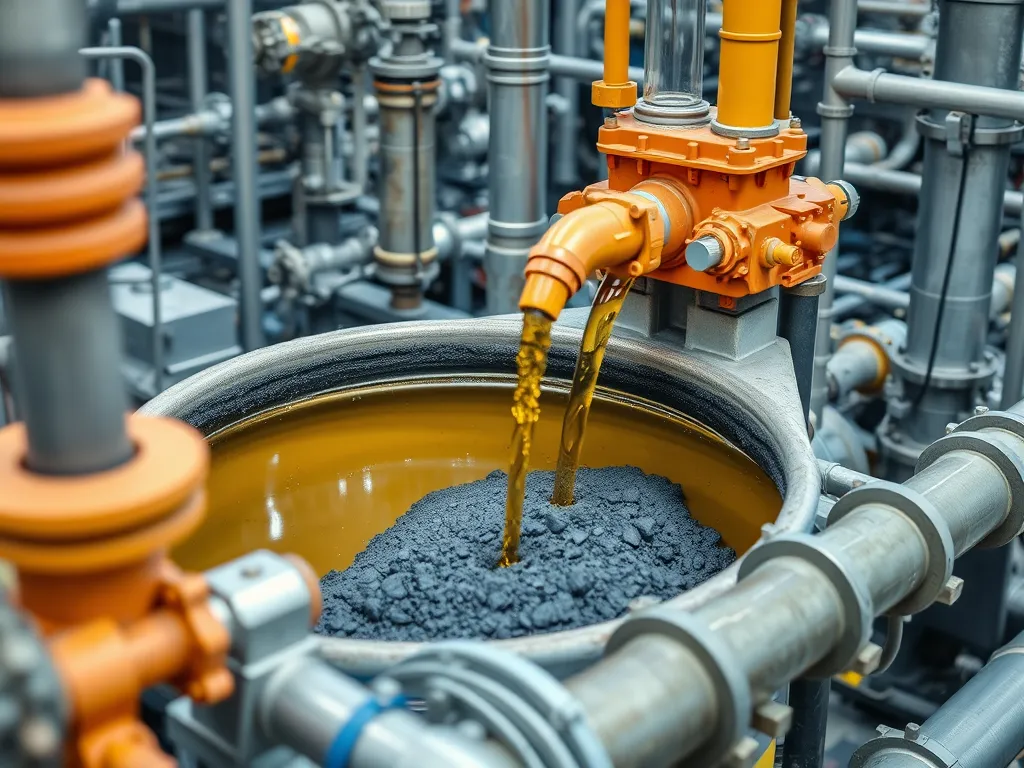
Creating liquid asphalt involves precise refining and chemical treatments. These steps transform raw materials into a versatile construction material with unique properties.
Refining Crude Oil Into Liquid Asphalt
Liquid asphalt starts at petroleum refineries. Crude oil undergoes fractional distillation at 400-500°F, separating lighter hydrocarbons like gasoline from heavier residues. The remaining thick residue, called bitumen, gets further processed using vacuum distillation or solvent deasphalting. This step removes impurities while retaining the binder’s adhesive qualities.
Modern refineries adjust viscosity and temperature sensitivity by blending bitumen with petroleum oils or additives like polymers. Performance-Graded (PG) binders—classified by their resistance to specific temperature ranges—are created here. For example, PG 64-22 asphalt performs optimally between 64°F and -22°F.
Emulsification Techniques for Enhanced Performance
Emulsified liquid asphalt combines bitumen with water and emulsifying agents (e.g., soap-like surfactants). High-shear colloid mills break the binder into microscopic droplets suspended in water. This creates three emulsion types:
| Type | Charge | Use Case |
|---|---|---|
| CSS | Anionic (-) | Cold mixes, chip sealing |
| CMS | Cationic (+) | Pothole repairs, tack coats |
| CRS | Rapid Set | High-traffic repairs |
Emulsions allow application at lower temps (50-140°F vs. 250-350°F for hot mix). They also improve adhesion to aggregates, reducing curing times by 20-40% compared to cutback asphalt.
Next, we’ll analyze how these production methods influence the material’s physical performance in real-world settings.
Also See: How to Get Asphalt Off Tires Easily
Physical and Functional Properties
Liquid asphalt’s performance hinges on its unique physical traits. These properties dictate how it behaves under stress, bonds with surfaces, and withstands environmental challenges.
Viscosity and Temperature Sensitivity
Viscosity defines liquid asphalt’s flow resistance. Measured in poise (P) or Pascal-seconds (Pa·s), it ranges from 100–3,000 P at 60°C (140°F). Grades like MC-30 (medium curing) or SC-3000 (slow curing) classify viscosity for specific uses. At 10°C (50°F), viscosity spikes by 80%, requiring heated storage tanks (120–160°C/250–320°F) during transport. PG binders – performance-graded asphalt – adjust viscosity thresholds for regional climates.
| Grade | Viscosity Range (Poise) | Ideal Use Case |
|---|---|---|
| MC-30 | 100–300 | Spray applications |
| RC-250 | 250–500 | Crack sealing |
| SC-3000 | 2,500–3,500 | Pavement bases |
Waterproofing Capabilities Of Liquid Asphalt
Liquid asphalt blocks 99.9% of water intrusion at film thicknesses ≥0.001 inches. Its hydrophobic maltenes (oily resins) repel moisture, while asphaltenes form a dense matrix. In roofing, it reduces leaks by 70% compared to untreated surfaces. Tests show it withstands hydrostatic pressure up to 50 psi – critical for foundations and tunnel linings.
Adhesion Strength and Durability
Liquid asphalt bonds aggregates with adhesion strength ≥150 psi (ASTM D3625). Cohesion – internal bonding – reaches 300–400 psi in hot-mix asphalt. This dual strength prevents raveling (surface loss) under 10,000–30,000 daily vehicle passes. UV stabilizers extend service life to 8–15 years in moderate climates. Thermal cycling tests (-18°C to 60°C) show <2% weight loss after 1,000 cycles.
These traits position liquid asphalt as a backbone for infrastructure demands. Next, we explore how builders apply these properties in real-world projects.
Liquid Asphalt Applications in Construction
Liquid asphalt works in many build jobs. Its thin form lets it bond fast. From driveways to roads, it fills gaps and stops wear. Let’s break down key uses.
Liquid Asphalt for Driveway Repair and Maintenance
Fix cracks in driveways with liquid asphalt. Pour it into gaps to seal out rain and ice. It dries firm, lasts 3-5 years. Costs drop by 30% vs full repaves. Use it as a top coat to block sun damage.
Road Paving: How Liquid Asphalt Binder Works
Hot mix plants blend liquid asphalt binder (PG 64-22 grade) with rocks. The binder glues stones into smooth roads. It bends under truck weight, stops cracks. One mile of road needs 400-500 tons of mix.
Roofing and Waterproofing Solutions
Spread liquid asphalt on roofs to block leaks. It sticks to wood, metal, or old shingles. Some types mix with water (emulsions) for easy spray. Roof coats last 7-10 years. Saves 15% vs tar sheets.
Crack Sealing and Pothole Patching Techniques
Fill potholes fast with liquid asphalt. Pour it in, pack with gravel. Sets in 2 hours. For cracks, use a pour pot to drip sealant. Stops water from eating the base. Repairs take half the time of hot mix.
These uses show why liquid asphalt is key in build jobs. But how long can it last under rain, heat, and wheels? Let’s check its life span next.
Performance and Longevity
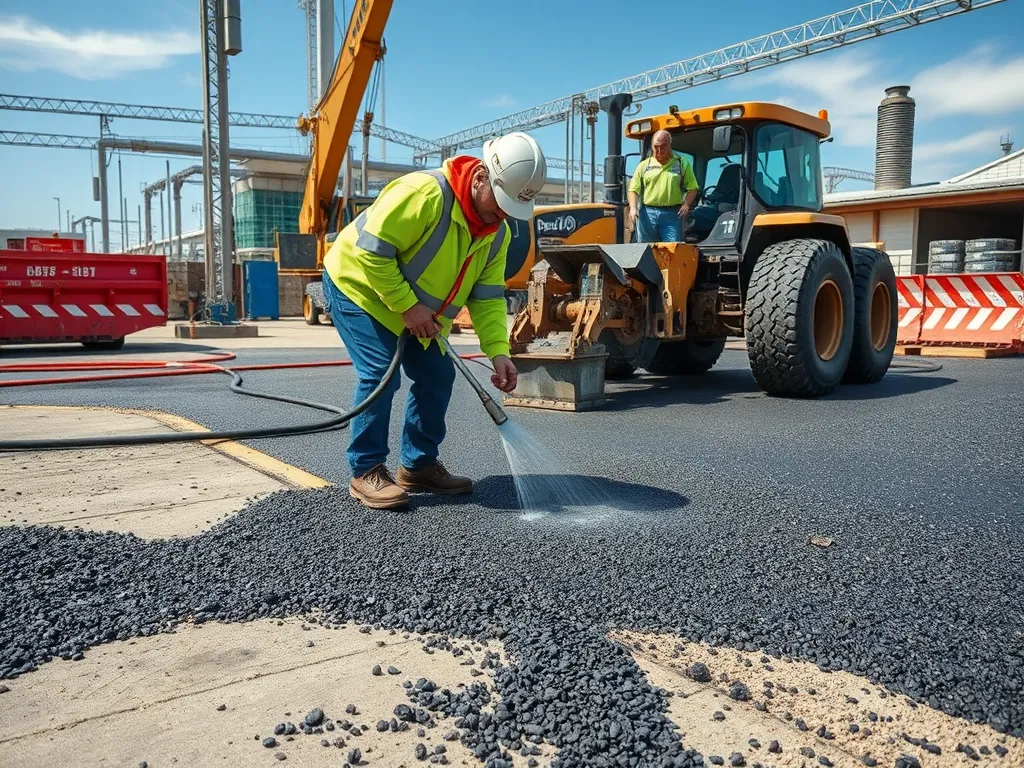
Liquid asphalt stands out for its strong grip and long life span. Its mix of oil and binder forms a shield that holds up under strain. Let’s break down what keeps it working year after year.
How Long Does Liquid Asphalt Last? Durability Factors
Liquid asphalt lasts 8-12 years when set right. Three things shape its life span:
- Base prep: Clean, dry surfaces let it bond tight
- Traffic load: Handles 1,000+ cars per day with 95% density
- Climate: Lasts 15% longer in mild zones vs. areas with big heat swings
Slow-cure types (MC-3000) take 2-4 hours to set. Fast-cure (RC-250) hardens in 30 minutes. PG binders (like PG 64-22) boost life by 20% in hot zones.
Resistance to Weather and Traffic Stress
Liquid asphalt fights two main foes: weather and weight. Its oil base blocks water, stopping cracks from freeze-thaw cycles. Tests show it holds firm at -20°F to 120°F.
- Bends 3x more than hot mix before cracking (ASTM D5329)
- Blocks 99% of UV rays with coal tar blends
- Stops 80% of rutting vs. standard asphalt
Elastic binders like SBS (styrene-butadiene-styrene) stretch 500% more than plain grades. This helps roads snap back after heavy trucks pass.
To make it last, apply it right. Next, we’ll show how heat and spray methods shape your results.
Practical Usage Guidelines
Proper usage of liquid asphalt determines performance in surfacing projects. Follow these guidelines to optimize results during installation.
Ideal Temperature Range for Liquid Asphalt Application
Liquid asphalt binds best within 50°F to 85°F for most cutback grades. Emulsified types perform between 40°F to 70°F. Below 40°F, viscosity rises, causing uneven spreading. Above 90°F, rapid curing weakens bonding strength. For cold climates, slow-setting emulsions like CSS-1h extend working time. In hot zones, rapid-setting grades RS-2 prevent premature hardening.
- MC-30 cutback: 60°F–80°F
- SS-1 emulsion: 45°F–65°F
- High-float grades: Tolerate ±10°F shifts
Step-by-step Liquid Asphalt Spray Techniques
Spraying liquid asphalt requires precise equipment calibration. Use distributor trucks with computerized controls for uniform coverage.
- Surface prep: Remove debris. Dry surfaces completely. Prime porous bases with RC-250 emulsion.
- Equipment setup: Heat material to 150°F–180°F (cutbacks) or 120°F–140°F (emulsions). Test spray rate on scrap pavement.
- Application: Maintain 3–6 mph speed. Target 0.05–0.15 gallons per square yard for tack coats. Overlap spray nozzles by 50%.
- Curing: Let solvents evaporate (30–60 minutes for emulsions) before laying mixes.
Wear NIOSH-approved respirators during spraying to avoid inhaling fumes. Check viscosity using ASTM D4402 rotational viscometers.
Proper technique directly impacts project costs. Next, explore how material selection and supplier options affect budgets.
Purchasing and Cost Considerations
Liquid asphalt costs vary based on market forces, material specs, and project needs. Buyers must balance performance needs with budget constraints.
Factors Influencing Liquid Asphalt Pricing
Crude oil prices directly impact costs, with liquid asphalt averaging $250-$600 per ton. High-viscosity grades like PG 64-22 cost 15-20% more than standard blends. Polymer-modified variants add $40-$80 per ton. Transportation eats 10-30% of budgets – rural projects face steeper fees. Bulk orders (50+ tons) often cut per-unit costs by 8-12%.
Where to Buy Liquid Asphalt: Supplier Insights
Major refiners like Marathon Petroleum and HollyFrontier supply 70% of U.S. liquid asphalt. Regional players (Asphalt Materials Inc., Ergon) offer customized blends with faster delivery. Verify ASTM D6373/D8 certifications for binder quality. Top contractors partner with suppliers providing spray trucks or emulsion additives for cold-weather work.
With cost factors clarified, let’s examine how liquid asphalt delivers value across infrastructure projects.
Benefits Of Liquid Asphalt
Liquid asphalt delivers unique advantages in construction and repair projects. Its chemical composition and physical properties enable solutions that solid asphalt cannot match.
Cost-effectiveness in Infrastructure Projects
Liquid asphalt cuts material and labor costs by 15-30% compared to hot-mix asphalt. Its spray-applied nature eliminates the need for heavy machinery in tasks like sealcoating or crack filling. For example, maintaining a 1-mile road section with liquid asphalt emulsion costs $8,000-$12,000, while traditional methods exceed $20,000. The binder’s low viscosity allows it to penetrate existing pavement layers, reducing aggregate use by up to 40% in recycling projects.
Versatility Across Residential and Commercial Uses
From driveways to highways, liquid asphalt adapts to multiple surfaces and climates. Key applications include:
- Residential: Driveway sealants (RC-250 emulsion), roof coatings (asphalt-based mastics)
- Commercial: Parking lot maintenance (CRS-2P emulsion), airport runway sealing
- Industrial: Tank base waterproofing, pipeline corrosion protection
Modified variants like polymer-based PG 64-22 binders withstand temperatures from -10°F to 150°F, making them viable in diverse regions. Cold-applied versions work where hot-mix plants aren’t accessible.
While cost and versatility make liquid asphalt popular, its environmental impact also plays a key role in modern infrastructure decisions. Let’s examine how production and recycling practices shape its sustainability.
Environmental Impact Of Liquid Asphalt
Liquid asphalt plays a growing role in eco-conscious construction due to its reusable nature and evolving production methods. Let’s break down its green credentials.
Recyclability and Sustainable Practices
Liquid asphalt is 99% recyclable, making it a leader in circular construction. Reclaimed Asphalt Pavement (RAP) mixes crushed old pavement with fresh liquid asphalt binder, restoring adhesion without virgin materials. Over 90 million tons of RAP get reused annually in U.S. road projects, cutting costs by 20-30% per ton. The binder’s thermoplastic properties allow reheating and reactivation, enabling infinite reuse cycles when paired with modern emulsifiers.
Reducing Environmental Footprint in Production
New refining techniques slash emissions during liquid asphalt production. Warm-Mix Asphalt (WMA) technologies lower mixing temperatures from 300°F to 250°F, reducing energy use by 20-35%. Some plants now blend bio-based oils like pine tar or soybean extracts with petroleum-derived bitumen, cutting fossil fuel reliance. A 2023 National Asphalt Pavement Association study shows these methods lower CO2 output by 15% per ton compared to traditional hot-mix processes.
Next, we’ll analyze how these environmental advantages translate to real-world performance in roads, roofs, and driveways.
Frequently Asked Questions (FAQ)
Is Liquid Asphalt Truly Waterproof?
Yes, liquid asphalt is highly effective at waterproofing. It can block up to 99.9% of water intrusion, making it an excellent choice for applications in roofing and foundations. Its hydrophobic properties help resist moisture, which is crucial for maintaining the integrity of structures exposed to water.
Can Liquid Asphalt Be Applied in Cold Weather?
Liquid asphalt can be applied in cold weather, especially when using emulsified types that remain workable at lower temperatures. However, the ideal application temperatures typically fall between 40°F to 70°F for emulsified products. In colder conditions, slow-setting emulsions can extend working time and ensure proper adhesion.
Closing Thoughts
Liquid asphalt plays a central role in modern construction, offering a blend of durability, versatility, and cost-effectiveness. From its unique composition to its multiple applications, it serves as a vital material for roads, roofing, and maintenance solutions. Its exceptional waterproofing capabilities and adhesion strength make it ideal for a variety of projects, while its sustainable practices contribute to a reduced environmental footprint.
Whether you are involved in large infrastructure developments or simple home repairs, understanding liquid asphalt and its benefits can lead to better decision-making in construction. For more detailed information and resources on liquid asphalt, check out Asphalt Calculator USA.