
What is Hot Mix Asphalt? The Backbone Of Modern Pavement
Published on: May 6, 2026 | Last Updated: April 14, 2025
Written By: George Voss
Hot mix asphalt (HMA) is a paving material made by heating aggregates and asphalt binder to 300-350°F, then mixing them at high temperatures. Composed of 95% crushed stone, sand, or gravel (aggregates) and 5% asphalt cement (a petroleum-based binder), this mix creates durable road surfaces that withstand heavy traffic. Unlike cold mix asphalt applied at ambient temperatures, HMA requires heat during production and installation for optimal compaction and strength.
This article breaks down hot mix asphalt from raw materials to real-world use. You’ll learn how aggregates and performance-graded (PG) binders like PG 64-22 combine in asphalt plants, why HMA dominates highway construction, and what makes it cost $100-$200 per ton installed. We’ll compare hot vs cold mix applications, explore environmental impacts of production, and answer key questions about driveway suitability and 20+ year lifespans.
Understanding Hot Mix Asphalt
Hot Mix Asphalt (HMA) serves as the backbone of modern paved surfaces. Known for its strength under pressure, this material dominates road construction globally. Let’s unpack its core elements.
Definition Of Hot Mix Asphalt (HMA)
Hot Mix Asphalt is precisely engineered pavement material created under high temperatures. Produced between 300°F and 350°F, it blends stone, sand, gravel, and bitumen binder. Workers place the mixture while scorching, then compact it before cooling. The result? Solid surfaces built to handle heavy traffic on highways, streets, and driveways. Unlike cold mixes, HMA requires specific weather conditions – typically above 40°F – for proper installation.
Key Terminology: Asphalt Hot Mix, Hotmix Asphalt, and HMA
Multiple terms describe this material, often causing confusion:
- Asphalt Hot Mix: Highlights the heated production method
- Hotmix Asphalt: Common in technical specs, sometimes written as one word
- HMA: Industry shorthand used in engineering blueprints
Regional dialects influence usage – contractors in Texas might say “hotmix,” while New York crews prefer “HMA.” Regardless of phrasing, all terms point to the same durable product. When ordering, confirm local terminology to prevent project delays.
With the fundamentals covered, let’s examine what gives hot mix its structural power. The next section breaks down its components stone by stone.
Composition Of Hot Mix Asphalt
Hot mix asphalt combines three core elements: aggregates, binder, and additives. Each component plays a distinct role in creating durable pavement capable of handling heavy traffic and extreme weather.
Aggregates: The Backbone Of Asphalt Mix
Aggregates make up 90-95% of hot mix asphalt by weight. These crushed stones, sand, and gravel provide structural strength. Sizes range from coarse (3/4″ diameter) to fine (less than 0.075 mm). Engineers use gradation tests to ensure proper interlocking – a critical factor for load distribution.
| Aggregate Type | Size Range | ASTM Standard |
|---|---|---|
| Coarse | 3/4″ to 3/8″ | C33/C33M |
| Fine | 3/8″ to No. 200 sieve | D448 |
Asphalt Binder: The Binding Agent
The remaining 5-10% is asphalt binder – a petroleum-based glue that coats aggregates. PG (Performance Graded) binders like PG 64-22 dominate modern mixes. The numbers indicate temperature tolerance: 64°C high-temperature resistance and -22°C low-temperature flexibility. Binder viscosity at 135°C (275°F) determines workability during paving.
Additives for Enhanced Performance
Specialized additives modify asphalt properties:
- Polymer modifiers: SBS polymers boost elasticity (cost: +$15-$25/ton)
- Fibers: Cellulose fibers prevent drainage in open-graded mixes
- Anti-strip agents: Amine-based liquids improve moisture resistance
Warm mix asphalt additives like Evotherm allow production at 20-40°F lower temperatures, cutting fuel use by 30%.
With precise material ratios established, the next phase transforms these components into pavement-ready hotmix asphalt through controlled manufacturing processes.
Manufacturing Process Of Hot Mix Asphalt
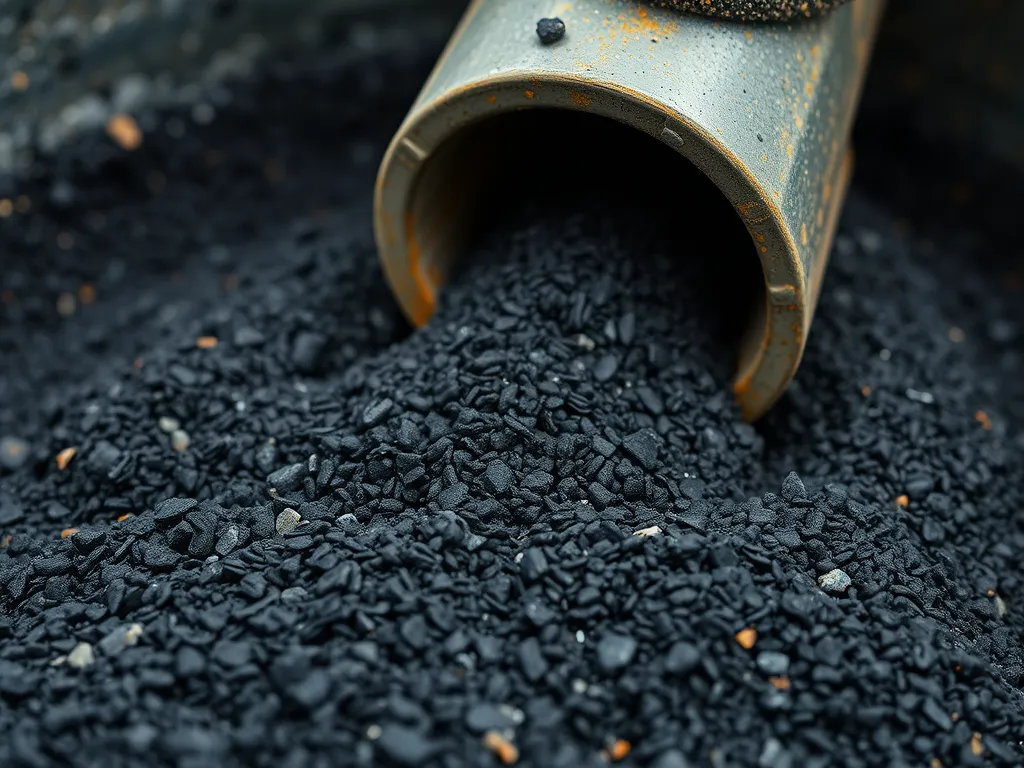
Producing hot mix asphalt requires precise temperature control and material balance. Plants achieve this through three critical stages.
Heating and Drying Aggregates
Aggregates form 90-95% of hotmix asphalt by weight. Before mixing, they’re heated to 300-350°F in rotary dryers. This removes moisture, ensuring better adhesion with asphalt binder. Moisture content above 0.5% weakens pavement strength. Gradation matters – aggregates must meet ASTM D692 standards for size consistency.
Mixing With Asphalt Cement
Hot asphalt cement (160-300°F) combines with heated aggregates in a drum or batch mixer. The binder coats each stone uniformly, creating a workable asphalt mix. Mix times vary: 30-60 seconds for batch plants, up to 90 seconds in drum plants. PG-graded binders (like PG 64-22) are chosen based on climate – higher numbers handle warmer temperatures.
Quality Control in Hotmix Asphalt Production
Every batch undergoes rigorous testing to meet AASHTO M 323 specs. Key checks include:
| Test | Method | Target |
|---|---|---|
| Gradation Analysis | AASHTO T 30 | ±3% of design |
| Binder Content | AASHTO T 308 | ±0.3% of target |
| Temperature | ASTM D979 | 275-325°F |
Plants use infrared thermometers and nuclear density gauges for real-time adjustments. Failed batches get rejected – quality impacts pavement lifespan by up to 40%.
Properly manufactured HMA sets the stage for high-performance applications across roads, driveways, and specialized surfaces.
Also See: Economic Impact Of Asphalt Infrastructure: Benefits
Primary Applications Of Hot Mix Asphalt
Hot mix asphalt (HMA) serves multiple purposes due to its strength, flexibility, and weather-resistant properties. From bustling highways to residential driveways, its versatility makes it the go-to material for surfacing needs.
Road Construction: Hot Mix Asphalt Road Surfaces
Over 90% of paved roads in the U.S. rely on hot mix asphalt. Its high-density composition handles heavy traffic loads, including trucks and buses. Engineers select PG (Performance Graded) binders tailored to local climates—PG 64-22 for colder regions, PG 76-22 for high-heat zones. Layers of HMA, compacted to 95% density, create smooth, long-lasting roadways that resist rutting and cracking.
Driveways: Hot Mix Asphalt for Residential Use
Homeowners choose hotmix asphalt for driveways due to quick installation and budget-friendly costs. A typical residential project uses 2-3 inches of compacted HMA over a crushed stone base. The surface cures within 24-48 hours, offering immediate use. With proper maintenance, these driveways last 15-20 years—twice the lifespan of gravel surfaces.
Parking Lots and Commercial Spaces
Commercial parking lots demand durable surfaces to withstand constant vehicle movement. HMA’s flexibility prevents cracks from freeze-thaw cycles. Contractors often use stone matrix asphalt (SMA), blending larger stones with polymer-modified binders, for high-traffic zones. A 4-inch layer supports up to 10,000 vehicles daily, while reflective coatings improve visibility for striping.
Specialized Uses: Tennis Courts and Asphalt Hotmix Construction
Beyond roads, HMA forms the base for tennis courts, running tracks, and playgrounds. Polymer-modified mixes provide cushioned surfaces, reducing joint stress. Builders apply colorized sealcoats to meet sport-specific requirements—blue for basketball, green for tennis. Porous HMA variants allow drainage at 300-500 inches per hour, preventing water buildup.
From highways to sports complexes, hot mix asphalt adapts to diverse needs. Next, let’s explore how its structural benefits outperform other paving options.

Benefits Of Hot Mix Asphalt
Hot mix asphalt (HMA) brings key perks to roads, driveways, and more. Let’s break down why it’s a top pick for builders and planners.
Durability and Longevity
HMA lasts 15-20 years with basic care. Its blend of stone, sand, and thick binder forms a tight bond when heated to 300°F. This mix handles heavy trucks, daily traffic, and weight without cracks. Less fixes mean lower costs—owners save up to 40% on repairs over its life.
Weather Resistance for Hot Asphalt Surfaces
HMA stays strong in -30°F winters or 120°F summers. PG (Performance Grade) binders are picked based on local climate data. These binders stop cracks from freeze-thaw cycles and resist rutting in heat. Water drains fast, cutting ice risks in cold months.
Smooth Finish and Safety Features
Rollers press HMA while hot, creating flat surfaces with under 0.1-inch gaps. This smoothness cuts tire noise by 5 decibels vs rough roads. Polymers in the mix boost grip, lowering crash rates by 18% on curves. Reflective beads in some blends improve night visibility.
With these strengths, HMA outshines many paving options. Next, let’s compare it to cold mix asphalt in key areas like cost, use cases, and performance.
Hot Mix Asphalt Vs. Cold Mix Asphalt
Hot mix asphalt (HMA) and cold mix asphalt serve distinct roles in paving. Both contain aggregates and binders, but how they’re made and applied splits their functions.
Key Differences in Composition and Application
HMA combines aggregates heated to 280-330°F with hot asphalt cement. This allows tight compaction for dense, stable surfaces. Cold mix uses emulsified asphalt (bitumen suspended in water) mixed with unheated aggregates. It stays workable at low temps but lacks HMA’s structural strength.
Application temps dictate usage. HMA must stay above 220°F during placement, making it ideal for roads, driveways, and parking lots. Cold mix works for pothole fixes or temporary patches in winter when HMA plants shut down. A ton of HMA covers 40-80 square feet at 2-inch depth, while cold mix requires thicker layers for similar support.
Advantages Of Hot Asphalt Mix in High-traffic Areas
HMA’s high-density build handles heavy loads without rutting. Superpave mix designs (a method aligning materials with traffic and climate) boost longevity. PG binders (performance-graded asphalt) resist cracking in freezing temps and softening in heat.
Busy highways and truck routes benefit from HMA’s 15-20 year lifespan. Its smooth finish cuts hydroplaning risks, while skid-resistant aggregates improve traction. Cold mix degrades faster, lasting 6-12 months under similar traffic.
With its mix of strength and adaptability, HMA dominates permanent paving. Up next: breaking down costs and how much material your project requires.
Cost and Quantity Checks
Hot mix asphalt costs shift based on job size, mix type, and place. Know these steps to plan your budget and order right.
Hot Mix Asphalt Cost Per Ton
HMA runs $50 to $150 per ton. Oil costs swing prices: high crude oil hikes binder fees. PG 64-22 binder (common in roads) adds $30-$60 per ton. Check local plants for exact rates. Big jobs (10+ tons) may get bulk cuts of 5-10%.
Find How Much Hot Asphalt Mix You Need
Use this math: square feet x depth (inches) ÷ 324 = cubic yards. Hot mix weighs 145 lbs per cubic foot. Multiply yards by 1.25 to get tons. A 1,000 sq ft drive at 3″ thick needs 9.25 tons (1,000 x 3 ÷ 324 = 9.25). Add 5-10% extra for waste.
What Changes HMA Price
Four main things set hotmix asphalt costs: 1) Aggregates (gravel, sand) make up 70% of mix—local sources cut fees. 2) Binder grade: PG 76-28 (for hot zones) costs 15% more than PG 58-28. 3) Truck haul miles add $3-$5 per ton per 10 miles. 4) Time of year: Summer paving spikes demand, raising rates 8-12%.
Special blends cost more. Polymer-modified HMA (used on interstates) runs $90-$140 per ton. Porous asphalt mix (drains water fast) hits $120-$160 per ton due to added steps.
Up next: While hot mix asphalt works for most jobs, some limits exist. Let’s look at why weather and green rules affect its use.
Disadvantages Of Hot Mix Asphalt
While hot mix asphalt dominates road construction, it carries specific challenges that require careful planning. Two critical issues stem from production methods and climate sensitivity.
Environmental Impact Of Asphalt Hotmixing Plants
Asphalt hotmixing plants emit 6-12 pounds of CO₂ per ton of material produced. High-temperature heating (275°F+) releases volatile organic compounds (VOCs) and greenhouse gases. Drum mixers and batch plants consume 25-35 gallons of fuel per hour, contributing to air pollution.
Modern plants use baghouse filtration systems to capture 95% of particulate matter. Warm-mix additives reduce production temps by 50°F, cutting energy use by 20%. Recycled asphalt pavement (RAP) incorporation lowers virgin material demand – some mixes contain 30-50% reclaimed content.
Limitations in Cold Weather Applications
Hot asphalt mix requires ambient temps above 50°F during installation. Below this threshold, the material cools too rapidly, preventing proper compaction. Pavements laid under 40°F risk premature raveling and cracking within 12-18 months.
Contractors combat this by using thermal blankets to extend working windows by 15-20 minutes. Northern states like Minnesota enforce seasonal paving bans – HMA projects typically halt when ground temps drop below freezing. Cold-laid alternatives like polymer-modified mixes address some issues but cost 15-30% more.
While these challenges exist, proper planning and technology keep hot mix asphalt a top choice for durable surfaces. Let’s address common questions about its performance and use cases.

FAQs About Hot Mix Asphalt
How Long Does Hot Mix Asphalt Last?
Hot mix asphalt typically lasts between 15 to 20 years with proper maintenance. Its longevity can be attributed to its durable composition that withstands heavy traffic loads and environmental factors.
What is Hot Mix Asphalt Used for?
Hot mix asphalt is primarily used for paving roads, driveways, parking lots, and other surfaces that require strong, durable pavement. It is also suitable for specialized applications such as tennis courts and recreational paths.
Is Hot Mix Asphalt Suitable for Driveways?
Yes, hot mix asphalt is an excellent choice for residential driveways. It provides a smooth, durable surface that is quick to install and can last up to 20 years with proper care.
What Determines the Cost Of Hot Mix Asphalt Paving?
The cost of hot mix asphalt paving is influenced by various factors including the price of raw materials (aggregates and asphalt binder), the complexity of the project, geographical location, and seasonal demand fluctuations.
Closing Thoughts
Hot mix asphalt (HMA) plays a vital role in modern infrastructure. Its durability, smooth finish, and versatility make it ideal for various applications such as roads, driveways, and parking lots. Understanding its composition and manufacturing process offers insights into its effectiveness and reliability.
While hot mix asphalt has numerous benefits, it’s important to consider environmental impacts and limitations during colder months. When selecting materials for your next construction project, weigh the advantages and disadvantages to make informed decisions.
For more information and tools related to asphalt calculations, head over to Asphalt Calculator USA. Your projects deserve the best resources!

