How Traffic Loads Shape Asphalt Performance: Types Compared
Published on: May 31, 2026 | Last Updated: April 14, 2025
Written By: George Voss
Traffic load effects on asphalt types determine how pavements withstand vehicle forces over time. Dense-Graded Asphalt handles 18-wheelers better than Porous Asphalt, while Stone Matrix Asphalt (SMA) resists deformation under 10,000+ daily truck passes. These differences stem from material composition, load distribution, and surface design.
This article examines how vehicle weights impact pavement integrity. Analysis covers load testing methods like Falling Weight Deflectometer (FWD) measurements, rutting patterns at 140°F asphalt temperatures, and SMA’s 40% longer lifespan in highway applications. Sections detail damage prevention through thickness design, polymer-modified binders, and drainage solutions for load-induced water damage.
Composition Of Asphalt Pavements
Pavement performance under traffic load hinges on material selection. Every mix combines stone, sand, binder, plus modifiers. These components determine how forces spread through layers. Choices directly influence rut resistance, crack prevention, service life.
Key Materials in Asphalt Mix Design
Stone aggregates form 90-95% of mix weight. Granite or limestone provide skeletal strength. Bitumen (5-10%) binds particles while permitting slight flex. Polymer-modified binders boost high-temperature stability. PG 64-22 binders work best for zones with freeze-thaw cycles. Fiber additives in stone matrix asphalt (SMA) reduce drain-down.
Role Of Aggregate and Binder in Load Distribution
Crushed, angular stones interlock under pressure, diverting forces sideways. Rounded gravels shift more, speeding rutting. Bitumen viscosity dictates stress absorption—stiff binders resist deformation but crack under repeated bending. Modified binders balance flexibility with load spreading. Proper pairing reduces vertical strain by 15-30% in heavy traffic zones.
Grasping these material roles sets the stage for evaluating real-world traffic impacts. Next, we’ll break down how different vehicles exert forces on pavements.
Composition Of Asphalt Pavements
Asphalt pavements handle traffic load through smart mix design. Their strength comes from three core parts: stone, binder, and additives. Each part plays a role in how roads bear weight and last over time.
Key Materials in Asphalt Mix Design
Stone (called aggregate) forms 90-95% of the mix by weight. These rocks range from sand to 1.5-inch chunks. Binder (asphalt cement) coats the stones, acting as glue. Additives like polymers or fibers boost strength. For heavy traffic load, engineers pick PG (Performance Graded) binders. PG 76-22 binders, for example, handle both high heat and truck weights.
| Material | Role | Traffic Load Impact |
|---|---|---|
| Aggregate | Bears weight | Size/shape affects rutting |
| Binder | Binds mix | Stiffness fights cracking |
| Additives | Boosts traits | Raises load limits by 15-30% |
Role Of Aggregate and Binder in Load Distribution
Strong stones take the brunt of traffic load. Angular rocks lock tight, spreading tire force across layers. Rounded stones shift more under weight, causing ruts. Binder stiffness matters too. Thick binder (300-500 Pa·s at 60°C) keeps stones glued under truck axles. Weak binder lets stones grind loose, leading to cracks.
In high-traffic zones, mixes use 3/4-inch stone with PG 70-28 binder. This combo handles 18,000 lb axle loads without deep ruts. For local roads with cars, smaller stones and PG 58-22 work fine.
How these parts work decides if roads bend or break under stress. Next, we break down how traffic load types test these limits.

Evaluating Traffic Load Impacts
Traffic forces shape asphalt performance. Accurate load assessment ensures pavement longevity. Let’s break down key variables engineers analyze.
Types Of Traffic Loads on Asphalt
Loads vary by vehicle type and movement. Each creates distinct stress patterns on pavement layers.
Static vs. Dynamic Loads
Static loads apply constant pressure. Parked trucks or stored materials cause gradual deformation. Dynamic loads involve motion. Moving vehicles generate impact forces up to 3x their static weight. These fluctuating stresses accelerate fatigue cracking.
Axle Load Variations (Passenger vs. Commercial Vehicles)
Passenger cars exert minimal stress with 3,000-lb single axles. Commercial trucks dominate damage. A semi-truck tandem axle applies 34,000 lbs. One heavy truck causes as much wear as 10,000 cars. Engineers use ESALs (Equivalent Single Axle Loads) to quantify this disparity.
Critical Factors in Traffic Load Analysis
Beyond weight alone, three elements dictate asphalt response. These guide material selection and thickness design.
Load Magnitude and Frequency
Heavier loads compress asphalt layers deeper. Repeated passes magnify damage exponentially. A road handling 1,000 ESALs daily fails 8x faster than one with 500 ESALs. High-frequency routes need stiffer PG 76-22 binders versus PG 64-22 for local streets.
Speed and Distribution Patterns
Faster vehicles reduce contact time, lowering rutting risk. Slow-moving trucks in ports or intersections cause 40% deeper ruts. Uneven lane usage creates edge cracks. 85% of highway truck traffic stays in the right lane, demanding reinforced outer sections.
These load factors set the stage for choosing asphalt mixes. Next, we’ll compare how different formulations handle these pressures.
Also See: Asphalt Production Standards and Specifications Guide
Asphalt Types and Their Response to Traffic Loads
Different asphalt mixes handle traffic load effects with varying success. Performance hinges on material design, structural thickness, and load distribution capacity. Let’s examine three common types under pressure.
Dense-graded Asphalt Performance Under Heavy Loads
Dense-graded asphalt, used in 85% of U.S. highways, contains tightly packed aggregates and asphalt binder. This mix resists traffic loads up to 18,000 lbs per axle through interlocking stone particles. Superpave-designed mixes with PG 64-22 binders handle rutting at 140°F, making them suitable for truck lanes. But repeated heavy axle loads above 12,000 ESALs (Equivalent Single Axle Loads) yearly can cause surface depressions over 5-7 years without proper base layers.
Porous Asphalt Limitations in High-traffic Areas
Porous asphalt’s 16-22% void space drains water but weakens under sustained traffic loads. The open structure compacts 40% faster than dense mixes under daily 500+ vehicle passes. Loads exceeding 8,000 lbs per axle accelerate raveling, where aggregate pieces dislodge. Best reserved for parking lots or roads with under 2,000 ADT (Average Daily Traffic), porous systems fail prematurely when hosting frequent heavy trucks.
Stone Matrix Asphalt (SMA) for Heavy-duty Applications
Stone Matrix Asphalt uses 70-80% crushed stone locked with cellulose fibers and polymer-modified binders. SMA withstands 30% higher traffic loads than dense-graded asphalt at 45°F to 85°F. Its stone-on-stone contact reduces rutting by 60% in routes with 15,000+ ESALs, like bus lanes or port access roads. Though SMA costs $8-$12 more per ton, its 18-22 year lifespan justifies the investment for corridors with constant truck traffic.
Selecting the right asphalt type prevents early wear, but even robust mixes face challenges. Up next: how traffic loads trigger specific failure modes like rutting and cracking.
Common Damage Mechanisms
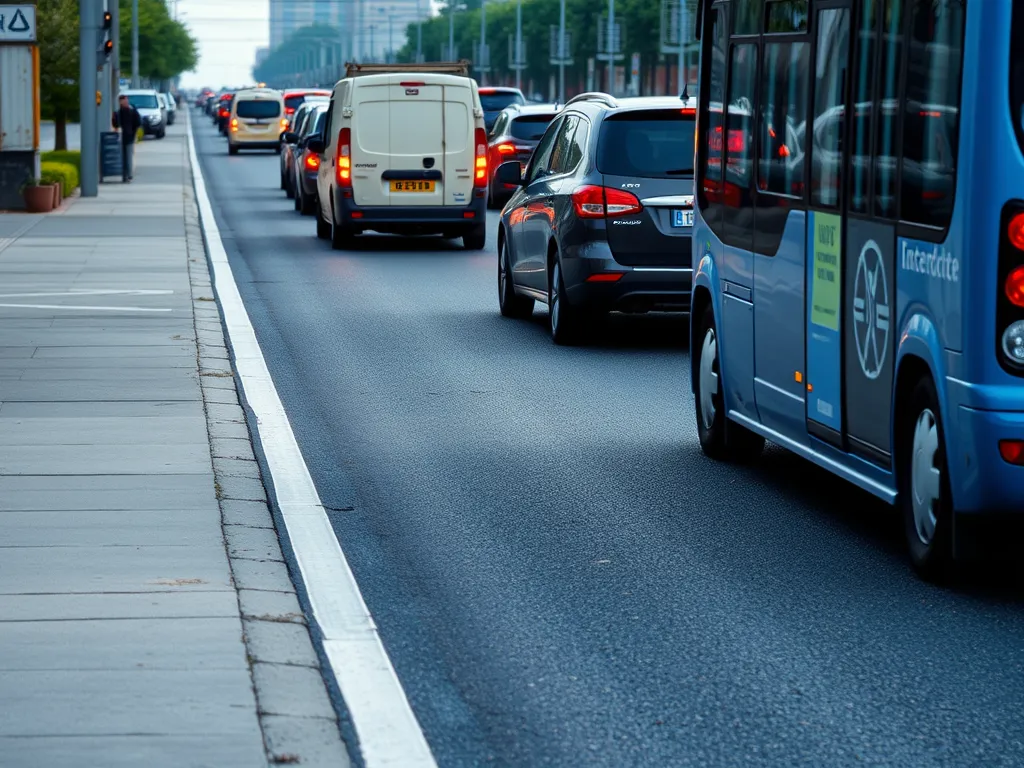
Traffic load strains asphalt in ways that create clear failure patterns. Each type has unique links to vehicle weight, speed, and mix design.
Rutting Deformation in Asphalt Layers
Ruts form when heavy loads push asphalt mix sideways. Trucks with 18,000+ lb axle weights cause 80% of rutting. Soft binder or weak base layers speed this process. SMA mixes resist rutting better than dense-graded due to stone-on-stone contact.
Temperature-Load Interaction in Rut Formation
Heat softens asphalt, letting loads sink deeper. At 140°F, PG 64-22 binder loses 60% stiffness. Night truck traffic on hot days triples rut depth vs cooler temps. Cool-mix additives help but add $3-$5 per ton.
Fatigue Cracking From Repeated Loading
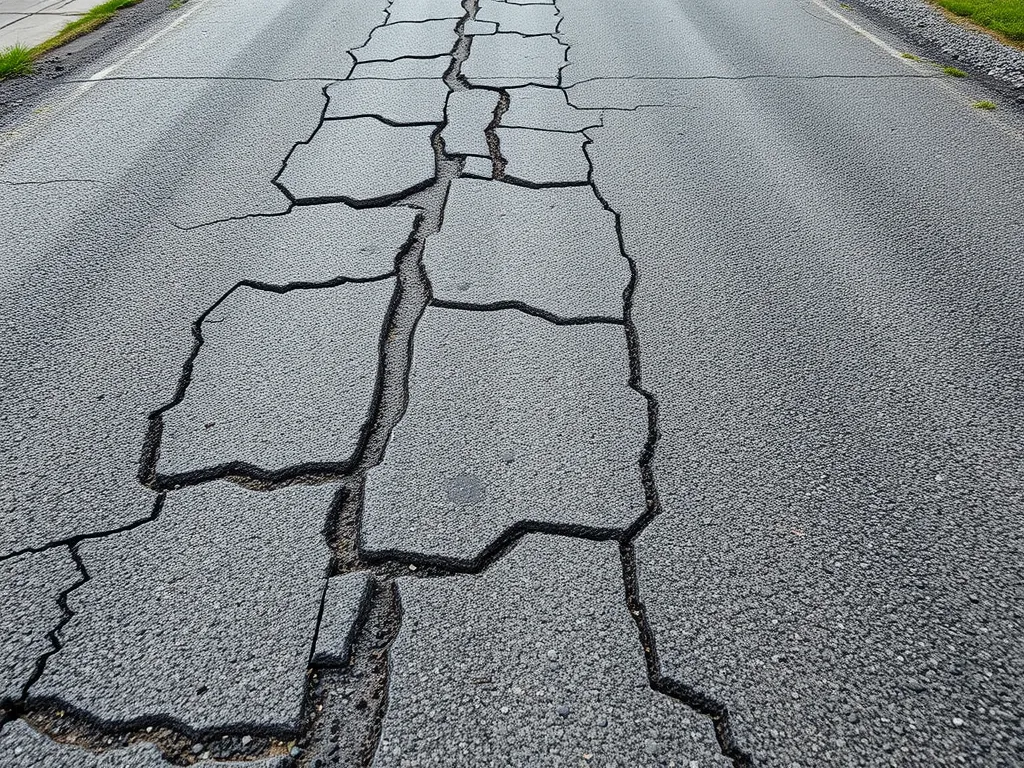
Repeated bends from traffic create micro-cracks that grow upward. 10,000+ load cycles (≈1 year on urban roads) cause visible alligator cracks. Porous asphalt fails faster here – 40% less cycle life vs SMA. Base layer quality matters: 6” crushed stone adds 15+ years.
Edge Cracking Due to Load Concentration
Trucks near road edges stress unsupported asphalt. A 12” unpaved shoulder cuts edge life by half. Each 1% rise in edge traffic boosts crack risk 3x. Fix costs $4.50/sq.ft vs $2.80 for center repairs. Wider lanes or rumble strips help spread loads.
These damage types show why load tests matter. Next, we’ll break down how pros measure asphalt’s load limits.
Load Testing and Structural Analysis
Testing how asphalt holds up under traffic load shows which types work best. Load tests check strength, while structural math predicts long-term wear.
Methods for Asphalt Load Capacity Testing
Two main ways test asphalt load limits: field checks and lab tests. Both show weak spots before roads fail.
Non-Destructive Pavement Evaluation
Falling Weight Deflectometers (FWD) hit roads with 9,000-pound pulses to mimic truck loads. Sensors track how much the asphalt bends. Stiffer pavements (like SMA) bend less—often under 0.01 inches—proving they handle heavy traffic loads better.
Laboratory Simulation of Traffic Stresses
Lab machines like AMPT (Asphalt Mixture Performance Tester) push 100+ load cycles per minute on asphalt cores. Tests spot rutting risks in porous mixes after 20,000 cycles or track fatigue cracks in dense-graded types.
Interpreting Modulus Values in Load-bearing Design
Modulus values measure asphalt stiffness under load. High-traffic roads need mixes with modulus over 300,000 psi—common in stone matrix asphalt. Low values (under 150,000 psi) signal porous asphalt may fail under truck loads. Engineers use these numbers to pick the right type and thickness.
Next, we explore how weather and traffic loads team up to break down pavements faster.

Environmental Factors in Load-induced Deterioration
Traffic load wears down asphalt, but weather makes it worse. Water shifts and heat waves speed up harm when trucks and cars pass by. Let’s break down two key threats.
Moisture Infiltration Under Traffic Stress
Heavy traffic load cracks asphalt. Rain seeps into these gaps. Water weakens the bond between rocks and bitumen. This leads to potholes and loose chunks on roads.
- Wet roads lose 40% strength faster than dry ones
- Freeze-thaw cycles widen cracks under truck weight
- Pore pressure from tires pushes water deeper
Dense-graded asphalt handles moisture better. Porous types fail fast in wet, high-traffic zones. Drainage layers help but add $3-$5 per sq.ft.
Thermal Cycling Effects on Loaded Asphalt
Heat makes asphalt soft. Cold makes it stiff. Traffic load on asphalt in these shifts causes splits and dips. A 50°F daily swing cuts road life by 15%.
- Summer: Trucks leave ruts in hot asphalt (140°F+)
- Winter: Bus wheels crack cold pavement (below 32°F)
- Thermal fatigue cracks form at 0.1″ per year
Stone Matrix Asphalt (SMA) resists heat-cold cycles. Its fiber mesh holds rocks tight. SMA lasts 12+ years vs. 8 years for standard mixes.
Fixing these issues needs smart design. Next, let’s explore how to build roads that beat both traffic and weather.
Mitigation Strategies for Traffic Load Effects
Managing traffic load impacts requires targeted strategies to extend pavement life. Proper design and maintenance counter the forces causing rutting, cracking, and structural failure.
Reinforcement Techniques for High-traffic Areas
Geosynthetic interlayers reduce strain in asphalt under heavy truck traffic. Polyester geogrids installed between layers improve tensile strength by 40-60%. High-modulus asphalt concrete (HMAC) mixes with polymer-modified binders like PG 76-22 resist deformation at 120°F+. Stone matrix asphalt (SMA) provides 30% better rut resistance than dense-graded mixes due to stone-on-stone skeleton structure. Steel mesh reinforcement in airport runways handles 800,000 lb aircraft loads.
Optimal Thickness Design Principles
The AASHTO 1993 Guide bases layer thickness on traffic ESALs (Equivalent Single Axle Loads). Interstate highways require 12-18 inches of asphalt over aggregate base. Structural number (SN) calculations factor in material stiffness and subgrade support. For 10 million ESALs, SMA surfaces need 4-inch layers versus 6 inches for porous asphalt. Software like PerRoad simulates load distribution to prevent overstressing weak subgrades with k-values below 100 psi/in.
Preventive Maintenance for Load-affected Pavements
Microsurfacing with polymer-modified emulsions restores skid resistance on rutted lanes. Crack sealing at 0.25” width prevents water infiltration under truck tire pressures (100-120 psi). Thin 1.5-inch overlays add 8-12 years to pavements carrying 3,000+ daily trucks. Rolling deflectometer tests identify soft spots needing stabilization with 6% cement-treated base.
While these strategies combat mechanical wear, environmental factors amplify traffic load damage. Up next: how moisture and temperature swings attack load-stressed pavements.
FAQ: Traffic Load Effects on Asphalt
How Does Traffic Overload Affect Road Pavement Performance?
Traffic overload leads to accelerated wear and tear on road pavements. When the weight of vehicles exceeds the designed load capacity, it can cause deformation, cracks, and ultimately, structural failure of the pavement, significantly shortening its lifespan.
What Effect Does Excessive Weight Have on Asphalt Pavement?
Excessive weight on asphalt pavement results in increased stress that can lead to various forms of damage such as rutting, cracking, and surface degradation. This stress is particularly detrimental when it occurs consistently over time, resulting in more severe and rapid deterioration.
What Are the Primary Stresses in Asphalt Pavements?
Asphalt pavements experience primary stresses from several factors, including the weight of vehicles (static and dynamic loads), the frequency of traffic, and environmental conditions. These stresses can lead to deformations and cracks, particularly in areas where heavy load-bearing vehicles frequently travel.
Closing Thoughts
Traffic loads significantly influence the performance and lifespan of asphalt pavements. Understanding the effects of static and dynamic loads is critical for choosing the right asphalt type. Dense-graded asphalt, porous asphalt, and Stone Matrix Asphalt (SMA) each respond differently under various traffic conditions. This highlights the importance of selecting appropriate materials based on expected traffic patterns and load characteristics.
Critical damage mechanisms like rutting, fatigue cracking, and edge cracking demand attention in pavement design and maintenance. Employing effective mitigation strategies such as reinforcement techniques, optimal thickness design, and preventive maintenance can significantly enhance asphalt durability.
For more insights and in-depth calculations related to asphalt and traffic loads, visit Asphalt Calculator USA.
Additional Resources for You:
- Kett, I. (1999). Asphalt Materials and Mix Design Manual. Oxford: Elsevier Science.
- Contribution of climate change and traffic load on asphalt pavement carbon emissions – ScienceDirect
- The Impact of Traffic & Vehicle Loads on Pavements — Pavement Management Services
- Ca
- Can Traffic & Vehicle Loads Affect Pavement? | EastCoat Pavement