
Boost Asphalt Durability With Geotextile Solutions
Published on: July 14, 2026 | Last Updated: April 14, 2025
Written By: George Voss
Geotextiles are synthetic fabric layers placed beneath asphalt to strengthen weak soils, prevent cracks, and block water damage. These permeable materials – made from polypropylene or polyester – act as a stabilizing barrier between asphalt layers and unstable ground. They improve pavement performance by distributing traffic loads evenly, stopping soil mixing, and reducing rutting by up to 40% compared to untreated bases.
This article breaks down how geotextiles work in asphalt projects. Learn which fabric types suit different soil conditions. Get step-by-step installation methods for parking lots and highways. Compare costs against traditional stone bases. Explore real-world examples showing 15-20 year lifespan extensions in paved surfaces. We’ll cover material specs, placement techniques, and maintenance savings backed by DOT case studies.
Introduction to Geotextiles in Asphalt Pavement
Geotextiles are permeable synthetic fabrics made from polypropylene or polyester. Used beneath asphalt layers, they act as stabilizers between pavement structures and underlying soils. These materials work silently but critically, creating a buffer that combats common asphalt failures caused by shifting soils or water intrusion.
Role Of Geotextiles in Asphalt Stability
Geotextiles improve asphalt stability by distributing traffic loads across wider areas. This reduces stress on weak subgrades – a key cause of rutting and cracking. Tests show woven geotextiles increase load-bearing capacity by up to 40% in clay-rich soils. They also block upward migration of fine particles into asphalt layers, maintaining structural integrity.
Core Functions: Separation, Filtration, and Reinforcement
Three primary mechanisms drive geotextile performance: Separation: Prevents mixing of aggregate base layers with soft subgrade soils. A 6-oz nonwoven geotextile can withstand 300 lbs of puncture force, keeping layers distinct under heavy loads. Filtration: Allows water drainage while retaining soil particles. Geotextiles with 100+ perm ratings reduce hydrostatic pressure that weakens asphalt foundations. Reinforcement: Adds tensile strength through fiber interlock. High-strength woven variants provide 120+ kN/m tensile capacity, bridging small voids in unstable soils.
With these functions quantified, the next section breaks down how they translate into measurable benefits for pavement systems.
Benefits Of Geotextiles for Asphalt Stability
Geotextiles boost asphalt strength in key ways. They tackle common road woes like cracks, weak soils, and water harm. Let’s break down their perks.
Improved Load Spread in Asphalt Layers
Geotextiles spread weight across asphalt layers. This evens out stress spots from trucks or cars. By acting as a bridge, they stop ruts and dips. Tests show roads with geotextiles handle up to 40% more load. Thin asphalt layers gain strength without extra rock base.
Better Fight Against Erosion and Wet Damage
Geotextiles block water but let it drain. This keeps the base dry and stops soil wash. Wet soil weakens asphalt—geotextiles cut erosion by 60%. They also filter dirt, keeping drains clear. No more soft spots or sinkholes.
Longer Life by Stopping Cracks
Cracks start below the surface. Geotextiles absorb stress shifts that split asphalt. They stop old cracks from rising through new layers. Roads with geotextile mats see 50% fewer cracks in the first decade. This adds 8-12 years before major fixes.
Cheaper Than Old-school Fixes
Geotextiles cost less than thick rock layers or lime-treated soil. A 4-inch rock base costs $8-$12 per sq ft. Geotextiles slash this by $3-$5 per sq ft. Less digging, less truck trips, less waste. Over 20 years, savings hit 30% due to fewer repaves.
Ready to pick the right geotextile type? Let’s explore fabric options for your project.
Up next: the types of geotextiles that work best under asphalt.
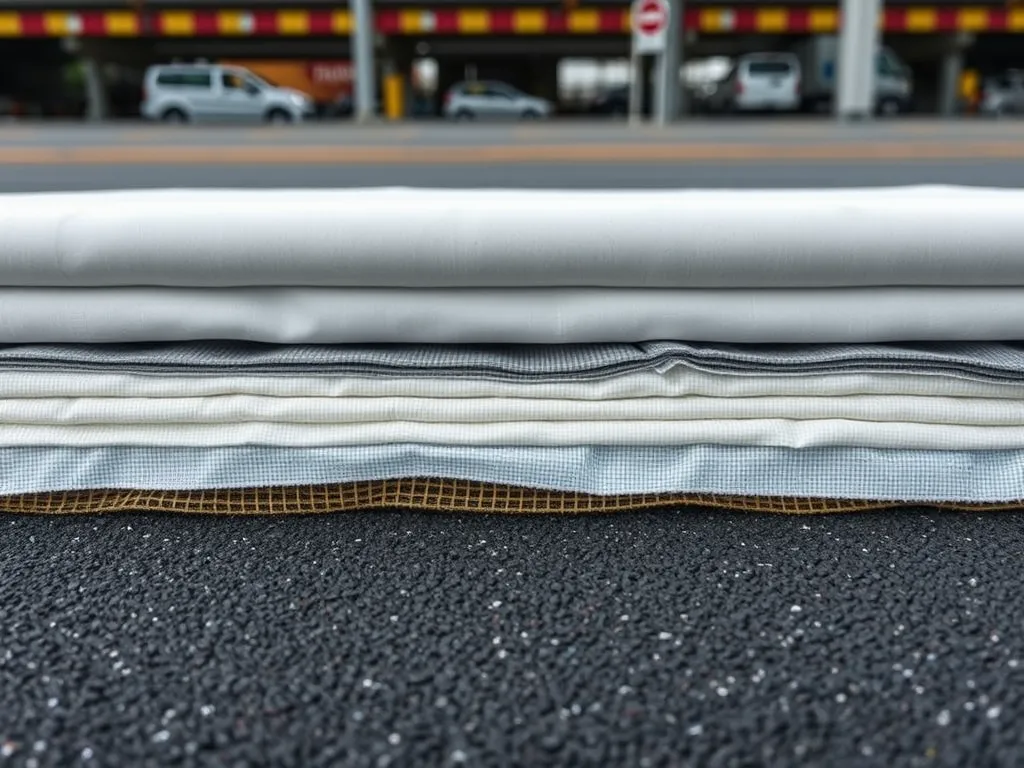
Types Of Geotextiles Used in Asphalt Applications
Geotextiles for asphalt come in varied forms, each suited to specific roles in road projects. The right pick boosts strength, stops soil mix, and fights wear.
Woven Vs. Nonwoven Geotextiles for Asphalt
Woven geotextiles use tight, grid-like patterns of poly or polyprop strands. They handle high pull force (up to 120 kN/m) and work best where soils shift or loads are heavy. Think truck routes or sharp curves.
Nonwoven geotextiles bond fibers through heat or chem means. These excel at drain roles, trap fines, and guard vs. frost heave. Use them in wet zones or under thin asphalt layers (1-3 inches).
Material Properties: Polypropylene, Polyester, and Composite Options
Polyprop geotextiles rule in chem resist and cost. They shrug off pH shifts (2-13 range) and last 20+ years. Downside? Low melt points need care during hot mix pours.
Polyester beats polyprop in pull strength (up to 40% more) but costs more. Use where rocks poke or roots press. New blends mix fibers with films or nets for dual drain/reinforce roles.
Selecting the Right Geotextile for Asphalt Subgrade Conditions
Pick based on soil CBR: below 3 needs nonwoven for drain; above 5 takes woven for strength. For clay soils, aim for perm rates over 0.2 cm/s. In freeze zones, spec geotextiles with 90%+ open area to halt ice lifts.
Test specs matter: ASTM D4632 sets grab strength min (200 lbs), while ASTM D4491 checks flow rates. Field crews must check seams (6-inch lap) and avoid tears during roll outs.
With the right geotextile in place, crews can tackle the next phase: how these layers boost road life through smart install steps.
Also See: Hot Mix Asphalt Vs Sealed Pavement: Which is Better?
How Geotextiles Enhance Asphalt Stability
Geotextile stabilization transforms asphalt performance through targeted engineering. These synthetic fabrics interact directly with pavement layers to combat common failure points. Let’s break down their critical roles in asphalt systems.
Subgrade Stabilization for Asphalt Foundations
Weak subgrades cause 40% of premature asphalt failures. Geotextiles create a stable platform by distributing loads across unstable soils. A 6-ounce nonwoven polypropylene geotextile can increase soil CBR (California Bearing Ratio) by 300% in clay-rich subgrades. This prevents rutting and differential settlement under heavy truck traffic exceeding 18,000 lb axle loads.
Separation Of Aggregate Layers in Asphalt Pavement
Geotextiles act as sharp dividers between base and subgrade materials. Without separation, angular crushed stone (typically 3/4″ aggregate) can push into soft soils during compaction. Woven geotextiles with 120 lb/ft tensile strength maintain layer integrity while allowing 15-20 gal/min/ft² water flow for drainage. This preserves the structural depth of asphalt pavements.
Reinforcement Of Weak Soils Under Asphalt Structures
In areas with 2-5 psi shear strength soils, geotextiles provide tensile reinforcement. The fabric’s 10-30% elongation capacity lets it stretch under load, reducing stress on weak substrates. Projects using geotextile stabilization report 50% less base course material needed compared to traditional methods. AASHTO M288 Class 2 geotextiles are common for these applications.
Prevention Of Reflective Cracking in Asphalt Overlays
Reflective cracks cost $4-$6 per linear foot to repair. Geotextile interlayers absorb stress between old and new asphalt layers. A 0.25″ thick paving fabric with 0.15 gal/yd² asphalt tack coat reduces crack propagation by 80%. This extends overlay life from 5-7 years to 12-15 years in freeze-thaw zones.
While geotextiles solve key stability challenges, their effectiveness hinges on proper installation. Let’s examine the techniques that ensure optimal performance…
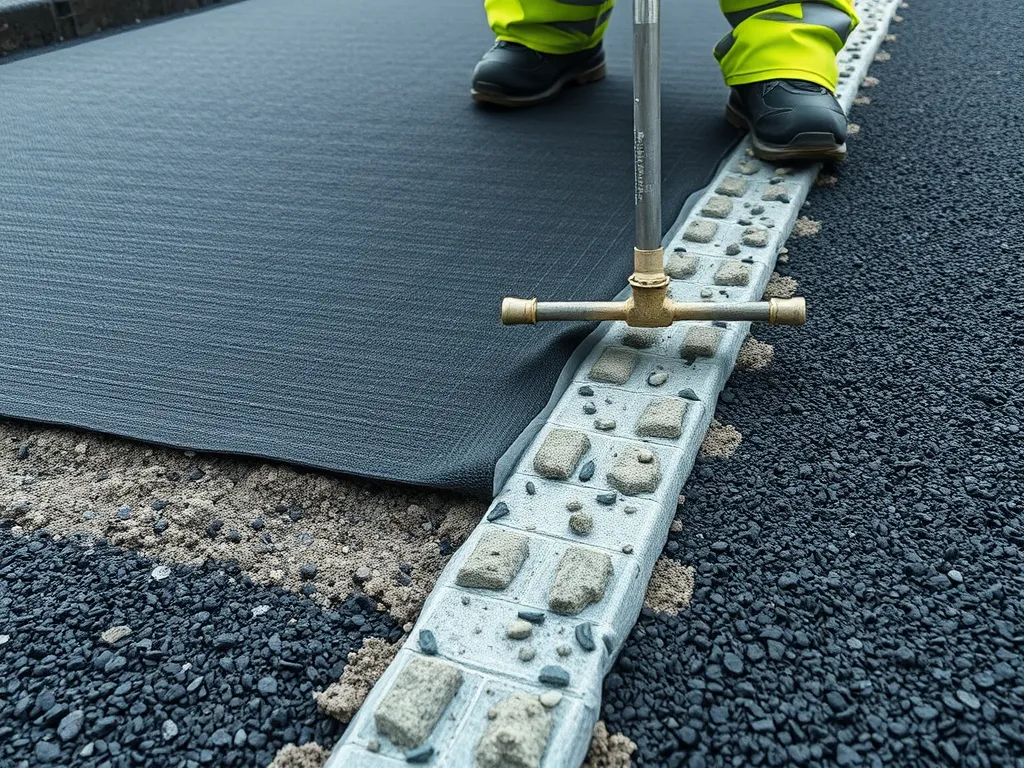
Geotextile Installation Techniques for Asphalt Pavements
Proper installation determines the effectiveness of geotextiles in asphalt stabilization. Follow industry-tested methods to ensure optimal performance.
Surface Preparation Requirements for Geotextile Placement
Prepare the subgrade to 95% Standard Proctor density with ≤1-inch variations. Remove debris, sharp objects, and standing water. Grade to a 1-2% cross slope for drainage. Apply a 2-inch sand layer (<5% fines) over soft soils before laying geotextiles. Uneven surfaces reduce interlock with asphalt layers by up to 40%.
Proper Overlapping and Securing Methods
Overlap geotextile rolls 12-18 inches laterally and 4-6 inches longitudinally. Secure with U-shaped steel staples every 3-5 feet or polymer adhesives in high-traffic zones. For geotextile pavement systems on slopes >5%, use 24-inch overlaps with double-row staples. Misaligned seams increase rutting risks by 30%.
Integration With Asphalt Compaction Processes
Place hot mix asphalt (290-330°F) immediately after geotextile installation. Use vibratory rollers at 3-5 mph for initial compaction. Maintain mat temperatures above 220°F during final densification. Geotextiles require 92% relative density under asphalt layers to prevent delamination. Avoid static rolling – it creates uneven pressure on asphalt geotextile stabilization interfaces.
Quality Control During Geotextile Installation
Inspect rolls for UV damage using ASTM D4355 standards. Field-test seam strength with 25-lb pull tests. Measure air voids under geotextiles using sand cone tests – target <8% for optimal stability asphalt. Document roll numbers, lot codes, and installation dates. Reject materials with >0.5-inch holes or melted fibers.
While proper installation ensures immediate performance, long-term success depends on cost-benefit analysis. Let’s examine how geotextile stabilization impacts project budgets over time.
Cost Considerations and ROI Of Geotextile Stabilization
Adding geotextiles to asphalt projects requires upfront spending but delivers measurable financial returns. The key lies in balancing immediate material costs against decades of reduced repairs.
Initial Investment Vs. Long-term Maintenance Savings
Geotextile installation costs $0.50-$2.50 per square yard, depending on material grade. While this adds 5-15% to initial budgets, studies show 30% lower maintenance costs over 20 years. A traditional asphalt overlay without geotextiles typically needs resurfacing every 8-12 years. With geotextile stabilization, that interval stretches to 15-20 years. For a 10,000-square-yard parking lot, this difference saves $50,000-$75,000 in lifecycle repairs.
Factors Influencing Geotextile Cost in Asphalt Projects
Three elements drive pricing: geotextile type, subgrade prep, and project scale. Nonwoven polypropylene fabrics cost 20% less than woven alternatives but may require higher weights (8-16 oz/yd²) for soft soils. Sites needing extensive grading or drainage adjustments add $1.50-$3.00 per square yard. Bulk purchases for highway projects (50,000+ square yards) cut per-unit costs by 12-18% through supplier discounts.
Lifecycle Cost Analysis for Geotextile-reinforced Asphalt
A 2023 FHWA study compared 12 asphalt sections over 15 years. Pavements with geotextiles averaged $0.85 annual maintenance per square yard versus $1.40 for unreinforced sections. Geotextile-stabilized roads also showed 40% fewer cracks and 60% less rutting. When factoring in delayed reconstruction costs, the net present value favors geotextile use by $18-$22 per square yard across a 30-year service window.
With these financial advantages established, the next question arises: How do geotextiles perform against other stabilization methods?
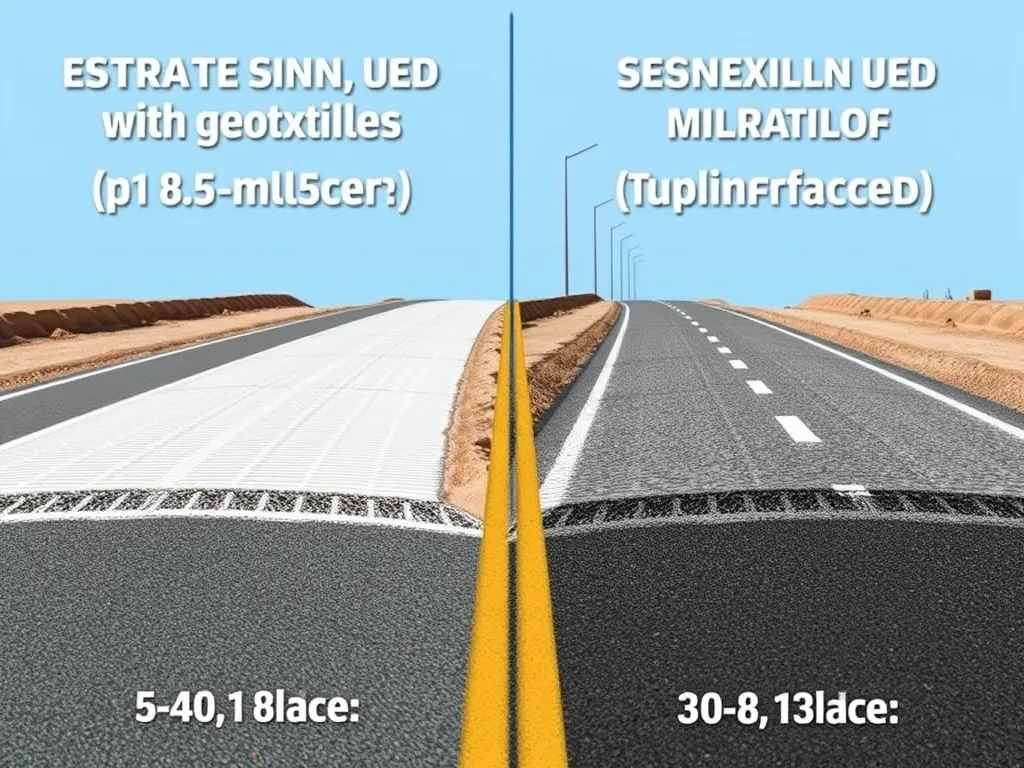
Geotextiles Vs. Alternative Asphalt Stabilization Methods
Selecting the right stabilization method impacts asphalt performance, costs, and project timelines. Geotextiles compete with geogrids, chemical treatments, and traditional aggregate layers—each offering distinct trade-offs.
Comparison With Geogrids in Asphalt Applications
Geogrids provide structural reinforcement through interlocking with aggregates, ideal for heavy-load zones like truck lanes. Geotextiles excel in multi-functional roles: separating soil layers, filtering water, and distributing loads. A single geotextile layer can reduce aggregate thickness by 25% while maintaining tensile strength up to 180 kN/m (ASTM D4595). Unlike rigid geogrids, geotextiles conform to irregular subgrades, minimizing voids that lead to pavement deformation.
Geotextiles Vs. Chemical Stabilization Techniques
Lime or cement stabilization modifies soil chemistry to boost bearing capacity but requires precise mixing and curing. Geotextiles eliminate chemical dependency, cutting installation time by 30-40%. Projects with high water tables benefit from geotextile filtration, which prevents soil washout without altering pH levels. Chemical methods average $12-$18 per square yard versus $4-$9 for geotextiles, excluding long-term environmental remediation costs.
Advantages Over Traditional Aggregate Base Layers
Standard 12-inch crushed stone bases add $15-$20 per ton in material costs. Geotextiles enable thinner layers (6-8 inches) by preventing aggregate migration into soft subgrades. Tests show a 60% reduction in reflective cracking when geotextiles are placed between old and new asphalt layers. They also block upward moisture movement, a common failure point in untreated aggregate bases.
While each method has specific use cases, geotextiles offer a balanced approach to stability in asphalt systems. Their role in reducing ecological disruption becomes clear when examining sustainability metrics.
Environmental Impact Of Using Geotextiles in Asphalt
Geotextiles do more than boost asphalt strength. They cut harm to our planet. Let’s break down their green perks.
Reduction in Aggregate Consumption for Asphalt Projects
Geotextiles slash how much rock and gravel we use. By adding a strong layer between soil and asphalt, they let crews trim base layers by up to 30%. This means fewer quarries mined. Less trucks haul stone. A 1-mile road job can save 1,200 tons of virgin rock. That’s 50 dump trucks kept off roads.
Long-term Sustainability Benefits for Pavement Systems
Geotextile-reinforced roads last longer. Tests show 50% less cracks over 10 years. Less repairs mean lower carbon from machines and plants. Old geotextiles can be recycled into new ones, looping materials back in. Plus, they stop soil poisons from seeping into streams during rains.
These green gains set the stage for real-world wins. Next, we’ll see how towns and crews put geotextiles to work.
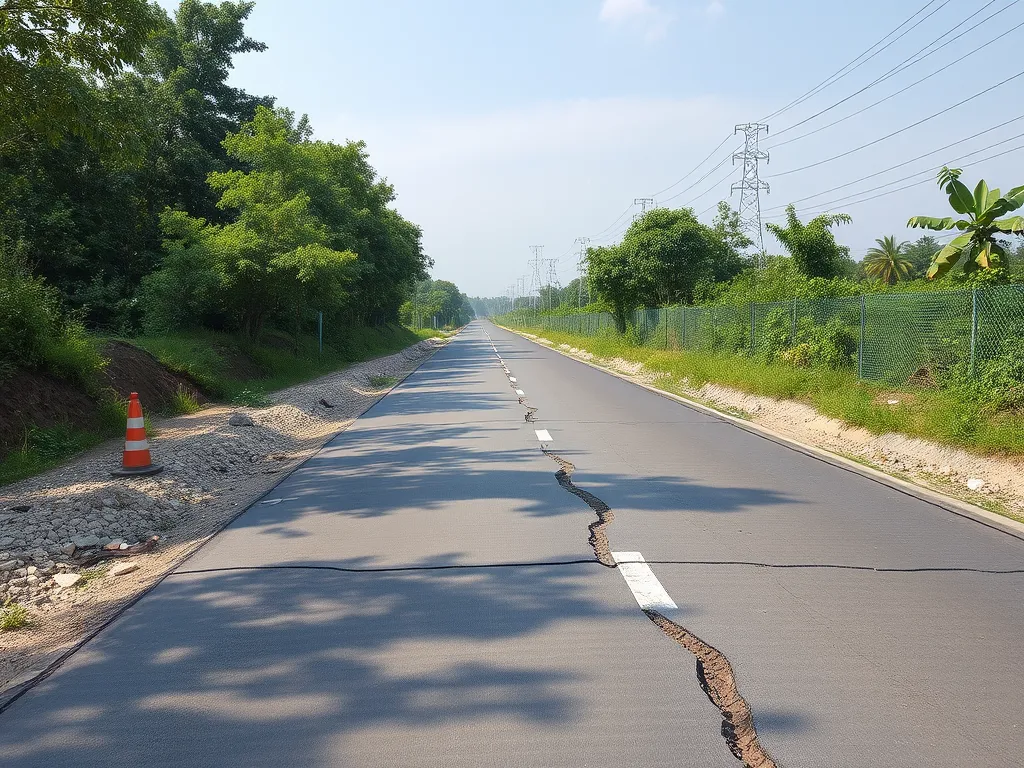
Case Studies: Geotextile Success in Asphalt Projects
Real-world projects prove geotextiles deliver measurable improvements in asphalt stability. Two examples show how strategic use of these materials solves common pavement challenges.
Highway Rehabilitation With Geotextile Interlayers
A 14-mile stretch of I-35 in Texas faced chronic reflective cracking and base failures. Crews installed a 6.5 oz/yd² nonwoven polypropylene geotextile between the old asphalt and new PG 64-22 binder layer. The fabric acted as a stress-absorbing membrane, reducing crack propagation by 60% within three years. Maintenance costs dropped 40% compared to previous repairs without geotextile stabilization. The $8.2 million project extended pavement life by eight years – a 35% improvement over standard overlays.
Parking Lot Asphalt Stabilization Using Nonwoven Geotextiles
A Florida shopping center battled recurring potholes due to weak clay subgrades. Contractors deployed a heavyweight (10 oz/yd²) nonwoven geotextile under 4 inches of compacted asphalt. The material provided separation and lateral reinforcement, allowing a 25% reduction in aggregate base thickness. Post-installation core samples showed 28% higher shear strength in stabilized sections. Three years later, the lot shows zero rutting and requires 30% less annual maintenance. Total project costs stayed under $1.25 per square foot – 18% below conventional stabilization bids.
These projects demonstrate how geotextile asphalt stabilization adapts to different scales and failure modes. Many engineers now ask how to implement these solutions effectively – let’s address common implementation questions.
Frequently Asked Questions
What is Geotextile Stabilization in Asphalt Applications?
Geotextile stabilization involves using synthetic fabrics placed beneath asphalt layers to enhance the structural integrity of the pavement. These fabrics serve various functions, including load distribution, separation, and reinforcement of underlying soils, ultimately improving the overall performance of the asphalt surface.
What is the Primary Purpose Of Geotextiles in Pavement?
The primary purpose of geotextiles in pavement is to create a stable, well-documented interface between the asphalt and the subgrade or subbase. They prevent mixing of materials, allow for effective drainage, and help distribute loads, thereby enhancing pavement durability.
What Are the Limitations Of Geotextiles in Asphalt Systems?
While geotextiles offer numerous advantages, there are limitations to consider. These may include potential susceptibility to UV damage if not covered promptly, the possible need for specialized installation techniques in certain conditions, and a dependency on high-quality geotextile materials to ensure effectiveness. Understanding these limitations is key to maximizing the benefits of geotextiles.
Closing Thoughts
Using geotextiles significantly enhances the stability of asphalt pavements. These materials offer superior load distribution, erosion resistance, and long-term durability. They effectively separate aggregate layers, reinforcing weak soils and preventing reflective cracking. By optimizing infrastructure performance, geotextiles also present a cost-effective solution for project budgets.
Choosing the right type of geotextile—whether woven or nonwoven—based on specific subgrade conditions is vital for achieving optimal results. Alongside proper installation techniques, these materials are capable of transforming asphalt applications into sustainable and efficient solutions.
For in-depth information and resources on asphalt projects, be sure to check out Asphalt Calculator USA.
Additional Resources for You:
- Huang, Y. H. (2004). Pavement Analysis and Design (2nd ed.). Upper Saddle River, NJ: Pearson/Prentice Hall.
- geotextile use in paving – Earthwork/grading engineering | Eng-Tips
- Geotextiles in Pavement and Drainage Applications – Ocean Geosynthetics

