The Science Behind Asphalt Thermal Properties
Published on: April 14, 2026 | Last Updated: April 14, 2025
Written By: George Voss
Asphalt’s thermal properties determine how it absorbs, stores, and releases heat—key factors in road durability and urban temperatures. These properties include thermal conductivity (ability to conduct heat), specific heat capacity (energy needed to raise temperature), and thermal diffusivity (speed of heat transfer). Unlike concrete, asphalt’s dark color and dense structure make it absorb 85-95% of solar radiation, reaching surface temperatures up to 160°F on hot days. This heat management affects everything from pavement cracks to city microclimates.
This article explains how asphalt interacts with temperature changes. You’ll learn why thermal conductivity ranges from 0.75 to 2.0 W/m·K depending on aggregate type and binder content. We’ll show how air voids and moisture alter heat flow, compare lab tests like heat flow meter analysis to field measurements, and explore solutions like permeable pavements that reduce urban heat islands by 5-10°F. Real-world examples include interstate highway failures caused by thermal expansion and cool asphalt mixes using recycled glass to reflect sunlight.
Introduction to Asphalt Thermal Behavior
Asphalt pavement acts as both a heat conductor and insulator. Its ability to absorb, store, and release thermal energy impacts everything from road durability to local microclimates. This dual function stems from material science principles applied during mix design and construction.
Defining Asphalt’s Role in Temperature Management
Asphalt manages heat through its composite structure. Aggregates (crushed rock) and bitumen (petroleum binder) create a matrix with 0.85-1.25 W/m·K thermal conductivity. This allows gradual heat transfer from surface layers to deeper pavement sections. High thermal inertia enables asphalt to store 2.1-2.4 MJ/m³ of heat energy, moderating temperature swings. In cities, this trait contributes to heat buildup but also prevents frost penetration in cold climates.
Why Thermal Properties Matter for Pavement Performance
Thermal behavior dictates critical pavement responses:
- Rutting risk increases when surface temps exceed 140°F (60°C), softening bitumen
- Thermal contraction below 40°F (4.4°C) induces cracking at 0.00001-0.00002 in/in/°F rates
- Daily 50°F+ temperature swings accelerate thermal fatigue in binder layers
Performance-graded (PG) binders address these challenges. PG 64-22 asphalt withstands temps from 64°C to -22°C through modified viscosity and elasticity. Proper thermal design extends pavement life by 35-50% compared to standard mixes.
These thermal characteristics directly influence material selection and thickness requirements. Next, we break down the specific properties governing heat flow in asphalt systems.
Key Thermal Properties Of Asphalt
Asphalt’s response to temperature changes shapes pavement durability and urban climate effects. Three core metrics define this behavior.
Thermal Conductivity Of Asphalt Mixtures
Thermal conductivity measures how quickly heat moves through asphalt. This property affects surface cooling rates and subsurface heat storage.
How Asphalt Conducts Heat
Aggregates and bitumen work together to transfer thermal energy. Dense-graded mixes with quartz-rich aggregates conduct heat 15-20% faster than open-graded designs. Bitumen acts as a partial insulator, slowing heat flow at microscopic levels.
Typical Thermal Conductivity Values for Asphalt
| Mix Type | Conductivity Range (W/m·K) |
|---|---|
| Dense-Graded | 1.25 – 1.75 |
| Open-Graded | 0.85 – 1.15 |
| Stone Mastic | 1.40 – 1.90 |
Values vary based on aggregate mineral content and compaction levels.
Thermal Diffusivity and Heat Retention
Diffusivity (α) determines how fast pavement surfaces adjust to temperature shifts. Calculated as α = k/(ρ·Cp), where k=conductivity, ρ=density, and Cp=specific heat. Typical asphalt diffusivity ranges from 0.45-0.65 mm²/s. Higher values mean quicker heat dispersion, reducing urban heat island effects.
Specific Heat Capacity Of Asphalt
Asphalt requires 0.92-1.05 kJ/kg·K to raise its temperature by 1°C. This metric explains why pavements store heat longer than materials like concrete (0.75 kJ/kg·K). During summer afternoons, asphalt surfaces can reach 68-77°C – 21-32°C hotter than air temperatures.
These thermal traits set the stage for examining what alters asphalt’s heat transfer capabilities. Next, we’ll explore how material choices and environmental factors shape conductivity outcomes.

Factors Influencing Asphalt Thermal Conductivity
Asphalt thermal conductivity determines how quickly heat transfers through pavement layers. Four primary variables shape this property, each requiring precise engineering control.
Aggregate Composition and Mineralogy
Aggregates make up 90-95% of asphalt mixtures. Their mineral content directly impacts heat flow:
- Granite aggregates conduct heat at 2.5-3.5 W/m·K
- Limestone rates lower (1.5-2.2 W/m·K)
- Quartz-rich mixes boost conductivity by 15% versus basaltic types
Dense-graded aggregates with angular shapes create more contact points for heat transfer compared to rounded gravel.
Asphalt Binder Properties
Bitumen’s thermal conductivity ranges from 0.15-0.25 W/m·K. Polymer-modified binders like SBS (styrene-butadiene-styrene) reduce conductivity by 8-12% versus conventional PG 64-22 binders. Warm-mix asphalt additives lower production temperatures but don’t significantly alter cured binder thermal performance.
Air Void Content in Asphalt Concrete
Air voids act as insulation pockets. A 1% increase in void content drops thermal conductivity by approximately 0.03 W/m·K. Typical pavements have:
- 3-5% voids in dense-graded mixes
- 8-12% in open-graded friction courses
Over-compaction during paving can reduce voids below 3%, creating heat bridges that accelerate temperature transfer.
Moisture Presence in Pavement Layers
Water conducts heat 25x faster than air. Saturated asphalt shows 0.6 W/m·K conductivity versus 0.3 W/m·K when dry. Freeze-thaw cycles amplify this effect – ice formation expands voids, while thawing increases water penetration depth.
These variables directly inform the measurement methods used to assess asphalt’s thermal performance.
Also See: How Many Tons in 18 Cu Yards Of Milled Asphalt?
Measuring Asphalt Thermal Characteristics
Testing how asphalt deals with heat needs lab tools and field checks. These methods map heat flow, spot weak points, and guide mix designs. Builders use the data to boost road life and cut heat risks.
Laboratory Testing Methods
Labs test asphalt samples under set conditions. Controlled tests give repeatable data on heat traits. Two key methods dominate modern labs.
Transient Plane Source Technique
The TPS method uses a flat sensor to pulse heat into asphalt. It tracks temp shifts over 0.1-10 seconds. This fast test finds thermal conductivity (0.7-2.0 W/mK) and diffusivity. No sample prep is needed—ideal for fresh mixes or recycled blends.
Heat Flow Meter Analysis
Heat flow meters (ASTM C518) sandwich samples between hot/cold plates. Steady-state readings take 1-4 hours but nail exact conductivity values. Labs use this for quality checks on dense-graded mixes. Data helps tweak aggregates or binders.
Field Measurement Approaches
Real roads face sun, rain, and traffic. Field tools track how asphalt acts outside labs. IR cameras scan surface temps up to 150°F in summer. Embedded sensors log heat shifts in pavement layers. Heat flux gauges measure energy flow through roads over time.
Testing heat traits in labs and fields shows why some roads crack or rut. Next, we’ll break down how asphalt soaks up heat from sun and air.

Asphalt’s Heat Absorption Mechanisms
Road surfaces interact with solar energy through complex physical processes. These interactions directly influence pavement temperatures, urban climates, and material longevity.
Solar Radiation Absorption Dynamics
Asphalt absorbs 85-95% of solar radiation due to its bitumen binder blended with mineral aggregates. Infrared wavelengths (700-2500 nm) get trapped within the pavement structure, converting light energy into thermal energy. Summer surface temps often reach 140-160°F—40-60°F hotter than surrounding air—due to this energy conversion.
Surface Albedo and Color Impact
With albedo values between 0.05-0.10, black asphalt reflects minimal sunlight compared to concrete’s 0.25-0.35 reflectance. Dark hues intensify heat buildup:
- Jet-black fresh pavement: 0.05 albedo
- Grey weathered surfaces: 0.10-0.15 albedo
- Cool asphalt coatings: Up to 0.30 albedo
New solutions like light-colored polymer-modified binders or reflective quartz aggregates cut surface temps by 10-15°F.
Thermal Mass Effects in Thick Pavements
Dense asphalt layers exceeding 6 inches store 1.5-2.0 MJ/m³K of thermal energy. This thermal inertia slows daytime heat transfer into lower layers while releasing stored warmth at night. Urban corridors with thick pavements maintain elevated temps 3-5 hours longer than rural zones. Engineers balance thermal mass using:
- Porous mixes with 20% air voids
- Phase-change material additives
- Thickness reductions in non-critical zones
These heat dynamics set the stage for exploring temperature impacts on pavement integrity—cracking, rutting, and structural fatigue emerge when thermal stresses exceed design thresholds.
Temperature Effects on Asphalt Performance
Asphalt thermal behavior directly shapes pavement durability across seasons. Daily and annual temperature swings trigger three key mechanical responses that challenge road longevity.
Thermal Expansion/contraction Cycles
Asphalt pavement expands by 0.003-0.005% per °F temperature rise. Over a 100°F daily swing, this creates 0.3-0.5 inches of movement per 100 feet of road. Quartz aggregates lower expansion rates to 20×10⁻⁶/°C, while limestone mixtures reach 28×10⁻⁶/°C. Restrained movement builds compressive stresses up to 150 psi in summer and tensile stresses in winter.
Softening at High Temperatures
Asphalt binder viscosity drops 90% between 50°F and 140°F. PG 64-22 binders – common in southern states – maintain stiffness up to 64°C (147°F). At 85°F surface temps, rutting risk increases 8% for every 5°F rise. Modified binders with polymers raise softening points by 15-25°F compared to conventional mixes.
Thermal Fatigue Cracking
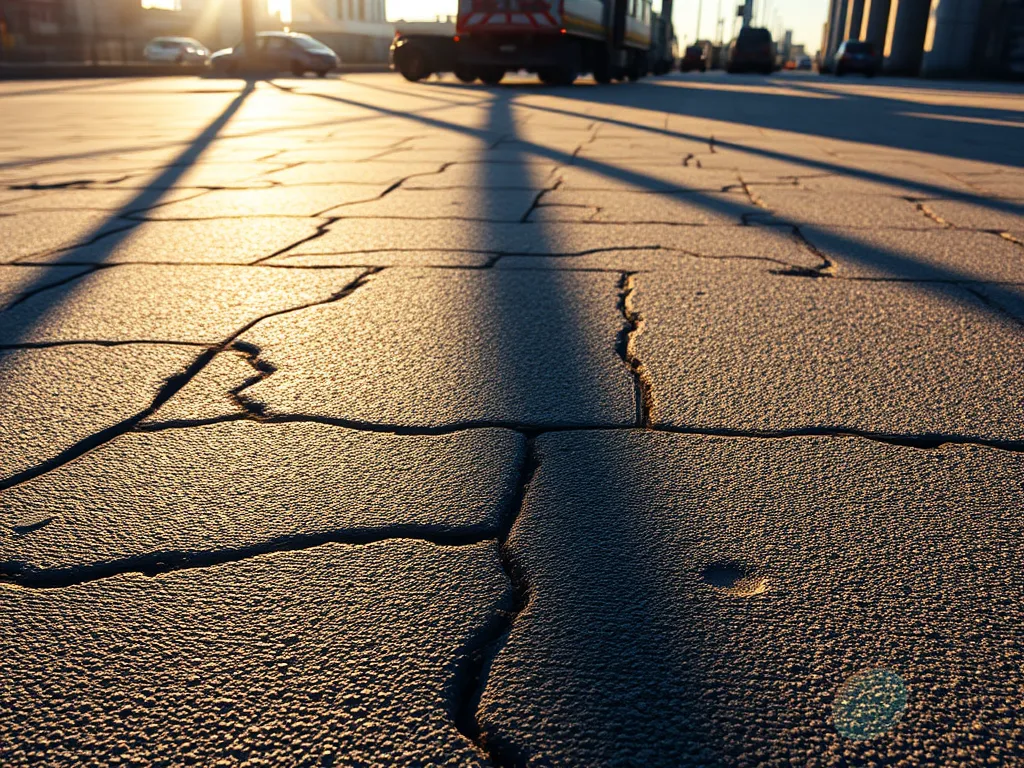
500 annual temperature cycles can reduce asphalt fatigue life by 40%. Thermal stresses between surface (120°F) and base layers (75°F) create differential movements. After 10 years, these daily swings typically cause 30% more transverse cracks than load-related damage alone. Nighttime cooling rates above 2°F/hour accelerate crack propagation.
These thermal challenges drive innovation in pavement design, setting the stage for advanced strategies to combat urban heat effects.
Managing asphalt thermal stresses isn’t just about durability – it’s key to reducing urban heat impacts. Modern engineering solutions now tackle both performance and environmental goals through…
Urban Heat Island Mitigation Strategies
As cities seek solutions for rising temperatures, asphalt thermal properties play a central role in reducing urban heat islands. Modified pavements now combine material science with climate-responsive design to balance durability and thermal regulation.
Cool Asphalt Technologies
Innovative asphalt mixes now target heat reduction through altered thermal conductivity and solar reflectance. These systems aim to lower surface temperatures while maintaining structural integrity under traffic loads.
High-Albedo Surface Treatments
High-albedo asphalt reflects more sunlight through specialized surface layers. By increasing solar reflectance from 0.05 (traditional) to 0.35-0.45, these pavements reduce heat absorption by 40-60%. Reflective coatings containing glass beads or light-colored aggregates scatter thermal radiation, cutting peak surface temperatures to 125°F versus 160°F for standard asphalt.
Permeable Pavement Systems
Permeable asphalt combats heat through evaporative cooling. Its 16-22% void structure allows water to pass through, lowering temperatures via phase change effects. Field tests show permeable surfaces run 20-30°F cooler than dense-graded mixes during summer afternoons. The design combines open-graded friction courses with stone reservoirs that store 4-6 gallons of water per square foot.
Vegetation Integration Techniques
Strategic vegetation pairing leverages asphalt’s thermal behavior for urban cooling. Tree canopies spaced 20-30 feet apart reduce pavement solar gain by 50-70%, while bioswales integrated with porous asphalt lower subsurface temperatures by 8-12°F. Root-resistant mixes with polymer-modified binders maintain pavement stability near vegetation, balancing shade benefits with structural needs.
These heat mitigation methods demonstrate how altering asphalt thermal properties can reshape urban climates. Next, we’ll examine common queries about asphalt’s temperature interactions in real-world settings.
Frequently Asked Questions
How Does Asphalt Absorb Heat Compared to Other Materials?
Asphalt absorbs heat more effectively due to its dark color and high density, which allows it to trap a significant amount of solar energy. The materials that compose asphalt, particularly the bitumen and mineral aggregates, facilitate this heat absorption better than lighter or less dense materials, such as concrete, which has a higher albedo and reflects more sunlight.
Is Asphalt a Better Heat Conductor Than Concrete?
In terms of thermal conductivity, asphalt generally has a higher value than concrete, meaning it can transfer heat more readily. Asphalt’s thermal conductivity typically ranges from 0.75 to 2.0 W/m·K, which is often higher than that of standard concrete, leading to greater heat buildup on asphalt surfaces during hot conditions.
What Makes Asphalt Surfaces Hotter Than Ambient Air?
Asphalt surfaces can reach temperatures significantly higher than ambient air due to their low albedo, which means they reflect very little solar radiation. Additionally, the thermal mass of asphalt allows it to store heat efficiently during the day and release it slowly, often keeping pavement temperatures elevated even after the air cools down at night.
What is the Thermal Conductivity Range for Asphalt?
The thermal conductivity of asphalt varies based on its composition and structure. Generally, it ranges from approximately 0.75 to 2.0 W/m·K. Dense-graded asphalt mixtures have higher conductivity compared to open-graded mixtures, which impacts how heat is transferred through the pavement.
Closing Thoughts
The thermal properties of asphalt play a pivotal role in its performance and lifespan. Understanding its thermal conductivity, diffusivity, and heat retention is essential for engineers and architects when designing sustainable pavements. Factors such as aggregate composition and air void content significantly influence these properties, impacting how well asphalt performs under temperature extremes.
Innovative technologies, like cool asphalt treatments and permeable pavement systems, are emerging to combat urban heat islands and enhance asphalt’s functionality. By incorporating these strategies, we not only improve asphalt performance but also contribute to more sustainable urban environments.
For more detailed insights and calculations related to asphalt and its thermal properties, be sure to check out Asphalt Calculator USA.
Additional Resources for You:
- Federal Highway Administration (FHWA) – Asphalt Pavement Technologies
- Thermal Behavior of an Asphalt Pavement in the Laboratory and in the Parking Lot – PMC
- A laboratory investigation on thermal properties of virgin and aged asphalt mixture – ScienceDirect
- Review of regulation techniques of asphalt pavement high temperature for climate change adaptation | Journal of Infrastructure Preservation and Resilience | Full Text
- The Science of Asphalt: Understanding the Composition and Properties – Asphalt paving services and more in Nashville, TN, 37219