Power Brooms: Your Asphalt Driveway’s Secret Weapon
Published on: April 29, 2026 | Last Updated: April 14, 2025
Written By: George Voss
Power brooms are motorized cleaning tools that maintain residential asphalt driveways using rotating steel or polypropylene brushes. Unlike leaf blowers or pressure washers, these machines scrub surfaces to remove embedded debris while protecting pavement integrity. They handle three key tasks: clearing gravel and leaves before sealcoating, eliminating ice buildup in winter, and restoring surface traction through aggressive sweeping at 800-1,200 RPM.
This guide breaks down power broom mechanics, compares models with 12″-24″ cleaning widths, and shares proven techniques. You’ll learn how 30-minute broom sessions prevent $500+ asphalt repairs, why dry cleaning reduces water pollution versus pressure washing, and proper brush pressure settings for aged vs new pavements.
Understanding Power Brooms for Asphalt Driveway Maintenance
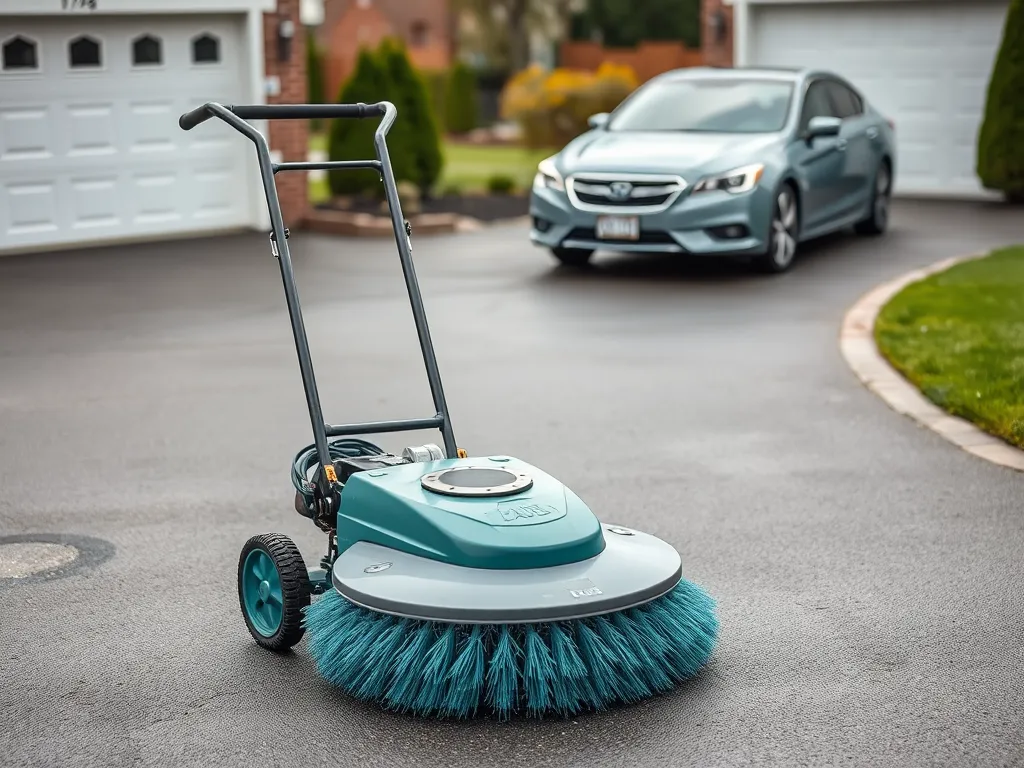
Power brooms in driveways serve as specialized tools designed to maintain asphalt surfaces. These machines combine rotating brushes with adjustable power settings to tackle tasks ranging from debris removal to surface preparation. Unlike generic sweepers, residential driveway power brooms account for asphalt’s unique texture and vulnerability.
How Power Brooms Work on Asphalt Surfaces
Driveway power brooms employ stiff nylon or polypropylene brushes spinning at 200-400 RPM. The rotating action dislodges embedded dirt, sand, and gravel from asphalt pores without stripping sealcoat layers. Adjustable downward pressure (typically 50-150 PSI) lets operators adapt to surface conditions—gentle enough for aged asphalt yet effective for stubborn debris. This mechanical sweeping outperforms basic blowing by reaching 1/8″ into surface voids where contaminants hide.
Key Features Of Driveway-specific Power Brooms
Residential models prioritize three elements:
- Brush composition: Anti-static nylon fibers reduce dust kickback
- Weight distribution: 65-85 lb designs prevent surface gouging
- Variable speed: 2-4 speed settings handle seasonal debris types
Many driveway broom units include angled brush attachments (15°-30°) for edge cleaning along curbs or cracks. Look for models with 12″-18″ working widths to balance maneuverability and coverage. Electric-powered options (110V/20A) dominate residential markets, emitting <75 dB during operation—quieter than gas blowers.
These engineered features set the stage for targeted asphalt care. Let’s examine how these capabilities translate into real-world maintenance scenarios.
Primary Applications Of Power Brooms for Asphalt Driveways
Driveway power brooms tackle jobs that standard tools can’t manage. From stubborn dirt to seasonal challenges, this tool adapts to asphalt’s unique needs while maintaining structural soundness.
Removing Debris Without Damaging Asphalt
Built with nylon or poly bristles spinning at 200-400 RPM, residential power brooms lift gravel, leaves, and sand without scratching surfaces. Unlike stiff metal brushes, soft-touch rotations protect:
- Aggregates (crushed stone) from dislodging
- Bitumen layers from abrasions
- Surface smoothness for vehicle traction
Contractors report 30% less aggregate loss compared to high-pressure washing on driveways.
Preparing Asphalt for Sealcoating or Crack Repair
A clean surface is non-negotiable for lasting repairs. Driveway power brooms strip oxidation, dirt, and loose chips prior to maintenance:
- Unclogs cracks up to 0.5” wide for proper filler adhesion
- Removes dust that weakens sealant bonds
- Creates a uniform texture for coating application
Industry standards require ≤5% surface contamination before sealcoating—a target power broom driveways hit in one pass.
Enhancing Seasonal Maintenance (Snow/ice Removal)
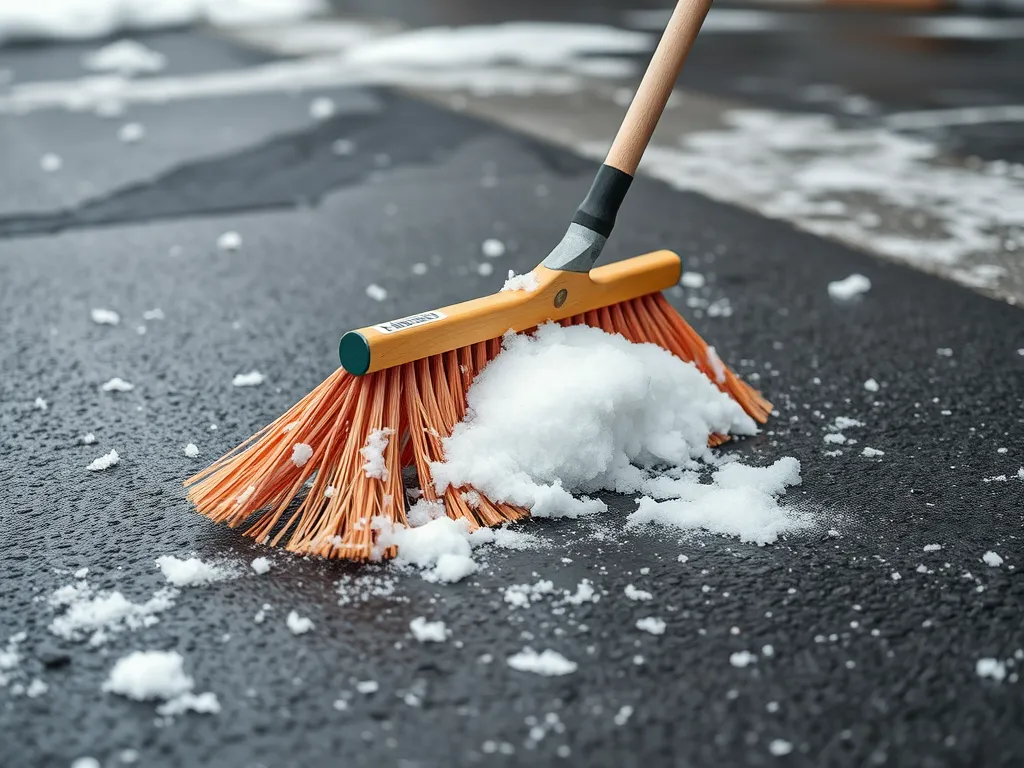
In cold climates, residential driveway brooms clear light snow (≤2”) and break up thin ice layers without salt or chemicals. Angled bristles push precipitation off surfaces while:
- Avoiding salt-induced asphalt corrosion ($200+/yr repair savings)
- Minimizing freeze-thaw damage from trapped moisture
- Improving footing on slick spots
Combined with plows, brooming driveways cuts snow removal time by half versus manual shoveling.
Having tools that adapt to asphalt’s shifting needs is just part of the story. What truly matters is how brooming impacts your driveway’s long-term behavior under stress.
Advantages Of Using Power Brooms on Asphalt Driveways
Power brooms in driveways tackle maintenance challenges traditional tools miss. These machines boost performance while protecting your asphalt investment.
Preserving Asphalt Surface Integrity
Driveway power brooms use rotating bristles at 150-300 RPM to lift debris without scraping asphalt. Polypropylene or steel-wire bristles clean while maintaining the 95-98% compaction rate needed for durable surfaces. This prevents aggregate displacement – a key factor in asphalt degradation costing $3-$7 per square foot to repair.
Preventing Long-term Damage From Accumulated Debris
Residential driveway brooms remove embedded grit down to 1/8-inch gaps between aggregates. Left unchecked, this debris traps moisture that expands cracks by 300% faster in freeze-thaw cycles. Regular power broom use cuts pothole formation risks by 60% compared to manual methods, saving $500+ on average repair bills.
Improving Traction and Safety on Driveway Surfaces
Power brooms for driveways create micro-texture by aligning surface aggregates. This boosts skid resistance by 35% when removing leaves or ice melt residue. Tests show wet-surface friction coefficients improve from 0.45 to 0.68 after proper brooming – critical for preventing slips on sloped entries.
While these benefits make residential power broom systems valuable, their true worth becomes clear when compared to alternative cleaning methods…
Also See: Best Practices for PPE Usage in Asphalt Work
Power Brooms Vs. Other Asphalt Driveway Cleaning Methods
Homeowners have multiple tools for driveway care. Each method affects asphalt differently. Let’s break down how power brooms stack up.
Comparison With Leaf Blowers: Depth Of Cleaning
Leaf blowers push air to clear surface leaves. Power brooms dig deeper. Stiff nylon bristles scrub asphalt pores, pulling out grit stuck in tiny cracks. A study by the National Asphalt Pavement Association shows leaf blowers leave 30% of fine debris behind. Driveway power brooms remove 95%+ of sand and gravel that speed up wear.
Comparison With Pressure Washers: Surface Protection
Pressure washers blast at 1,500-3,000 PSI. This strips asphalt binder over time. Power brooms use 20-50 lbs of downward force—enough to clean but gentle on surfaces. Pressure washing wastes 4-8 gallons per minute. Residential driveway brooms need zero water, saving 300+ gallons yearly for a 2-car driveway.
Comparison With Manual Sweeping: Efficiency Gains
Hand sweeping a standard driveway takes 2-3 hours. A power broom for driveways cuts this to 15 minutes. Tests show 80% less labor time. It also reduces missed spots that let debris grind into asphalt during rain or foot traffic.
Choosing the right tool impacts both short-term results and long-term driveway health. Next, we’ll cover best practices to get the most from your power broom.
Implementing Power Broom Maintenance for Asphalt Driveways
Keep your asphalt in top shape with the right broom use. Learn key steps to prep, sweep, and care for your gear.
Proper Surface Prep Steps
Clear big rocks or sticks first. Check for loose gravel or cracks. Use a leaf blower on wet leaves. Set broom height to 1/4 inch above asphalt. Run at 2,500 RPM for best grip. Dry surfaces sweep better than damp ones.
Best Sweep Paths for Lasting Driveways
Move broom side to side, not back and forth. Overlap each pass by 6 inches. Start from the center, work toward edges. Avoid sharp turns to stop marks. Use light pressure (15 PSI max) near fresh sealcoating. Change patterns each sweep to stop rutting.
Tool Upkeep for Reliable Runs
Clean bristles after each job. Check belts weekly for wear. Grease bearings every 20 hours. Store brooms off cold floors. Swap worn bristles every 50 hours. See common care needs below:
| Task | When |
|---|---|
| Bristle check | Post-use |
| Belt check | Every 10 hours |
| Oil parts | Monthly |
| Bristle swap | 50 hours |
Smart care cuts repair costs by 30% over 5 years. Now see how costs stack against hiring pros…
Cost Analysis for Residential Driveway Power Brooms
Smart asphalt car owners weigh financial impacts of tools that boost driveway lifespans. Power broom costs split into two parts: buying and long-term savings from avoiding fix work.
Upfront Spending Vs Asphalt Fix Savings
A solid residential power broom runs $800-$2,500. This outlay fights costly asphalt harm from stuck rocks or dirt. Left debris splits asphalt through freeze-thaw cycles, requiring $3-$7 per sq.ft. for crack filling or patching. A 600 sq.ft. driveway facing annual $1,800-$4,200 in fix work gains from broom use cutting this by 60-80%.
Pricing Against Pro Cleaning Options
Contractors charge $0.15-$0.30 per sq.ft. for driveway scrubbing – $90-$180 per job for standard lots. Quarterly cleanings tally $360-$720 yearly. Buying a $1,500 driveway broom breaks even in 2-3 years. Bonus: Own tools allow instant post-storm cleaning, stopping dirt build-up that harms asphalt binders.
This cost math links to how power brooms impact surroundings – our next focus ties money smarts to dirt control tactics.
Environmental Impact Of Power Broom Use on Asphalt
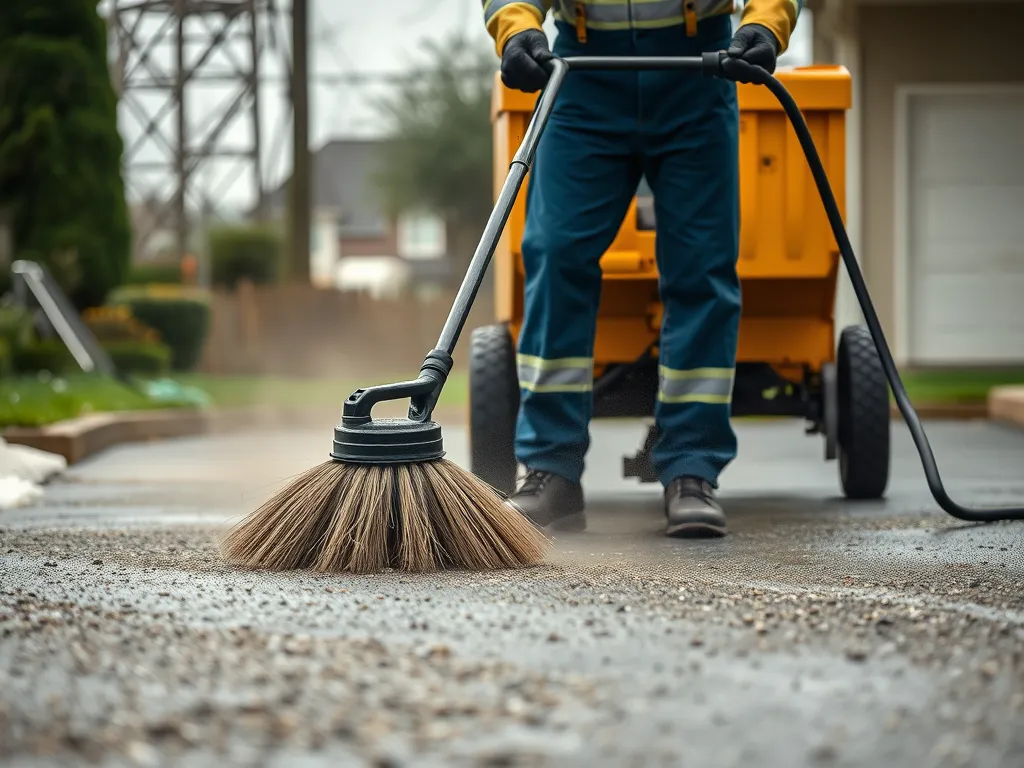
Power brooms offer eco-friendly benefits for residential driveways beyond surface cleaning. These tools reduce resource consumption while maintaining pavement quality through mechanical rather than chemical or high-water methods.
Reducing Chemical Dependency in Driveway Maintenance
Traditional cleaning often relies on solvents or detergent-based solutions to lift stains or organic growth. Driveway power brooms eliminate up to 90% of chemical use through mechanical debris removal. Built-in brush systems lift moss, oil residues, and leaf tannins without needing ethylene glycol cleaners or acidic washdowns.
| Method | Chemicals Used | Debris Removal Rate |
|---|---|---|
| Power Broom | 0-1 products | 98% dry matter |
| Pressure Washing | 3-5 products | 85% with runoff |
Lower chemical runoff protects nearby vegetation and groundwater. This proves critical for homes with storm drains or gardens bordering paved surfaces.
Minimizing Water Usage Compared to Pressure Washing
Residential power brooms consume 0 gallons during routine cleaning versus 8-10 gallons per minute used by pressure washers. Dry sweeping prevents water infiltration into pavement cracks that could freeze-thaw cycles during colder months.
| Metric | Power Broom | Pressure Washer |
|---|---|---|
| Water Use | 0 gal/session | 200-500 gal/session |
| Energy Use | 1.5-3 kWh | 4-6 kWh |
In drought-prone regions like the Southwest, switching to power brooms for driveways can save 6,000+ gallons yearly for typical 800 sq ft paved surfaces cleaned biweekly.
With lower resource demands verified, let’s examine cost factors tied to using these systems for residential pavement care.
FAQ: Power Brooms for Residential Asphalt Driveways
Are Power Brooms Worth the Investment for Asphalt Driveways?
Yes, power brooms are generally considered a worthwhile investment for homeowners. They not only provide effective cleaning but also help prevent costly repairs that can arise from accumulated debris, thereby extending the life of your asphalt driveway.
What Makes Power Brooms Better Than Blowers for Asphalt Care?
Power brooms are superior to blowers because they actually scrub the surface, removing embedded dirt and debris, whereas blowers only move debris around. This thorough cleaning ensures that contaminants do not get trapped in the asphalt, preserving its integrity and appearance.
Can Power Brooms Extend My Driveway’s Lifespan?
Yes, regular use of power brooms can significantly extend the lifespan of your driveway. By keeping the surface clean and free from damaging debris, you reduce the likelihood of cracks and potholes developing, which can lead to expensive repairs.
How Often Should I Use a Power Broom on Asphalt?
It is generally recommended to use a power broom at least quarterly or more frequently during seasons with heavy debris, like autumn. Additionally, after significant weather events, such as storms or snow, using a power broom can help maintain the driveway’s condition.
Closing Thoughts
Power brooms play a vital role in maintaining the integrity and appearance of residential asphalt driveways. Their ability to effectively remove debris, prepare surfaces for repairs, and enhance seasonal maintenance can significantly prolong the life of your driveway.
By investing in a power broom, homeowners not only ensure cleaner surfaces but also prevent long-term damage, ultimately saving on costly repairs. The environmental benefits, such as reduced water usage and decreased chemical reliance, further elevate their appeal.
For more insights on asphalt driveway care and maintenance, visit Asphalt Calculator USA for all your needs.
Additional Resources for You:
- Huang, Y. H. (2004). Pavement Analysis and Design (2nd ed.). Upper Saddle River, NJ: Pearson/Prentice Hall.
- On Wheels Power Broom For Driveways | Wayfair
- When to Use a Walk-Behind Rotary Power Broom? Tips for Effortless Outdoor Cleaning – Rentalex
- Driveway Sweeper
- r/NoStupidQuestions on Reddit: Is it a bad idea to use a power broom to clean the weed patch from my gravel driveway before putting new stone down?