
The Role Of Temperature in Asphalt Application
Published on: April 29, 2026 | Last Updated: April 14, 2025
Written By: George Voss
Temperature controls how asphalt bonds, compacts, and lasts. Every paving project depends on precise heat levels during mixing, laying, and curing. Too cold, and the mix won’t compress properly. Too hot, and binders break down faster. Ideal temperatures ensure tight compaction (95% density or higher) and prevent cracks, rutting, or premature aging.
This article explains how temperature impacts each phase of asphalt work. You’ll get specific guidelines: hot mix needs 150-160°C (300-320°F) at placement, while cold mix handles 5-40°C (40-100°F). We’ll cover weather challenges like summer paving above 35°C (95°F) and winter limits below 10°C (50°F). Learn how infrared thermometers check surface temps and why PG 64-22 binders handle colder climates better than PG 76-16 grades.
Importance Of Temperature Control in Asphalt Projects
Precise thermal management defines success in asphalt paving. Every phase – from mixing to compaction – relies on maintaining specific heat thresholds. Deviations trigger immediate workability issues and long-term structural risks.
Why Temperature Matters for Asphalt Performance
Asphalt binder viscosity changes 10x for every 20°F temperature shift. This directly impacts aggregate coating quality and bonding strength. Modern PG (Performance Grade) binders – like PG 64-22 or PG 76-16 – are specifically graded for temperature susceptibility. The Superpave mix design system bases target temps on regional climate data to prevent thermal cracking.
Impact on Compaction and Density
Compaction requires asphalt mix between 275-300°F for proper particle alignment. Below 250°F, the mixture stiffens, reducing density to 85-88% instead of the required 92-95% air void target. For every 10°F drop below optimal paving temperature, compaction efficiency decreases 1-2%. Low density invites water infiltration and freeze-thaw damage.
Long-Term Durability Considerations
Improper application temperatures accelerate pavement aging. Mixes cooled too quickly develop thermal cracks within 2 winters. Overheated binders oxidize, causing raveling and rutting. A 2018 NAPA study found pavements placed outside ideal temp ranges required repairs 50% sooner, increasing 10-year maintenance costs by 40%.
Mastering thermal variables isn’t optional – it’s engineering. Next, we break down exact temperature benchmarks for different asphalt types and weather conditions.
Optimal Temperature Ranges for Asphalt Application
Precise heat management determines asphalt pavement quality from installation through decades of service. Deviations below or above target thresholds create immediate workability issues and long-term structural risks.
Best Temperature to Lay Asphalt
Surface placement demands strict thermal control. The sweet spot allows proper compaction before stiffening occurs.
Ideal Range in Celsius (°C)
Fresh hot mix asphalt should hit the road between 120°C and 150°C. Ambient air must stay above 10°C for adequate mat cooling rates.
Ideal Range in Fahrenheit (°F)
Converted to Fahrenheit, target delivery temps range from 250°F to 300°F. Paving crews need ground temps above 50°F for optimal density results.
Mixing Temperature for Asphalt
Plant production temps vary by mix type and binder grade. Modern PG (Performance Graded) binders require exact heating to achieve specified viscosity.
Hot Mix Asphalt Temperature Requirements
Standard HMA mixes fire at 150-180°C (300-350°F). Polymer-modified mixes may need 5-15°C higher temps for proper aggregate coating.
Cold Mix Asphalt Temperature Guidelines
Cold-applied asphalt uses emulsified binders activated at 10-40°C (50-100°F). These patching mixes sacrifice some strength for all-season workability.
| Mix Type | Production Temp (°C) | Production Temp (°F) |
|---|---|---|
| Hot Mix Asphalt | 150-180 | 300-350 |
| Warm Mix Additive | 120-140 | 250-285 |
| Cold Mix | 10-40 | 50-100 |
While thermal parameters form the foundation, real-world success depends on managing heat loss during transport and placement. Next we examine how weather patterns threaten temperature stability at the jobsite.
Weather and Environmental Factors
Weather shapes how asphalt behaves during paving. Heat, cold, sun, and wind all play key roles in getting the mix right.
Effects Of Hot Weather on Asphalt Paving
High temps speed up asphalt cooling. This cuts the time crews have to spread and pack the mix. Even small delays cause flaws.
Asphalt Temperature in Direct Sunlight
Sun heats pavement fast. Fresh asphalt can hit 160°F (71°C) in full sun. Hot surfaces make the binder thin. Thin binder weakens bonds between rocks in the mix.
Summer Paving Challenges
Summer heat demands quick work. Crews pave at dawn or dusk to avoid peak sun. They use shorter truck routes to keep mix temps above 275°F (135°C). Additives like polymers help the mix stay workable.
Cold-weather Asphalt Application
Cold slows asphalt curing. Mixes stiffen before crews can shape them. Frost or ice under layers ruins grip.
Minimum Temperature for Laying Asphalt
Paving stops when ground temps drop below 50°F (10°C). Air temps must stay above 40°F (4°C) for 48 hours. Winter mixes use warm binders to push limits to 25°F (-4°C).
Cool Temperature Paving Techniques
Infrared heaters warm the base layer first. Insulated trucks keep mix hot. Rollers press faster to lock in heat. These steps add 15-20% to project costs but prevent cracks.
Tracking these temps needs precise tools. Next, we break down how pros measure heat in the field.
Also See: Cold Patch Vs Hot Mix Patching: Which is Best?
Asphalt Temperature Chart and Measurement
Accurate temp checks make or break paving jobs. Use charts and tools to track heat levels at each step.
Standard Temperature Ranges for Different Mix Types
Each asphalt mix needs precise heat for proper binding. Deviations cause weak spots or early wear.
Hot Mix Asphalt Temperature Range
Hot mix asphalt (HMA) rolls out at 280-330°F (138-166°C). This range keeps PG binders (performance-graded asphalt) fluid for smooth spreading. Below 275°F? The mix hardens too fast, risking poor compaction.
Warm Mix Asphalt Temperature Range
Warm mix asphalt (WMA) uses 200-250°F (93-121°C). Additives lower melting points, cutting fuel costs by 20-35%. Ideal for cool days or short hauls.
Field Measurement Techniques
Pavers check temps every 15 minutes. Two methods rule the job site.
Infrared Thermometers for Surface Temp
Infrared guns scan surface heat in seconds. Aim at fresh mat areas – avoid truck beds or cold edges. Readings vary ±9°F, so pair with probe tests.
Probe Tests for Internal Mix Temperature
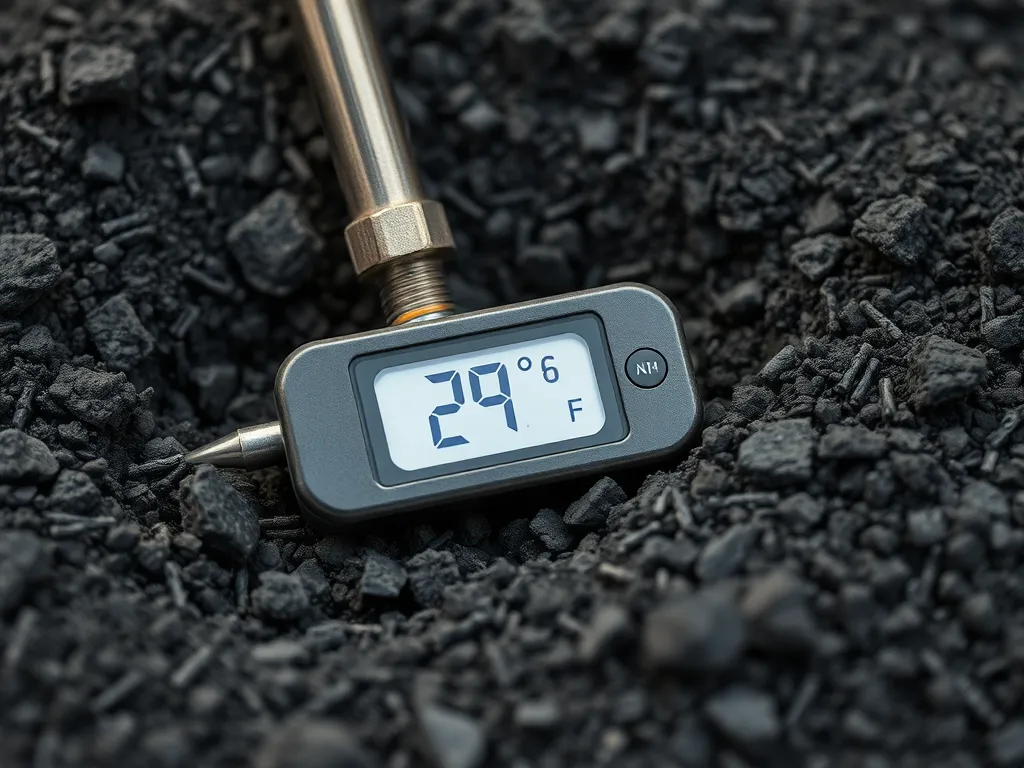
Stick a 12″ temp probe into the mat center. Wait 2 minutes for core readings. Hot mix should hit 275°F+ at 2″ depth. Record data for quality reports.
Nail the temps now, and the road handles trucks later. But even perfect heat can’t fix bad timing – next up, when weather fights your asphalt.
Consequences Of Incorrect Application Temperatures
Deviating from specified thermal ranges during paving creates immediate functional problems. These errors compromise structural integrity, ride quality, and project costs.
Risks Of Overheated Asphalt
Exceeding 325°F (163°C) in hot mix installations triggers multiple failure modes. Bitumen viscosity drops below 0.2 Pa·s, weakening binding properties.
Premature Cooling Issues
Excessively heated mix loses thermal energy faster once spread. Temperature gradients between surface layers exceed 50°F (28°C) per inch, causing:
- Incomplete compaction below 93% density targets
- Thermal shrinkage cracks within 72 hours
Surface Defects and Cracking
High heat degrades polymer-modified binders. Bleeding occurs when bitumen content exceeds 6.5%, while raveling starts below 4.2% binder volume.
Dangers Of Cold Application
Installing mix below 225°F (107°C) prevents proper particle orientation. Voids rise above 8%, versus the 3-5% needed for water resistance.
Poor Compaction Results
Cold mix resists densification under rollers. Projects requiring 96% modified Proctor density might only reach 88-91%, increasing rutting risks.
Reduced Load-Bearing Capacity
Low thermal energy creates weak interlock between stones. Pavements designed for 10 million ESALs (Equivalent Single Axle Loads) might fail at 3-4 million cycles.
Monitoring thermal profiles using infrared sensors ensures mix stays within critical viscosity windows. Next, we’ll examine techniques for maintaining ideal conditions during curing phases.
Temperature Management During Drying and Sealing
Proper thermal control extends beyond laying asphalt. Drying and sealing phases demand strict monitoring to ensure pavement longevity. Even minor deviations can create weak spots or adhesion failures.
Optimal Conditions for Asphalt Curing
Curing transforms liquid asphalt binder into a solid matrix. This process relies on gradual heat dissipation. Contractors track two metrics: ambient air readings and surface temps.
Ambient Temperature Requirements
Maintain air temps between 10°C and 30°C (50°F-86°F) during curing. Below 10°C, binder hardening slows dramatically. Above 30°C, rapid surface drying causes crusting while underlying layers remain unstable. Nighttime drops below 4°C (39°F) require thermal blankets.
Surface Temperature Limits
Fresh asphalt surfaces must stay above 4°C (40°F) for 48 hours post-placement. Use infrared guns to verify readings every 2 hours. Thermal differentials exceeding 14°C (25°F) between surface and base layers trigger stress cracks.
Sealing Temperature Guidelines
Sealcoating acts as asphalt’s sunscreen. But apply it wrong, and you’ll trap moisture instead of blocking UV rays. Timing depends on both mix type and weather patterns.
Minimum/Maximum Temp for Sealcoating
Apply sealants only when air temps range from 10°C to 35°C (50°F-95°F). Below 10°C, emulsions won’t coalesce properly. Above 35°C, rapid evaporation creates a brittle film. Measure pavement temps directly: 16°C-29°C (60°F-85°F) ensures optimal sealer penetration.
Mastering thermal factors during curing and sealing sets the stage for energy-efficient practices. Next, we’ll examine how temperature choices affect environmental outcomes during asphalt projects.
Environmental Considerations
Heat levels shape more than just asphalt quality. They impact fuel use, emissions, and paving rules tied to weather patterns.
Temperature-related Energy Efficiency
Hot mix plants burn fuel to hit 300-350°F. Warm mix tech slashes this need. Using additives or foaming, it works at 250-275°F. This 50°F drop cuts fuel costs by 20%. Less heat means lower CO2 – up to 30% per ton made. Some states now demand warm mix for state jobs to meet green goals.
| Mix Type | Temp Range (°F) | CO2 Per Ton (lbs) |
|---|---|---|
| Hot Mix | 300-350 | 35 |
| Warm Mix | 250-275 | 24 |
Winter Paving Restrictions
Ground under 40°F blocks proper bonding. Many states ban paving when air temps dip below 50°F. Northern zones like Minnesota set hard stops from Nov 15-April 1. Contractors beat the freeze with:
- Polymer-rich binders that grip in cold
- Heated screeds to keep mats above 250°F
- Insulation blankets post-roll
Winter work hikes costs by 30-50% but keeps roads safe. Some crews now use recycled shingles in cold mixes – their soft gums help in chill.
Next up: How pros track heat on-site with smart tools and field checks.
FAQ: Asphalt Application Temperatures
What is the Minimum Safe Temperature for Asphalt Paving?
The minimum safe temperature for laying asphalt is typically around 50°F (10°C) for ground temperatures and 40°F (4°C) for air temperatures. Below these thresholds, the curing process may be hindered, potentially leading to bonding issues.
How Does Sun Exposure Affect Freshly Laid Asphalt?
Sun exposure can rapidly increase the temperature of freshly laid asphalt, affecting its workability. In direct sunlight, asphalt’s surface temperature can reach 160°F (71°C), which can thin the binder and weaken the mix’s integrity, risking poor bonding and premature wear.
Can Asphalt Be Applied in Rain or Freezing Conditions?
Asphalt should not be applied in rain or freezing conditions as moisture can interfere with the bonding process. If the ground temperature is below 50°F (10°C) or if there is freezing rain, it can lead to significant issues such as reduced compaction and increased susceptibility to damage.
Final Thoughts
Temperature plays a vital role in asphalt application, influencing everything from compaction to long-term durability. Inadequate temperature management can lead to severe issues like poor compaction or even structural failures. Understanding the optimal temperature ranges for both mixing and laying asphalt is not just advisable—it’s essential for achieving quality results.
Whether you’re working in hot or cold weather, knowing the right techniques can enhance performance and extend the lifespan of your asphalt projects. Accurate temperature measurement is key, using tools like infrared thermometers and probe tests to ensure correct conditions.
For more tips and tools on asphalt application, be sure to check out Asphalt Calculator USA. Your success in asphalt work starts with precise temperature control!
Additional Resources for You:
- Roberts, F. L., Kandhal, P. S., Brown, E. R., Lee, D. Y., & Kennedy, T. W. (1996). Hot Mix Asphalt Materials, Mixture Design, and Construction (2nd ed.). National Asphalt Pavement Association (NAPA).
- Asphalt Paving: Temperature & Timing | Alpha Paving
- Seal the Deal: The Crucial Role of Temperature in Effective Sealcoatin – ToteHeater- Understanding the Vital Role of Temperature in Sealcoating Sealcoating is an essential aspect of asphalt maintenance, helping to extend the lifespan of paved surfaces and protect them from the harsh elements. However, one often overlooked factor that plays a crucial role in the effectiveness of seal coating (AKA sealco
- Review of regulation techniques of asphalt pavement high temperature for climate change adaptation | Journal of Infrastructure Preservation and Resilience | Full Text
- Why Is Temperature Monitoring Important in Asphalt Paving?

