Atmospheric Distillation: The First Step in Building Better Roads
Published on: September 4, 2026 | Last Updated: April 14, 2025
Written By: George Voss
Atmospheric distillation separates crude oil into components using heat at normal air pressure. This refining method heats crude to 650°F in 100-foot towers, splitting it into gasoline, diesel, and heavy residues. The heaviest residue forms asphalt binder – the sticky glue holding roads together. Key equipment includes distillation columns, heat exchangers, and condensers that manage vapor flow and cooling.
This article shows how atmospheric distillation creates asphalt for highways and driveways. We’ll detail each step from crude oil heating to fraction separation. You’ll see how tower design impacts material quality and why temperature control matters. We’ll also compare methods like vacuum distillation, review emissions controls, and answer top industry questions.
What is Atmospheric Distillation?
Atmospheric distillation splits crude oil into parts using boiling points. This process occurs at normal atmospheric conditions, avoiding costly vacuum systems. It forms a foundation for making fuels, lubricants, and asphalt.
Definition and Basic Principles
Atmospheric distillation divides hydrocarbons by boiling points. Crudе oil heats to 300°C-370°C in a distillation tower. Lighter parts like naphtha vaporizе first. Heavy bits, including asphalt basеstock, stay at thе bottom. Separation dеpends on volatility – a kеy concеpt in distillation chеmistry.
Atmospheric Distillation in Pеtrolеum Rеfining
In oil rеfining, atmospheric distillation units (ADUs) procеss 100,000-250,000 barrеls daily. Thе distillation column opеration splits crude into naphtha, kеrosеnе, dіеsеl, and rеsiduals. Thе hеavy rеsiduе (long-chain hydrocarbons) forms asphalt basе. Rеfіnеriеs adjust tеmpеraturе gradіents to control asphalt viscosity and purity – critical for roads that withstand 3,000+ vеhiclеs daily.
Up next: A clоsеr look at thе stеps and tools that makе this procеss work. How do distillation columns and tеmpеraturеs actually crеatе asphalt’s building blocks?
The Atmospheric Distillation Process Explained
Crude oil undergoes rigorous processing to yield usable products like fuels, lubricants, and asphalt. The journey begins inside towering units designed to split raw petroleum into distinct components.
Steps in Crude Oil Distillation
In the crude oil distillation process, preheated petroleum enters the distillation tower at 350-400°C. Heaters boost crude’s temperature before pumping it into the unit’s lower third. Inside, lighter hydrocarbons vaporize instantly, rising through trays. Heavier components sink, forming residual streams. These residues often form the base for asphalt production.
Role Of the Distillation Column
The distillation tower—typically 20-50 meters tall—contains 30-50 trays. Each tray collects condensed liquids, allowing vapor-liquid contact. Rising vapors cool while descending liquids warm, creating equilibrium. This staged separation maximizes efficiency. PG 64-22 binder, common in road construction, originates from these controlled interactions.
Temperature Gradients and Fraction Separation
Temperature drops by 5-10°C per tray from the tower’s base to its top. At 350°C, diesel condenses near the bottom. Naphtha separates around 150°C higher up. The heaviest residues, with boiling points exceeding 500°C, exit the tower’s bottom. These residues undergo further processing to meet Superpave specifications for pavement.
With refined streams collected, focus shifts to the equipment enabling these transformations. Next, we’ll explore the machinery powering every phase of petroleum refining.
Equipment Used in Atmospheric Distillation Units
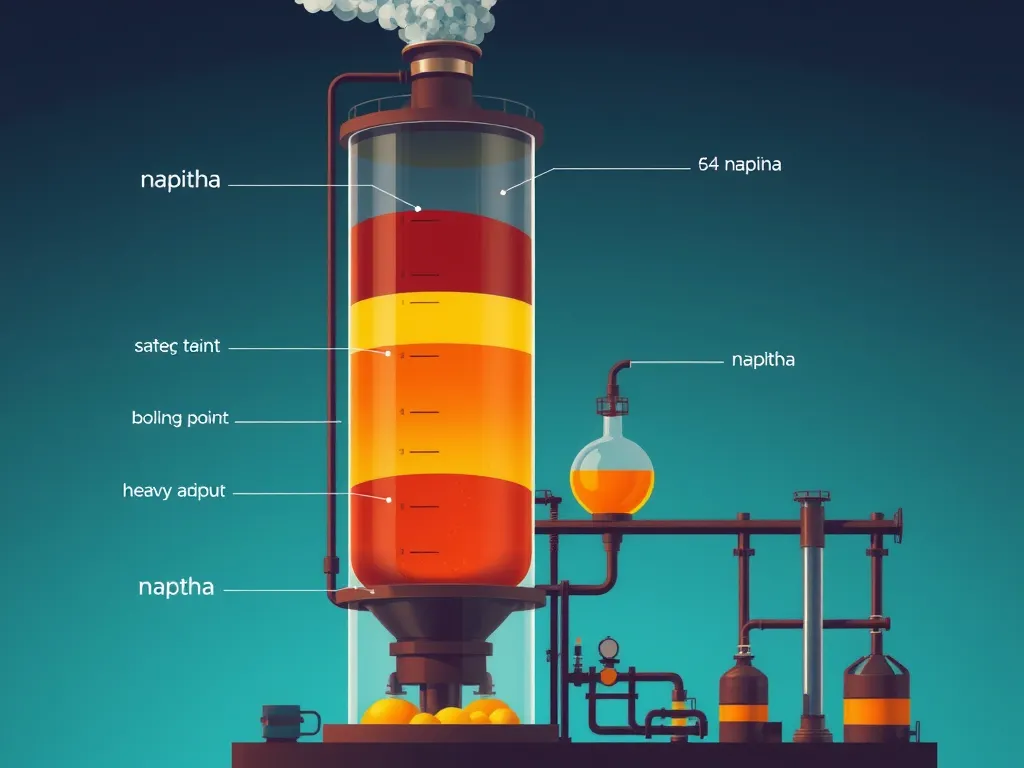
Atmospheric distillation units (ADUs) rely on specialized equipment to separate crude oil into fractions like naphtha, diesel, and asphalt feedstock. Each component plays a specific role in maximizing efficiency and product quality.
Distillation Towers and Fractionating Columns
Distillation towers, also called fractionating columns, are vertical steel structures up to 50 meters tall. They contain trays or packing materials that create vapor-liquid contact zones. As heated crude oil enters the tower, lighter hydrocarbons vaporize and rise. Heavier components like asphalt residues settle at the bottom. The tower operates at near-atmospheric pressure (1-2 bar), preventing thermal cracking of hydrocarbons.
Heat Exchangers and Preheaters
Before entering the distillation tower, crude oil passes through shell-and-tube heat exchangers. These devices preheat incoming crude to 320-370°C using waste heat from outgoing streams. Preheaters improve energy efficiency by 15-20% compared to standalone heating. Electric desalters often integrate with this system to remove impurities before distillation.
Condensers and Storage Tanks
Vapors from the tower’s upper sections flow into air-cooled or water-cooled condensers. These units convert gases like butane and propane into liquid fractions. Storage tanks then hold separated products: light naphtha in floating roof tanks (to prevent evaporation losses), diesel in cone-roof tanks, and asphalt residues in heated tanks at 150°C to maintain viscosity.
Understanding the equipment behind atmospheric crude oil distillation leads us to examine how these systems directly shape asphalt quality and production rates.
Also See: Sealcoating Vs Resurfacing: Which is Best?
Role Of Atmospheric Distillation in Asphalt Production
Atmospheric distillation shapes asphalt by splitting crude oil into parts. The heavy base for roads starts here.
Separation Of Heavy Residues for Asphalt
Crude oil enters the tower at 300-350°C. Light fuels rise. Heavy bits sink. These thick residues—called “long residues”—form asphalt’s core. They hold 15-25% of crude’s weight. The bottom flow hits 5-10% sulfur, needing checks for use.
Quality Control in Asphalt Feedstock
Heat and pressure must stay tight to hit specs. Tests run on the long residue:
| Test | Method | Goal |
|---|---|---|
| Penetration | ASTM D5 | Hardness at 25°C |
| Softening Point | ASTM D36 | Heat resistance |
| Viscosity | ASTM D4402 | Flow under stress |
Fail these? Mixes crack or rut. Refiners tweak tower temps by ±5°C to fix it.
Atmospheric distillation sets the stage. Next, how it stacks up against other refining steps.
Comparing Atmospheric Distillation With Other Methods
Refineries rely on multiple techniques to separate crude oil into usable products. Two common methods include atmospheric distillation units (ADUs) and vacuum distillation units (VDUs), along with simple versus fractional distillation. Each serves distinct roles in processing hydrocarbons.
ADU Vs. Vacuum Distillation Units (VDU)
Atmospheric distillation operates under normal pressure, heating crude oil to 350-400°C inside towers. This separates lighter fractions like naphtha or diesel. VDUs process heavier residues from ADUs under reduced pressure (25-80 mmHg), lowering boiling points to split viscous materials without thermal cracking.
- Output: ADUs yield 70-80% of crude as light/middle distillates. VDUs focus on lubricants or asphalt base.
- Equipment: VDUs require specialized vacuum systems, increasing energy use by 15-20% versus ADUs.
- Temperature: VDUs run 50-100°C cooler than ADUs to protect heavy molecules.
Simple Distillation Vs. Fractional Distillation
Simple distillation separates components with large boiling point gaps (e.g., water from salt). Fractional distillation, used in atmospheric crude oil distillation, employs fractionating columns with trays or packing. This enables continuous vapor-liquid contact, refining mixtures with tight boiling ranges.
- Efficiency: Fractional distillation achieves 95% purity for products like kerosene. Simple distillation rarely exceeds 70%.
- Scale: Simple distillation suits small-batch labs. Fractional columns in refineries stretch over 30 meters, handling 200,000+ barrels daily.
- Complexity: Fractional systems use reflux streams, temperature controls, and 30-50 trays for precise cuts.
While these methods optimize output, managing their environmental impact remains key. Next, we’ll explore emissions controls and safety measures in modern distillation systems.
Environmental and Safety Considerations
Refineries prioritize minimizing ecological impacts while operating atmospheric distillation units. Strict regulations govern emissions, while rigorous protocols protect workers during crude oil processing.
Emissions Management in Distillation
Atmospheric distillation releases volatile organic compounds (VOCs), sulfur oxides (SOx), nitrogen oxides (NOx), and particulate matter. Modern systems deploy electrostatic precipitators to capture 99% of PM2.5 particles. Flue gas desulfurization units cut SOx emissions by 95%, meeting Clean Air Act standards.
Vapor recovery systems recycle light hydrocarbons like propane from the distillation tower, reducing VOC leaks. Refineries spend 15-20% of operational budgets on emission control technologies, including thermal oxidizers destroying 98% of benzene residuals. Continuous monitoring sensors feed real-time data to centralized compliance dashboards.
Safety Protocols for Handling Volatile Fractions
Light naphtha separated in the crude oil distillation process poses explosion risks due to low flash points (-40°F). Facilities use explosion-proof electrical systems rated for Class I, Division 1 zones. Workers wear FR clothing and utilize intrinsically safe tools during fractionating column maintenance.
Leak detection systems trigger shutdowns if hydrocarbon concentrations exceed 10% of the lower explosive limit (LEL). Emergency venting routes divert pressurized gases to elevated flares. Annual HAZWOPER training ensures compliance with OSHA’s 29 CFR 1910.120 standards, reducing incident rates by 72% since 2010.
Managing risks in atmospheric crude oil distillation requires balancing efficiency with ecological stewardship. These operational priorities set the stage for evaluating how ADUs differ from vacuum distillation systems in refining workflows.
Frequently Asked Questions (FAQ)
How Does Atmospheric Distillation Of Crude Oil Work?
The process involves heating crude oil to high temperatures in a distillation tower where it separates into lighter and heavier fractions based on boiling points. This method operates under atmospheric pressure, allowing for effective separation without the need for a vacuum, dedicating the heavier residues for asphalt production.
What is the Difference Between a VDU and an ADU?
Atmospheric distillation units (ADUs) operate at normal atmospheric pressure, extracting lighter fractions from crude oil, while vacuum distillation units (VDUs) function under reduced pressure to process heavier residues without thermal cracking. ADUs typically yield more light and middle distillates, whereas VDUs focus on residues, enabling them to carefully extract components like lubricants and asphalt base.
What is an Atmospheric Distillation Unit (ADU)?
An Atmospheric Distillation Unit (ADU) is a key facility in petroleum refining designed to separate crude oil into various components by utilizing heat at atmospheric pressure. ADUs are fundamental in the initial stage of oil refining, allowing for the production of essential products such as gasoline, diesel, and asphalt.
Why is Atmospheric Distillation Vital for Asphalt?
Atmospheric distillation is critical for asphalt production as it separates the heavier fractions of crude oil, which are transformed into asphalt binder. The process ensures the quality and consistency of the asphalt, which is essential for road durability and performance, accommodating the requirements stating that asphalt must withstand substantial vehicular traffic while maintaining structural integrity.
Closing Thoughts
Atmospheric distillation is a cornerstone in the production of asphalt, streamlining the separation of heavy residues from crude oil. This process not only enhances efficiency but also ensures the quality of asphalt feedstock, impacting the performance of roads and infrastructures.
By utilizing distillation columns and effective temperature gradients, atmospheric distillation captures vital components essential for producing high-quality asphalt. This method stands out against alternatives like vacuum distillation, reinforcing its role in modern petroleum refining.
As the industry advances, attention to environmental and safety protocols during the distillation process remains paramount. Implementing emissions management strategies is crucial to protect both workers and the environment.
For more in-depth information on asphalt production and related topics, check out Asphalt Calculator USA.