Distillation Residue in Asphalt: Composition, Production, and Utilization
Published on: September 6, 2026 | Last Updated: April 14, 2025
Written By: George Voss
Distillation residue is the thick, heavy material left after refining crude oil through vacuum distillation. Composed mainly of large hydrocarbons like asphaltenes (rigid molecules) and maltenes (sticky resins), this residue forms the base for asphalt binders. Unlike gasoline or diesel, it has high viscosity (over 1,000 Pa·s at 60°C) and resists extreme temperatures from -20°F to 300°F. Refineries create it by heating crude oil under low pressure to separate lighter fuels. Road crews use it in pavement mixes, pothole patches, and recycled asphalt projects.
This article breaks down how distillation residue works in asphalt technology. We’ll detail its chemical makeup, explain vacuum distillation methods, and show its role in durable roads. You’ll find data on storage temperatures (typically 300-350°F), VOC limits per EPA guidelines, and comparisons to bitumen. Case studies highlight its use in highway construction and eco-friendly recycling. Technical insights cover everything from refinery pipelines to paving machines.
What is Distillation Residue?
Distillation residue forms during petroleum refining when crude oil gets heated to separate lighter fuels. This leftover material lacks the volatility to vaporize, remaining as thick, dense matter. Often called “bottom of the barrel,” it serves as the foundation for asphalt production.
Definition Of Distillation Residue in Petroleum Processing
Petroleum distillation residue refers to non-volatile remnants after crude oil undergoes atmospheric or vacuum distillation. Temperatures exceeding 350°C leave behind heavy molecules unsuited for gasoline, diesel, or jet fuel. Refineries collect this residue from tower bottoms for further processing into asphalt binders or industrial fuels.
Key Components Of Petroleum Distillation Residual Waste
Three primary elements dominate distillation residuals:
- Asphaltenes: Large, complex carbon structures giving asphalt rigidity
- Maltenes: Oily resins providing flexibility and weather resistance
- Metalloids: Trace amounts of nickel, vanadium, and iron
Heavy Hydrocarbons and Asphalt-Related Compounds
Hydrocarbons with 40+ carbon atoms form the backbone of asphalt-grade residues. These long-chain molecules create the sticky, viscous texture needed for pavement binding. Asphalt-related compounds like saturates, aromatics, and naphthenic acids account for 85-92% of typical distillation residuals used in road construction.
Up next: How these chemical components translate into functional properties for durable pavements.
Composition and Properties Of Distillation Residue
Distillation residual waste contains complex hydrocarbons that define its role in asphalt production. The material’s behavior under heat, pressure, and mixing relies on both molecular structure and physical traits.
Chemical Makeup Of Heavy Distillation Residue
Petroleum distillation residue consists of high-molecular-weight compounds left after lighter fractions like gasoline or diesel are removed. These residuals form the backbone of asphalt binders due to their carbon-rich chains.
Asphalt-Relevant Constituents (Asphaltenes, Maltenes)
Two key components dominate: asphaltenes and maltenes. Asphaltenes are dense, rigid molecules giving asphalt stiffness. Maltenes (saturates, aromatics, resins) act as a fluid matrix, balancing flexibility. Typical heavy distillation residue contains 10-20% asphaltenes and 60-70% maltenes by weight.
Physical Properties Critical for Asphalt Production
Performance hinges on traits like viscosity and thermal stability. Distillation by-products must meet ASTM D946 standards for penetration grades or PG binders used in road construction.
Viscosity, Temperature Resistance, and Binding Characteristics
Viscosity ranges from 1,000 to 5,000 cP at 135°C, ensuring proper flow during mixing. Temperature resistance spans -22°F to over 300°F for modified binders. Binding strength relies on maltene-asphaltene balance—too much asphaltene creates brittleness; excess maltene causes rutting.
With these traits defined, next we explore how refineries isolate and optimize distillation residuals for pavement use.
Production Processes Generating Distillation Residue
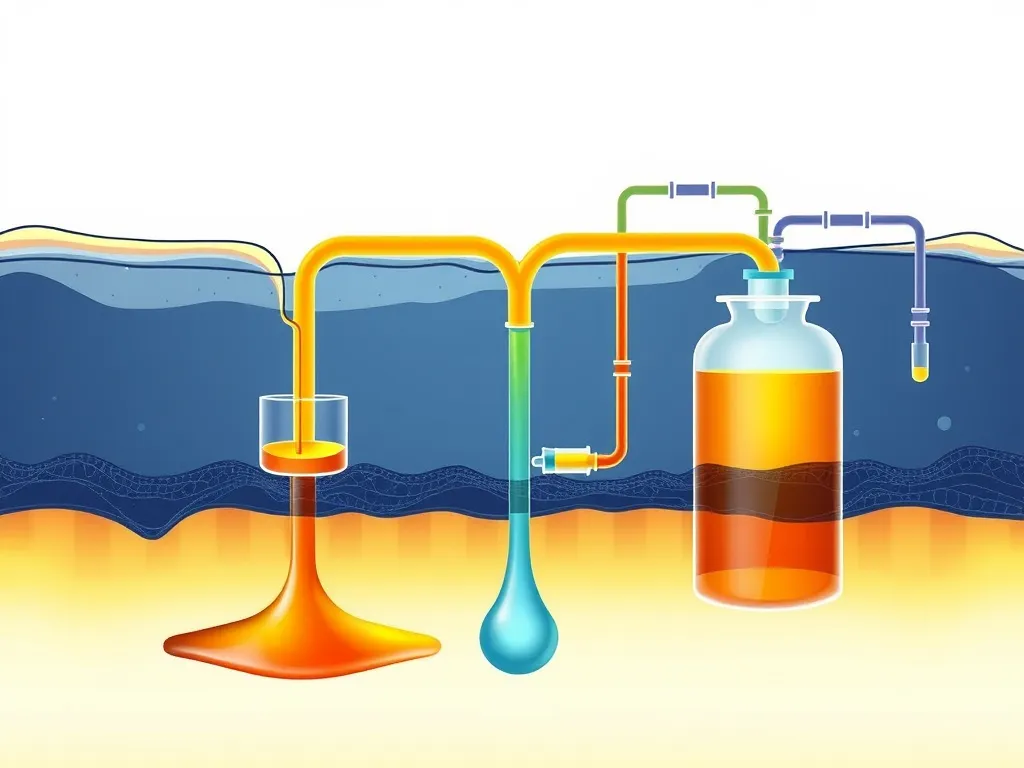
Distillation residue forms during hydrocarbon processing, with output varying by method. Two primary industrial pathways yield materials vital for asphalt production: vacuum distillation and fractionation. Both transform crude oil into functional construction components.
Vacuum Distillation in Petroleum Refining
Crude oil first undergoes atmospheric distillation at 350-400°C. Lighter fractions like gasoline vaporize, leaving thick, high-boiling-point materials. Vacuum distillation then cuts remaining hydrocarbons under 50-100 mmHg pressure. This step isolates heavy gas oils from residual components.
Role in Creating Asphalt-Grade Residuals
Vacuum distillation bottoms contain 80-85% carbon-rich molecules. These residuals hold asphalt-forming asphaltenes (15-25%) and maltenes (60-70%). Facilities adjust vacuum levels (25-75 mmHg) to control viscosity between 1,000-5,000 cP at 135°C – ideal for PG 64-22 binders. Thermal cracking during this phase boosts thermal stability for pavement use.
Fractionation Techniques Yielding Asphalt Precursors
Solvent deasphalting further splits vacuum residue. Propane or butane solvents dissolve maltenes, leaving asphaltene-rich solids. This creates two streams: DAO (deasphalted oil) for lubes and hard asphalt with 85-95% carbon content. Air blowing at 200-300°C modifies oxidation levels, adjusting penetration grades from 40/50 to 200/300.
Fractionation byproducts like slack wax or aromatic extracts may blend into modified asphalt. Such materials boost rutting resistance, handling traffic loads up to 30 million ESALs. Facilities typically process 10,000-50,000 barrels daily of residue into pavement-grade products.
With production methods shaping material quality, application planning demands strict analysis of residue traits. Upcoming sections detail how industry transforms these outputs into durable road surfaces.
Also See: Durable Asphalt for Commercial Roadways
Primary Applications in Asphalt Industry
Distillation residue forms the backbone of modern asphalt production. Refineries supply over 80% of pavement binders through petroleum distillation residuals. These materials bridge crude oil processing with durable infrastructure needs.
Use Of Petroleum Distillation Residuals in Asphalt Binder
Petroleum distillation residue serves as the base for asphalt cement. Vacuum-distilled heavy hydrocarbons (C50-C100 molecules) provide viscosity and weather resistance. PG (Performance-Graded) binders blend these residuals with modifiers to meet Superpave specifications. For example, PG 64-22 asphalt contains 65-75% distillation residuals by weight.
- Binder stiffness: 180-220 Poise at 60°C (140°F)
- Penetration grade range: 40-300 dmm
- Typical mix temperatures: 150-175°C (302-347°F)
Modification Of Distillation By-products for Pavement Materials
Raw fractionation residue gets upgraded for specific performance needs. Polymer-modified asphalt (PMA) combines distillation residuals with SBS elastomers or crumb rubber. This raises softening points from 45°C to 85°C+ while improving crack resistance. Chemical additives like hydrated lime reduce moisture damage by 40-60% in treated mixes.
Warm-mix asphalt technologies now blend distillation by-products with organic waxes or chemical surfactants. These allow 20-40°F lower production temperatures, cutting fuel costs by $3-$5 per ton.
Recycling Distillation Residual Waste in Road Construction
Reclaimed asphalt pavement (RAP) reuses 400 million tons of distillation residual waste annually in the U.S. Milling machines remove old asphalt surfaces, which get crushed and blended with fresh binder. Modern plants incorporate 30-50% RAP while maintaining ASTM D4887 shear strength standards.
- Energy savings: 16-24% per recycled ton
- Cost reduction: $12-$18 per ton vs virgin materials
- Emission cuts: 20% fewer VOCs during production
New techniques like full-depth reclamation mix distillation residues with cement or foamed asphalt. This creates stabilized bases that last 15+ years under heavy traffic loads.
With proper handling methods, distillation residuals maintain pavement performance while reducing environmental impacts. Next, we’ll examine the storage and temperature controls needed to preserve these materials’ integrity.

Handling and Processing Considerations
Working with heavy distillation residue demands precise protocols to maintain material integrity and worker safety. Storage methods and temperature management directly impact asphalt quality and production efficiency.
Storage Requirements for Heavy Distillation Residue
Petroleum distillation residual waste requires heated storage tanks to prevent solidification. Tanks must maintain temperatures between 300-350°F (149-177°C) using thermal oil systems or electric tracing. Carbon steel tanks with epoxy lining prevent corrosion from sulfur compounds present in residue distillation by-products. Facilities follow ASTM D6373 standards for tank design, including vapor recovery systems to capture volatile organic compounds (VOCs).
| Storage Factor | Specification |
|---|---|
| Temperature Range | 300-350°F |
| Tank Material | Carbon steel + epoxy lining |
| Safety Systems | VOC capture, fire suppression |
Temperature Control During Asphalt Manufacturing
Distillation residual waste must reach 320-400°F (160-204°C) during asphalt mixing to achieve optimal viscosity for binding aggregates. Overheating above 425°F (218°C) triggers thermal degradation, breaking down asphaltenes critical for pavement durability. Plants use closed-loop heating systems with 0.5-1.5°F/min ramp rates to prevent thermal shock. Infrared sensors monitor consistency, ensuring residue from distillation processes meets PG 64-22 or PG 76-16 performance grades.
Temperature-regulated transport trucks maintain materials at 290-310°F (143-154°C) during delivery, reducing thermal segregation. Insulated silos with agitators preserve homogeneity in the final asphalt binder, cutting waste by up to 12% compared to non-temperature-controlled setups.
Proper handling of distillation residuals ensures road surfaces withstand traffic loads exceeding 30 million ESALs (Equivalent Single Axle Loads). These practices also set the stage for addressing environmental impacts during material transport and application.
Environmental and Safety Protocols
Proper handling of petroleum distillation residuals demands strict adherence to environmental and safety measures. These by-products pose unique challenges due to their chemical complexity and potential hazards.
Managing Risks From Petroleum Distillate Residues
Petroleum distillate residues contain heavy hydrocarbons like asphaltenes and maltenes, which require specialized handling. Key risks include VOC emissions, flammability at high temperatures (above 300°F), and worker exposure to toxic compounds. Storage tanks must use inert gas blanketing to prevent combustion, while transport pipelines require leak detection systems rated for 0.5% hydrocarbon concentration alerts.
Volatile Organic Compound (VOC) Mitigation
VOCs (volatile organic compounds) in distillation residuals contribute to air pollution and health risks. Effective control methods:
- Vapor recovery units capturing 90-95% of emitted hydrocarbons
- Thermal oxidizers operating at 1500°F to destroy residual VOCs
- Low-VOC binder additives reducing emissions by 40% during asphalt mixing
Regulatory Compliance for Residue Disposal
The EPA’s Resource Conservation and Recovery Act (RCRA) classifies untreated distillation residual waste as D001 ignitable hazardous material. Disposal options depend on contaminant levels:
| Regulation | Agency | Focus Area | Key Requirement |
|---|---|---|---|
| 40 CFR Part 261 | EPA | Waste Classification | Test flash point (>140°F for non-hazardous) |
| 29 CFR 1910.119 | OSHA | Process Safety | Implement management systems for large residue volumes |
| Clean Air Act Title V | EPA | Emissions | Permit required for facilities processing >10 tons/year VOCs |
Landfills accepting distillation by-products must have double-lined cells with leak detection. Incineration remains the primary method for high-contaminant residues, requiring scrubbers to meet 0.1 gr/dscf particulate limits.
With protocols established for safe residue management, the next focus lies in comparing these materials to other asphalt components.

Distillation Residue Vs Other Asphalt Components
Distillation residue plays a unique role in asphalt production compared to traditional binders and pavement additives. Its chemical profile and functional traits set it apart from materials like bitumen or crack sealant by-products.
Comparison With Bitumen and Synthetic Binders
Bitumen, a primary asphalt binder, shares origins with distillation residue but differs in refinement. While bitumen undergoes targeted processing to meet PG (Performance-Graded) specifications, distillation residue forms as a heavy byproduct during vacuum distillation. It contains 20-35% more asphaltenes than standard bitumen, increasing viscosity to 3,000-5,000 cP at 135°C. Synthetic binders, like polymer-modified SBS (Styrene-Butadiene-Styrene), lack the natural heavy hydrocarbons found in residue. These engineered materials prioritize elasticity over the residue’s thermal stability, which withstands rutting at 60°C+ pavement temperatures.
| Component | Asphaltene Content | Viscosity @135°C | Primary Use |
|---|---|---|---|
| Distillation Residue | 15-25% | 3,000-5,000 cP | Base binder |
| Bitumen (PG 64-22) | 10-18% | 1,500-2,500 cP | Surface course |
| Synthetic Binder | 5-8% | 4,000-8,000 cP | High-stress zones |
Differentiation From Crack Sealant By-products
Crack sealants contain distillation by-products but blend them with polymers and fillers like crumb rubber or limestone. These mixtures focus on flexibility (300-500% elongation) rather than binding strength. Distillation residue lacks the additives that let sealants adhere to moving cracks. Sealant by-products also carry lower flash points (150-180°C vs 200-230°C for residue), requiring cooler application temps. Unlike residue, which gets recycled into new asphalt, sealant waste often ends up in landfills due to contamination risks.
Up next: Best practices for storing and processing these materials to maintain performance while cutting costs.
FAQs About Distillation Residue in Asphalt
What Remains in Distillation Equipment After Asphalt Production?
After asphalt production, distillation equipment typically retains heavier residuals, known as distillation residue, which includes a mixture of asphaltenes, maltenes, and other high-boiling point hydrocarbons. This residue is a thick, viscous material that is not suitable for further refining into lighter products.
How Does Distillation Residue Differ From Fresh Asphalt Binders?
Distillation residue differs from fresh asphalt binders primarily in its viscosity, composition, and processing history. Fresh asphalt binders are engineered to have specific performance characteristics, typically having a lower asphaltene content compared to distillation residue and may include additives to enhance properties like flexibility and thermal stability. Fresh binders are formulated for optimal performance, while distillation residue serves as a raw material base often requiring further modification.
Why is Vacuum Distillation Critical for Asphalt-grade Residues?
Vacuum distillation is crucial for producing asphalt-grade residues as it allows the separation of lighter fractions from heavier hydrocarbons without thermal cracking. This method operates under low pressure, which prevents the degradation of the heavy molecules necessary for creating durable asphalt binders. The controlled environment of vacuum distillation ensures that the resulting residue retains the desired chemical properties and high viscosity, essential for paving applications.
Closing Thoughts
Distillation residue plays a pivotal role in asphalt technology, offering unique properties that enhance road construction and maintenance. Its complex composition, rich in heavy hydrocarbons and asphalt-related compounds, contributes significantly to the quality of asphalt binders.
Producing asphalt from distillation residue not only maximizes resources but also aligns with sustainable practices in the construction industry. By utilizing advanced techniques like vacuum distillation and fractionation, manufacturers effectively transform waste into valuable materials for paving. This not only reduces environmental impact but also lowers production costs.
As the industry progresses, ongoing research and stringent safety protocols continue to ensure that the handling and application of distillation residue meet the highest standards. This reinforces the value of distillation residue as a key component in asphalt production.
For more information on asphalt technology and related calculations, check out Asphalt Calculator USA.
Useful References for You:
- The Asphalt Institute (Technical Resources & Standards)
- Fuel Distillation (ASTM D86) – Fluid Life
- Processing and Conversion of Vacuum Distillation Residue | FSC 432: Petroleum Refining
- Vacuum distillation residue upgrading by an indigenous bacillus cereus – PMC
- Loss Percent Residue Distillation – Extractive Distillation – Brewiki