UV Protection in Asphalt Sealers: Your Guide to Longer-lasting Pavement
Published on: July 25, 2026 | Last Updated: April 14, 2025
Written By: George Voss
UV protection in asphalt sealers uses specialized additives to block sun damage, differing from basic sealers by actively fighting solar radiation. These formulations contain reflective pigments like titanium dioxide or absorptive polymers that shield asphalt from ultraviolet (UV) rays. Without this protection, asphalt oxidizes (breaks down from oxygen exposure), fades from black to gray, and cracks within 2-3 years. Top options include coal tar sealants blocking 95% of UV light, acrylic polymers with built-in UV resistance, and paraffin-enhanced emulsions that repel sunlight.
This guide explores how UV rays degrade pavement and why sealers with sun-blocking tech matter. You’ll learn which sealer types perform best in direct sunlight, proper application methods for maximum coverage, and cost comparisons between products. We break down environmental impacts, maintenance timelines, and expert tips to protect driveways, parking lots, and roads from $1,500+ premature repairs.
Understanding Protection Against Solar Damage in Asphalt Sealers
What is Protection Against Solar Radiation and Why Does Asphalt Need It?
Protection against solar radiation in asphalt sealers involves additives that deflect or absorb harmful rays from the sun. Asphalt’s binder—bitumen—softens at 140°F and breaks down when exposed to prolonged solar exposure. Sealants with solar-blocking agents slow oxidation, maintaining the binder’s flexibility and preventing surface erosion. High-quality formulas can block 95% of UV-A (315-400 nm) and UV-B (280-315 nm) rays, critical wavelengths that degrade pavement.
How Solar Rays Damage Asphalt Surfaces
Solar radiation attacks asphalt through photo-oxidation and thermal stress. UV-B rays penetrate the surface, splitting hydrocarbon chains in bitumen and reducing elasticity by 30-50% within 2-3 years. Infrared radiation heats pavement to 160°F+, accelerating binder evaporation. Combined, these processes create cracks, fade color, and cause aggregate loss. Unprotected surfaces lose 3-5% of their structural integrity annually, requiring repairs 2x faster than sealed pavements.
Recognizing these damage patterns highlights the value of advanced sealcoat formulas designed to combat solar radiation – a focus we’ll explore next in evaluating technologies that block harmful rays.
Key Benefits Of Uv-resistant Asphalt Sealers
Shield pavement surfaces from solar damage while boosting performance. High-quality asphalt sealer UV protection transforms how driveways and parking lots withstand environmental stress.
Extended Pavement Lifespan
UV-blocking asphalt sealers add 5-7 years to pavement life by slowing oxidation. Solar radiation breaks down asphalt binder at 0.3% annually in unsealed surfaces. Premium sealants containing titanium dioxide or zinc oxide cut this rate by 60%, maintaining pavement structural integrity through seasonal cycles.
| Protection Type | Lifespan Extension |
|---|---|
| Standard Sealers | 2-3 years |
| UV-Resistant Formulas | 5-7 years |
Preservation Of Aesthetic Appeal
Asphalt sealer UV resistant formulas combat color fading caused by photo-oxidation. Reflective pigments in top-tier products like coal tar-based sealants maintain 90% of original black appearance for 18-24 months. This visual preservation increases property value – sealed lots show 23% higher curb appeal scores in commercial real estate assessments.
Reduced Cracking and Oxidation
Thermal stress from daily solar exposure creates 80% of pavement cracks. UV protection for asphalt sealers lowers surface temperatures by 15-20°F through light-reflective additives. Field tests show sealed surfaces develop 40% fewer alligator cracks and 55% less raveling compared to unsealed asphalt within 3 years.
Cost Savings Through Preventive Maintenance
Investing $0.15-$0.35 per square foot in asphalt sealant UV protection prevents $3-$7 per square foot reconstruction costs. Municipalities report 62% lower maintenance budgets when using UV-blocking sealers on biennial cycles. The reflective properties also reduce urban heat island effects, cutting municipal cooling costs by 5-8% in paved areas.
With these protective advantages established, let’s examine the science behind solar-resistant pavement coatings…
How UV Protection Works in Asphalt Sealants
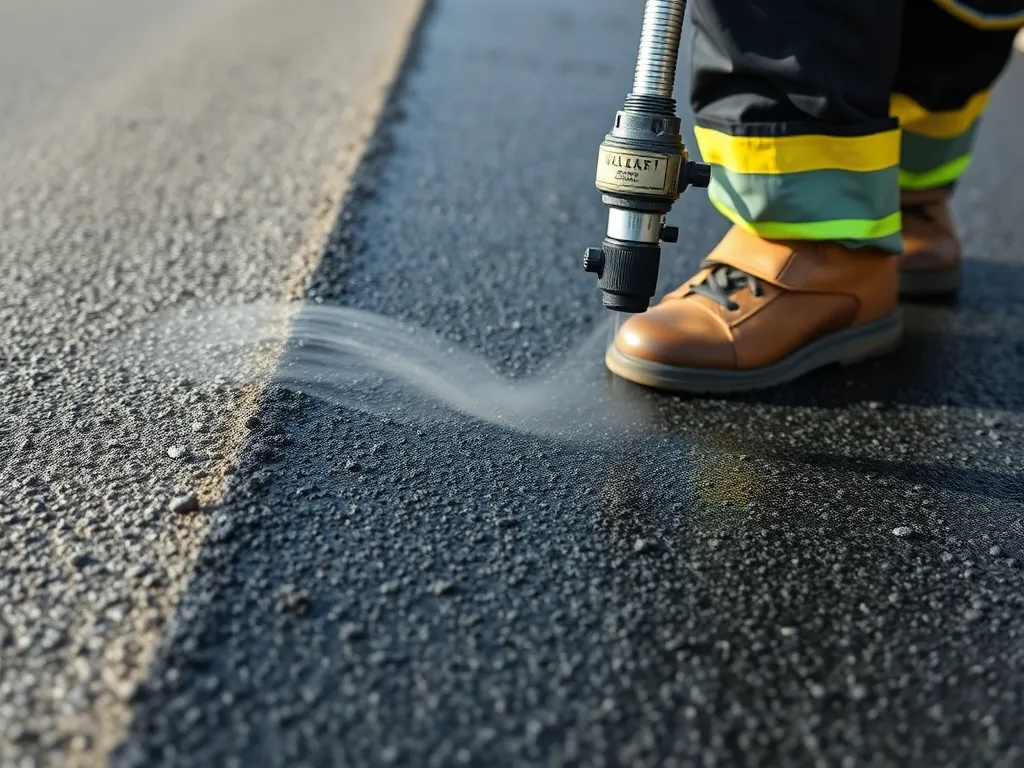
UV-resistant asphalt sealers act as a shield against solar damage. They combine advanced chemistry with material science to block harmful rays. The right mix of ingredients can extend pavement life by 3-5 years compared to unsealed surfaces.
Role Of Reflective Pigments and Additives
Reflective pigments like titanium dioxide (TiO₂) and zinc oxide form the first defense line. These particles bounce back 20-30% of UV radiation before it penetrates the asphalt surface. Additives such as carbon black absorb remaining rays, converting them into heat energy. Common UV-blocking agents include:
- Aluminum oxide particles (reflect 15-25% of UV-A/B)
- Paraffin waxes that fill micro-cracks
- Polymer-modified binders for flexible protection
Absorption Vs. Reflection Mechanisms
High-performance sealers use dual strategies. Reflective formulas work like mirrors, deflecting rays through light-colored pigments. Absorption-based sealants trap UV energy in carbon-rich materials, dispersing it as harmless heat. Reflective systems last longer in direct sunlight, while absorbers excel in shaded areas. Tests show acrylic polymer sealers reflect 40% more UV than coal tar alternatives.
Sealcoat Composition and UV Resistance
Premium UV-blocking asphalt sealers balance three elements: binders, fillers, and stabilizers. Acrylic polymers dominate the high-end market due to their 15-25% UV reflectance rates. Coal tar variants rely on natural pitch derivatives but face environmental restrictions. Critical ratios include:
- 18-22% solids content for proper film thickness
- 5-8% polymer loading in acrylic blends
- 1-3% anti-oxidant additives
Advanced formulas now incorporate nano-silica particles that scatter UV rays across multiple angles.
With these protective mechanisms in place, property owners face another critical choice: selecting the right type of UV-blocking sealer for their specific needs.
Also See: Hot Mix Asphalt Quality Assurance: Ensuring Quality
Types Of Uv-blocking Asphalt Sealers
Four main formulas dominate today’s market for UV protection in asphalt sealers. Each brings distinct traits to combat solar damage. Costs vary from $0.15 to $0.50 per sq.ft., with lifespans spanning 3-8 years.
Coal Tar-based Sealants
This traditional option contains polycyclic aromatic hydrocarbons (PAHs) for built-in UV absorption. Known for thick, coal-black finishes, it forms a rigid shield against solar rays.
UV Resistance Properties
Coal tar blocks 98% of UV-A/B rays, outperforming most rivals. Its natural carbon content slows oxidation, adding 2-3 years to pavement vs uncoated asphalt. Restrictions apply in 14 states due to runoff concerns.
Acrylic Polymer Sealers
Water-based formulas gain popularity through titanium dioxide additives. These sealants reflect up to 85% of UV radiation while maintaining color vibrancy.
Superior UV Protection Features
High-grade acrylics mix ceramic microspheres with UV stabilizers like benzotriazole. This combo cuts infrared heat by 30°F and stops surface fading. Expect 6-8 years of protection with proper application.
Asphalt Emulsions With UV Additives
Modified liquid asphalt blends integrate zinc oxide or carbon black. These components absorb UV wavelengths below 400 nm, shielding binder materials. Ideal for parking lots needing quick curing—sets in 4-6 hours.
Paraffin-enhanced Formulas
Wax-infused sealants create a hydrophobic barrier that deflects UV rays. Paraffin fills micro-cracks while blocking solar penetration. Apply at 0.25 gal/sq.yd for optimal results—thick coats risk tracking on shoes.
Matching UV-blocking asphalt sealers to local climate conditions impacts long-term performance. What factors dictate application methods? Our next section breaks down installation protocols.
Best Practices for Applying Uv-resistant Asphalt Sealers
Proper use of UV-blocking asphalt sealers boosts their power to guard against sun harm. Follow these steps to get the most from your sealer.
Optimal Application Timing After Installation
Wait 30 days after paving before using UV-resistant asphalt sealer. Fresh asphalt needs time to cure and let oils escape. Apply when temps stay above 50°F with dry skies for 24-48 hours. Midday sun speeds drying too fast – aim for early morning or late afternoon jobs.
Proper Spreading Thickness for Maximum Coverage
Spread sealant 1/8 inch thick for full UV protection. Use a squeegee or spray rig to hit 50-60 sq ft per gallon. Thin coats crack under UV rays. Thick layers take days to dry and may peel. Check depth with a thickness gauge during work.
Strategic Use Of Sand for Enhanced Durability
Mix 2-5 lbs of silica sand per gallon into asphalt sealer. Sand grains block UV rays from hitting the binder layer. They also add grip and slow wear from tires. Choose fine-grit sand (60-80 mesh) to avoid rough textures. Stir every 10 mins to stop settling.
Reapplication Frequency Guidelines
Reseal lots every 2 years for strong UV defense. Driveways need fresh coats every 3 years if using top-grade asphalt sealers with UV protection. Check for fading color or chalky spots – these signal UV damage has started. Hot climates may need yearly touch-ups on high-traffic zones.
Getting these steps right sets up your next choice: balancing upfront costs against long-term gains from UV-blocking asphalt sealers.
Evaluating Cost-effectiveness Of Uv-protected Sealers
Property owners often weigh short-term budgets against long-term pavement performance. Sun-blocking sealers add 15-30% to initial costs but slash repair frequency by up to 60% over 7 years.
Initial Investment Vs. Long-term Savings
A premium asphalt sealer UV resistant formula costs $0.18-$0.35 per square foot versus $0.10-$0.20 for basic options. This gap closes when considering extended service life: quality UV blocking asphalt sealers add 3-5 years between reapplications. Parking lots treated with reflective coatings show 42% fewer cracks after 5 years compared to untreated surfaces.
Price Comparison Between Sealer Types
| Sealer Type | Cost/Sq.Ft. | UV Protection Rating | Lifespan |
|---|---|---|---|
| Coal Tar | $0.12-$0.22 | Excellent | 3-4 Years |
| Acrylic Polymer | $0.25-$0.40 | Superior | 5-7 Years |
| Asphalt Emulsion | $0.15-$0.28 | Moderate | 2-3 Years |
Acrylics lead in UV defense but require higher upfront spending. Coal tar remains cost-effective for high-traffic areas, though 14 states restrict its application.
Factors Influencing Total Project Costs
Four elements impact budgets for asphalt sealers with UV protection:
- Surface Prep: Power washing adds $0.05-$0.08/sf but boosts adhesion by 70%
- Application Method: Spray systems consume 15% less material than squeegees
- Climate: Desert regions need 20% thicker coats to combat intense solar radiation
- Sealer Thickness: Optimal 1/8″ layer balances coverage and drying time
With cost factors mapped, the next layer examines ecological impacts of sun-defensive sealants.
Environmental Considerations for Uv-resistant Sealants
Eco-friendly Formulation Options
Green sealers now use plant-based mixes to block UV rays. These swaps cut coal tar use, which holds harsh chems (PAHs). Low-VOC blends with soy or clay keep air clean. Costs run 10-20% more but last 3-5 years. Look for EPA-safe marks like Green Seal.
Impact on Surrounding Vegetation
Coal tar can seep into soil near sealed lots. Tests show plants grow 50% less in these zones. Safe picks like acrylic or asphalt blends shield roots. Crews should spray 6+ feet from plants. Check soil pH post-job to keep greens strong.
Runoff Management Strategies
Rain can wash fresh sealer into streams. PAHs in runoff hurt fish and bugs. Use silt fences to block dirty flow. Pick sealers that soak in rain, not pool. Time jobs for dry spells (50°F+). Sweep up spills to keep drains clear.
Smart earth care leads to better picks—next up, key questions on UV-blocking sealers.
FAQs: UV Protection in Asphalt Sealers
What Are the Benefits Of UV Protection in Asphalt Sealers?
UV protection in asphalt sealers extends the lifespan of pavements, preserves aesthetic appeal, reduces the occurrence of cracks and oxidation, and offers significant cost savings through preventive maintenance. Sealers with UV protection resist sun damage effectively, keeping surfaces looking new and functional for longer periods.
Why is Sand Added to Asphalt Sealer?
Sand is added to asphalt sealer to enhance durability and provide better traction. It serves as a protective layer that blocks UV rays from reaching the binder underneath, while also reinforcing the surface against wear from vehicle traffic. The addition of sand ultimately helps to prolong the life of the sealer.
How Much Does Uv-resistant Asphalt Sealer Cost?
The cost of UV-resistant asphalt sealers typically ranges from $0.15 to $0.50 per square foot, depending on the type and brand. While premium sealers with advanced UV protection may have a higher initial cost, they can provide substantial savings in maintenance and repair over time.
What Weather Conditions Are Ideal for Sealcoating?
The best weather conditions for applying asphalt sealers include temperatures above 50°F and dry weather for at least 24-48 hours. Early morning or late afternoon applications are ideal to avoid rapid drying, which can lead to inferior bonding and coverage.
Coal Tar Vs. Acrylic: Which Offers Better UV Protection?
Coal tar-based sealants generally provide superior UV protection compared to acrylic sealers, as they can block up to 98% of UV rays. However, acrylic sealers are also effective, reflecting a substantial percentage of UV radiation and offering additional benefits like faster drying times and easier cleanup.
Why Do Some Contractors Question Driveway Sealing Value?
Some contractors may question the value of driveway sealing due to concerns about cost versus perceived benefits. They argue that in certain climates and conditions, sealers may degrade quickly or that the expense may not significantly extend the life of the pavement. However, many studies indicate that proper sealing can lead to long-term savings and durability.
How Does Asphalt React to UV Absorption?
Asphalt absorbs UV radiation, which leads to a breakdown of the binder materials through a process called photo-oxidation. This absorption results in decreased elasticity, color fading, and surface cracking. Proper UV-resistant sealers are designed to mitigate these effects, preserving asphalt integrity and appearance over time.
What Are the Pros/cons Of Different UV Protection Methods?
Each UV protection method has its advantages and disadvantages. Coal tar sealers offer excellent UV protection and longevity but may face environmental restrictions. Acrylic sealers are environmentally safer and easier to apply but may not provide as high levels of UV protection. Asphalt emulsions with UV additives represent a balance, providing protection at a moderate cost but may have varying performance based on application conditions.
Closing Thoughts
Applying UV protection in asphalt sealers is vital for extending the life and appearance of your surfaces. Quality sealers enhance durability, reduce cracking, and maintain the aesthetic appeal of driveways and parking lots. By investing in UV-resistant solutions, property owners can enjoy significant cost savings on maintenance and repairs.
Consider the options that best suit your needs, especially coal tar-based, acrylic polymer sealers, or emulsions with UV additives. Each type offers unique benefits for different applications. Adhering to best application practices will ensure the longevity of your investment.
For further insights on asphalt and construction, visit Asphalt Calculator USA. Our resources are designed to help you make informed decisions for your asphalt needs.
Additional Resources for You:
- Federal Highway Administration (FHWA) – Asphalt Pavement Technologies
- BioSealcoat® Sustainable Asphalt Sealer | Aexcel Corp.
- The 5 Best Asphalt Driveway Sealers in 2024 – Surface Solutions Blog
- Protect Asphalt with Seal Coating – Essential Tips | Brothers Paving
- Will Sealing a Parking Lot Protect it from UV Rays? – Asphalt Sealcoating