The Science Behind Asphalt Compaction: What Makes Roads Last?
Published on: April 11, 2026 | Last Updated: April 14, 2025
Written By: George Voss
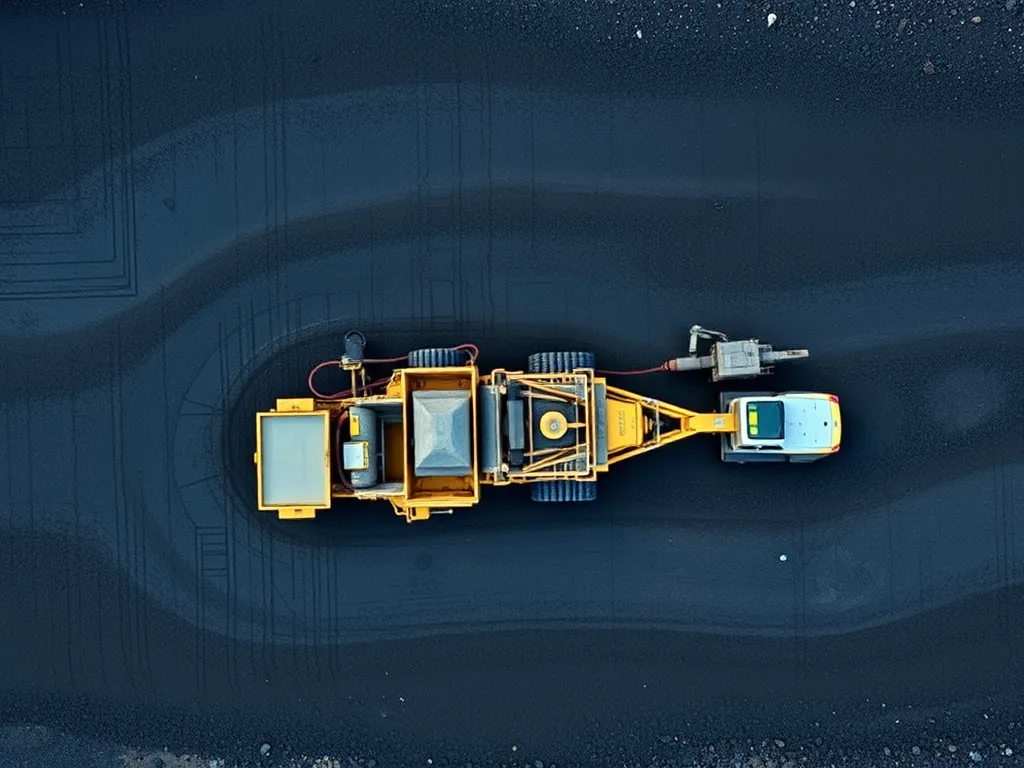
Asphalt compaction is the process of compressing hot asphalt mix using heavy rollers to remove air gaps and create dense, durable pavement. This transforms loose aggregate and liquid asphalt binder into a solid surface through particle rearrangement and viscoplasticity (a material’s ability to flow under heat). The science focuses on achieving 93-97% density targets while balancing temperature, material properties, and equipment forces.
This article breaks down asphalt compaction like a road engineer. You’ll learn how vibratory rollers use 1,500-3,000 vibrations per minute to settle materials. We’ll explain why mix temperatures must stay above 275°F during rolling. See how nuclear density gauges measure compaction quality in real time. Discover new tech like infrared thermal scanners that track heat loss. Get actionable data on roller passes, speed limits, and calculator tools for project planning.
Fundamental Principles Of Asphalt Compaction
Successful asphalt compaction relies on precise interactions between material properties and mechanical forces. These principles determine pavement density, strength, and longevity.
Core Concepts in Asphalt Compaction Theory
Effective compaction requires balancing three factors: material workability, energy input, and temperature control. Deviations in any factor can create weak spots or premature pavement failure.
Role of Viscoplasticity in Asphalt Behavior
Viscoplasticity describes asphalt’s dual response to stress – flowing like a liquid under heat while maintaining solid-like structure. At 275-325°F, the binder (typically PG 64-22) becomes less viscous, allowing aggregate particles to reposition under roller pressure. Cool below 185°F, and the mix stiffens rapidly, locking particles in place.
Particle Movement and Rearrangement During Compaction
Aggregates shift through two phases: initial repositioning under static weight, followed by fine-tuning through vibratory forces. Angular crushed stone achieves 12-18% better interlock than rounded gravel. Optimal gradation ensures smaller particles fill voids between larger ones, achieving 93-97% density targets.
Impact of Viscosity on Compaction Efficiency
Binder viscosity directly affects compaction energy needs. At 300°F, viscosity drops to 150-300 centipoise (cP), requiring 2-4 vibratory passes. Higher viscosity mixes (500+ cP) demand 6-8 passes, increasing fuel costs by $15-$25 per ton. Temperature drops of 15°F can double viscosity, cutting workability windows by 30%.
Air Void Reduction Mechanisms
Proper compaction squeezes air voids from 20-25% after placement to 3-5% final content. Roller vibration frequencies between 25-40 Hz create resonance in particle layers, forcing trapped air upward. Static pressure then seals surface voids. Each 1% air void reduction boosts load-bearing capacity by 9-12%.
Mastering these scientific principles sets the stage for selecting proper compaction equipment. The right machinery converts theory into durable pavement.
Essential Equipment for Asphalt Compaction
Proper compaction relies on selecting the right tools. Equipment choice directly impacts air void reduction, density targets, and pavement longevity. Modern compactors combine mechanical force with advanced monitoring to achieve 93-97% density goals.
Types Of Asphalt Compactors
Three primary roller types dominate asphalt compaction: vibratory, static, and pneumatic. Each applies distinct forces to rearrange aggregate particles and bind bitumen.
Vibratory Rollers: Science of Vibration Frequency
Vibratory rollers use eccentric weights rotating at 1,500-3,000 vibrations per minute (vpm). High-frequency vibrations (25-40 Hz) reduce friction between particles, enabling tighter packing. Operators adjust frequency based on lift thickness: 30 Hz for thin layers, 25 Hz for thick bases.
| Type | Contact Pressure | Best For |
|---|---|---|
| Static Steel-wheel | 300-400 psi | Final sealing passes |
| Pneumatic | 60-120 psi | Intermediate kneading |
Static Rollers vs. Pneumatic Rollers
Static steel-wheel rollers rely on mass (8-20 tons) to compress material. Pneumatic rollers use rubber tires that flex, creating 8-12 psi kneading action. The latter excel at closing surface voids without crushing aggregate.
Specialized Compaction Technologies
New systems integrate sensors and thermal imaging to optimize density in real time.
Infrared Thermal Profiling Systems
Infrared cameras map surface temperatures every 10 feet. Maintaining 275-300°F ensures proper particle mobility. Projects using thermal profiling report 15% fewer cold joints.
Intelligent Compaction Systems
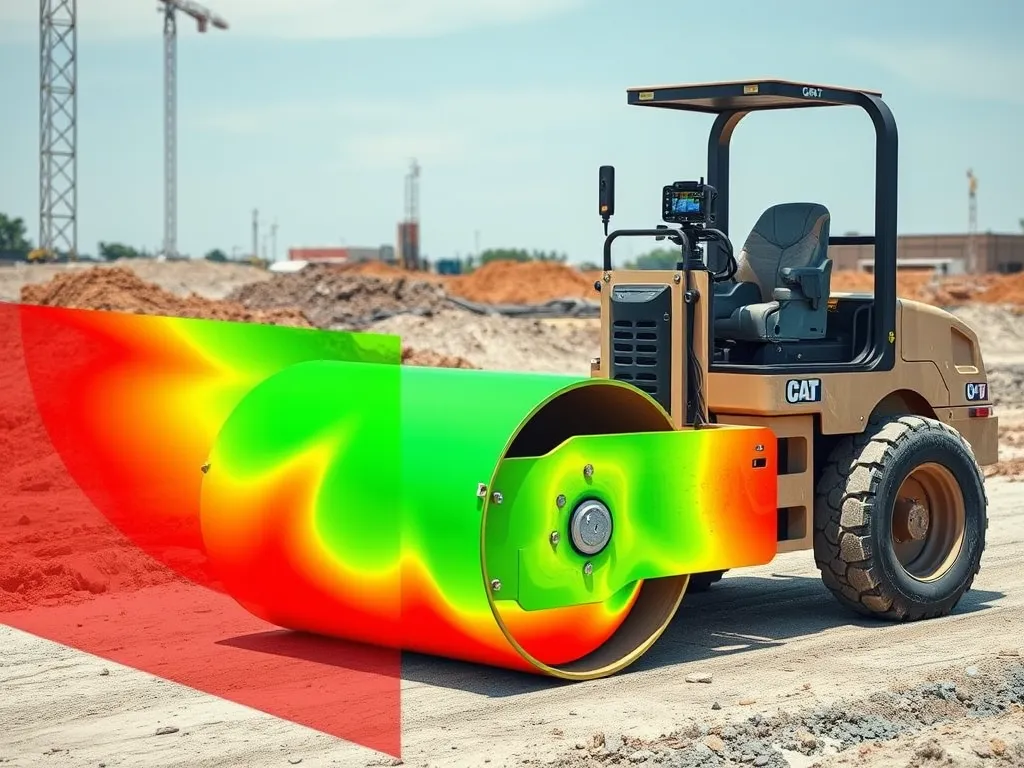
GPS-equipped rollers with accelerometers measure stiffness changes. Operators view color-coded maps showing under-compacted zones (red) versus达标 areas (green). These systems cut pass counts by 20% while improving uniformity.
With equipment setting the stage, achieving target density hinges on managing temperature gradients and mix properties—key factors we’ll explore next.
Critical Factors Influencing Compaction Quality
Successful asphalt compaction relies on precise control of three key elements: thermal conditions, equipment use, and material composition. Each factor directly affects pavement density and long-term performance.
Temperature Management Strategies
Heat acts as the engine driving compaction efficiency. Asphalt loses 3-5°F per minute during placement, requiring strategic timing for roller operations. Thermal segregation beyond 25°F differentials creates weak zones prone to cracking.
Optimal Temperature Ranges for Different Mix Designs
- PG 64-22 binder mixes: 275-300°F (typical for highways)
- Stone Matrix Asphalt (SMA): 305-330°F (needs higher heat for stone-on-stone contact)
- Warm-mix additives: 225-250°F (allows lower temps without sacrificing density)
Roller Operation Parameters
Modern vibratory rollers apply 2,500-5,500 pounds of centrifugal force, but smart operation trumps raw power. Three variables dictate outcomes:
Speed Control and Pass Count Optimization
- 3-5 mph maximum roller speed
- 3-8 passes per lane (varies with lift thickness)
- Over-compaction alert: Density decreases after 10+ passes
Vibration Amplitude Adjustments
- High amplitude (0.04-0.06 inches) for base layers
- Low amplitude (0.02-0.03 inches) for surface courses
- Frequency range: 1,500-3,000 vibrations per minute
Mix Design Considerations
Material science dictates compaction limits before crews reach the job site. The 2017 NCHRP Report 873 revealed gradation and binder content account for 62% of achievable density potential.
Aggregate Gradation Effects
- Dense-graded mixes compact to 5-8% air voids
- Open-graded mixes target 15-20% air voids
- #57 stone bases require 92% modified Proctor density
Binder Content Relationships
- 5-6% binder: Standard surface mixes
- 6.5-7.5% binder: High-RAP mixes
- 0.1% binder increase = 0.3% density gain (within optimal ranges)
Mastering these variables sets the stage for verifying results through field testing methods.
Also See: How to Get Asphalt Out Of Clothes: Quick Tips
Asphalt Compaction Testing Methods
Testing methods prove asphalt meets strength needs. They check if rollers create tight, long-lasting road surfaces. Teams use field tools and lab checks to verify density targets.
Density Measurement Techniques
Density tests show how well air voids get pressed out. Two main methods exist: nuclear gauges and non-nuclear tools. Both aim to hit the sweet spot between rock-solid and too brittle.
Nuclear Density Gauge Operation
Nuclear gauges shoot gamma rays into hot asphalt. These rays bounce back weaker if density is high. Operators get instant reads (lbs/ft³) without breaking the road surface. Safety gear is needed due to low-level radiation risks.
Non-Nuclear Testing Alternatives
Electric gauges use radio waves to track density changes. Microwave sensors measure how waves slow in dense mix. These options avoid radiation but may need more calibration. Best for sites near schools or homes.
Quality Control Standards
Road crews follow strict rules from ASTM and AASHTO. These standards keep roads from failing early. Miss the mark, and cracks or ruts show up fast.
Target Compaction Percentages (93-97% Typical)
93% density lets water seep in. 97% risks cracks from traffic stress. Most states demand 95% ±2% for highways. Warm mix asphalt may need 1-2% higher targets than hot mix.
Core Sampling Procedures
Drills pull 6-inch-wide plugs from cooled pavement. Labs bake cores to burn off binder, then weigh dry rocks. ASTM D2950 rules say test 1 core per 500 tons placed. Results take hours but give exact void counts.
Getting density right sets up roads for their next challenge – beating weather swings while carrying heavy loads. Next, we’ll see how temperature shifts during compaction change the game.
Environmental Considerations in Compaction
Hot mix asphalt emits fumes and uses energy during placement. Smart methods cut harm while keeping roads strong.
Temperature Loss Prevention
Heat loss during compaction makes the mix harder to work. Teams must act fast before the binder cools below 185°F. Thick lifts hold heat longer than thin ones.
Wind and Ambient Temperature Effects
Wind speeds over 10 mph cool asphalt 30% faster. Cold air below 50°F steals heat from the mat. Crews use tarps or adjust work hours to fight this. Infrared scans spot cold zones needing extra rolls.
Energy Efficiency Improvements
New rollers use 15% less fuel than models from 2010. Gear like Tier 4 Final engines cuts fumes by half. Smart tech matches roller power to job needs, wasting less energy.
Fuel Consumption Optimization
Each gallon of diesel fuels 2-3 hours of rolling. Tracking idle time via GPS saves 1-2 gallons daily. Proper tire pressure boosts fuel use by 8%. Hybrid rollers blend electric and diesel for steep sites.
Green methods now shape how crews plan jobs. Next, tools that turn science into real-world results.
Practical Application Tools
Turning theory into real-world results requires precise tools. Modern paving projects rely on specialized software to optimize the compaction process while meeting project specs. These digital solutions bridge the gap between lab research and field execution.
Using Asphalt Compaction Calculators
Compaction calculators translate material properties into actionable data. By simulating how mixes behave under different conditions, they guide roller patterns, temperature windows, and equipment choices. Most systems combine soil mechanics principles with viscoplastic behavior models specific to hot-mix asphalt.
Input Parameters and Formula Applications
Operators input six key variables: lift thickness, mix temperature, target density, roller type, base stiffness, and aggregate gradation. The calculator processes these using modified Proctor equations or Marshall method derivatives. For Superpave mixes, the gyratory compaction index often determines optimal force ranges between 2,800-3,400 psi.
Critical outputs include required compactive effort (measured in kN-m/m³) and minimum roller weight. A PG 64-22 binder mix at 275°F might need three vibratory passes followed by two static, while stone-matrix asphalt demands higher frequencies above 4,000 vpm.
Yield Calculations for Project Planning
Accurate yield predictions prevent material shortages or waste. Calculators determine cubic yards needed based on compacted thickness versus loose lift volume—typically showing 12-15% reduction during densification. For 10,000 sq ft of roadway with 3-inch compacted depth, expect 92.6 compacted cubic yards (1,850 tons at 145 lb/ft³).
Advanced systems factor in cooling rates, estimating window times before mix temperatures drop below 185°F. This prevents cold spots where density falls under 93%—the threshold for premature raveling.
With compaction quality directly tied to pavement life, these tools help teams hit 95-97% density targets consistently. Up next: Common questions when putting these methods into practice.
Frequently Asked Questions
How Does Asphalt Compaction Equipment Work?
Asphalt compaction equipment, such as vibratory and static rollers, compresses hot asphalt mix to remove air voids and achieve a dense, solid surface. The mechanical forces exerted by these machines, along with their operational parameters like speed and vibration frequency, play a critical role in the effectiveness of compaction.
What Defines Proper Asphalt Compaction?
Proper asphalt compaction is defined by achieving a target density of 93-97%, which is crucial for ensuring the longevity and durability of the pavement. This involves careful monitoring of temperature, material characteristics, and the methodologies applied during compaction.
How Many Roller Passes Are Typically Required?
The number of roller passes required for optimal compaction generally ranges from 3 to 8 passes, depending on the material’s lift thickness and type. Exceeding 10 passes can lead to over-compaction, which may compromise the asphalt’s structural integrity.
What Are Key Testing Methods for Compaction Quality?
Key testing methods for assessing compaction quality include nuclear density gauge measurements and non-nuclear density testing. These methods help ensure that the asphalt has reached the required density and the specified air void content within the pavement.
How to Use an Asphalt Compaction Calculator Effectively?
To use an asphalt compaction calculator effectively, operators should input critical parameters such as lift thickness, current mix temperature, target density, roller type, and aggregate gradation. The calculator then provides data on required compactive effort and minimum roller weight, guiding the compaction process.
Closing Thoughts
Understanding the science behind asphalt compaction is vital for achieving high-quality, durable surfaces. Proper compaction ensures optimal density and minimizes air voids, enhancing longevity and performance. Factors like temperature, equipment choice, and mix design play significant roles in compaction effectiveness.
The interplay between viscoplastic properties and particle movement highlights the complexity of asphalt behavior during compaction. With the right tools and techniques, including advanced compactors and testing methods, you can achieve superior results.
For further insights into asphalt compaction and to calculate your project needs, check out Asphalt Calculator USA.
Useful References for You:
- Kett, I. (1999). Asphalt Materials and Mix Design Manual. Oxford: Elsevier Science.
- Comparative study of asphalt concrete laboratory compaction methods to simulate field compaction – ScienceDirect
- Compaction – Pavement Interactive
- How to Compact Asphalt Pavements | For Construction Pros
- Compaction: The Key to Asphalt Pavement Performance | World of Asphalt