
Mastering Asphalt Compaction: Key Methods for Long-lasting Roads
Published on: April 21, 2026 | Last Updated: April 14, 2025
Written By: George Voss
Asphalt compaction compresses hot mix asphalt using rollers to remove air pockets, creating a dense surface that resists wear. This process requires precise temperature control (typically 275-325°F for initial rolling) and equipment like vibratory or pneumatic rollers. Proper compaction achieves 95-98% density, preventing water damage, cracks, and extending pavement life by 5-10 years. Under-compaction leaves air voids that weaken the structure, while over-compaction crushes aggregates, leading to surface cracks.
This guide breaks down asphalt compaction into actionable steps. Learn how to choose rollers (vibratory vs. pneumatic), apply rolling patterns like cross-hatch or spiral, and monitor mix temperature. Discover solutions for common issues like rutting or uneven density. We’ll also cover recycled asphalt techniques, emission-reduction tips, and tools like compaction calculators to hit target specs efficiently.
What is Asphalt Compaction?
Asphalt compaction is the process of compressing fresh-laid hot mix asphalt (HMA) to remove trapped air voids. This step bonds aggregates like crushed stone, sand, or gravel with bitumen binders into dense, unified pavement. Properly compacted surfaces reach 95-98% density relative to lab-tested maximum specific gravity. Without sufficient force applied during rolling, the mix cools with excess voids, weakening structural integrity.
The goal is achieving optimal interlock between particles while bitumen remains viscous. Vibratory rollers, plate compactors, or pneumatic rollers apply pressure through static weight combined with vibratory force. This force rearranges aggregate positions, filling gaps with smaller particles. Final density prevents water infiltration, rutting, or premature cracking under traffic loads.
Timing matters. Compaction must start when HMA temperatures stay between 275°F and 200°F for standard mixes. Cooler mixes resist particle movement, leading to poor density. Warmer mixes allow smoother particle rearrangement but demand rapid work before thermal loss. Temperature monitoring ensures rollers operate within the “compaction window” specific to each mix design.
Getting this right sets the stage for long-lasting roads. Up next, we’ll explore why precise compaction isn’t just beneficial—it’s non-negotiable for pavement performance.
Importance Of Effective Asphalt Compaction
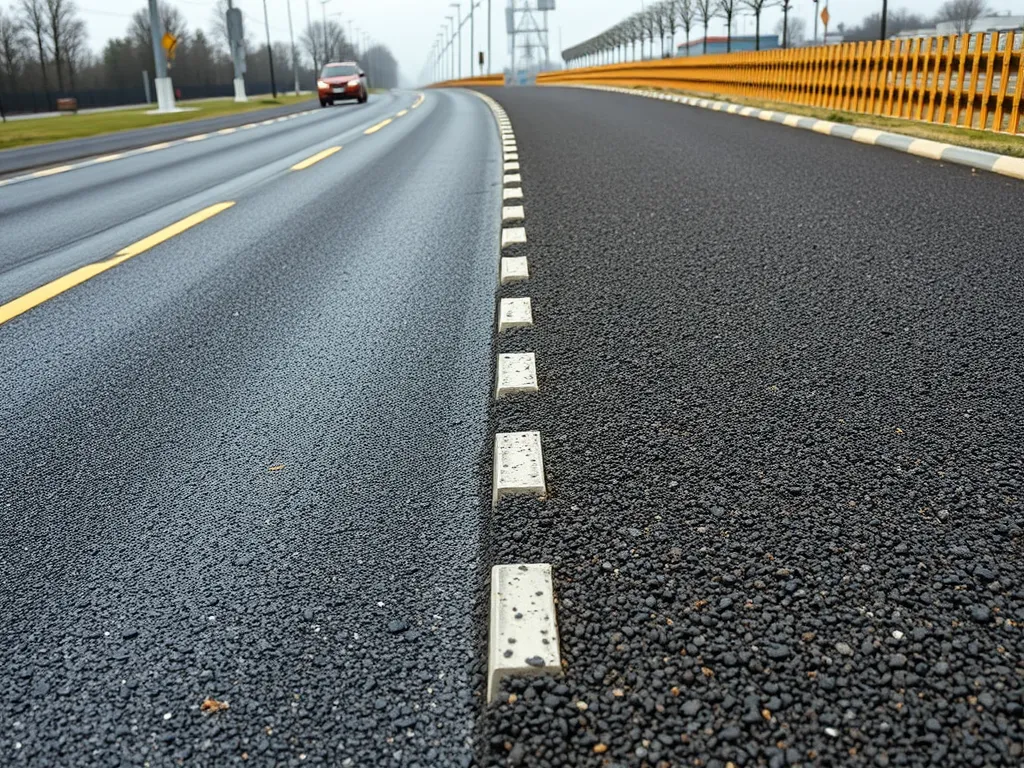
Proper asphalt compaction transforms loose aggregate-bitumen mix into dense pavement. Without it, roads crack prematurely, rut under traffic, and drain poorly. Achieving 95-98% density locks particles together, creating structural integrity that lasts decades.
Risks Of Over-compaction and Under-compaction
Under-compacted asphalt (below 92% density) leaves air voids. Water seeps in, freezes, and expands—causing potholes or raveling. Roads degrade 3x faster. Over-compaction crushes aggregates, stripping bitumen coating. This creates brittle surfaces prone to thermal cracks at ¼-inch widths. Both scenarios slash pavement lifespan from 15-30 years to under 5 in extreme cases.
Benefits Of Proper Compaction
Correctly compacted asphalt resists deformation under 18,000-pound truck axles. Smooth surfaces reduce tire noise by 5 decibels compared to poorly compacted lanes. Projects save up to 25% on maintenance costs over 20 years. Properly sealed surfaces also repel water, cutting drainage issues by 40% in rainy climates. Mixes with PG 64-22 binders compacted at 290°F achieve optimal particle alignment for load distribution.
Mastering these asphalt compaction techniques ensures pavements withstand weather, weight, and time. Next, let’s break down the exact steps to hit target density rates without guesswork.
Step-by-step Process for Proper Asphalt Compaction
Effective asphalt compaction demands precise execution. Follow these steps to achieve 95-98% density and long-lasting pavement.
Preparation Of the Base Layer
A stable base prevents shifting and cracking. Start by grading the subgrade to a 2% slope for drainage. Compact soil to 90% Proctor density using a vibratory plate compactor.
What to Put Under Asphalt (Base Materials)
- Crushed stone (Class 5 aggregate): 4-6 inch layer with 1.5-2.5 tons per cubic yard density
- Gravel (3/4″ minus): Compacted to 6-8 inches for heavy-traffic areas
- Geotextile fabric: Installed over weak soils to prevent mixing
Test base stability with a nuclear density gauge. Ensure less than 0.1-inch deflection under a 10-ton roller pass.
Asphalt Placement and Temperature Control
Maintain mix temperatures between 275°F and 325°F during laydown. Use infrared thermometers to monitor thermal consistency. Place lifts 2-4 inches thick – thicker layers require higher roller weights (10-12 tons).
Speed matters: Paver screeds should move at 10-20 feet per minute. Avoid stopping mid-pour to prevent thermal segregation. For cold-weather paving (below 50°F), increase mix temp by 25°F and use insulating blankets.
Compaction Equipment Setup and Configuration
Choose rollers based on mix type and lift thickness:
- Vibratory steel-wheel rollers: Set amplitude to 0.02-0.08 inches and frequency to 1500-3000 VPM
- Pneumatic rollers: Maintain 85-100 psi tire pressure for 2-inch lifts
- Sheepsfoot rollers: Use 30-40 lb/cm² pressure for thick base layers
Adjust equipment daily: Grease bearings, check drum alignment, and calibrate temperature sensors. For edges, use 200-lb plate compactors at 3000-6000 blows per minute.
Mastering these steps sets the stage for success. Next, we’ll break down the specific tools needed to execute these techniques flawlessly.
Also See: How to Finance an Asphalt Driveway: Smart Tips
Essential Equipment for Asphalt Compaction
Choosing the right tools ensures maximum density and pavement longevity. Each machine serves distinct roles in achieving 95-98% density targets.
Vibratory Rollers
Vibratory rollers apply 1,500-3,000 vibrations per minute (VPM) combined with static weight (10-20 tons). These machines excel at compacting granular base layers and asphalt mixes with ¾” aggregates. Adjust frequency settings between 25-40 Hz based on lift thickness – thinner layers need higher frequencies. Avoid overworking areas to prevent aggregate breakdown.
Pneumatic Rollers
Pneumatic rollers use 8-12 rubber-tired wheels (inflated to 80-100 psi) for kneading action. Ideal for intermediate compaction of surface courses, they eliminate roller marks and seal micro-cracks. Deploy them after vibratory rollers on mixes with PG 64-22 binders. Keep tire temperatures within 50-70°F to maintain consistent contact pressure.
Padfoot/sheepsfoot Rollers
Padfoot rollers generate 300-400 psi ground contact pressure through rectangular or round protrusions. Use them for subgrade prep or cold recycled asphalt (RAP) with high clay content. Operate at 3-6 mph to prevent soil displacement. For RAP projects, pair with 2% asphalt emulsion to stabilize materials before final rolling.
Hand Compaction Tools for Edges and Joints
Plate compactors (3-5 HP) and jumping jacks tackle tight spaces. Apply 3-5 passes along joints using 130-175°F asphalt temps to prevent voids. For repair patches, use gas-powered tampers with 1,000-1,500 lb force. Edge rolling boosts density by 5-7% compared to untreated areas.
Equipment alone won’t guarantee results. Let’s examine how temperature, mix design, and lift thickness determine your compaction strategy.
Key Factors Influencing Compaction Success
Three core elements determine how well asphalt pavement achieves target density. Ignoring any of these can lead to premature cracks, rutting, or moisture damage.
Mix Temperature and Timing
Asphalt must reach 275-325°F during placement to allow particles to bond. Compaction starts within 5 minutes of laying the mat. Below 175°F, the mix hardens, making full density impossible. For warm-mix asphalt (WMA), this thermal window extends to 15-20 minutes due to additives like Evotherm.
Lift Thickness and Aggregate Gradation
A 2-4 inch lift thickness balances heat retention with compression depth. Thicker lifts risk cold spots below 3 inches. Aggregate size matters: dense-graded mixes (½” stone) compact at 8-10 roller passes, while open-graded (¾” stone) need 6-8. Fine-graded stone matrix asphalt (SMA) requires steel-wheel rollers at 3-5 mph for stone-on-stone locking.
Chemical Composition Of Asphalt Mix
Polymer-modified binders (PG 76-22) stiffen mixes, demanding higher compaction temps (300-330°F). Rubberized asphalt needs pneumatic rollers to handle elastic particles. High RAP (recycled asphalt pavement) content above 30% may reduce workability, requiring 2% more passes or tack coats between layers.
With these factors dialed in, focus shifts to the science of roller movements. Next: how specific rolling patterns lock in density without tearing the mat.
Asphalt Rolling Patterns and Techniques
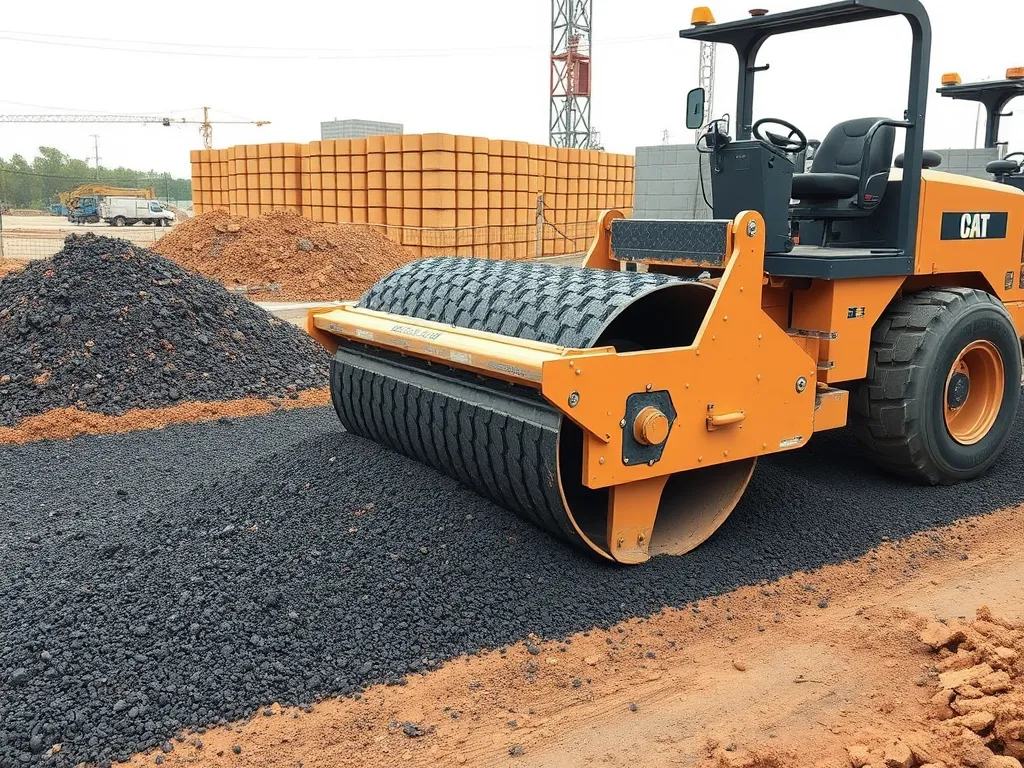
Proper rolling patterns directly influence pavement density and longevity. Contractors use specialized techniques to eliminate air voids while preventing aggregate damage. Let’s break down the most effective methods.
Dual-direction Passes
Rollers operate in forward and reverse directions, overlapping each pass by 6-12 inches. This eliminates “cold spots” caused by uneven pressure. Dual-direction rolling works best with vibratory rollers set to 1,500-3,000 vibrations per minute (VPM). Maintain roller angles below 15° to avoid material displacement.
Hugging the Joint Technique
For longitudinal joints, position rollers 6 inches from the cold edge. Overlap fresh asphalt by 50% on each pass to bond layers. Pneumatic rollers excel here due to their kneading action. Keep mix temperatures above 275°F (135°C) during joint compaction to ensure adhesion.
Cross-hatch Rolling Pattern
Rollers make diagonal passes at 45° angles, creating a diamond-shaped pattern. This technique improves aggregate interlock in mixes with ½” to ¾” stone gradation. Cross-hatching increases density by 2-3% compared to straight-line rolling, critical for high-traffic zones.
Spiral and Sawtooth Patterns
Spiral patterns involve circular passes with decreasing radii, ideal for roundabouts or cul-de-sacs. Sawtooth patterns use zigzag motions for tight spaces like utility trenches. Both require reduced roller speeds – under 2 mph – to prevent tearing PG 64-22 binders.
How Rolling Patterns Impact Density
| Pattern | Density Increase | Best For |
|---|---|---|
| Dual-Direction | 92% → 95% | Base layers |
| Cross-Hatch | 95% → 97% | Surface courses |
| Sawtooth | 90% → 93% | Confined areas |
Proper pattern selection helps achieve 95-98% density targets per Superpave specifications. Measure results with nuclear density gauges or non-nuclear asphalt density meters.
Mastering these asphalt compaction techniques sets the foundation for optimizing temperature, passes, and equipment settings – key parameters we’ll explore next.
Optimizing Compaction Parameters
Fine-tuning key factors boosts asphalt density and pavement life. Focus on these core elements to hit target specs.
Number Of Passes Required
Rollers need 3-8 passes per layer based on lift thickness and roller type. Thin layers (1.5-2 inches) need fewer passes than thick layers (4+ inches). Too few passes leave air voids above 5%, causing cracks. Too many crush aggregates or push mix sideways. Track passes with GPS rollers to avoid gaps.
Using an Asphalt Rolling Temperature Chart
Roll within the mix’s “compaction window”—typically 280-325°F for hot mix. Below 225°F, binders harden, resisting density gains. Use infrared thermometers to check mat temps every 15 minutes. Cold spots need faster rolling or reheating. Charts link mix types (PG 64-22, SMA) to ideal temp bands.
Target Compaction Percentage (95-98% Density)
Aim for 95-98% of lab-measured maximum density. Nuclear gauges or coring tests verify results. At 95%, air voids stay under 8%, blocking water damage. Each 1% drop below 95% cuts pavement life by 10%. High-traffic roads need 98% to handle 18-wheeler loads.
Role Of Asphalt Compaction Calculators
Digital tools factor in mix type, lift depth, and temps to suggest roller settings. Input data like aggregate size (3/4” vs 1/2”) or binder grade (PG 76-28) for tailored advice. Some apps sync with rollers to adjust speed (2-5 mph) or vibration (1,500-3,500 VPM) in real time. This cuts guesswork and boosts accuracy by 15-20%.
With parameters locked in, focus shifts to field execution. Next, master rolling patterns that eliminate weak spots and seal the surface tight.
Best Practices for Effective Compaction
Master these core methods to boost pavement life and cut repair costs.
Track Heat While Rolling
Asphalt packs best between 275°F and 175°F. Use IR guns to spot cold zones. Below 175°F, the mix won’t bind well. Vibe rollers work best above 200°F. Stop when temps hit 140°F to avoid cracks.
Set Roller Speed and Pace
Keep rollers at 3-5 mph. Fast speeds skip weak spots. Slow rolls push the mix too hard. For thick lifts, use high vibe rates. Thin layers need static rolls to prevent tears. Match passes to mix type for full depth.
Fix Crushed Asphalt Right
Crushed asphalt (RAP) needs extra care. Mix steel and air-filled rollers. RAP may take 2-3 more passes. Add tack coats between layers to bind them. Spray water to stop mix from sticking to drums.
Smooth the Final Layer
Use static rolls last to erase marks. Make slow, tight passes. Check flatness with a straight edge. Aim for 95-98% density. Test cores to confirm no air gaps.
Even with top methods, issues like rutting can occur. Spotting them early keeps your pave job on track.
Troubleshooting Common Compaction Issues
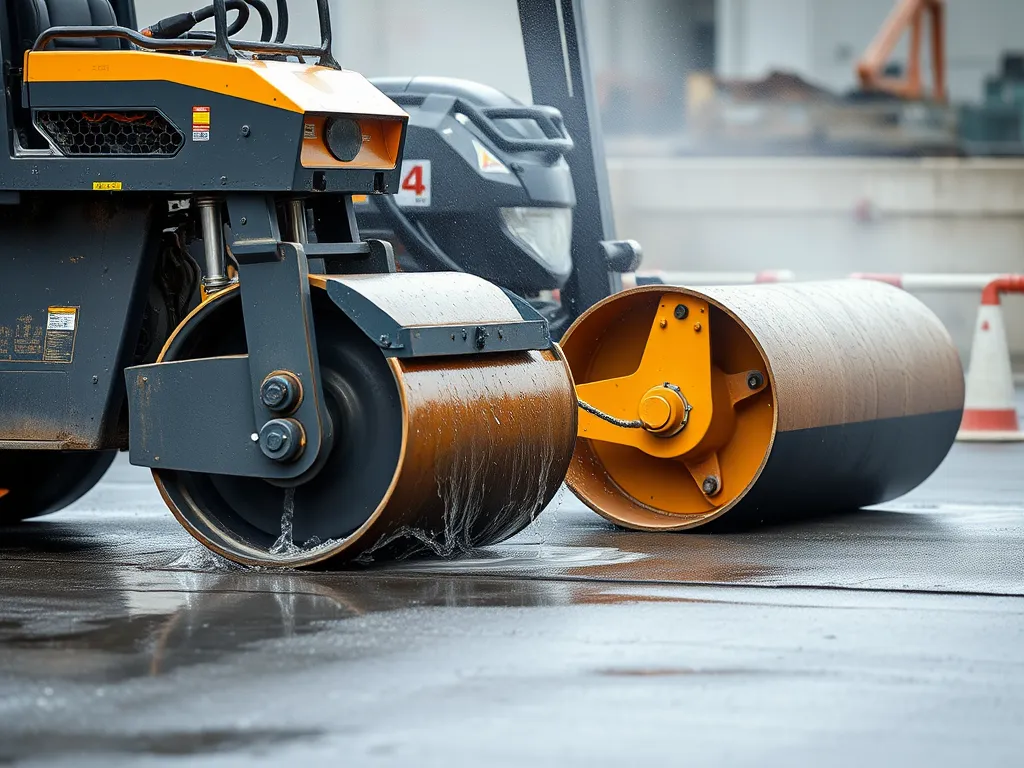
Even with precise asphalt compaction techniques, challenges can emerge during road construction. Identifying these problems early prevents costly repairs and extends pavement life.
Segregation and Rutting
Aggregate segregation occurs when coarse particles separate from finer materials, creating weak spots prone to rutting. This often stems from improper paver operation or mix handling. To fix it, verify the paver’s auger speed matches the delivery rate. Use vibratory rollers at 8-10 mph with 2,500-3,000 vibrations per minute for PG 64-22 binders. Maintain mix temperatures above 265°F during initial rolling to lock aggregates in place.
Shoving or Surface Deformation
Shoving appears as ripples or waves, typically caused by roller operators reversing too quickly on hot asphalt. Ensure rollers move forward continuously at 2-4 mph during breakdown passes. For mixes above 300°F, switch to pneumatic rollers set at 75-90 psi tire pressure. Adjust lift thickness to 3 inches max when using polymer-modified binders to prevent displacement.
Inconsistent Density Across the Pavement
Density variations exceeding 2% between test cores signal uneven compaction. Thermal segregation—cooler mix areas—is a common culprit. Map surface temperatures with infrared cameras, targeting zones below 225°F. Increase roller passes in those areas while maintaining a 95% overlap pattern. For base layers with >5% moisture content, delay compaction until optimal drying occurs.
Mastering these methods for asphalt compaction ensures long-term pavement performance. Next, let’s explore how environmental factors and recycled materials influence modern compaction strategies.
Environmental and Supplementary Considerations
Modern asphalt compaction balances performance with environmental responsibility. Let’s explore methods to minimize emissions and adapt techniques for recycled materials.
Reducing Emissions During Compaction
Diesel-powered rollers emit nitrogen oxides (NOx) and particulate matter (PM2.5). Contractors can cut these emissions by 15-20% using electric vibratory rollers or Tier 4 Final engines with advanced exhaust filters. Lowering mix temperatures to 250-275°F (121-135°C) reduces fuel consumption during compaction while maintaining workability with polymer-modified binders. Infrared thermography ensures uniform heat distribution, preventing energy waste from rework.
Recycled Asphalt Compaction Techniques
Recycled asphalt pavement (RAP) requires adjusted methods due to aged binder stiffness. Heat RAP mixes to 275-300°F (135-149°C) – 10-15°F higher than virgin asphalt – to activate binding agents. Apply tack coats at 0.05-0.07 gallons per square yard to improve layer adhesion. Use pneumatic rollers first to reorient RAP aggregates, followed by vibratory rollers at 1,500-2,400 vibrations per minute. Projects with 30% RAP content achieve 95-97% density when compacted within 8 minutes of placement.
Looking to refine your approach? The next section answers frequent queries about achieving flawless density results.
Frequently Asked Questions (FAQ)
How Do You Properly Compact Asphalt?
Step-by-Step Guidance
To properly compact asphalt, begin by ensuring the base layer is stable and adequately prepared. Lay down the asphalt mix at the correct temperature (between 275°F and 325°F) and promptly begin the compaction process using suitable rollers. Employ varying techniques based on the lift thickness and mix type, and check density continuously using nuclear gauges to achieve 95-98% compaction.
What is the Asphalt Compaction Formula?
Calculating Density and Air Voids
The asphalt compaction formula involves determining the maximum theoretical density of the mix, which is then used to calculate the field density and air voids. The formula for air voids (V) is: V = [(Gmm – Gt) / Gmm] x 100%, where Gmm is the maximum specific gravity and Gt is the theoretical specific gravity of the asphalt mix.
How Does Finish Rolling Differ From Initial Compaction?
Final Smoothing and Sealing
Finish rolling occurs after the initial compaction phase and focuses on smoothing the surface and sealing joints. While initial compaction emphasizes achieving density and removing air voids, finish rolling targets surface texture and aesthetics, ensuring the pavement is well-prepared for traffic and resilient against weather elements.
What Temperature is Optimal for Asphalt Compaction?
The optimal temperature for asphalt compaction typically ranges between 275°F and 325°F. This temperature range allows the asphalt to remain workable while ensuring proper bonding of the aggregates without risking premature cooling that could lead to density loss.
Can You Over-compact Asphalt?
Yes, over-compaction can occur and is detrimental to pavement quality. It crushes the asphalt aggregates, leading to stiffness and increased susceptibility to cracking and surface failures. Achieving the balance of proper compaction is essential for pavement longevity.
What Factors Affect Compaction Results?
Several factors can influence compaction results, including mix temperature, lift thickness, the type of aggregate used, roller speed, and the number of passes made. Environmental factors such as wind and ambient temperature can also affect the cooling rate of the asphalt mix during the compaction process.
How Frequently Should You Monitor Asphalt Temperature During Compaction?
It’s advisable to monitor asphalt temperature every 15 minutes during the compaction process. This helps ensure that the temperature stays within the optimal range and allows for timely adjustments in technique if cold spots are detected.
What is the Role Of an Asphalt Compaction Calculator?
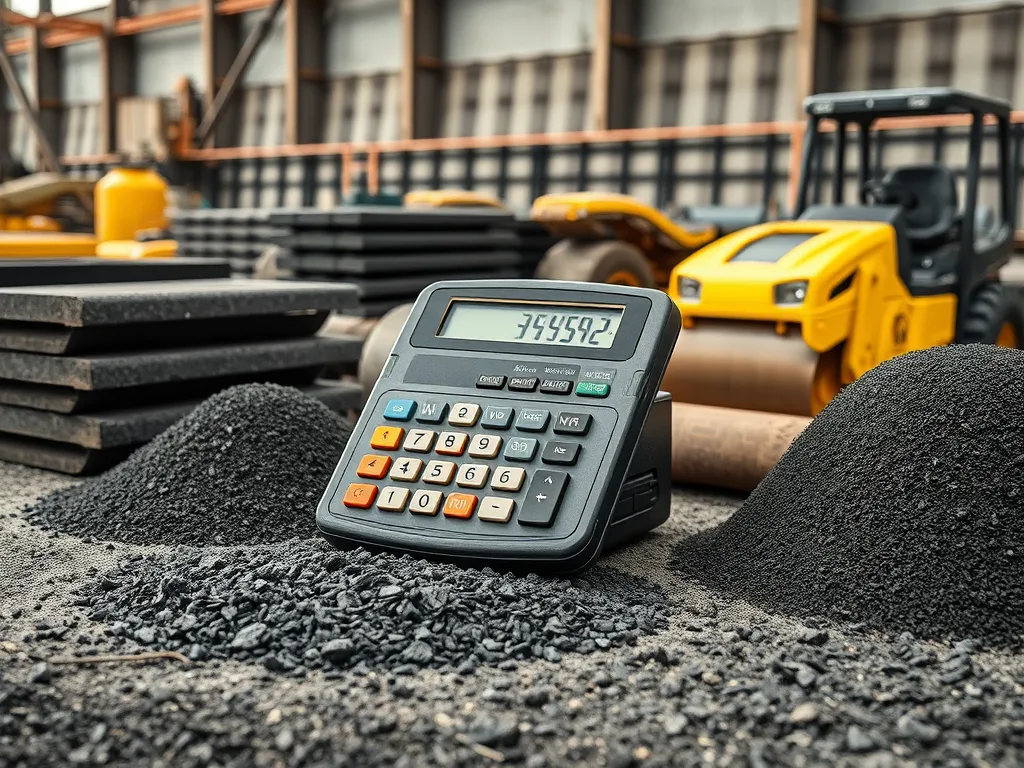
An asphalt compaction calculator helps estimate the required compaction parameters, including the number of passes, roller settings, and suitable temperature ranges based on the specific mix design. It simplifies the planning process and enhances the accuracy of achieving targeted density outcomes.
Closing Thoughts
Effective asphalt compaction is vital for creating strong, durable surfaces that can withstand traffic and environmental stressors. By utilizing the right techniques, tools, and parameters, you can achieve optimal compaction results. Monitor temperature, choose appropriate roller patterns, and adjust techniques to ensure a consistent and high-quality finish.
Remember that each project may require tailored approaches based on specific conditions, such as mix temperature and aggregate types. Troubleshooting common issues can also enhance overall performance and longevity of your asphalt surfaces.
For more in-depth guidance on asphalt compaction and calculators to aid in your projects, visit Asphalt Calculator USA.
Useful References for You:
- Huang, Y. H. (2004). Pavement Analysis and Design (2nd ed.). Upper Saddle River, NJ: Pearson/Prentice Hall.
- Factors affecting asphalt compaction – Asphalt magazine
- How to Achieve Optimum Compaction | For Construction Pros
- Why Is Compacting Asphalt an Important Step of Pavement Installation? | Bituminous Roadways Blog
- 4 Tips to Achieve Optimal Asphalt Compaction | World of Asphalt

