The Role Of Moisture in Asphalt Degradation: What You Need to Know
Published on: April 29, 2026 | Last Updated: April 14, 2025
Written By: George Voss
Moisture breaks down asphalt by seeping into its pores and cracks, weakening the bond between aggregates and bitumen—the sticky binder holding pavement together. Water triggers two main damage types: physical erosion from freeze-thaw cycles that expand cracks, and chemical stripping where moisture separates aggregates from binders. These processes create visible issues like potholes and hidden structural weaknesses that reduce pavement lifespan by 30-50% in wet climates.
This article explains how water infiltrates asphalt layers, identifies early warning signs like alligator cracking, and details prevention methods. You’ll learn about moisture susceptibility tests like the Modified Lottman Test (AASHTO T 283), cost-effective additives like hydrated lime (up to 2% mix weight), and why sealing cracks within 48 hours prevents 80% of water damage. We’ll also compare drainage solutions, from permeable asphalt (15-25% void spaces) to trench drains, and their impact on pavement longevity.
How Moisture Affects Asphalt Pavement Performance
Water breaks down asphalt through three key paths. Each weakens roads in unique ways, cutting pavement life by 30-50% in wet zones.
Mechanisms Of Moisture Damage in Asphalt
Porosity and Moisture Infiltration
Asphalt holds 5-8% air voids. Rain seeps into these gaps, pooling under the surface. Over weeks, this softens the base layer. High-traffic roads show this fast – 1 inch of rain can push 20 gallons into a 10×10 ft area.
Freeze-Thaw Cycle Impacts
Trapped water expands 9% when frozen. Daily temp swings (40°F to 20°F) crack binder bonds. After 5 freeze cycles, small splits grow into foot-long cracks. Frost heave lifts slabs 2-3 inches, creating gaps below.
Chemical Reactions with Asphalt Binders
Water strips bitumen from rock mix (stripping). Sulfates in rain speed this – pH under 5.5 eats binder glue. Tests show 15% bond loss after 60 days in wet settings. Polymer mods help, but costs rise $3-$5 per ton.
Immediate and Long-term Effects Of Water on Asphalt
Surface Erosion and Raveling
Fast flows peel off top layers. A 20 mph rain stream can wash 0.25″ of fines per year. Raveling starts as grit loss, then grows to golf ball-sized holes. Highways lose 12% skid grip yearly if not sealed.
Loss of Structural Integrity
Soaked bases lose 40% load strength. Trucks push ruts 1″ deep per 100k trips. Alligator cracks form when layers separate – 10+ cracks per sq yard means full rebuild. Costs jump 4x vs early fixes.
Watch for pooling water or faded spots – these hint at hidden harm. Next, we’ll map how to spot trouble signs before pavements fail.
Symptoms Of Moisture-induced Asphalt Degradation
Spotting asphalt water damage early stops minor flaws from growing into costly repairs. Look for both surface clues and hidden structural shifts that signal moisture asphalt degradation.
Visible Signs Of Water Damage
Rain, snow, or standing water leaves distinct marks on pavement. Cracks and potholes often point to asphalt moisture issues needing urgent action.
Cracking (Alligator, Longitudinal, Transverse)
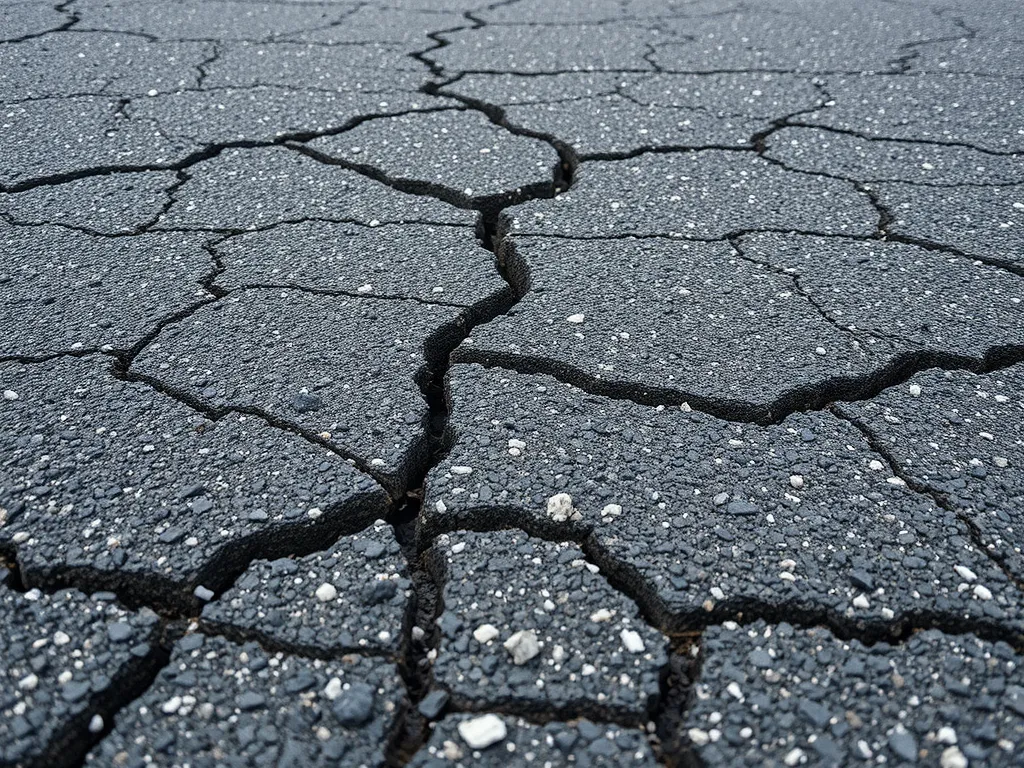
Alligator cracks form interlocking scales where moisture weakens sublayers. Longitudinal splits run parallel to traffic flow, while transverse cracks cut across lanes. All three types allow 40-60% more water infiltration than intact surfaces, speeding asphalt degradation moisture relation.
Potholes and Depressions
Potholes start as small voids under the surface. Asphalt moisture softens subgrade soil, causing slabs to collapse under vehicle loads. Depressions hold standing water, creating a cycle of worsening damage.
Hidden Structural Impacts
Not all moisture asphalt damage shows on top. Subsurface harm can slash pavement lifespan by half if ignored.
Subbase Weakening
Water-soaked subbases lose up to 70% of their load-bearing capacity. This leads to rutting—permanent grooves from repeated traffic—as layers compress. Frost heave in cold climates lifts slabs by 1-3 inches, fracturing bonds between asphalt courses.
Aggregate-Bitumen Bond Failure
Moisture strips bitumen from stone aggregates, a process called stripping. Tests show a 15-30% loss in binding strength when this occurs. Stripped pavements ravel, shedding stones and losing skid resistance.
Spotting these symptoms fast tracks fixes. Up next: how material choices and mix designs fight moisture asphalt deterioration.
Water attacks asphalt through distinct physical and chemical processes. These mechanisms determine how quickly pavements break down under wet conditions.
Asphalt Stripping: Causes and Consequences
Stripping occurs when water severs the bond between bitumen and aggregates. This adhesion failure starts at the microscopic level – water molecules displace binder coatings on stone surfaces. Heavy traffic or temperature swings accelerate the damage, causing visible potholes or loose gravel within 2-3 years. Stripped mixes lose 60-80% of their structural strength, requiring costly repairs.
Moisture Permeability in Different Asphalt Mixes
Not all asphalt resists water equally. Dense-graded surfaces let in 30% less water than open-graded mixes. Permeability rates range from 100-800 millidarcies based on material choices and compaction levels.
Role of Aggregate Gradation
Well-graded aggregates with 4-8% passing the #200 sieve create tight matrices. Angular crushed granite (<3% flat particles) interlocks better than rounded gravel, reducing water paths. Poorly graded mixes with excess fines (>10%) or gaps between stones increase permeability by 40%.
Impact of Binder Viscosity
High-viscosity binders like PG 76-22 (3,000 Poise at 60°C) resist water penetration better than standard PG 58-28 (1,000 Poise). Thin binders drain off aggregates 50% faster during rain exposure. Polymer-modified asphalt maintains adhesion under water 3-5x longer than unmodified mixes, adding $1.50-$2.00 per ton to material costs.
These material interactions explain why some pavements fail rapidly while others withstand decades of water exposure. Next, we’ll examine how engineers measure moisture resistance during mix design and quality control.
Also See: Evaluating the Life Cycle Of Asphalt Roads
Assessing Moisture Susceptibility in Asphalt
Engineers use advanced tests to measure how asphalt reacts to water exposure. These methods predict pavement performance in wet conditions while identifying mix weaknesses.
Standardized Testing Methods
Two industry tests dominate moisture resistance evaluation. Each simulates real-world water damage under controlled lab conditions.
Modified Lottman Test (AASHTO T 283)
This test subjects asphalt cores to vacuum saturation, freeze-thaw cycles, and 140°F water baths. It calculates tensile strength ratio (TSR) by comparing dry/wet sample strengths. Pavement mixes need ≥80% TSR to pass most DOT specifications. Failed mixes show visible stripping – aggregate surfaces lose bitumen adhesion.
Boiling Water Stripping Test
Aggregates coated with bitumen get boiled for 10 minutes. Technicians rate binder retention visually on a 0-100% scale. Values below 95% indicate poor adhesion. This rapid test helps screen aggregate-binder compatibility before mix design.
Factors Influencing Moisture Resistance
Mix composition and construction practices directly determine water damage risks. Two critical variables separate durable pavements from failure-prone ones.
Dust-to-Bitumen Ratio
Fines (particles <0.075mm) require precise balancing. A 0.6-1.2 ratio optimizes coating - enough dust to stiffen the binder but not starve aggregate surfaces. Excess fines create hydrophilic zones that attract water. Insufficient fines reduce mix stability.
Compaction Quality
Proper density minimizes air voids trapping water. Pavements compacted to 92-96% maximum theoretical density maintain 3-7% air voids. Below 92%, interconnected voids >8% let water penetrate deeper layers. Nuclear density gauges verify compaction during placement.
With test data and mix variables quantified, teams can implement targeted solutions to combat water-related failures. Next, we explore how advanced materials and maintenance block moisture intrusion.
Preventing and Mitigating Moisture Damage
Proactive measures make the difference between asphalt that fails in 5 years versus lasting 20+. These strategies target moisture asphalt degradation at multiple levels – from mix design to maintenance routines.
Design Strategies for Moisture-resistant Asphalt
Modern asphalt mixes now prioritize water resistance through material science innovations. Two key advancements dominate high-performance pavement design.
Anti-Stripping Additives
Liquid amines or hydrated lime (1-2% by weight) chemically modify asphalt cement to repel water. These additives boost aggregate-bitumen bond strength by 30-50% in ASTM D3625 tests, preventing stripping even at 95% humidity levels.
Polymer-Modified Binders
Styrene-butadiene-styrene (SBS) or ethylene-vinyl acetate (EVA) polymers create flexible asphalt cement with 60% lower moisture permeability. PG 76-22 graded binders withstand temperature swings from -22°F to 76°F without cracking – critical for freeze-thaw zones.
Maintenance Best Practices
Even superior asphalt needs vigilant care. These three tactics form the frontline defense against asphalt water damage.
Timely Crack Sealing
Seal 1/4″+ cracks within 48 hours using rubberized asphalt emulsions. Unsealed cracks let 12 gallons of water penetrate per linear foot annually – enough to erode subbases in 18 months.
Proper Drainage Systems
Slope pavements at 2% minimum grade. Install French drains with 4″ perforated PVC pipes at 6″ depth along edges. This system redirects 90% of surface water away from asphalt layers.
Sealcoating Applications
Coal-tar or asphalt-based sealants applied every 2-3 years reduce moisture infiltration by 70%. Properly sealed surfaces show 75% fewer potholes than unsealed ones after 10 freeze-thaw cycles.
While these methods significantly delay asphalt degradation moisture relation, environmental factors add new challenges. The next section explores sustainable approaches to balance pavement performance with ecological needs.
Environmental Considerations in Moisture Management
Balancing pavement performance with ecological responsibility requires strategies that address both drainage needs and material sustainability. Modern approaches prioritize systems that manage asphalt water damage while reducing environmental impact.
Sustainable Drainage Solutions
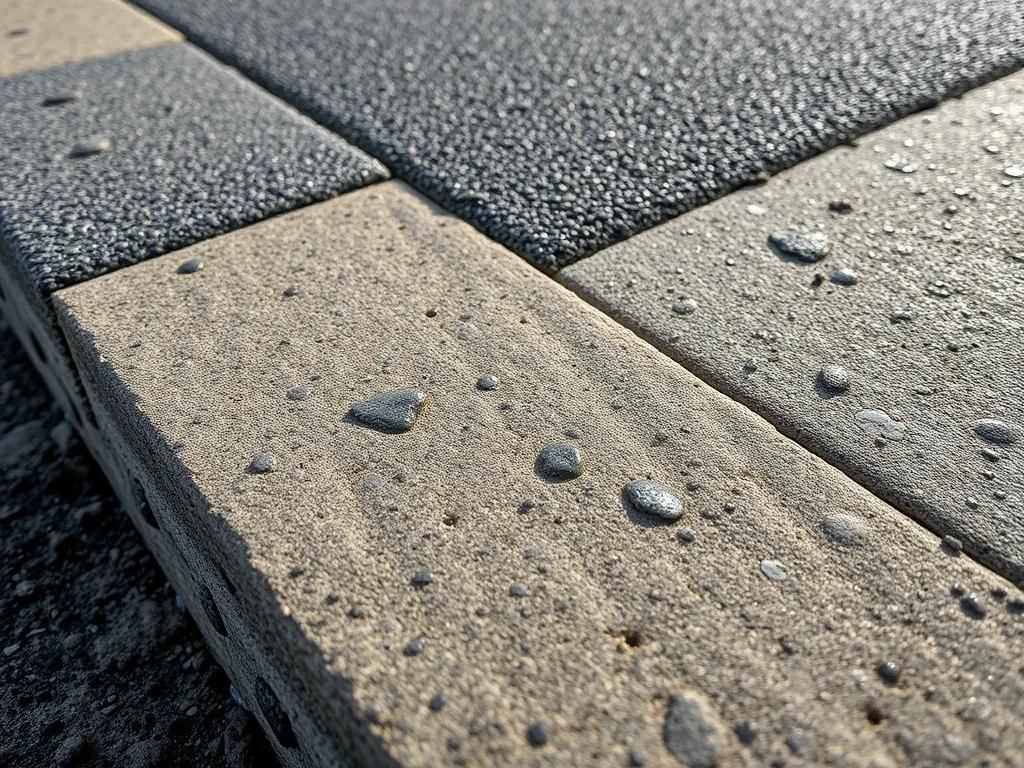
Permeable asphalt pavements cut standing water risks by letting rainfall pass through to the soil below. These mixes achieve infiltration rates of 100-200 gallons per hour, slashing stormwater runoff by 50-70% compared to traditional asphalt. The EPA recommends porous designs for parking lots and low-traffic roads to prevent asphalt degradation moisture issues.
Green infrastructure complements these systems. Bioswales with native plants filter pollutants, while rain gardens absorb excess water. Combined with proper slope grading (1-2% minimum), these methods keep moisture away from pavement layers. Cities like Seattle report 30% fewer potholes in areas using permeable asphalt with integrated drainage.
Recycled Asphalt Moisture Resistance
Recycled asphalt pavement (RAP) performs better against moisture damage than many assume. Studies show properly processed RAP mixes with 30-40% reclaimed material meet or exceed AASHTO T 283 standards when paired with polymer-modified binders. Key factors:
| Factor | Impact on Moisture Resistance |
|---|---|
| RAP crushing size | Particles under 1/2″ bond better with new bitumen |
| Additive blending | 1-2% hydrated lime reduces stripping by 60% |
| Compaction | 96% density prevents water pathways |
While RAP costs $18-$25 per ton versus $45-$60 for virgin mix, its success relies on strict quality control during processing. Facilities using infrared heaters to dry RAP report 12% higher moisture resistance in lab tests.
These eco-focused methods prove effective, but how do they perform over decades? We answer top queries about long-term results next.

Frequently Asked Questions (FAQ)
Can Asphalt Fully Recover From Water Damage?
Asphalt cannot fully recover from severe water damage, as the structural integrity may be compromised. While some minor surface issues can be repaired, extensive damage often requires significant remediation, such as rebuilding sections of the pavement.
Does Sealcoating Prevent All Moisture Infiltration?
Sealcoating significantly reduces moisture infiltration but does not provide complete protection. While it offers a protective barrier and can extend the life of asphalt, it is essential to combine it with other maintenance practices, such as timely crack sealing and proper drainage, for optimal durability.
How Does Water Affect Asphalt Lifespan?
Water exposure can reduce the lifespan of asphalt by 30-50%, particularly in wet climates. It can cause surface erosion, subbase weakening, and bond failure, leading to costly repairs and the need for resurfacing or complete reconstruction.
Are There Specific Conditions That Make Asphalt More Susceptible to Moisture Damage?
Yes, specific conditions such as high traffic volumes, poor drainage systems, and inadequate compaction contribute to increased moisture susceptibility. Additionally, the quality of the asphalt mix and the presence of cracks or pre-existing damage can heighten vulnerabilities to water ingress.
What Maintenance Actions Can Extend the Life Of Asphalt Against Moisture Damage?
Regular maintenance actions such as timely crack sealing, proper drainage installation, and periodic sealcoating can significantly extend the life of asphalt against moisture damage. Keeping asphalt clean and addressing repairs promptly are also crucial for reducing moisture-related deterioration.
How Do Anti-stripping Additives Work in Asphalt?
Anti-stripping additives work by modifying the chemical properties of the asphalt binder, improving its adhesion to aggregates. This enhancement helps reduce moisture-related bond failures, allowing the pavement to perform better under wet conditions and prolonging its lifespan.
Closing Thoughts
Moisture plays a pivotal role in the degradation of asphalt surfaces. It acts silently, infiltrating asphalt and causing various types of damage that can jeopardize the integrity of roadways and driveways alike. From surface erosion and cracking to hidden structural impacts, understanding how moisture affects asphalt is key to effective management and longevity.
Implementing prevention strategies, such as using anti-stripping additives and ensuring proper drainage, is essential. Additionally, regular maintenance practices like crack sealing and sealcoating can significantly reduce water’s detrimental effects.
Stay informed about moisture management techniques and strategies to preserve your asphalt investment. For more detailed insights, check out Asphalt Calculator USA.
Useful References for You:
- The Asphalt Institute (Technical Resources & Standards)
- (PDF) Effects of moisture damage on asphalt mixtures
- Effects of moisture on the bonding performance of asphalt-aggregate system – ScienceDirect
- (PDF) Laboratory evaluation of resistance to moisture damage in asphalt mixtures
- Influence of moisture on the migration of asphalt components and the adhesion between asphalt binder and aggregate – ScienceDirect