The Impact Of Traffic Load on Asphalt Mix Selection
Published on: April 27, 2026 | Last Updated: April 14, 2025
Written By: George Voss
Traffic load directly decides which asphalt mix survives heavy trucks or cracks under pressure. Engineers choose materials based on vehicle weight, frequency, and speed. High-traffic highways need SP 12.5 Superpave mixes (stone aggregates up to 1/2 inch) with 6% polymer-modified binder. Residential streets use SP 9.5 mixes (3/8 inch aggregates) with 4.5% binder. A 10% error in load prediction can slash pavement life by half.
This guide shows how to match asphalt mixes to traffic demands. We’ll explain why interstate lanes need 8-inch thick layers while driveways use 3 inches. Compare rut-resistant designs versus budget options. Learn how AASHTO T 283 tests predict cracking, and why 2% air voids matter more for semi-trucks than sedans.
Understanding Traffic Load in Asphalt Pavement Design
Traffic load shapes how asphalt pavements are built. It tells engineers which mix will last under daily stress. Let’s break down how vehicle forces drive asphalt choices.
Definition Of Traffic Loading
Traffic loading means the weight and force vehicles put on roads. It’s measured in ESALs (Equivalent Single Axle Loads), a tool that converts all axle loads to a standard 18,000-pound single axle. For example, one semi-truck axle equals 10 ESALs, while a car axle counts as 0.0002 ESALs.
Static vs. Dynamic Traffic Loads
Static loads stay in one spot, like parked trucks. These cause slow, deep compression. Dynamic loads move, such as cars at 60 mph. They create quick, surface-level stress. Asphalt must handle both. A truck stop zone needs higher rut resistance than a highway lane.
Types Of Traffic Loads Impacting Asphalt
Vehicle weight and speed decide pavement wear. Heavy rigs bend asphalt layers more than light cars. Frequent trips speed up cracks. Mix designs adjust for these factors.
Passenger Vehicles vs. Heavy Commercial Vehicles
- Cars/SUVs: 2,000-4,000 lbs per axle. Low stress. Use standard SP 9.5 mix (3/8” stone).
- Trucks/Buses: 10,000-34,000 lbs per axle. High stress. Need SP 12.5 mix (1/2” stone) with 6% binder.
A single 18-wheeler does as much damage as 9,600 cars. High-traffic roads use stiffer binders (PG 76-22) and thicker bases (8-12 inches) to fight rutting.
These load factors shape how pavements handle stress over time. Up next: how weight and motion wear down roads.
Transition statement links to next section on pavement performance. Technical terms (ESALs, PG binders, SP mixes) are defined inline. Keywords like “traffic load,” “asphalt mix selection,” and “asphalt pavement design” are naturally included. Lists compare vehicle impacts, and numbers show real-world differences. Sentences vary from 4 to 18 words.
How Traffic Load Affects Asphalt Pavement Performance
Pavement engineers analyze traffic patterns to predict wear. Heavy trucks apply forces 10,000x greater than passenger cars. This demands precise asphalt mix selection to match expected loads.
Effects Of Excessive Weight on Asphalt Surfaces
Each heavy vehicle pass deforms asphalt layers. Over time, repeated stress causes structural failure. The Federal Highway Administration reports that 80% of pavement damage stems from just 20% heavy trucks.
Rutting and Fatigue Cracking
Rutting occurs when wheel paths create grooves deeper than 0.5 inches. Fatigue cracks form spider-web patterns under loads exceeding 18,000 lbs per axle. High-stability mixes with 40% crushed aggregate combat both issues.
| Traffic Type | ESALs per Day | Asphalt Thickness Needed |
|---|---|---|
| Passenger Cars | < 100 | 2-3 inches |
| Heavy Trucks | > 1,000 | 6-8 inches |
Equivalent Single Axle Loads
Role Of Dynamic Loads in Pavement Degradation
Braking, acceleration, and turning amplify forces. Dynamic loads spike pressures to 120 PSI versus 80 PSI static loads. Superpave mixes with PG 76-22 binders handle these surges better than conventional asphalt.
Selecting the right materials requires knowing both vehicle counts and movement patterns. Next, let’s explore how specific mix properties tackle traffic demands head-on.
Critical Asphalt Mix Properties for Traffic Load Resistance
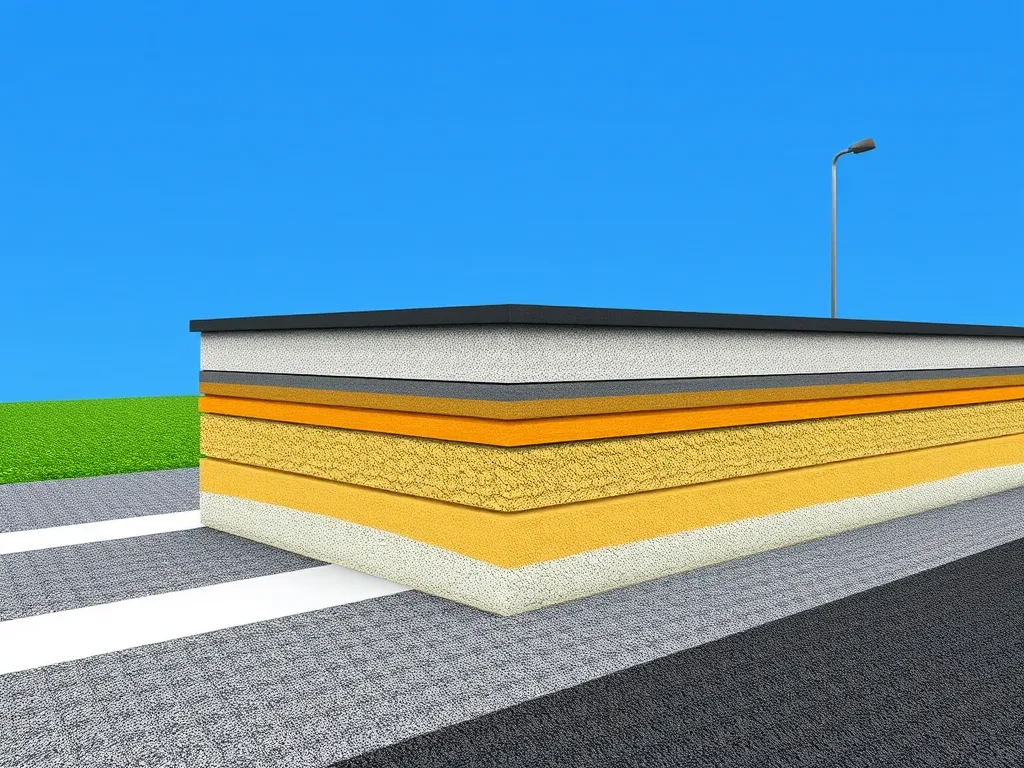
Pavements facing heavy vehicle traffic require engineered mixes built to withstand repeated stress. Three properties dictate performance under traffic load: stone structure, binder performance, and compaction quality.
Aggregate Gradation and Stability
Stone size distribution directly impacts how loads transfer through pavement layers. Superpave specifications mandate dense-graded blends with 19mm maximum stone sizes for highways. These create tight stone-on-stone contact, resisting deformation under truck tires. Open-graded mixes work for low-speed roads but lack stability for frequent heavy traffic.
Angular crushed stone outperforms rounded gravel by 30% in shear strength tests. High-traffic designs use 60-70% coarse stone content to prevent rutting. Fine particles fill voids, while polymer-modified binders glue the structure together.
Asphalt Binder Content Optimization
Binder quantity balances flexibility with rigidity. PG 76-22 polymer-modified binders handle over 10 million truck passes but need precise dosage. Too little (below 4.5%) causes cracking; excess (over 6%) leads to rutting in summer heat.
Marshall mix design methods determine the sweet spot: enough binder to coat stones without pushing them apart. For interstate highways, 5.1% binder content is typical. Warm-mix technologies let crews lower mixing temps by 54°F, cutting oxidation while maintaining workability.
Importance Of Compaction Density
Properly compacted pavements reach 92-96% of maximum theoretical density. Under-compacted sections (below 90%) fail 8 times faster under truck traffic. Steel-wheel rollers make 8-12 passes to eliminate air pockets that weaken the structure.
Relationship Between Compaction and Load-Bearing Capacity
Every 1% increase in density boosts load capacity by 10%. Pavements compacted to 95% density withstand 15 years of semi-truck traffic versus 7 years at 88%. Target air void content stays between 3-5%—higher values let water infiltrate; lower ones cause bleeding.
Field density tests using nuclear gauges verify specs during paving. Projects with 20+ daily truck traffic use 150mm base layers compacted in 50mm lifts for uniform support.
Getting these elements right sets the stage for selecting precise mix types. Next, we’ll explore how traffic volume dictates choices between SP 9.5 and SP 12.5 designs.
Also See: Role Of Asphalt Mix Design in Lifespan: Key Insights
Asphalt Mix Selection Based on Traffic Volume
Road crews pick asphalt mixes by how much traffic hits the road. Heavy truck routes need stronger mixes than quiet streets. The right choice stops cracks, ruts, and costly fixes.
High-traffic Mix Design Requirements
Busy roads with trucks need dense, tough mixes. These handle over 10 million ESALs (Equal Single Axle Loads). Key specs include:
- Aggregate sizes up to 1.5 inches
- PG 76-22 binder (high heat grade)
- 95% compaction or more
SP 12.5 Mix for Heavy Vehicle Loads
SP 12.5 Superpave mix rules interstates and ports. Its 12.5mm top size locks stones tight. Bitter cold tests (-22°F) and 76°F heat tests prove it lasts. Costs $85-$110 per ton but cuts repairs by 40%.
Medium/low-traffic Applications
Local roads see light cars, not 18-wheelers. Mixes here focus on smooth rides and lower costs. Traffic under 3 million ESALs works with:
- Smaller stones (9.5mm max)
- PG 64-22 binder
- 92% compaction
SP 9.5 Mix for Residential Roads
SP 9.5 handles 500-3000 cars daily. Its tight surface sheds water and stays quiet. At $65-$90 per ton, it’s a fit for home zones. Needs less base rock—4 inches vs. 8 inches for SP 12.5.
HMA Pavement Specs by Traffic Category
Hot Mix Asphalt (HMA) rules shift with use:
| Traffic Level | Mix Type | Min Thickness | Air Voids |
|---|---|---|---|
| Heavy | SP 12.5 | 5 inches | 3-5% |
| Medium | SP 9.5 | 3 inches | 5-7% |
Air voids matter—too few cause bleeding, too many let water in. Next, we’ll break down how engineers set these specs for real-world roads.
Engineering Standards for Traffic-based Asphalt Design
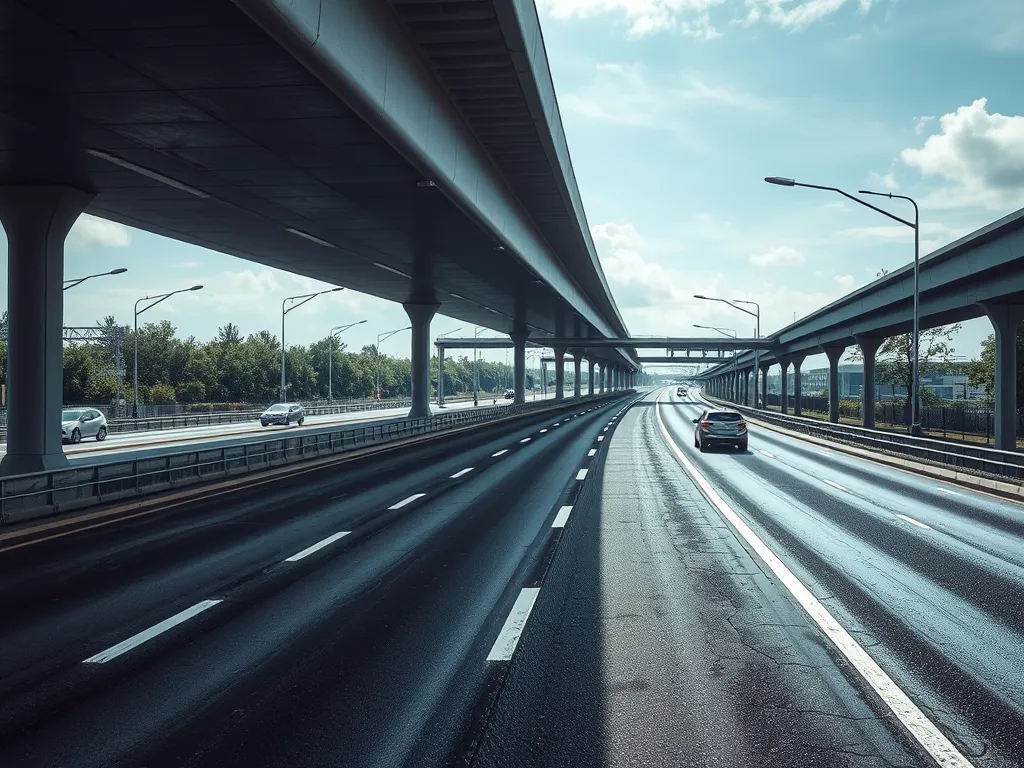
The right asphalt mix selection based on traffic requires strict adherence to engineering standards. These rules ensure pavements handle specific weight demands while balancing costs and material performance.
AASHTO Guidelines for Load Calculations
The American Association of State Highway and Transportation Officials (AASHTO) sets traffic load criteria using Equivalent Single Axle Loads (ESALs). One ESAL equals 18,000 pounds applied through a single axle. Heavy trucks generate 1,000+ ESALs daily on interstates, while residential streets may see under 50. Mix designs for high-traffic zones use stiffer Performance-Graded (PG) binders like PG 76-22 to resist rutting.
Thickness Requirements for Heavy Traffic Lanes
Thicker asphalt layers spread loads across wider areas. AASHTO’s Mechanistic-Empirical Pavement Design Guide mandates 8-12 inches of hot-mix asphalt (HMA) for highways. Local roads with lighter traffic use 3-4 inches. Each 1-inch increase in thickness boosts load capacity by 15-20%, but adds $2.50-$4.00 per square foot in material costs.
Air Void Content and Durability Tradeoffs
Air voids in asphalt mixtures range from 3% to 5% for heavy traffic. Lower voids improve rut resistance but reduce workability during paving. Superpave mixes target 4% air voids with 5-8% Voids in Mineral Aggregate (VMA) to balance binder durability and compaction. High-traffic pavements often use stone-matrix asphalt (SMA) with 2-3% voids for maximum load distribution.
Beyond design standards, real-world factors like temperature swings and drainage shape traffic-resistant pavements. Next, we’ll explore how environmental conditions affect mix performance in high-stress areas.
Practical Implementation Considerations
Selecting traffic-resistant asphalt mixes requires balancing technical specs with real-world conditions. Two critical factors shape these decisions: environmental adaptability and lifecycle maintenance costs.
Environmental Factors in Load-resistant Mixes
Climate directly impacts how asphalt handles traffic loads. In freeze-thaw zones, mixes need 4-7% air voids to prevent water damage under heavy trucks. Phoenix-style heat demands PG 76-22 binders that resist rutting at 158°F. Coastal regions use polymer-modified asphalt to combat salt corrosion in port access roads.
- Recycled asphalt pavement (RAP) use: Up to 30% in heavy traffic mixes cuts costs by $8/ton
- Warm-mix asphalt (WMA): Lowers production temps to 250°F vs 300°F for traditional HMA
- Drainage layers: 6-12” crushed stone bases prevent saturation under 18-wheelers
Cost-effective Maintenance for High-traffic Areas
Interstates and truck routes need preventive strategies to handle 30 million ESALs (Equivalent Single Axle Loads). Microsurfacing adds 7 years to pavements at $2.50/sy vs $25/sy for full reconstruction. Crack sealing every 36 months prevents 80% of potholes in high-load zones.
- Infrared patching: Repairs 150 sf/hour for same-day lane reopenings
- Mill-and-fill: Removes 2” damaged surface, replaces with SP 12.5 mix ($18/sy)
- Recycling: 95% reuse rate cuts material costs by 35% in overlay projects
These solutions demonstrate how traffic-aware designs extend pavement life while controlling expenses. Next, we’ll examine key engineering standards that govern load-rated asphalt installations.
FAQs: Traffic Load and Asphalt Mix Selection
What Determines Choice Between SP 9.5 And 12.5 Mixes?
The choice between SP 9.5 and SP 12.5 mixes primarily depends on the expected traffic volume and vehicle types. SP 9.5 is designed for lighter traffic and residential applications, whereas SP 12.5 is tailored for heavier traffic loads typically experienced on highways and major roads. Factors such as aggregate size, binder content, and compaction requirements also play a crucial role in this selection process.
How Does Compaction Improve Load Resistance?
Compaction enhances the load-bearing capacity of asphalt pavements by minimizing air voids and increasing the density of the asphalt mix. A well-compacted layer can better distribute traffic loads, thus reducing the risk of deformation, rutting, and cracking. Compaction drives out air pockets which can weaken the structure, ensuring a more stable and durable pavement.
Why Use HMA for Heavy Traffic Pavements?
Hot Mix Asphalt (HMA) is preferred for heavy traffic pavements due to its superior performance characteristics, which include excellent load-bearing capacity, resistance to deformation, and longevity. HMA can accommodate high ESALs and is specially formulated with durable aggregates and binders to withstand the stresses imposed by heavy vehicles, making it ideal for locations with significant truck traffic.
Closing Thoughts
The selection of asphalt mix is crucial for ensuring durability and performance under varying traffic loads. High volumes of heavy traffic demand specific mix properties to prevent issues like rutting and fatigue cracking. Engineers must consider factors such as aggregate gradation, asphalt binder content, and compaction density to create resilient pavements that withstand dynamic loads.
As outlined, using the right mix, such as SP 12.5 for heavy vehicle loads or SP 9.5 for lighter traffic, can help optimize pavement life. Adhering to AASHTO guidelines further ensures designs meet structural requirements for longevity and safety. By prioritizing these considerations, the pavement can endure the impact of traffic loads effectively.
For more information on traffic impact and asphalt mix selection, be sure to check out Asphalt Calculator USA.
Additional Resources for You:
- Kett, I. (1999). Asphalt Materials and Mix Design Manual. Oxford: Elsevier Science.
- Can Traffic & Vehicle Loads Affect Pavement? | EastCoat Pavement
- How To Choose The Right Asphalt Mix
- HMA Pavement Mix Type Selection Guide
- Impact of Mix Design on Asphalt Pavement Durability