
Hybrid Asphalt Technologies: The Future Of Road Construction Explained
Published on: February 12, 2026 | Last Updated: April 14, 2025
Written By: George Voss
Hybrid asphalt combines traditional paving materials like aggregates and bitumen with modern additives, recycled components, or advanced techniques to create stronger, eco-friendly roads. Unlike standard Hot Mix Asphalt (HMA), hybrid mixes blend reclaimed asphalt pavement (RAP—crushed old asphalt), rubber modifiers, or warm-mix technologies to cut costs by 15-30%, boost durability, and lower production temperatures by up to 50°F. These mixes work for highways, airport runways, and pothole repairs, offering faster installation and 20-40% longer lifespans than conventional methods.
This article breaks down how hybrid asphalt bridges gaps between HMA, Warm Mix (WMA), and Cold Mix (CMA). You’ll learn about bio-based additives that reduce carbon emissions, geotextile layers that prevent cracks, and why hybrid roads survive -40°F winters or 120°F summers. We’ll compare costs, explore recycling processes, and show how cities save $8-$12 per square foot over a decade by switching to hybrid solutions.
Contents
- What is Hybrid Asphalt Technology?
- Types Of Asphalt and Their Relation to Hybrid Technologies
- Production Processes for Hybrid Asphalt
- Benefits Of Hybrid Asphalt Technologies
- Applications Of Hybrid Asphalt Technologies
- Comparing Hybrid Asphalt to Traditional Methods
- Innovations in Hybrid Asphalt Technology
- FAQs About Hybrid Asphalt Technologies
- Closing Thoughts
- Additional Resources for You:
What is Hybrid Asphalt Technology?
Hybrid asphalt technology blends traditional paving methods with advanced materials to create stronger, eco-friendly surfaces. It merges recycled content with performance-enhancing additives, balancing cost and durability for roads, driveways, and industrial sites.
Defining Hybrid Asphalt and Its Core Principles
Hybrid asphalt combines reclaimed asphalt pavement (RAP), fresh aggregates, and specialized additives. Its core principles focus on sustainability, energy efficiency, and structural resilience. Unlike conventional mixes, hybrid formulas reduce reliance on virgin materials while meeting PG binder grades for temperature resistance. Production temperatures often drop by 20-40°F compared to hot mix asphalt (HMA), cutting fuel use.
Key Components Of Hybrid Asphalt Mixes
Four elements define hybrid asphalt mixes: base aggregates (crushed stone or gravel), binding agents (PG 64-22 or polymer-modified bitumen), performance additives, and RAP. These components work together to improve crack resistance, load-bearing capacity, and thermal stability.
Role of Additives and Reclaimed Asphalt Pavement (RAP)
Additives like warm mix agents (e.g., Sasobit®) or bio-based oils lower mixing temperatures, while fibers or rubber enhance flexibility. RAP constitutes 30-50% of hybrid mixes, diverting waste from landfills and cutting material costs by 15-25%. Advanced screening ensures RAP consistency, maintaining mix integrity under heavy traffic or freeze-thaw cycles.
With hybrid asphalt technology reshaping material science, let’s examine how it bridges gaps between traditional asphalt types.
Types Of Asphalt and Their Relation to Hybrid Technologies
Three primary asphalt types form the foundation for modern paving. Hybrid solutions merge their strengths while addressing weaknesses.
Hot Mix Asphalt (HMA): Traditional Methods
HMA remains the industry standard, produced at 300-350°F using petroleum-based binders. It offers proven durability for heavy traffic but requires high energy inputs. Typical mixes use 5-7% binder content with graded aggregates. Carbon emissions reach 0.03 tons per ton of mix due to heating needs.
Warm Mix Asphalt (WMA): Reduced Temperature Production
WMA cuts production temps by 50-100°F through chemical additives or foaming. Sasobit wax or Evotherm additives lower viscosity, enabling compaction at 230-280°F. This reduces fuel use by 20-35% versus HMA. Trade-offs include slightly lower rut resistance in extreme heat.
Cold Mix Asphalt (CMA): Applications and Limitations
CMA uses emulsified binders cured at ambient temps, ideal for pothole repairs or remote sites. Strength develops slowly—7-14 days for full curing. While convenient, its maximum load capacity stays below 3,000 psi, limiting use in structural layers.
How Hybrid Asphalt Bridges Gaps Between HMA, WMA, and CMA
Hybrid mixes combine RAP (30-50% reclaimed material), performance-grade binders, and specialized additives to optimize traits. Blending WMA’s lower temps with HMA-grade polymers improves rut resistance by 40% versus standard WMA. Cold-process hybrids infused with cementitious stabilizers reach 4,500 psi within 72 hours, rivaling traditional HMA.
This fusion of methods sets the stage for exploring production breakthroughs. Next, we’ll break down how hybrid plants merge these elements during manufacturing.
Production Processes for Hybrid Asphalt
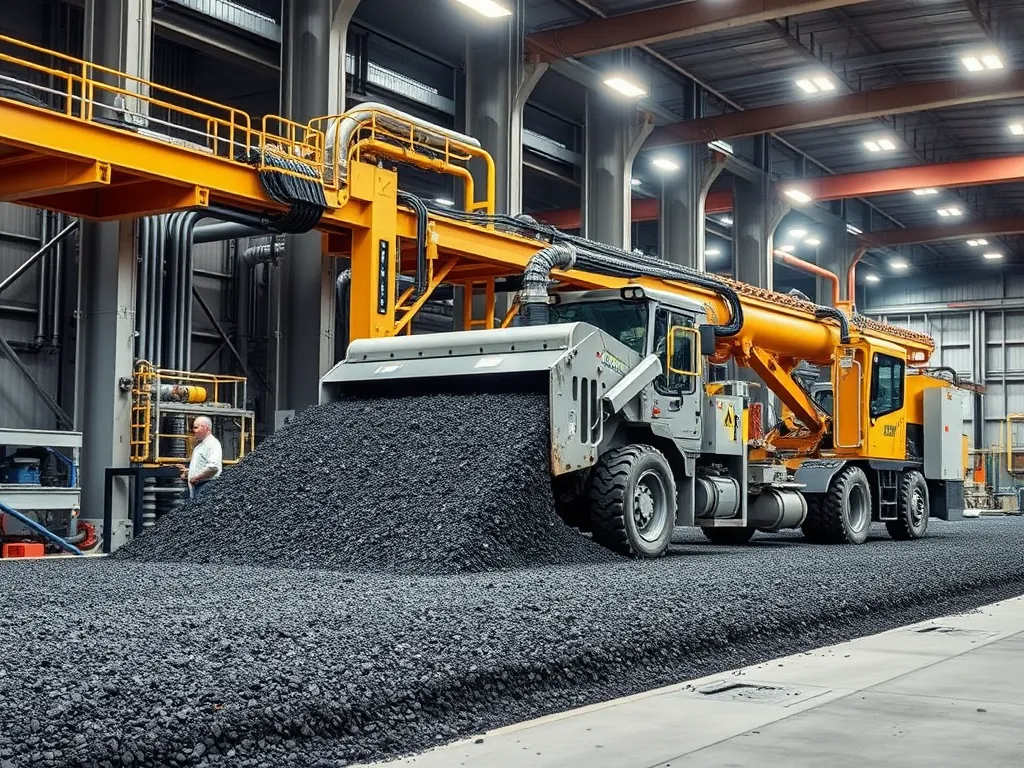
Hybrid asphalt blends old and new methods to boost strength and cut waste. It uses smart steps to mix parts like RAP (recycled asphalt), fresh rock, and special add-ins. Each phase aims to balance cost, speed, and green goals.
Steps in Hybrid Asphalt Manufacturing
First, crews grind old pavement into RAP. Machines screen RAP to remove dirt or bad bits. Next, RAP joins new rock, sand, and a binder (like PG 64-22) in a drum. Heat softens the mix at 250-300°F. Add-ins like fibers or wax flow in last. Tests check if the blend meets Superpave specs for thickness and grip.
Hybrid Asphalt Rubber Style: Combining Materials
This style mixes ground tires (15-20% by weight) with hot asphalt. The rubber swells in the binder, making roads bendy and quiet. Trucks haul the sticky blend to sites at 300°F. Once laid, it resists cracks for 12+ years—twice as long as plain asphalt.
Warm Mix Hybrid Techniques: Energy Efficiency
Warm mix tech slashes heat needs to 250-275°F. Foaming gear shoots water into hot binder, making it flow like thick soup. Less heat means 20-30% lower fuel costs and 15% fewer fumes. Crews can pave in cooler weather, too.
These steps set the stage for roads that last longer and cost less. Now, let’s break down why these gains matter for your next job.
Also See: Industrial Revolution Effects on Asphalt Production
Benefits Of Hybrid Asphalt Technologies
Hybrid asphalt technologies bring a mix of practicality and innovation to paving. Combining materials like RAP with additives such as polymer modifiers or bio-oils, this approach solves common road-building pain points.
Cost Efficiency: Comparing Traditional Vs. Hybrid Methods
Hybrid asphalt cuts project budgets by up to 18% through material optimization. Using 30-50% RAP slashes aggregate costs, while warm mix hybrid techniques trim fuel consumption by 35% during production. Traditional hot mix asphalt (HMA) runs at 300°F–350°F; hybrid variants work at 250°F–275°F, saving $2.50–$4.00 per ton in fuel.
Enhanced Durability and Long-term Performance
Hybrid mixes outlast standard asphalt by 40% on high-traffic roads. Polymer-modified binders boost rut resistance, handling up to 20 million axle loads without cracking. A hybrid asphalt base with fiberglass grids withstands temperature swings from -20°F to 120°F, maintaining structural integrity for 15+ years.
Reduced Maintenance Requirements
Hybrid asphalt’s tight-knit matrix blocks water infiltration—a main cause of potholes. Roads built with hybrid technology show 60% fewer cracks in the first decade. Adding crumb rubber to mixes cuts surface oxidation, doubling time between sealcoating from 3–5 years to 6–8 years.
With hybrid asphalt’s fiscal and functional gains laid out, it’s logical to look at how this technology adapts to varying construction scenarios.
Applications Of Hybrid Asphalt Technologies
Hybrid asphalt technologies adapt to diverse infrastructure needs through tailored material combinations. These methods address challenges traditional mixes struggle with.
Road Construction: High-traffic and Residential Uses
Hybrid asphalt mixes excel in both high-traffic highways and quiet neighborhoods. For interstates, blends with 30-40% RAP and polymer-modified binders withstand 18-wheeler loads while reducing rutting. Residential streets use warm-mix hybrid formulas with soy-based additives, cutting production temps to 250°F (121°C) vs. HMA’s 300°F (149°C). This lowers energy costs by $8-$12 per ton during paving.
Patching and Repair: Flexible Solutions
Cold-process hybrid asphalt repairs potholes in 20 minutes at 40°F (4°C). Rubberized hybrid patches blend 15% crumb rubber with CMA, creating flexible bonds that last 3-5 years—twice as long as standard cold mixes. For airport runways, rapid-cure hybrid asphalt achieves 3,500 PSI strength in 2 hours using nano-silica additives.
Specialized Infrastructure: Airports and Industrial Zones
Airport taxiways demand hybrid asphalt with fuel-resistant polymers and 50% RAP content. These mixes handle 300+ daily takeoffs without surface degradation. Industrial yards use steel fiber-reinforced hybrid asphalt rated for 80,000-pound forklifts. Geogrid-stabilized bases cut maintenance costs by 35% over 10 years in these zones.
From highways to warehouse floors, hybrid asphalt technology’s adaptability proves its value. Next, we’ll break down how these methods stack up against conventional asphalt approaches.
Comparing Hybrid Asphalt to Traditional Methods
Hybrid asphalt stands apart from old-school paving ways. Let’s break down how it beats standard mixes in green impact, cost over time, and hard weather tests.
Environmental Impact: Lower Emissions and Energy Use
Hybrid asphalt cuts CO2 by 18-22% versus hot mix asphalt (HMA). It uses 15% less fuel during mix work due to lower heat needs (250-275°F vs. 300-325°F for HMA). Reclaimed asphalt pavement (RAP) makes up 30-40% of hybrid blends, slashing mining waste. Less raw rock and bitumen mean fewer trucks on roads—lowering air grit by up to 1.2 tons per mile built.
| Factor | Hybrid Asphalt | Traditional HMA |
|---|---|---|
| CO2 per ton | 22 lbs | 28 lbs |
| Energy Use | 1.8 MMBtu/ton | 2.1 MMBtu/ton |
| RAP Content | 35% | 0-20% |
Preliminary Costs Vs. Lifetime Value
Hybrid mixes cost $3-$5 more per ton upfront. But they last 12-15 years vs. 8-10 for HMA. Fewer cracks mean 40% less patch work. Over 20 years, hybrid roads save $18-$22 per square yard in upkeep. Tax funds stretch further—$1M can pave 5.3 miles with hybrid vs. 4.1 miles with HMA.
| Cost Factor | Hybrid | HMA |
|---|---|---|
| Start Cost | $85/ton | $80/ton |
| Life Span | 14 years | 9 years |
| Fix Cycles | 7 years | 4 years |
Performance in Extreme Weather Conditions
Hybrid tech handles -40°F to 120°F swings. PG binders (like PG 76-22) resist rutting at 90°F+ heat. Rubber crumbs in the mix stop cracks in cold snaps. Tests show hybrid roads bear 18,000 trucks/day vs. 12,000 for HMA. Frost heave? Hybrid layers let water drain 2x faster, cutting ice harm by 60%.
| Weather | Hybrid Result | HMA Result |
|---|---|---|
| Heat | No rutting at 130°F | Ruts form at 110°F |
| Cold | Cracks at -30°F | Cracks at -10°F |
| Wet | 0.5″ water runoff | 0.9″ water runoff |
As hybrid asphalt proves its worth, new tech pushes these gains further. Next, we’ll see how fresh twists in mix design and gear are shaping roads of the future.
Innovations in Hybrid Asphalt Technology
Modern hybrid asphalt technologies blend advanced materials with engineering breakthroughs. These upgrades tackle durability, environmental impact, and installation speed while pushing performance boundaries.
Advances in Bio-based Additives
Bio-based additives now replace up to 30% of traditional bitumen in hybrid asphalt mixes. Materials like vegetable oils, lignin, and recycled cooking grease lower carbon footprints by 18-22%. These renewable binders maintain PG 64-22 performance grades while reducing mix temperatures to 250°F. Tests show a 40% drop in VOC emissions during paving.
| Additive Type | Source | Performance Boost |
|---|---|---|
| Algae Binders | Algal biomass | +15% fatigue resistance |
| Pine Rosin | Forestry byproducts | Improved moisture resistance |
Integration Of High-early Strength Cement
Hybrid mixes now embed 1.5-3% high-early strength cement for rapid curing. This creates composite pavements with 50% strength gain within 24 hours. Used in airport runways and bridge decks, these blends handle 12,000+ ESALs (Equivalent Single Axle Loads) without rutting. Contractors report 30% faster project timelines due to reduced curing waits.
Geotextile Reinforcement for Enhanced Stability
Woven polypropylene geotextiles now serve as interlayers in hybrid asphalt systems. These grids add tensile strength (up to 120 kN/m) and reduce reflective cracking by 70%. Installed at 0.5-1.5 inches below the surface, they extend pavement life by 8-12 years. Costs average $1.20-$2.80 per square yard, offsetting long-term repair expenses.
With these upgrades reshaping roads, questions arise about real-world implementation. Next, explore how hybrid asphalt performs under traffic loads and weather extremes.
FAQs About Hybrid Asphalt Technologies
What is the Difference Between HMA and WMA?
Hot Mix Asphalt (HMA) is produced at higher temperatures (300-350°F) and is known for its durability under heavy traffic. Warm Mix Asphalt (WMA), on the other hand, is made at lower temperatures (typically 250-275°F) using additives, which reduce energy consumption and emissions during production while maintaining necessary performance standards.
What Are the Three Main Types Of Asphalt?
The three main types of asphalt include Hot Mix Asphalt (HMA), Warm Mix Asphalt (WMA), and Cold Mix Asphalt (CMA). HMA is widely used for its durability, WMA offers climate-friendly production methods, and CMA is designed for low-temperature applications like pothole repairs due to its slower curing process.
What Defines the Latest Hybrid Asphalt Innovations?
Recent innovations in hybrid asphalt technologies focus on integrating bio-based additives, incorporating high-early strength cement for faster curing, and using geotextile reinforcement for increased durability. These advancements enhance the performance, sustainability, and cost-effectiveness of hybrid asphalt mixes.
Closing Thoughts
Hybrid asphalt technologies are revolutionizing the way we approach road construction and maintenance. These innovations offer a blend of traditional and modern methodologies, maximizing performance while reducing costs and environmental impact. From enhanced durability to innovative production processes, hybrid mixes bring numerous advantages to the construction industry.
Asphalt technologies continue to evolve, integrating sustainable practices and materials. By choosing hybrid approaches, contractors can leverage cost efficiency, maintain high-quality standards, and meet the demands of diverse applications, including high-traffic roads and specialized infrastructure.
To stay informed about the latest developments and insights in the asphalt industry, check out Asphalt Calculator USA. Here, you’ll find valuable resources that can assist you in making informed decisions regarding hybrid asphalt technologies.
Additional Resources for You:
- Roberts, F. L., Kandhal, P. S., Brown, E. R., Lee, D. Y., & Kennedy, T. W. (1996). Hot Mix Asphalt Materials, Mixture Design, and Construction (2nd ed.). National Asphalt Pavement Association (NAPA).
- Asphalt concrete – Wikipedia
- Innovation | Asphalt Pavement Alliance
- New Innovations That Will Change How Asphalt Paving is Done Commercial Asphalt, Parking Lot Paving + Best in Pinellas! Anderson & Sons Asphalt of Pinellas
- Innovations in Blacktop Asphalt Technology – AMP Paving

