How to Use a Paver Machine Effectively for Asphalt Projects
Published on: February 11, 2026 | Last Updated: April 14, 2025
Written By: George Voss
An asphalt paver machine spreads and compacts hot mix asphalt (HMA) using a hopper, conveyor system, and heated screed plate. Effective operation requires precise control of material flow, temperature (275°F-325°F for optimal compaction), and paver speed (3-12 feet per minute). Unlike compactors or graders, pavers combine material distribution and initial compaction in one pass, making proper setup critical for smooth surfaces. Key steps include aligning the machine with string lines, preheating the screed to 250°F-300°F to prevent sticking, and coordinating with dump trucks to avoid cold joints.
This article breaks down paver operation into actionable steps. Learn how to calibrate screed height for target thickness (1.5”-4”), adjust auger speed to prevent segregation, and maintain straight lines using laser guidance or curb alignment. We’ll cover troubleshooting common issues like mat tearing from cold asphalt or uneven density due to erratic speed. Maintenance checklists, safety protocols for 300°F+ surfaces, and EPA-compliant waste disposal methods are also included.
Contents
- Introduction to Asphalt Paver Machines
- Key Components Of an Asphalt Paver Machine
- Pre-operation Setup for Asphalt Paving
- Step-by-step Asphalt Paver Operation
- Best Practices for Efficient Asphalt Laying
- Troubleshooting Common Asphalt Paving Issues
- Paver Machine Maintenance for Asphalt Projects
- Safety Guidelines for Asphalt Paver Operation
- Environmental Considerations in Asphalt Paving
- FAQs About Asphalt Paver Machine Operation
- Closing Thoughts
- Useful References for You:
Introduction to Asphalt Paver Machines
Asphalt paver machines shape roads, driveways, and parking lots with precision. These heavy-duty tools handle hot mix asphalt (HMA) at temperatures reaching 280-330°F. Proper paver machine operation ensures smooth surfaces, uniform density, and long-lasting results.
What is an Asphalt Paver Machine?
A self-propelled construction device designed to lay asphalt evenly. It combines a hopper (holds HMA), conveyor system (transports material), augers (spread mix sideways), and screed (levels and compacts). Tracked pavers work best for unstable ground, while wheeled models excel on flat surfaces. Modern versions include grade sensors for slope control.
Key Functions in Asphalt Paving
Four critical tasks define paver machine laying asphalt effectively. First, material distribution: Conveyors move HMA from the hopper to augers, which spread it across the screed’s width. Second, initial compaction: The screed vibrates at 1,500-4,500 Hz to achieve 75-85% density before rollers finish the job. Third, temperature management: Heating the screed prevents mix sticking, ensuring smooth texture. Fourth, joint construction: Overlapping previous mats by 2-6 inches prevents gaps.
Mishandling these functions leads to defects like segregation or uneven thickness. For example, running conveyors too fast tears HMA apart, creating coarse patches. Setting auger height wrong leaves ridges. Matching paver speed to truck deliveries keeps mix above 250°F—critical for compaction.
Next, we’ll break down the parts that let pavers execute these tasks reliably.
Key Components Of an Asphalt Paver Machine
Effective paver machine operation starts with knowing its core parts. These systems work together to lay asphalt at rates up to 25 tons per hour with precision.
Hoppers and Material Feed System
Hoppers hold 7-15 tons of hot asphalt mix (280-325°F) delivered by trucks. Hydraulic arms push material into slat conveyors at controlled speeds. Uneven feed causes mat irregularities – keep hoppers at least half full to maintain steady flow.
Conveyors and Augers
Conveyors transfer mix from hoppers to auger chambers. Adjust belt speeds to match paving rates (typically 10-30 feet per minute). Augers spread material across the screed width at 20-30 RPM, preventing gaps or pile-ups. Worn auger flights create segregation – replace when gaps exceed 1/4 inch.
Screed Plates and Compaction Systems
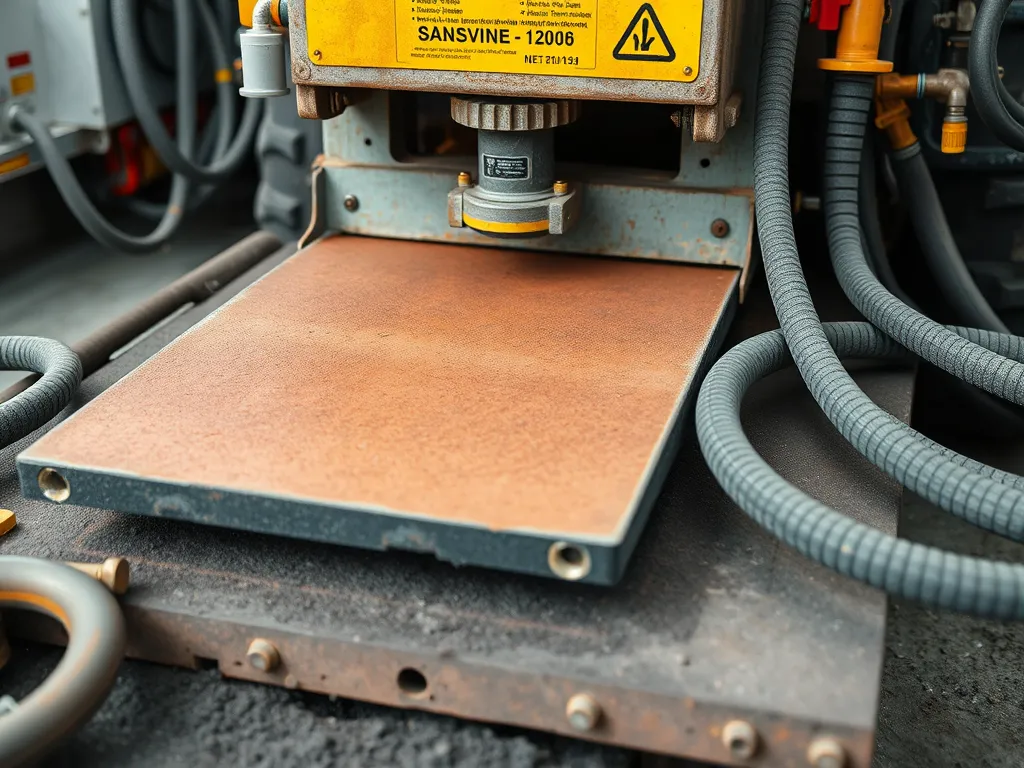
The screed levels and pre-compacts asphalt to 75-85% density. Hydraulic extensions adjust mat width from 8 to 50 feet. Vibration (3,000-4,500 VPM) and heated plates (250°F+) ensure smooth finishes. Set screed angle based on mix type: 1:6 slope for coarse-graded, 1:4 for fine-graded.
Tracks or Wheels for Mobility
Tracked pavers (3-5 PSI ground pressure) excel on unstable bases, while wheeled models maneuver better on paved surfaces. Maintain track tension to prevent slippage – 1-1.5 inches deflection under load. For wheeled units, check tire pressure weekly (35-50 PSI) to avoid ruts.
With these systems mastered, precise pre-operation setup becomes the next critical step for flawless asphalt placement.
Pre-operation Setup for Asphalt Paving
Proper setup ensures smooth paver machine operation. Skipping steps risks uneven pavement, costly rework, or equipment damage. Focus on these four checks before laying the first ton of mix.
Calibrating the Paver for Asphalt Thickness
Set the screed’s strike-off plate to match design thickness. Use grade sensors or manual strike-off boards for verification. For example, paving 2-inch layers requires precise leveling shoe adjustments. Incorrect calibration creates thin spots or excess material—both reduce pavement lifespan by 15-30%.
Heating the Screed to Prevent Asphalt Sticking
Preheat screed plates to 250-300°F. Cold screeds make hot mix binders (like PG 64-22) stick, tearing the mat. Propane burners or electric systems heat modern pavers. Check temps with infrared thermometers. Uneven heating causes ripples or voids needing immediate correction.
Aligning the Paver With the Asphalt Mat Path
Set string lines or laser guides parallel to the road’s centerline. Adjust paver tracks or wheels to follow markers within 1/8-inch tolerance. Misalignment forces manual fixes during paving. For curves, use pivoting tow points on tracked models to maintain smooth transitions.
Checking Asphalt Temperature and Consistency
Verify mix temps at 275-325°F upon delivery. Cold mix below 250°F resists compaction; over 350°F causes binder oxidation. Inspect loads for segregation—coarse clusters or fine streaks. Reject loads with visible issues to prevent weak spots under traffic loads.
With setup complete, focus shifts to material flow control during paving. Next, we’ll break down each step in the paver laydown machine operation process.
Also See: Cold Mix Asphalt Application in Winter: Key Tips
Step-by-step Asphalt Paver Operation
Proper paver machine operation determines asphalt mat quality. Follow these steps to ensure smooth material placement.
1. Loading Hot Asphalt Into the Hopper
Feed the hopper with asphalt mix at 290-330°F. Dump trucks should back up evenly to prevent material spillage. Maintain a steady supply to avoid work stoppages. Never let the hopper empty completely—this creates cold joints. Use truck hitch sensors if available for automated truck-paver coordination.
2. Adjusting Conveyor Speed for Material Flow
Set conveyor speed to match paver travel rate. For standard 10-20 ft/min paving, start at 75% conveyor capacity. Check material flow through the hopper gates—too fast causes segregation; too slow leaves gaps. Adjust using the rheostat while monitoring auger chamber levels. Balance speed with mix temperature to prevent premature cooling.
3. Distributing Asphalt With Augers
Augers spread material evenly across the screed width. Set auger height to 2/3 the compacted mat thickness. For 3-inch layers, position 2 inches above base. Rotate augers at 30-50 RPM depending on mix viscosity. Ensure consistent material flow to both sides—uneven distribution creates thickness variations exceeding ±0.1 inch.
4. Leveling and Compacting With the Screed
Heat screed plates to 250°F before contact with asphalt. Set angle of attack at 0.25-0.75 inches for proper density. Engage vibratory systems at 1,500-4,000 VPM (vibrations per minute). Adjust amplitude based on mix type—high vibration for coarse aggregates, lower for fine mixes. Monitor mat texture; ripples indicate incorrect screed settings.
5. Maintaining Straight Lines During Paving
Align the paver using stringlines or automated grade control. Check alignment every 10 feet with a transverse slope sensor. For manual steering, fix sight markers at 50-foot intervals. Keep wheel/track paths clean—debris causes directional drift. Maintain ±0.5-inch lateral tolerance for lane markings.
Mastering these steps sets the stage for efficient asphalt laying. Next, we’ll explore techniques to boost productivity while preserving mat integrity.
Best Practices for Efficient Asphalt Laying
Mastering these techniques ensures smooth surfaces, long-lasting roads, and reduced material waste during paver machine operation.
Optimal Paver Speed for Consistent Asphalt Density
Set paver speed between 3-5 meters per minute for uniform compaction. Moving too fast (over 7 m/min) creates low-density areas prone to rutting. Slower speeds below 2 m/min let asphalt cool unevenly, risking poor bonding between layers. Match speed to material delivery rates – a full hopper allows steady momentum without pauses.
Avoiding Overlap and Ensuring Joint Integrity
Keep screed overlaps under 50mm to prevent thick seams that crack under traffic loads. For longitudinal joints, set adjacent paver runs within 6mm height difference. Heat joint edges with infrared heaters to 120°C (250°F) before connecting new asphalt strips. This technique maintains structural continuity in pave machine operations.
Monitoring Asphalt Temperature for Proper Compaction
Track mix temps at the screed exit – aim for 135-150°C (275-300°F). Below 115°C (240°F), asphalt loses workability, creating voids during rolling. Use infrared thermometers every 15 minutes. Adjust material feed rates if temps drop 10°C below target – cold patches reduce pavement life by up to 30%.
Coordinating With Dump Trucks to Minimize Stops
Plan truck rotations to keep 2-3 loads waiting during asphalt paving machine operation. Stops longer than 5 minutes create visible mat flaws. Train drivers to approach pavers at 5-10° angles for smooth material transfers. Use radio communication to sync truck dump times with paver conveyor speeds.
While these methods boost paving quality, even skilled crews face challenges when conditions shift. Let’s examine common issues and fixes…
Troubleshooting Common Asphalt Paving Issues
Even skilled crews face roadblocks during paver machine operation. Spotting issues early keeps the job on track.
Uneven Asphalt Thickness
Thin spots or bulges create weak zones prone to cracks. Check two main culprits.
Causes: Incorrect Screed Settings or Inconsistent Material Flow
A tilted screed leaves uneven mats. Level it before each run. Clogged feed systems starve the augers. Clean gates and set flow rates to match paver speed (2-4 feet per minute).
Asphalt Segregation in the Mat
Coarse piles or fine streaks hurt pavement strength. Fix starts at the conveyor.
Causes: Poor Conveyor/Auger Adjustments
Fast conveyors dump too much mix. Sync belt speed with truck dumps. Set auger height to 2/3 the mat depth. This spreads mix evenly without crushing stones.
Surface Defects (Waves, Craters, or Rolls)
Ripples or dips signal heat or gear issues. Act fast before mix cools.
Causes: Temperature Fluctuations or Machine Misalignment
Cold mix (below 275°F) won’t compact. Check temps every 15 minutes. Bent screed plates or loose tracks cause rolls. Inspect gear pre-shift. Align paver wheels/tracks with string lines.
Fix these snags fast to save time and mix. Up next: keeping your paver running smooth with smart care steps.
Paver Machine Maintenance for Asphalt Projects
Proper upkeep keeps your equipment running smoothly during paver machine operation. Neglecting routine tasks leads to costly breakdowns or subpar pavement quality. Focus on these three core areas to maximize machine lifespan.
Daily Cleaning to Remove Asphalt Residue
Built-up mix hardens quickly, clogging critical components. Use diesel or specialized solvents to scrub hoppers, conveyors, and augers after each shift. Pay close attention to the screed’s underside—leftover material creates uneven surfaces during the next pave machine use. Unchecked residue reduces belt traction by up to 40%, forcing motors to overwork.
Greasing Tracks, Rollers, and Moving Parts
Friction from heavy loads wears down bearings and pivot points. Apply lithium-based grease every 4-8 hours to tracks, roller shafts, and joint hinges. Under-lubricated parts generate excess heat, shortening component life by half. Overgreasing attracts debris—wipe excess with clean rags to prevent track slippage during paver laydown machine operation.
Inspecting Screed Plates and Conveyor Belts
Check screed plates for warping beyond 1/8” tolerance—uneven edges cause thickness variations. Tighten loose bolts holding heating elements to avoid cold spots. Examine conveyor belts for fraying or slack; adjust tension to 1-2 inches of deflection under load. Replace cracked belts immediately—they split under 300°F mix, risking project delays.
Following these steps ensures reliable performance for your next asphalt paving machine operation. Next, let’s review protocols to keep crews safe while working near high-temperature machinery.
Safety Guidelines for Asphalt Paver Operation
Working with hot asphalt demands strict safety protocols. Follow these rules to protect workers and maintain smooth paver machine operation.
Personal Protective Equipment (PPE) for Hot Asphalt
Asphalt mixes exit trucks at 275-325°F. Crews need heat-resistant gloves (rated for 500°F), steel-toe boots with metatarsal guards, and long-sleeved flame-retardant clothing. Face shields protect against splatter during paver machine laying asphalt. For fumes, use NIOSH-approved N95 respirators. ANSI/ISEA 107-2020 Class 3 high-visibility vests ensure visibility in active zones.
Safe Distance From Trucks and Crew Members
Keep 10-15 feet between paver laydown machines and dump trucks during material transfer. Spotters with two-way radios coordinate movements to prevent collisions. Workers should never stand directly behind conveyors or under hoppers. During asphalt paver procedure, establish clear hand signals for start/stop commands.
Avoiding Burns From Hot Components
Screed plates retain heat up to 300°F for 2 hours post-operation. Use insulated tools for adjustments. Lockout/tagout systems de-energize augers before clearing jams. Check hydraulic hoses for leaks – pressurized fluid reaches 2,000 PSI and 150°F. Apply anti-stick sprays to screeds to reduce contact risks.
Following these protocols ensures safer paving machine procedures. Next, we’ll explore methods to reduce environmental impact while maintaining worksite safety.
Environmental Considerations in Asphalt Paving
Paver machine use must balance speed with care for the earth. Smart steps cut harm while keeping jobs on track.
Minimizing Material Waste During Paving
Proper paver setup cuts waste. Calibrate mix flow to match road width. Use grade sensors to keep pave depth exact—errors over 1/4 inch can add 5% extra material use. Plan the pave path to match truck load times. This cuts wait gaps that let mix cool and harden.
- Recycle millings: Crush old pave layers for reuse in base coats
- Track yield: Compare mix used vs area paved to spot waste
- Clean hoppers fast: Leftover mix sets quick, clogs systems
Proper Disposal Of Asphalt Residue
Never dump extra mix. Hot asphalt scraps release fumes and harm soil. Follow EPA rules for non-hazardous waste (Code 503112).
- Cold planing: Grind leftover pave into gravel for new jobs
- Plant recycling: Send chunks to batch plants for reheating (saves 30% cost)
- Landfill last: Fees run $30-$80 per ton vs $0 for onsite reuse
Good pave teams track each load from truck to road. Up next: Clear answers to common paver machine how-to questions.
FAQs About Asphalt Paver Machine Operation
How Does an Asphalt Paver Machine Work?
An asphalt paver machine operates by receiving hot mix asphalt from trucks, transferring the material through a hopper and conveyor system, and spreading it evenly across the road’s surface with a heated screed. The machine compacts the asphalt as it is laid, achieving the desired density and smoothness.
How Do You Keep the Paver Straight During Asphalt Laying?
To maintain straight lines during asphalt laying, operators can use string lines or automated grade control systems. Regular checks can also be conducted with transverse slope sensors to ensure the paver remains aligned with the intended path, minimizing deviations.
Does the Paver Push the Truck During Operation?
No, the asphalt paver does not push the truck. Instead, the truck is positioned to dump hot asphalt into the paver’s hopper without any forceful interaction. Proper alignment and timing between the paver and truck are crucial for a smooth material transfer.
What is the Ideal Speed for an Asphalt Paving Machine?
The ideal speed for an asphalt paving machine typically ranges from 3 to 7 meters per minute, depending on the project requirements and material conditions. Maintaining this speed ensures consistent density and minimizes the risk of defects in the asphalt mat.
How is Asphalt Temperature Managed During Paving?
Asphalt temperature is managed by monitoring the mix temperature as it is received and during application. Operators should aim for a temperature range of 275°F to 325°F for optimal compaction. Infrared thermometers can be used to regularly check the temperature at various points in the laydown process, ensuring it’s within the acceptable range for effective paving.
Closing Thoughts
Successfully using a paver machine for asphalt projects requires a blend of technical know-how and practical skill. From calibration to maintenance, each step contributes to the efficiency and quality of your asphalt paving. Prioritizing safety and environmental practices protects workers and the surroundings while ensuring a smooth pavement finish.
Always remember to monitor temperature and consistency, as they are vital for optimal asphalt performance. Consistent communication with your crew enhances the overall operation, reducing delays and improving workflow. No task is too small when aiming for a flawless asphalt surface.
For more in-depth information on asphalt paving and to explore useful tools, visit Asphalt Calculator USA. Your journey towards mastering asphalt paver machine techniques starts here!
Useful References for You:
- Roberts, F. L., Kandhal, P. S., Brown, E. R., Lee, D. Y., & Kennedy, T. W. (1996). Hot Mix Asphalt Materials, Mixture Design, and Construction (2nd ed.). National Asphalt Pavement Association (NAPA).
- How Does an Asphalt Paver Work? – LeeBoy®
- Asphalt Paving Machine – Ensuring The Quality Of The Pavement
- The Importance of Paver Machine in Road Construction
- How a paver works (with Automated Level Controls)