
How to Spot and Solve Drainage Problems in Your Asphalt Driveway
Published on: February 2, 2026 | Last Updated: April 14, 2025
Written By: George Voss
To identify and fix drainage issues in asphalt driveways, check for standing water after rain, cracks near edges, or soil erosion along the pavement. Fixes range from filling potholes with cold mix asphalt ($25-$50 per bag) to installing trench drains ($15-$30 per linear foot) or adjusting the slope (1-2% grade recommended). Ignoring these problems leads to faster deterioration: waterlogged asphalt cracks 3x faster than properly drained surfaces.
This guide shows how to diagnose common asphalt driveway drainage failures, compare repair methods like resurfacing vs. catch basins, and maintain your pavement’s slope. You’ll learn cost-effective DIY fixes for minor pooling, when to hire pros for slope corrections, and how permeable asphalt ($8-$15 per sq.ft.) reduces runoff by up to 50%.
Contents
- Identifying Drainage Issues in Asphalt Driveways
- Types Of Asphalt Driveway Drainage Systems
- Step-by-step Fixes for Asphalt Driveway Drainage Issues
- DIY Vs. Hiring a Professional
- Maintaining Asphalt Driveways to Prevent Drainage Issues
- Environmental Considerations for Asphalt Driveway Drainage
- Frequently Asked Questions
- Closing Thoughts
- Useful References for You:
Identifying Drainage Issues in Asphalt Driveways
Spotting drainage problems early saves time, money, and prevents structural damage. Let’s break down the red flags and diagnostic methods.
Common Signs Of Asphalt Driveway Drainage Problems
Three key indicators scream “drainage trouble” louder than a car horn in traffic. Address these before they escalate.
Persistent Water Pooling or Standing Water
Puddles lasting 24+ hours after rain signal poor drainage. Water weighs 8.34 lbs per gallon – that’s 500+ lbs of pressure on asphalt daily. Common causes include low spots or improper slope below the recommended 1-2% grade.
Cracks, Potholes, or Uneven Surfaces
Water seeping into base layers weakens asphalt’s structure. Look for alligator cracks (interconnected web patterns) or depressions deeper than ¼ inch. These allow 3x more water infiltration than intact surfaces.
Erosion Along Driveway Edges
Exposed aggregate or soil gaps wider than ½ inch show water’s escape path. Unchecked erosion can undermine up to 6 inches of driveway width annually.
How to Check for Drainage Problems
Grab a notepad, flashlight, and basic tools. These field tests take under 30 minutes but reveal critical data.
Assessing Water Flow During Rain
Time rainfall events. Track where water collects and flows using colored chalk. Ideal flow moves away from structures at 2-3 feet per minute across the surface.
Inspecting for Cracks and Surface Damage
Use a straightedge to find depressions. Measure crack widths with a ruler:
| Crack Width | Severity |
|---|---|
| < ¼" | Minor – seal with emulsion |
| ¼”-1″ | Moderate – needs patching |
| >1″ | Major – base repair required |
Testing Slope with a Level or String
Driveways need 1-2% slope (1-2″ drop per 8 feet). Check with a 4-foot level or string line stretched between stakes. Measure vertical gaps – less than 1″ over 8 feet means trouble.
Diagnosed the issue? Next, we’ll explore drainage systems that turn your driveway into a water-shedding machine.
Types Of Asphalt Driveway Drainage Systems
Pick the right system to fix driveway drainage problems. Three main types handle water flow. Each works for different issues. Costs range from $8 to $30 per foot based on materials.
Trench Drains for High Water Flow
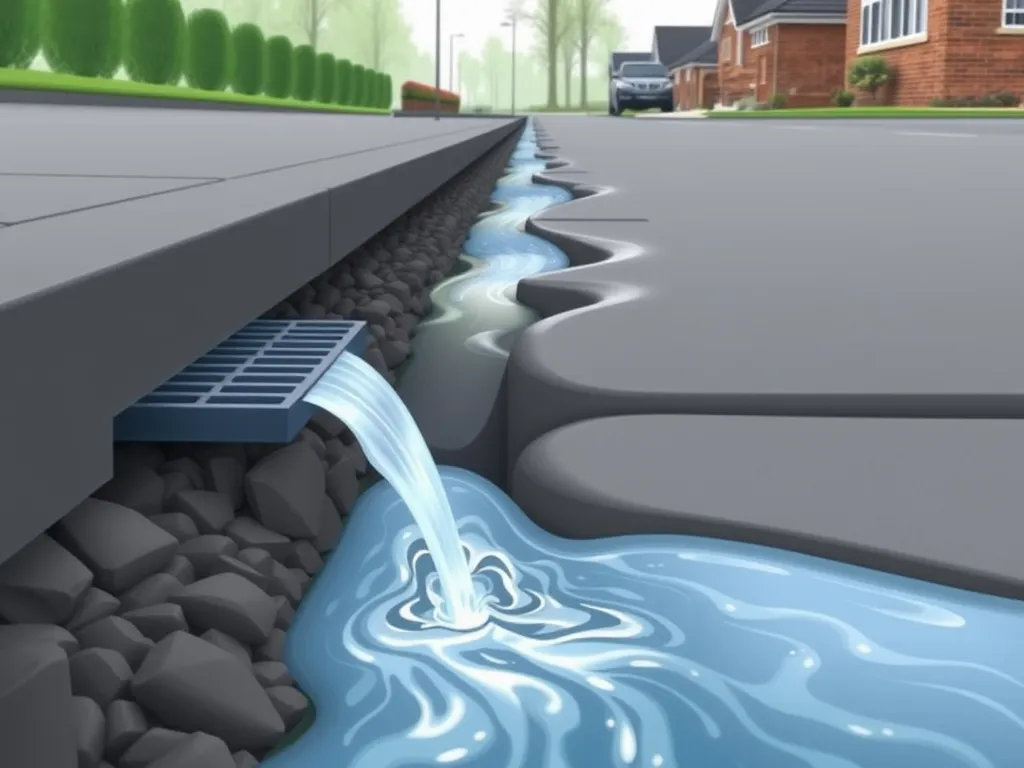
Use trench drains when heavy rain floods your driveway. These long, narrow channels run along low spots. Made of concrete or polymer, they catch fast-moving water. Install them 1-2 inches below the asphalt surface. Pair with PVC pipes to move water 10-20 feet away from the base. Ideal for driveways with slope issues.
Catch Basins for Redirecting Water
Catch basins stop pooling near garage doors or flat zones. These box-like units sit below ground, linked to drain pipes. Water flows in through grates, then exits via 4-inch corrugated tubes. Place basins every 15-20 feet in problem areas. Add a gravel base to stop soil clogs. Costs $150-$400 per unit, plus labor.
Channel Drains for Surface Water Control
Channel drains tackle sheet flow across wide driveways. Slim metal or plastic grates sit flush with the asphalt. They guide water to a safe exit point, like a street gutter. Choose 3-6 inch widths based on rain patterns. Easy to add during paving or retrofits. Expect $10-$20 per linear foot for basic models.
Once you pick a system, learn how to install it right. Next, we’ll break down step-by-step fixes for water issues.
Step-by-step Fixes for Asphalt Driveway Drainage Issues
Fix drainage problems in driveways with these proven methods. Tackle water flow, cracks, and slope issues to stop damage fast.
Fixing Water Pooling and Standing Water
Pooled water weakens asphalt and breeds mold. Use these fixes to guide runoff away from your driveway.
Installing a Trench Drain System
Dig a 12-inch-deep trench along low spots. Lay PVC pipe (4-6 inch width) with a 1% slope. Cover with grate. Costs $15-$30 per foot. Works best for heavy water flow near garage doors.
Resurfacing to Improve Slope
Add 2 inches of fresh asphalt mix to create a 2% slope (1/4 inch per foot). Use a screed board to shape. Ideal for driveways with less than 1% pitch. Fixes 80% of mild pooling cases.
Repairing Cracks and Potholes
Open cracks let water seep into the base. Seal them before they grow into bigger holes.
Sealing Cracks with Asphalt Emulsion
Clean cracks with a wire brush. Pour asphalt emulsion (Grade CRF-2) into gaps wider than 1/4 inch. Use a pour pot for even spread. Dries in 4-6 hours. Stops 90% of water entry.
Filling Potholes with Cold Mix Asphalt
Pack holes with cold mix (like EZ Street). Compact with a hand tamper. Add layers until 1/2 inch above surface. Costs $5-$10 per 50 lb bag. Lasts 1-3 years with proper care.
Adjusting Driveway Slope for Better Drainage
Aim for 2-3% slope (2-3 inch drop per 8 feet). Too flat? Redirect water with these methods.
Adding Asphalt Overlays to Redirect Water
Apply a 1.5-inch overlay on one side to shift slope. Use a laser level to check grade. Costs $3-$5 per sq ft. Avoid if base layer is damaged—replace instead.
Next: See when to fix drainage issues yourself or hire a pro for best results.
Also See: 5 Asphalt Application Techniques for Safety
DIY Vs. Hiring a Professional
Choosing between fixing drainage issues yourself or hiring help depends on the problem’s scale, your skill level, and local regulations. Let’s break down when each approach makes sense.
When to Tackle Drainage Repairs Yourself
Minor cracks (under ¼ inch wide), small pooling areas (less than 2 inches deep), or adjusting surface slope with basic tools often fit DIY fixes. Use asphalt emulsion sealant for hairline cracks or cold mix asphalt for potholes under 6 inches wide. Reshaping edges with a shovel or adding gravel trenches costs $1-$3 per square foot, saving 40-60% versus hiring labor. Always check local codes before digging deeper than 12 inches.
Signs You Need a Landscaping or Asphalt Specialist
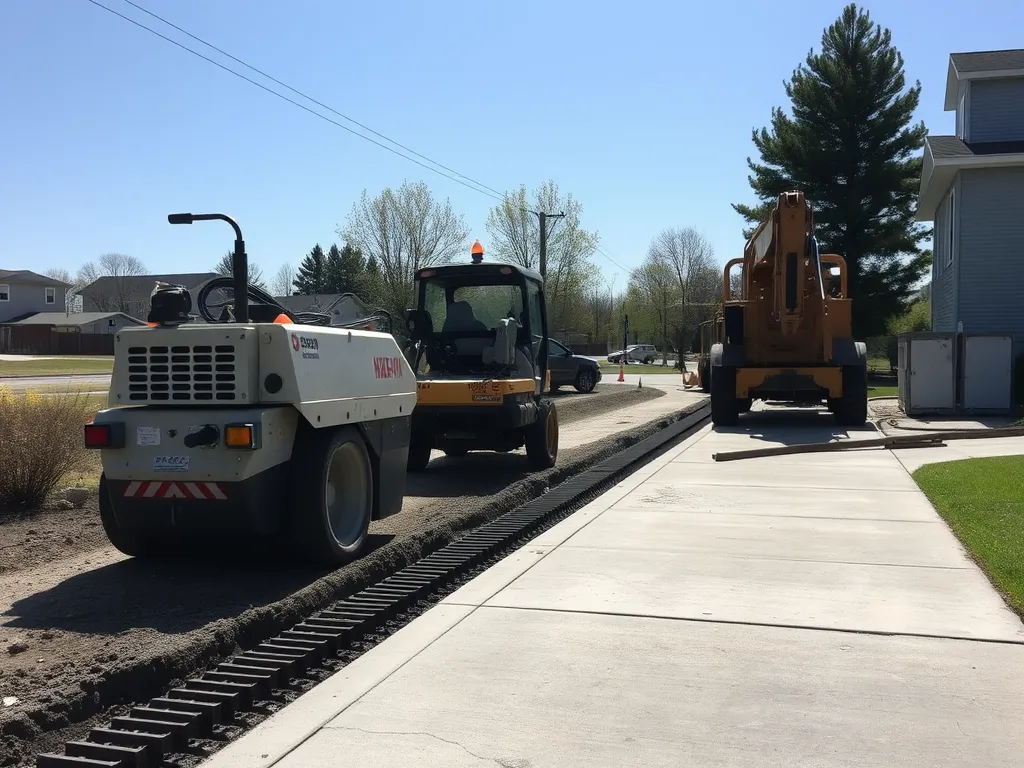
Call a pro for sinking asphalt, repeated potholes, or slope errors exceeding 2% grade. Large trench drains ($15-$30 per linear foot) or full resurfacing ($3-$7 per square foot) demand heavy equipment like plate compactors or infrared heaters. Specialists handle permits, soil testing, and integrating systems like catch basins with existing storm drains. They also spot subsurface issues—clogged French drains or compromised subgrades—that DIY fixes miss.
Regular maintenance keeps repairs manageable. Let’s explore how to protect your driveway’s drainage health long-term.
Maintaining Asphalt Driveways to Prevent Drainage Issues
Proactive care stops drainage problems before they start. Asphalt lasts longer when protected against water damage. Follow these steps to keep water moving away from your driveway surface and foundation.
Regular Cleaning and Debris Removal
Leaves, dirt, and gravel block water flow within hours. Sweep weekly with stiff-bristle brooms or use leaf blowers. After storms, check drain paths near edges. Pressure wash at 1,500-2,000 PSI yearly to clear oil stains that trap moisture. Clogged drains cause 80% of driveway drainage issues within 5 years.
Sealing Asphalt Every 2-3 Years
Sealcoating fills micro-cracks that let water seep into base layers. Apply emulsion-based sealants at 0.15-0.25 per square foot. Schedule applications during dry spells above 50°F. Fresh seals need 24-48 hours to cure—avoid driving during this time. Unsealed asphalt absorbs 30% more water during freeze-thaw cycles.
Inspecting and Clearing Drainage Systems Seasonally
Check trench drains, catch basins, and channel drains each spring and fall. Remove sediment buildup with shop vacs or plumbing snakes. Test flow rates by pouring 5 gallons through each drain. Redirect downspouts 6-8 feet from pavement edges. Replace broken grates or cracked PVC pipes within 2 weeks to prevent soil erosion.
Proper maintenance pairs with smart design choices. Next, explore eco-friendly methods to handle runoff while meeting local regulations.
Environmental Considerations for Asphalt Driveway Drainage
Effective drainage protects both your driveway and surrounding ecosystems. Poor water management leads to environmental strain while increasing repair costs over time.
Managing Runoff to Prevent Soil Erosion
Uncontrolled runoff strips topsoil at rates up to 5 tons per acre annually, destabilizing nearby landscapes. Redirect water flow with these methods:
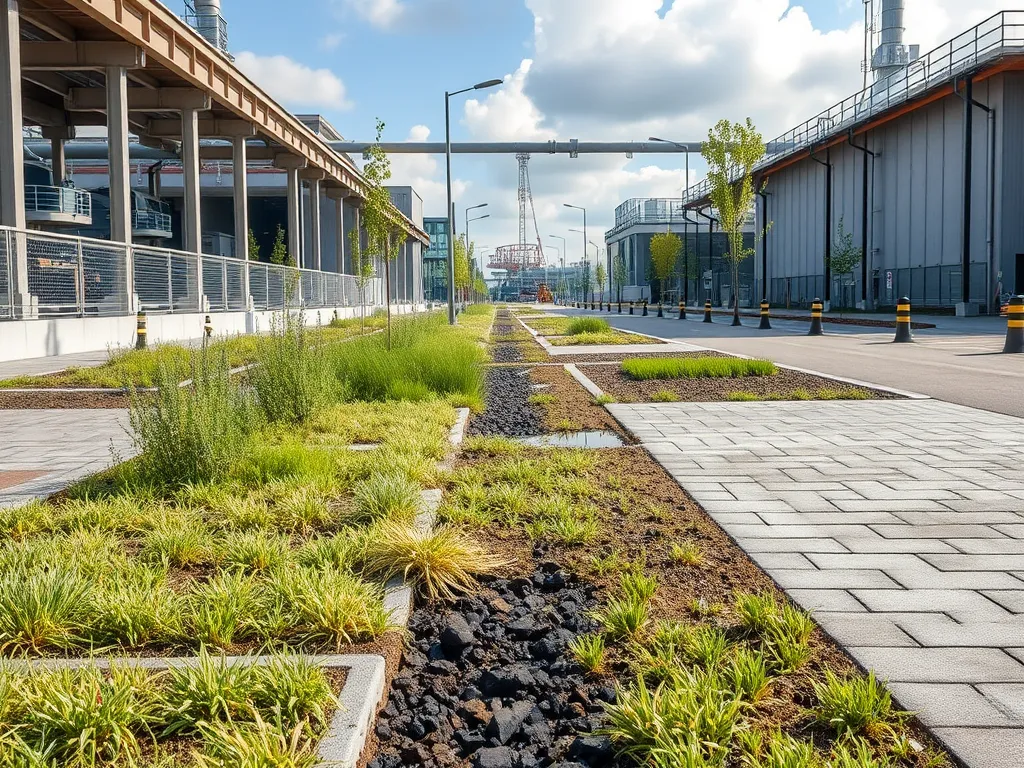
- Bioswales: Sloped channels filled with native plants filter pollutants from runoff
- French drains: Perforated pipes wrapped in gravel capture water 12″-18″ below surface level
- Riprap barriers: Angled rock layers placed along driveway edges break water momentum
Aim for 2% minimum slope grade to keep sheet flow moving away from paved surfaces. Check local codes – many areas require stormwater retention systems for driveways over 500 sq.ft.
Using Permeable Asphalt Solutions
Permeable asphalt (20-35% void spaces) absorbs 5-7 gallons of water per minute per square foot. This eco-friendly alternative uses open-graded aggregates and polymer-modified binders for strength. Key benefits:
- Reduces stormwater runoff by 75-100% compared to traditional asphalt
- Replenishes groundwater supplies through natural filtration
- Meets EPA Phase II stormwater regulations in most states
Installation costs $8-$15 per sq.ft., 20-40% higher than standard asphalt. Maintain permeability with quarterly vacuum sweeping – neglect reduces effectiveness by 50% within 3 years.
Up next: Learn cost comparisons and local regulations in our FAQ section.
Frequently Asked Questions
How Do You Fix Poor Drainage in an Asphalt Driveway?
To fix poor drainage in an asphalt driveway, consider solutions such as installing trench drains, resurfacing the driveway to improve the slope, or sealing cracks and filling potholes to prevent water infiltration.
What Are the Best Drainage Systems for Asphalt Driveways?
The best drainage systems for asphalt driveways include trench drains for high water flow, catch basins for redirecting water, and channel drains to manage surface water effectively.
Can Landscapers Fix Driveway Drainage Issues?
Yes, landscapers can often address driveway drainage issues, especially if they involve grading or landscaping features like bioswales and French drains. However, for structural or asphalt-specific problems, it may be best to hire specialized asphalt professionals.
How Much Does It Cost to Fix Standing Water in a Driveway?
The cost to fix standing water in a driveway varies based on the solution. For example, installing trench drains can cost between $15-$30 per linear foot, while resurfacing the driveway may run $3-$7 per square foot.
What Are Local Driveway Drainage Rules for Asphalt?
Local driveway drainage rules can vary by municipality, often requiring specific permits for drainage systems. It’s essential to check local regulations regarding stormwater management, especially if your driveway exceeds a certain size or is in a designated area.
Closing Thoughts
Proper drainage is vital for the longevity of your asphalt driveway. Identifying and resolving issues early can save you money and prevent extensive damage. Regular maintenance, such as cleaning and sealing, plays a key role in keeping drainage problems at bay.
Whether you’re considering DIY fixes or hiring a professional, understanding your options is crucial. Systems like trench drains and catch basins can significantly enhance water management, ensuring that your driveway remains functional and visually appealing.
For more comprehensive information on asphalt solutions, visit Asphalt Calculator USA.

