The Carbon Footprint Of Asphalt Production: Emissions, Impact, and Comparisons
Published on: October 7, 2025 | Last Updated: April 14, 2025
Written By: George Voss
The carbon footprint of asphalt production measures greenhouse gases (GHGs) released during manufacturing, mainly CO₂ from heating aggregates and petroleum-based bitumen. Producing one ton of asphalt emits 30-40 kg of CO₂, contributing roughly 0.3% of global annual emissions. Unlike concrete, asphalt requires lower initial heating temperatures (280-325°F) but relies heavily on fossil fuels. Strategies like Reclaimed Asphalt Pavement (RAP) reuse and Warm Mix Asphalt (WMA) technology can cut emissions by 15-30% per project.
This article explores how asphalt production impacts climate change. You’ll get data on emissions per ton, yearly trends (2020-2022), and comparisons to concrete. We’ll break down energy use in asphalt plants, identify emission hotspots, and outline proven reduction tactics used by leading contractors. Learn how recycled materials, energy-efficient practices, and emission tracking tools are reshaping this critical industry.
What is Asphalt?
Known for its jet-black finish, asphalt binds crushed stone, sand, and bitumen into surfacing material. Bitumen, derived from petroleum, serves to glue components while providing water resistance. This mixture forms roads, parking lots, and roofing shingles. Heating to 300°F during mixing activates binding properties.
Composition and Primary Uses
Stone makes up 90-95% of asphalt’s volume, with bitumen filling gaps between particles. Crushed limestone, gravel, or recycled concrete often replace virgin stone. Bitumen’s viscosity shifts with temperature, allowing flexibility in climates ranging from -40°F to 120°F. Over 420 million tons of this material get used yearly in U.S. paving projects.
Role in Road Construction and Infrastructure
Over 94% of paved roads in the United States rely on asphalt. Its flexibility handles heavy traffic loads while resisting weather damage. Yet producing this surfacing material generates 20-35 kg of CO2 per ton due to high-temperature mixing. Frequent road repairs using fresh mixes contribute to recurring emission cycles. Urban heat island effects also rise since dark pavements absorb 80-95% of sunlight.
Breaking down each phase of production reveals where emissions spike.
The Asphalt Production Process
Making asphalt mixes rock, sand, and sticky binder at high heat. Each step affects its carbon impact.
Key Steps in Manufacturing Asphalt
Plants mix raw stuff in precise ratios. Heat binds them into pavement-grade material. This step drives most emissions.
Heating and Mixing Aggregates
Aggregates bake at 300°F to remove moisture. Burners blast heat, releasing 18-22 lbs of CO2 per ton of mix. Higher temps boost emissions by 8-12%.
Energy Sources for Asphalt Plants
Plants burn fuels to heat mixers. Common picks:
- Natural gas (cleanest, 40% of plants)
- Diesel (30% higher CO2 than gas)
- Recycled oil (cuts emissions by 15%)
Switching to gas slashes a plant’s carbon output by 1.2 tons daily.
Emissions Hotspots During Production
Drying drums and mixers spew 70-80% of a plant’s CO2. Stack tests show 450-600 ppm gases during peak runs. Storage silos leak 5-8% extra emissions as mix cools.
Next, we break down how these emissions add up yearly—and what it means for global warming.
Carbon Footprint Of Asphalt Production
Making asphalt puts carbon into the air at each step. Let’s break down the numbers.
Total Carbon Output Per Ton Of Asphalt
One ton of new asphalt sends 30-50 kg of CO2 into the air. This range shifts with plant type, fuel used, and how much old asphalt (RAP) gets mixed in. Plants burning gas or oil hit the top end. Those using RAP cut output by 15-20% per ton.
Yearly Carbon Footprint Trends
Asphalt’s carbon impact swings with road work cycles and fuel costs. Recent data shows clear shifts.
2020 vs. 2021 Asphalt Carbon Emissions
| Year | CO2 Output (Million Tons) | Change |
|---|---|---|
| 2020 | 16.2 | – |
| 2021 | 18.9 | +16.7% |
Lockdowns cut 2020 road work. The 2021 rebound spiked emissions as crews raced to fix roads.
2021 vs. 2022 Asphalt Carbon Emissions
| Year | CO2 Output (Million Tons) | Change |
|---|---|---|
| 2021 | 18.9 | – |
| 2022 | 17.8 | -5.8% |
Higher RAP use (32% in 2022 vs. 28% in 2021) and warm mix tech drove the drop.
Asphalt’s Contribution to Global Warming
Asphalt plants add 1.2-1.8% of all U.S. CO2 from industry. But the full picture includes more than tailpipes:
- Dark roads soak up heat, boosting city temps by 2-5°F
- Mixing at 300°F+ needs heavy fuel burn
- Trucks hauling asphalt add 4-6 kg CO2 per ton-mile
To cut these numbers, we need to look at each gas type asphalt plants put out. Next, we’ll map CO2, methane, and nitrous oxide across the making process.
Also See: Cold Mix Asphalt for Maintenance Of Unpaved Roads
Greenhouse Gas Emissions in Asphalt Manufacturing
Producing pavement materials generates multiple greenhouse gases (GHGs) beyond just carbon dioxide. These emissions stem from energy-intensive steps in manufacturing, with fuel combustion contributing most directly to climate impacts.
CO2 and Other GHG Emissions Breakdown
Carbon dioxide dominates asphalt’s carbon emissions, making up 85-90% of total GHGs released. Burning fuels like natural gas or diesel in drum mixers emits 20-30 kg of CO2 per ton of hot-mix asphalt. Methane (5-8%) leaks during fuel transport, while nitrous oxide (2-3%) forms during high-temperature mixing. PG binders—polymer-modified bitumen—can boost emissions by 12% compared to standard grades due to extra processing.
Quantifying Emissions Per Production Stage
Three stages drive emissions:
Aggregate Heating: Drying rocks at 300-330°F consumes 70% of plant energy, emitting 14-21 kg CO2e per ton. Plants using fuel oil generate 20% more emissions than those running on natural gas.
Mixing: Combining heated rocks with liquid bitumen at 280-320°F contributes 20% of emissions (4-6 kg CO2e/ton). Closed-loop systems cut particulate matter by 45% but don’t lower CO2 output.
Storage: Keeping mixtures hot in silos until transport adds 10% (2-3 kg CO2e/ton). Solar-heated storage tanks reduce this by up to 18% in newer facilities.
Beyond reducing emissions during production, comparing pavement materials reveals opportunities for lower-impact choices. Let’s examine how asphalt stacks up against concrete.
Asphalt Vs. Concrete: Carbon Footprint Comparison
Road builders weigh two main options: asphalt or concrete. Both have carbon costs, but key differences shape their eco impact.
Emissions Per Ton: Asphalt Vs. Concrete
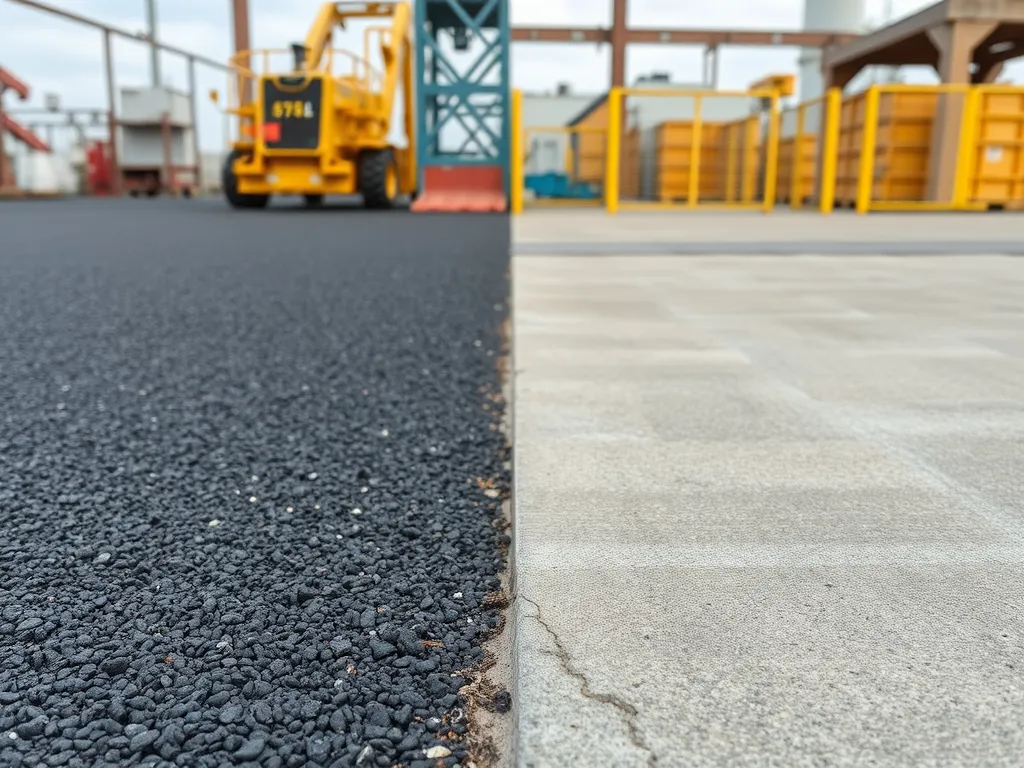
Asphalt emits 20-30 kg CO2 per ton made. Concrete hits 80-100 kg CO2 per ton. Why the gap? Cement in concrete needs high heat, which burns fuel and breaks down limestone. Asphalt skips cement, using bitumen as glue. Bitumen still needs heat, but less energy per ton.
Lifetime Carbon Impact in Road Construction
New roads need more than just making the mix. Asphalt roads can be ground up and reused (called RAP). This cuts new material use by 30-40%. Concrete roads last longer but can’t recycle as much. Fixing asphalt roads emits 25% less CO2 per repair than concrete fixes. Over 30 years, asphalt’s total carbon drops 15-20% vs concrete.
Which Material Has a Higher Footprint?
Concrete’s per-ton emissions are 4x higher. But lifespan matters. A concrete road may last 40 years vs asphalt’s 20. Even so, studies show asphalt’s full life cycle (build, fix, recycle) emits 10-15% less CO2. New warm mix asphalt cuts fuel use by 20%, widening the gap.
Choosing road materials isn’t just about CO2 per ton. It’s about build methods, repair cycles, and reuse. New tech helps asphalt lead in low-carbon roads.
Next, we’ll explore how the asphalt industry slashes its carbon impact through smarter methods and materials.
Strategies to Reduce Asphalt’s Carbon Impact
Cutting asphalt production emissions demands innovation at every stage—from materials to manufacturing. Four key approaches are reshaping the industry’s sustainability profile.
Recycling and Reclaimed Asphalt Pavement (RAP)
Recycled asphalt pavement (RAP) slashes demand for new aggregates and bitumen. Using 30-40% RAP in mixes lowers carbon emissions by 15-20% per ton. Plants now routinely integrate 100 million tons of RAP annually across the U.S., diverting waste from landfills. Advanced milling techniques ensure recycled material meets strength standards while trimming virgin resource use.
Warm Mix Asphalt Technology
Warm mix asphalt (WMA) reduces production temperatures from 300°F to 275°F. Lower heat cuts fuel consumption by 20%, directly lowering CO₂ emissions. Additives like Sasobit® or foaming processes enable workability at reduced temps. Over 35% of U.S. asphalt plants now use WMA, saving 115,000 tons of yearly CO₂ output.
Energy Efficiency in Heating Processes
Modern plants employ infrared burners and heat recovery systems to boost thermal efficiency. Switching from heavy fuel oil to natural gas cuts GHG emissions by 25% per ton. Solar-assisted drying or electric aggregate heaters further reduce reliance on fossil fuels. Plants retrofitted with these technologies report 12-18% lower energy use per batch.
Emission Monitoring and Optimization
Real-time sensors track CO₂, NOx, and particulate levels during production. Data analytics adjust combustion parameters, mix designs, and curing times to minimize emissions. The National Asphalt Pavement Association’s Emerald Eco-Label program certifies plants that maintain emissions below 12 kg CO₂e per ton—30% under industry averages.
These strategies prove asphalt’s carbon footprint isn’t fixed. Next, we’ll analyze how these innovations stack up against traditional methods in real-world emissions data.
Frequently Asked Questions (FAQ)
Is Asphalt Production Bad for the Environment?
Asphalt production contributes to greenhouse gas emissions, particularly CO2, but improved technologies and recycling methods are helping to mitigate its environmental impact. By implementing practices like using Reclaimed Asphalt Pavement (RAP) and warm mix technologies, the asphalt industry is moving toward more sustainable production methods.
What Percentage Of Global Warming is Linked to Asphalt?
While asphalt production accounts for an estimated 0.3% of global annual carbon emissions, its impact on global warming is influenced by additional factors such as urban heat island effects and emissions from transportation related to asphalt distribution.
What Were the Annual Carbon Footprints for 2020, 2021, and 2022?
The annual carbon footprints of asphalt production were 16.2 million tons in 2020, increasing to 18.9 million tons in 2021, before dropping to 17.8 million tons in 2022. This fluctuation reflects changes in road work cycles and the adoption of more sustainable practices.
What GHG Emissions Are Released During Asphalt Production?
Asphalt production primarily emits carbon dioxide (CO2), which constitutes 85-90% of total greenhouse gases (GHGs). Other emissions include methane (5-8%) and nitrous oxide (2-3%), which are released during various production stages, particularly fuel combustion and high-temperature mixing processes.
Closing Thoughts
The carbon footprint of asphalt production is significant but manageable. With thousands of tons produced annually, understanding its emissions is vital for reducing environmental impact. From heating and mixing to the energy sources used in asphalt plants, every step contributes to its overall carbon output.
Strategies like incorporating recycled asphalt and adopting warm mix technology can drastically cut emissions. Ongoing innovation and adherence to best practices in the industry pave the way for a greener future.
For more insightful information, visit Asphalt Calculator USA. Together, we can reduce asphalt’s carbon footprint and make a positive contribution to the environment.
Additional Resources for You:
- Yoder, E. J., & Witczak, M. W. (1975). Principles of Pavement Design (2nd ed.). New York, NY: Wiley.
- Measuring Carbon Footprint of Flexible Pavement …
- Evaluation system for CO2 emission of hot asphalt mixture – ScienceDirect
- AsphaltPro MagazineAsphalt Production Sustainability Lowers Carbon Footprints | AsphaltPro Magazine | Industry Incorporates Sustainability at Asphalt Production Plants – Part II
- Mdpi-res