
The Role Of Temperature in Asphalt Paving Performance
Published on: April 1, 2026 | Last Updated: April 14, 2025
Written By: George Voss
Temperature controls how asphalt behaves during mixing, laying, and compacting. It affects the binder’s ability to glue aggregates together and directly impacts pavement strength. Too hot, and the mix becomes unstable. Too cold, and it won’t bond properly. Contractors monitor temperatures closely, aiming for 275°F–325°F for standard hot mix asphalt. Even a 25°F drop can reduce density by 10%, leading to cracks or potholes.
This article explains why temperature matters at every step, from plant to pavement. You’ll learn how weather changes cooling rates, why modified binders need tighter heat control, and how infrared tools prevent costly errors. We’ll cover real-world strategies to handle summer heatwaves or winter chills while achieving lasting results.
Contents
- Introduction to Temperature’s Impact on Asphalt Paving
- Effects Of Temperature on Asphalt Performance
- Optimal Temperature Ranges for Asphalt Paving
- Consequences Of Temperature Extremes
- Measuring and Managing Asphalt Temperature
- Environmental Factors Influencing Asphalt Temperature
- Frequently Asked Questions (FAQs)
- Closing Thoughts
- Additional Resources for You:
Introduction to Temperature’s Impact on Asphalt Paving
Heat shapes how asphalt performs from mix to road. Each step relies on exact temps to bind rock, sand, and bitumen. Get it wrong, and cracks form fast. Get it right, and roads last decades.
Why Temperature Matters in Asphalt Performance
Bitumen—the glue in asphalt—thins at high heat and thickens when cold. At 300°F, it flows to coat stones. Below 185°F, it hardens, ruining bonds. Proper heat keeps voids under 7% for dense pavement. PG binders (like PG 64-22) set temp ranges for local climates.
Key Stages Where Temperature Affects Asphalt
Four phases demand strict heat control:
Mixing: Plants heat rock to 275-325°F. Too cool, and bitumen won’t stick. Superpave mixes need exact temps to meet specs.
Moving: Trucks lose 10-25°F per hour. Insulated beds keep mixes above 250°F.
Laying: Asphalt must hit the road at 220-300°F. Cold mats won’t bond to layers below.
Packing: Rollers work best between 175-275°F. Cooler temps cut density by 5%, raising repair costs 40%.
Now that we’ve mapped the heat zones, let’s break down how temp shifts change asphalt’s strength and lifespan.
Effects Of Temperature on Asphalt Performance
Temperature directly shapes asphalt’s structural integrity at every stage. From plant mixing to final compaction, precise heat management ensures durable pavement.
During Mix Production and Plant Operations
Hot mix asphalt (HMA) plants heat aggregates and PG-grade bitumen to create a workable blend. Deviations here trigger ripple effects across the entire project.
Optimal Heating for Binding Aggregates
Conventional binders require 275°F–325°F to coat aggregates fully. Polymer-modified binders demand 300°F–350°F for proper viscosity. Insufficient heat leaves stone surfaces exposed, while overheating oxidizes binders, increasing brittleness.
| Binder Type | Mixing Temp Range | Coating Threshold |
|---|---|---|
| PG 64-22 | 275°F–325°F | 290°F minimum |
| PG 76-22 | 300°F–350°F | 320°F minimum |
During Transportation and Storage
Hauling HMA requires balancing time and insulation. Every 30-minute delay drops mix temperature by 12°F–18°F in standard trucks.
Preventing Heat Loss in Delivery Trucks
Double-walled trailers with ceramic insulation limit cooling to 5°F–8°F per hour. Contractors use GPS-tracked trucks to maintain dump temperatures above 250°F. For projects exceeding 60-minute hauls, warm mix asphalt additives extend workability by 40%.
During Laydown and Compaction
Paving crews have a 15–20 minute window post-dumping to achieve target density. Temperature drops below 185°F reduce roller efficiency by 60%.
Temperature Requirements for Proper Density
Compaction must occur within these thresholds:
- Base layer: 265°F–300°F
- Surface course: 240°F–280°F
Steel-wheel rollers achieve 92% density at 280°F but only 88% at 225°F – a 4% gap that cuts pavement lifespan by 7–10 years.
Mastering these thermal thresholds paves the way for exploring ideal temperature ranges across asphalt types.

Optimal Temperature Ranges for Asphalt Paving
Precise temperature control determines asphalt pavement quality. From mixing to compaction, each phase demands strict thermal ranges to ensure durability and performance.
Ideal Mixing Temperatures for Different Asphalt Types
Asphalt mixes require specific heat levels to activate binders and coat aggregates. Superpave specifications recommend:
Modified vs. Conventional Binders
Performance-graded (PG) binders react differently to heat. Modified binders (e.g., PG 76-22 polymer blends) tolerate higher temps than conventional (PG 64-22).
| Binder Type | Mixing Temp Range (°F) |
|---|---|
| Conventional | 280–330 |
| Modified | 300–350 |
Laydown and Compaction Temperature Guidelines
Post-mix handling requires fast action. Laydown temps must stay above 275°F to ensure workability. Compaction needs 185–275°F for 92% density targets.
Avoiding Cold Weather Challenges
Below 50°F ambient air, asphalt cools rapidly. Contractors use thermal blankets or warm-mix additives (e.g., Evotherm®) to extend working time. Compaction below 185°F risks air voids exceeding 8%, weakening pavement structure.
Proper thermal management prevents costly repairs. Next, we examine how temperature extremes threaten asphalt integrity.
Also See: Exploring Bioasphalt: Materials and Applications
Consequences Of Temperature Extremes
Temperature extremes directly impact asphalt’s structural integrity and lifespan. Both scorching heat and freezing cold create unique challenges that affect pavement durability within weeks or years after installation.
High-temperature Risks
When asphalt pavement exceeds 140°F, its binder begins losing stiffness. This leads to deformation under traffic loads – a costly issue for roads in sunbelt states like Arizona or Texas.
Softening and Rutting in Hot Climates
Rutting – permanent grooves in wheel paths – occurs when hot asphalt mix lacks sufficient high-temperature PG binder grades. Modified binders (PG 76-22 or higher) resist softening better than conventional ones at 160°F+. Without proper grade selection, repairs can cost $15-$50 per square yard within 3-5 years.
Low-temperature Challenges
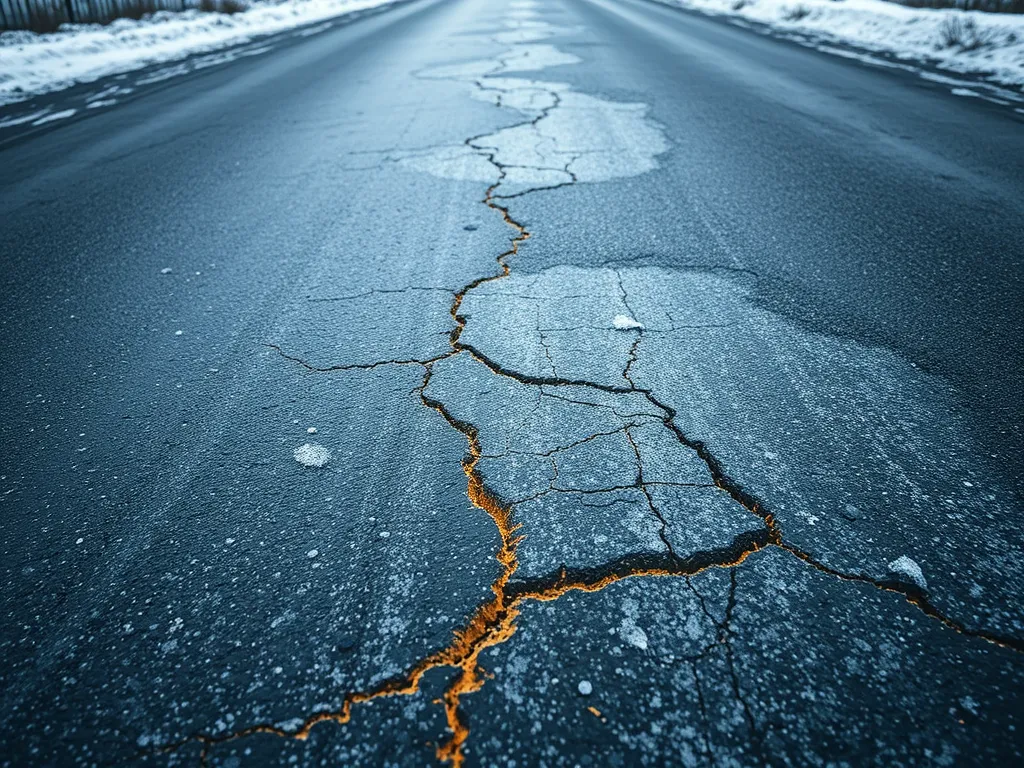
Asphalt becomes brittle below 40°F, reducing flexibility. Pavements in northern regions face thermal cracking when temperatures plunge faster than the material’s stress-relaxation capacity.
Cracking and Poor Adhesion in Cold Weather
Thermal cracks form when asphalt shrinks faster than its tensile strength allows. At 32°F or lower, binders struggle to bond aggregates, creating porous surfaces that let water seep in. Using PG 58-34 binders or adding polymers improves cold-weather performance by lowering the glass transition temperature (-20°F for modified mixes vs. 15°F for standard).
Managing these extremes requires precise temperature tracking tools – the focus of our next section.
Measuring and Managing Asphalt Temperature
Precise temperature control separates successful paving projects from failed ones. Contractors rely on advanced tools and strategic planning to keep materials within target ranges from plant to pavement.
Tools for Monitoring Pavement Temperature
Real-time data guides decisions during critical paving stages. Modern devices provide instant readings without physical contact, ensuring mix integrity stays intact.
Infrared Thermometers and Thermal Cameras
Infrared thermometers measure surface heat between 250°F and 50°F with ±2°F accuracy. Thermal cameras map temperature variations across entire mats, spotting cold spots that cause weak bonds. Proper emissivity settings (0.95 for fresh asphalt) prevent false readings. ASTM D3668 mandates thermal testing every 500 tons during placement.
Best Practices to Maintain Optimal Heat
Heat management starts before trucks arrive. Strategies include adjusting mix delivery schedules, using insulated truck beds, and preheting pavers to 300°F. Crews prioritize rapid placement—targeting 20-30 minutes between truck discharge and final compaction.
Timing Paving Operations for Weather Conditions
Paving halts when ambient air drops below 50°F in many regions. Summer work shifts to early mornings to avoid midday heat softening mixes. Weather apps track real-time wind speed: gusts above 15 mph accelerate cooling by 35%. Thermal blankets retain heat in cool climates, extending working windows by 2-3 hours. Contractors review 24-hour forecasts to avoid rain events that drop surface temps below 175°F prematurely.
These temperature management techniques set the stage for examining how environmental factors like humidity and wind amplify thermal challenges during paving.
Environmental Factors Influencing Asphalt Temperature
Weather conditions directly affect how asphalt behaves during placement. Air temperature, moisture levels, and wind patterns all interact with pavement materials – creating challenges that demand precise management.
Impact Of Ambient Air Temperature
Ambient air temperature sets the baseline for asphalt cooling rates. For standard PG 64-22 binders, paving crews target air temperatures above 50°F. Below this threshold, mixes cool 30-50% faster, risking incomplete compaction. Hot climates above 85°F extend workability but require faster rolling to prevent tender zones. Thermal imaging reveals gaps as small as 20°F across the mat can cause density variations exceeding 3%.
Role Of Humidity and Wind Speed
Wind steals heat faster than any weather factor. At 15 mph, asphalt surfaces lose 8-12°F per minute – double the rate of calm days. High humidity above 70% slows heat transfer slightly but complicates mix moisture control. Contractors combine anemometers with real-time thermal scanners to adjust laydown speed. A 5 mph wind jump might trigger a 25°F mix temp boost to compensate.
Mitigating Rapid Cooling During Paving
Three tactics combat premature stiffening:
- Deploying ground-fired heaters to pre-warm base layers to 120°F+
- Using insulated tack coat sprayers to maintain 180°F application temps
- Sequencing breakdown rollers within 90 seconds of paver discharge
Night paving in arid regions often requires polymer-modified mixes with extended 290-320°F working ranges.
Mastering environmental variables sets the stage for precise heat tracking – a skill we’ll explore through advanced monitoring technologies next.

Frequently Asked Questions (FAQs)
What is the Effect Of Temperature on Asphalt?
Temperature affects the viscosity of the binder in asphalt, influencing how well it coats aggregates and how the asphalt behaves under load. Higher temperatures decrease viscosity, leading to better flow and adhesion, while lower temperatures increase viscosity, which can result in poor bonding and cracking.
What is the Best Temperature for Asphalt Paving?
The ideal temperature range for asphalt paving is typically between 275°F to 325°F during mixing, and the laydown temperature should be between 220°F to 300°F. Maintaining these temperatures ensures proper compaction and bonding.
Does Asphalt Cure Faster in Hot Weather?
Yes, asphalt tends to cure faster in hot weather as the heat promotes the evaporation of moisture and enhances the binder’s properties. However, extremely high temperatures can also lead to mix instability if not managed correctly.
How Does Humidity Affect Asphalt Temperature During Paving?
High humidity can slightly slow heat transfer from the asphalt, which may prolong the time it takes for the mix to cool. However, it can also complicate moisture control, potentially affecting how well the blend adheres, making it vital to monitor humidity levels closely during operations.
What Are the Consequences Of Paving in Cold Weather?
Paving in cold weather can lead to inadequate compaction, increased air voids, and bonding failures. If the asphalt cools too quickly below the required temperature, it can result in thermal cracking and long-term pavement damage.
How Does Wind Speed Influence Asphalt Temperature During the Paving Process?
Wind speed plays a significant role in asphalt cooling. At higher wind speeds, asphalt surfaces can lose heat rapidly, leading to lower temperatures that may hamper proper compaction and mix performance. It’s crucial to account for wind speed when planning paving operations.
What Tools Are Best for Monitoring Asphalt Temperature?
Infrared thermometers and thermal cameras are among the best tools for monitoring asphalt temperature. They provide immediate, non-contact temperature readings and can help identify cold spots that could affect the pavement’s performance.
How Can Contractors Prevent Heat Loss During Transportation?
To prevent heat loss during transportation, contractors can use insulated trucks, employ double-walled trailers, and minimize delays to keep the asphalt mix temperature above the required thresholds, thus ensuring it remains workable upon arrival at the job site.
Closing Thoughts
Understanding the role of temperature in asphalt paving is crucial for achieving optimal performance and longevity. Factors such as mix production, transportation, and laydown all require careful temperature management. Adhering to ideal temperature ranges and using appropriate monitoring tools can significantly enhance the quality of the asphalt.
Extreme temperatures, both high and low, pose risks including softening, rutting, cracking, and poor adhesion. Continuous monitoring and adopting best practices will help mitigate these issues, ensuring durable and resilient pavement.
For further information and resources on optimizing your asphalt project, visit Asphalt Calculator USA.
Additional Resources for You:
- Federal Highway Administration (FHWA) – Asphalt Pavement Technologies
- Temperature Impact on Pavers: Selecting for Durability
- What Temperature Should Asphalt Be Between Lifts? Insights from Sacramento, California
- Feeling the heat – Asphalt magazine
- The Role Of Temperature In Paving Asphalt – Black and Yellow Blog

