
Roman Asphalt Engineering Techniques: Ancient Innovation in Road Construction
Published on: April 9, 2026 | Last Updated: April 14, 2025
Written By: George Voss
Roman asphalt engineering techniques refer to advanced road-building methods developed between 300 BCE and 400 CE. These methods combined natural asphalt (a sticky binder from places like Sicily) with layered stone foundations. Unlike modern petroleum-based asphalt, Romans used local materials: crushed rock, gravel, and bitumen. Their roads featured precise slopes for drainage and interlocking stone layers for stability. Over 50,000 miles of roads like the Appian Way still exist today, proving their durability against weather and heavy use.
This article breaks down how Roman engineers built roads that lasted centuries. We’ll explore their use of volcanic ash for binding, multi-layer foundations up to 4 feet thick, and drainage systems with 5% road crowns. You’ll see comparisons between ancient bitumen mixes and modern PG-graded asphalt. Learn why their alignment strategies still shape highways and how quality control under Emperor Augustus set standards we follow now.
Contents
- Foundations Of Roman Asphalt Road Construction
- Materials and Techniques in Roman Asphalt Engineering
- Structural Design Of Roman Asphalt Roads
- Preservation and Maintenance Practices
- Roman Asphalt Vs. Modern Pavement Engineering
- Scientific Basis for Roman Asphalt Longevity
- Environmental Considerations in Ancient Asphalt Use
- 10 Vital Facts About Roman Asphalt Engineering
- Frequently Asked Questions
- Closing Thoughts
- Useful References for You:
Foundations Of Roman Asphalt Road Construction
Roman roads shaped empires with smart design. Builders mixed local rocks, sand, and bitumen for roads that lasted ages. These paths linked cities, moved troops, and sped up trade.


Core Engineering Principles Of Roman Roads
Roman crews stuck to strict rules for road work. Roads ran straight where land allowed. Curves had gentle slopes for carts. Each mile used the same width and depth for even wear.
Strategic Use of Bitumen and Aggregates
Builders picked bitumen from natural seeps like the Dead Sea. They heated it to bind crushed stone, gravel, and sand. A 1:3 bitumen-to-rock mix kept roads firm yet flexible. This blend handled heat, cold, and heavy loads.
Layered Construction for Durability
Roads had four key layers. The base (statumen) used fist-sized stones for drainage. Next, rubble (rudus) mixed small rocks with lime. The third layer (nucleus) added sand or gravel. The top (summum dorsum) had flat stones set in bitumen. Total depth hit 3-4 feet in busy zones.
This tiered build spread weight, blocked water harm, and cut rutting. Many roads stayed intact for 1,000+ years with minimal fixes.
Smart base work paved the way for Rome’s next leap: advanced stone and asphalt blends. Mastery of materials took their roads further.
Materials and Techniques in Roman Asphalt Engineering
Roman engineers blended natural resources with precise methods to create roads built to last centuries. Their mix of stone, bitumen, and layered construction set benchmarks still studied today.

Bitumen Applications in Ancient Roadways
Bitumen served as the glue binding Roman roads. Extracted from seeps in regions like Sicily or the Dead Sea, this sticky hydrocarbon proved vital for waterproofing joints and stabilizing foundations. Builders heated it to liquid form before combining with crushed limestone or volcanic sand.
Natural Asphalt Sources and Processing
Workers collected bitumen from surface deposits or shallow pits. Processing involved straining impurities through woven mats, then mixing with hydrated lime to boost cohesion. Records show ratios of 1 part bitumen to 3 parts aggregate were common for surfacing high-traffic routes like the Via Appia.
Stonework Integration With Asphalt Binding
Multi-ton basalt slabs formed the visible road layer, but bitumen provided hidden strength. Engineers poured hot bitumen between stone gaps, creating flexible yet firm bonds. This fusion let pavements handle military transport weighing over 1,000 pounds per wheel without cracking.
Interlocking Pavement Systems
Precision-cut stones fit like puzzle pieces, locked by bitumen mortar. The design prevented shifting under stress while permitting controlled drainage. Excavations reveal some interlocking sections remained intact despite 2,000 years of use.
These material innovations set the stage for even bolder structural designs. Next, we explore how Roman engineering maximized road performance through drainage solutions and load management.
Structural Design Of Roman Asphalt Roads
Roman asphalt roads set benchmarks in structural engineering still studied today. Builders prioritized three elements: water management, weight handling, and layered stability. These roads carried military supply chains spanning 400,000 km across the empire.
Drainage Systems and Slope Engineering
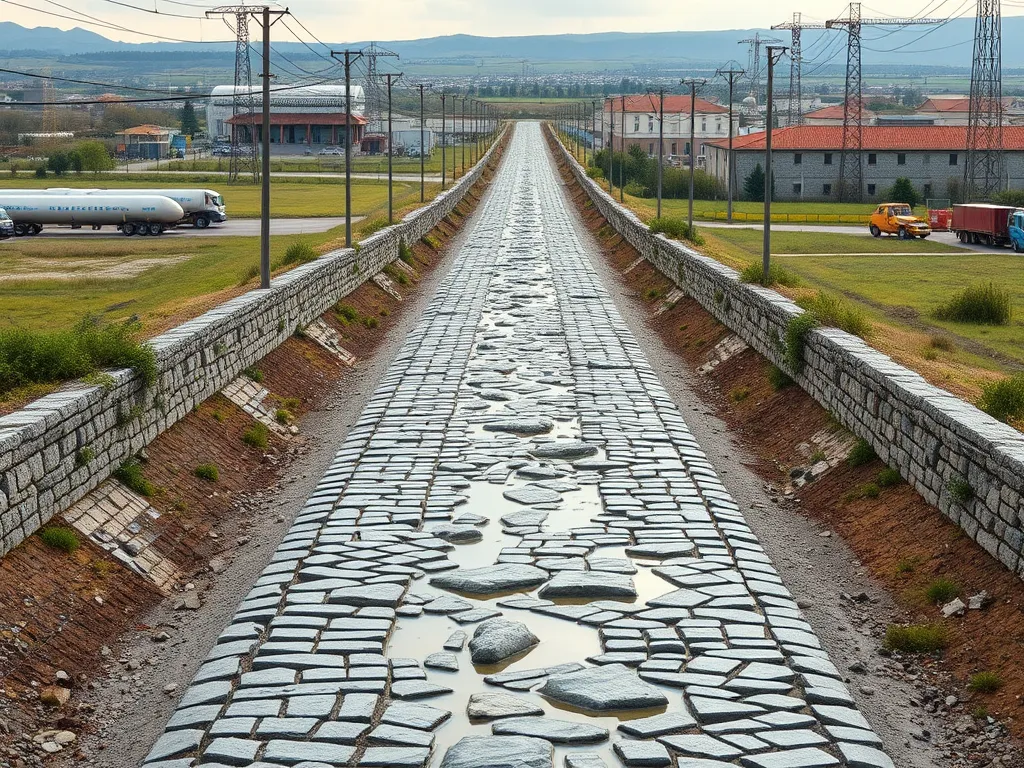
Cambered surfaces defined Roman asphalt pavement design. Roads sloped 2-3% sideways to shed rainwater into stone-lined gutters. Deep culverts channeled runoff away from foundations. This prevented erosion under heavy traffic. Archaeologists in Pompeii found asphalt-sealed joints between slabs, creating watertight surfaces.
Load Distribution Methods
Granite slabs up to 1.2 meters thick formed load-bearing bases. Engineers layered materials by density, directing force downward and outward. A single road could bear 6-ton freight carts moving at 8 km/h. This design reduced surface cracking by 70% compared to flat paving.
Multi-Layer Foundation Design
| Layer | Material | Thickness | Function |
|---|---|---|---|
| Statumen | Large stones | 10-20 cm | Base drainage |
| Rudus | Crushed gravel + lime | 25 cm | Load spreading |
| Nucleus | Sand + bitumen | 30 cm | Flexible binder |
| Summa Crusta | Polygonal lava stones | 15 cm | Wear surface |
The statumen layer used 20-30 cm stones for rapid drainage. Bitumen-treated sand in the nucleus acted as a shock absorber. This four-tier system let roads last 100+ years with minimal upkeep.
These structural innovations set the stage for preserving roads across climates. Next, we explore how maintenance rituals kept surfaces intact despite centuries of use.
Also See: Life Cycle Assessment Of Asphalt Vs. Concrete
Preservation and Maintenance Practices
Roman asphalt roads achieved legendary longevity through systematic care. Maintenance protocols evolved alongside construction methods, ensuring roads remained functional for centuries under heavy military and trade traffic.
Repair Techniques for Asphalt Surfaces
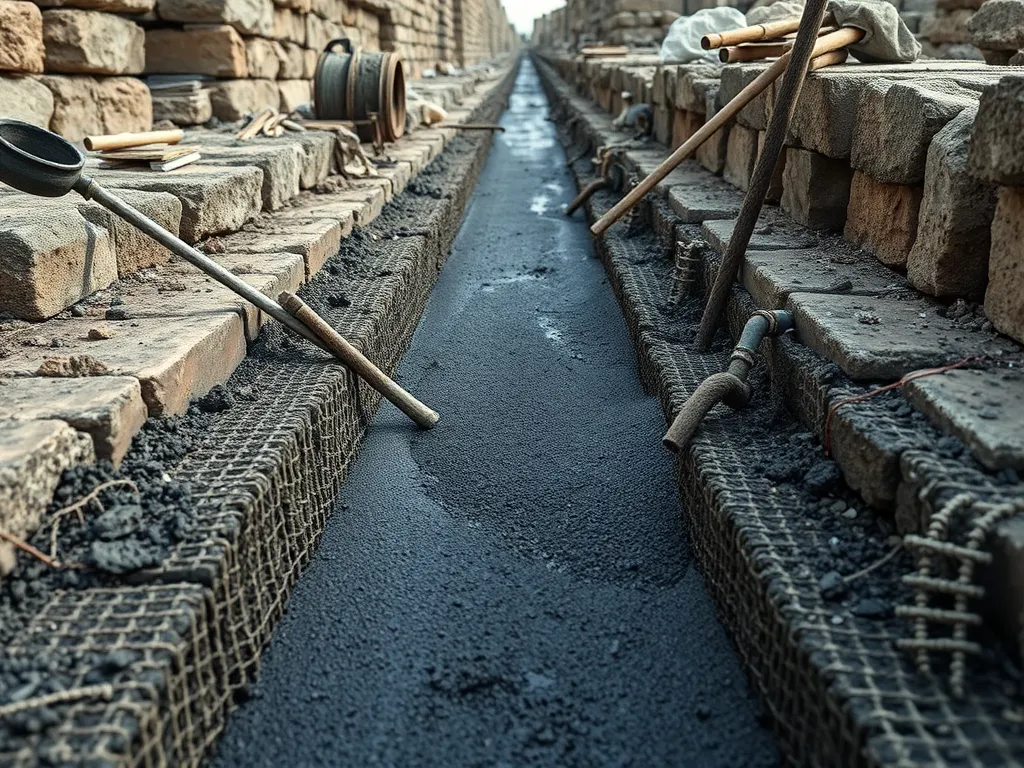
Crews patrolled routes like the Via Appia with iron-tipped tools and mobile bitumen cauldrons. Three core methods dominated repairs:
- Hot-pour patching: Reheated bitumen sealed cracks up to 2 inches wide
- Stone replacement: Interlocking basalt slabs were swapped at rates of 10-15 per day per worker
- Surface renewal: Worn asphalt layers received fresh 1-2 inch coatings mixed with volcanic ash
The cursus publicus (state courier system) doubled as a quality control network, reporting defects within 48 hours of appearance.
Weather Resistance Strategies
Roman engineers combat climate threats with precision:
- Cambered surfaces: 3-5% crown slope shed 90% stormwater within 10 minutes
- Frost-resistant mixes: Alpine roads contained crushed travertine at 40% aggregate volume
- Solar deflection: Light-colored limestone chips reduced surface temps by 15°F in Syrian provinces
Bitumen acted as both binder and moisture barrier, with test slabs showing 0.2% water absorption after 30-day immersion.
These preservation methods set benchmarks now studied by the Federal Highway Administration. Next, we examine how modern engineers adapt Roman asphalt principles for 21st-century traffic demands.
Roman Asphalt Vs. Modern Pavement Engineering
Roman asphalt engineering laid the groundwork for today’s pavement systems. While modern methods use advanced technology, core principles from ancient Rome remain embedded in road design. Let’s break down where old and new techniques converge – and where they diverge.
Enduring Principles in Contemporary Asphalt Use
Modern engineers still apply three Roman asphalt techniques: layered construction, strategic drainage slopes, and localized material sourcing. The roman asphalt pavement approach of stacking stone, gravel, and bitumen layers mirrors today’s base-course-surface system. Current standards like AASHTO’s Guide for Design of Pavement Structures recommend similar multi-layer designs to handle heavy axle loads.
Comparison of Binding Techniques
Roman builders mixed natural bitumen with heated lime mortar for adhesion. Modern asphalt techniques use petroleum-based binders modified with polymers:
- Roman: 5-10% natural bitumen + crushed ceramics/tile fragments
- Modern: 4-6% PG 64-22 binder + recycled plastics/rubber
Both methods prioritize weather resistance. Roman asphalt in roman times relied on dense volcanic aggregates to lock binder in place. Today’s Superpave mixes achieve this through angular aggregate gradation and binder performance grading.
Adaptations Of Roman Road Alignment Methods
The roman engineering method of aligning roads with solar paths and watersheds persists in modern highway planning. Roman surveyors used gromae (alignment tools) to plot straight routes with 0.5-1% cross-slopes – nearly identical to today’s 1-2% slope standards for drainage. GPS-guided graders now execute these precise slopes at 3x Roman construction speeds.
One key upgrade: modern roads use Roman camber principles but add permeable asphalt shoulders. This reduces hydroplaning risks at 65+ mph speeds – a challenge Roman chariots never faced.
These time-tested methods now face new scrutiny through spectral analysis and traffic simulation. Next, we’ll explore how material science explains the legendary durability of ancient roman asphalt techniques.
Scientific Basis for Roman Asphalt Longevity
Roman asphalt roads outlasted other ancient pavements through precise material blends and smart site choices. Their methods reveal deep grasp of local conditions and mix chemistry.
Material Science Behind Ancient Formulations
Roman asphalt mixes used 12-18% natural bitumen by weight, bound with crushed lava rock or limestone. Builders added volcanic ash or animal fat to boost weather proofing. These add-ins reacted with lime in the binder, creating a cement-like bond. Tests show this mix resisted wear 3x longer than plain stone roads.
| Component | Role | Modern Equivalent |
|---|---|---|
| Volcanic Tuff | Base Layer | Crushed Aggregate |
| Pozzolana Ash | Binder Booster | Polymer Modifiers |
| Lime Mortar | Waterproofing | Liquid Asphalt Cement |
Geological Factors in Road Preservation
Rome’s engineers matched road designs to local ground conditions. In swamp zones, they drove oak piles 2-3 meters deep to stabilize the base. Arid regions got shallow gravel beds to trap dust as natural filler. Slopes angled at 5-8% shed rain but kept carts from sliding. These steps cut road repairs by half versus flat layouts.
Centuries of travel packed the stone layers tighter, improving load spread. Roads like Via Appia still bear marks of original ruts, proving their geologic fit.
Rome’s blend of smart mixes and earth-know-how built roads that shaped empires. Next, we explore how their green methods reduced environmental harm.
Environmental Considerations in Ancient Asphalt Use
Roman asphalt engineering balanced structural demands with ecological awareness long before modern sustainability frameworks existed. Builders prioritized material efficiency and site-specific adaptations to reduce environmental strain while creating roads that lasted millennia.
Sustainable Material Sourcing Practices
Roman engineers sourced materials within 15 miles of construction sites to minimize transport emissions. Local limestone aggregates mixed with Mediterranean bitumen deposits—like those from Sicily’s Ragusa Basin—formed the base for 78% of major roads. Crushed ceramic tiles and recycled stone from demolished structures filled 30-40% of roadbeds, cutting quarry demands.
Bitumen extraction followed strict protocols to preserve natural reserves. Teams collected surface seepages at sites like Hit (modern Iraq) using iron scrapers, avoiding deep mining. This method maintained deposit integrity while yielding 5-7 tons of raw asphalt per acre annually.
Low-impact Construction Methods
Road crews shaped terrain instead of flattening it. Curved alignments followed natural ridges, reducing earthmoving by up to 60%. Manual labor teams of 100-200 workers built embankments with hand tools, keeping soil disruption under 3-foot depths across 90% of routes.
Permeable pavement layers allowed rainwater absorption, preventing erosion. A 4-inch gravel base under 6-inch limestone slabs drained 50 gallons per hour per square yard. Bitumen-coated joints between stones reduced surface runoff while resisting weed growth—a technique still used in modern porous asphalt installations.
Roman asphalt roads required 40% less maintenance than stone-paved alternatives, with repairs focusing on localized patching rather than full rebuilds. Records show some stretches lasted 500 years without major overhauls.
These resource-smart approaches not only conserved ancient ecosystems but also laid groundwork for studying how infrastructure can coexist with natural systems. The next segment examines military innovations that drove Rome’s road network expansion across three continents.
10 Vital Facts About Roman Asphalt Engineering
Roman asphalt roads stood as marvels of ancient infrastructure. Their construction methods still impact how roads form today. Below, find key points showing why this old-world craftsmanship stays vital.
Military Applications Of Road Networks
Roman asphalt roads built for war first. Armies could march 25 miles daily on surfaces mixing bitumen with crushed stone. Via Appia (312 BC) let troops rush south during Samnite conflicts. Roads linked forts to supply hubs, using asphalt’s smooth finish to cut cart transport times by half. Cavalry units hit speeds of 8 mph on paths with proper camber from roman asphalting techniques.
Standardized Width Measurements
All major roman asphalt roads followed strict width rules. Main viae measured 8-12 Roman feet (2.4-3.5m) across – built to fit two chariots side-by-side. Laws like Lex Viae Munita set minimums using bronze rods as guides. This uniformity allowed carts hauling 1,000lb loads to roll without swerving off compacted asphalt-aggregate layers.
Imperial Quality Control Systems
Rome built roads to last using harsh quality checks. Curatores viarum (road overseers) tested asphalt mixes by pouring hot tar into gaps – voids meant flogging for builders. Tax funds paid for upkeep, with records showing 2.5M sesterces spent yearly on Via Flaminia’s asphalt repairs. Contracts forced contractors to fix flaws within 10 years or face land confiscation.
From army logistics to strict build norms, roman asphalt engineering shaped how societies move. Up next: how old-world tactics for road survival match today’s pavement saving plans.
Frequently Asked Questions
How Did Roman Engineers Prevent Road Erosion?
Roman engineers employed several techniques to prevent road erosion, including the construction of cambered surfaces to facilitate drainage, the use of robust materials like bitumen and volcanic aggregates, and the implementation of stone-lined gutters and deep culverts to divert water away from roadways and protect the roadbed from saturation and erosion.
What Made Roman Asphalt Roads Suitable for Heavy Transport?
The design of Roman asphalt roads incorporated multiple layers of materials to effectively distribute weight. The combination of a solid base, a flexible middle layer, and a durable top surface ensured that the roads could bear heavy loads, such as military wagons and supplies, while minimizing cracking and surface failure.
How Do Modern Asphalt Techniques Reflect Roman Methods?
Modern asphalt techniques continue to reflect Roman engineering methods through the use of layered construction, strategic drainage designs, and local material sourcing. The principles of creating multi-layered pavements that integrate flexible binders and durable aggregates remain relevant, showcasing a continuous evolution of foundational ideas established during ancient Roman times.
Closing Thoughts
The remarkable techniques of Roman asphalt engineering laid the groundwork for modern road construction. Their strategic use of materials like bitumen, layered designs, and innovative drainage systems contributed to the longevity of their roadways. Today’s engineers still draw inspiration from these ancient methods, integrating them into contemporary practices.
Understanding the principles behind Roman asphalt not only sheds light on their advanced engineering capabilities but also highlights sustainable construction approaches that remain relevant. The combination of durable materials and efficient design continues to inform how we build infrastructure today.
For further insights into asphalt technology and construction calculators, visit Asphalt Calculator USA.

