How Aggregates Shape Every Asphalt Surface You Use
Published on: April 6, 2026 | Last Updated: April 14, 2025
Written By: George Voss
Aggregates form 90-95% of asphalt mixtures by weight, acting as the backbone of pavements. These materials—crushed stone, gravel, sand, or recycled asphalt—determine strength, weather resistance, and surface grip across asphalt types. Dense-graded hot mix uses angular crushed stone for highways, while porous asphalt relies on uniform gravel for drainage. Aggregate size, shape, and mineral content directly impact rutting resistance, freeze-thaw durability, and skid numbers measured with British Pendulum Testers.
This guide explores how aggregates dictate asphalt performance in roads, driveways, and parking lots. You’ll learn why interstate highways demand tougher granite aggregates than local streets using limestone. We break down ASTM D692 standards for aggregate grading, compare virgin vs reclaimed materials, and show how 1/2” vs 3/8” stone sizes affect pavement life. Discover how contractors optimize blends for specific climates and traffic loads using AASHTO M323 guidelines.
Contents
- Primary Functions Of Aggregates in Asphalt
- Four Main Types Of Aggregates in Asphalt
- Aggregate Specifications for Asphalt Mixtures
- Composition Of Asphalt Mixtures: Aggregates Vs Binder
- Impact Of Aggregate Size on Asphalt Performance
- Significance Of Gradation in Hot Mix Asphalt
- Types Of Asphalt Mixes and Aggregate Applications
- Calculating Asphalt Mixture Properties
- Environmental Considerations in Aggregate Selection
- FAQ: Common Questions About Asphalt Aggregates
- Closing Thoughts
- Additional Resources for You:
Primary Functions Of Aggregates in Asphalt
Aggregates form 90-95% of hot mix asphalt (HMA) by weight, serving as the backbone of pavement systems. Their composition directly impacts performance across traffic loads, weather extremes, and surface demands.


Structural Support and Load Distribution
Coarse aggregates like crushed granite or limestone create interlocking networks that distribute vehicle weight. A 1.5-inch thick asphalt layer with 3/4″ angular aggregates withstands 18-kip truck axles by transferring stress downward. Without proper gradation, pavements develop ruts under repeated loading.
Enhancing Durability and Stability
Aggregates with high resistance to weathering prevent premature asphalt failure. Dacite or traprock aggregates in Superpave mixes show less than 35% wear in Los Angeles Abrasion tests, outlasting softer materials. Angular particles also improve stability – mixes with 60% crushed faces sustain 4,000+ psi Marshall stability versus 2,500 psi for rounded gravel.

Improving Skid Resistance and Surface Texture
Micro-texture from fine aggregates like quartzite (PSV 50-60) and macro-texture from 3/8″ chips create friction. Open-graded mixes using single-size aggregates achieve 65+ BPN (British Pendulum Number), reducing wet-pavement crashes by 40%. However, excessive sand content (>25%) can polish under traffic, dropping friction values by 30% within 5 years.
With these core functions established, we next examine the four primary aggregate types used in asphalt production.
Four Main Types Of Aggregates in Asphalt
Aggregates form 90-95% of hot mix asphalt by weight, directly influencing performance. Four core materials dominate modern mixes.

Crushed Stone Aggregates in Asphalt
Produced by mechanically breaking rocks, crushed stone offers superior angularity. Sharp edges create interlock, boosting rut resistance in high-traffic zones like interstate highways. Common gradations range from ¾-inch coarse stone to #10 sieve fines. Meets Superpave specifications for bulk specific gravity (2.5-2.9) and absorption rates below 2%.
Gravel Aggregates in Asphalt
Naturally rounded gravel works best in low-speed or rural pavements. Smooth surfaces reduce friction but lower production costs by 15-20% versus crushed stone. Used with PG 58-28 binders in base layers, gravel mixes require strict silt/clay control—max 1% passing the #200 sieve.
Sand Aggregates in Asphalt
Fine aggregates (0.075mm to 4.75mm) fill voids between larger stones. Washed concrete sand improves workability during compaction. In porous asphalt, open-graded sand mixes allow 18-22% stormwater infiltration rates, meeting EPA drainage standards.
Reclaimed Asphalt Pavement (RAP) Aggregates
RAP reuses milled pavement containing aged binder and aggregates. Modern plants blend up to 30% RAP into new hot mix, cutting material costs by 25%. Processed through crusher screens, RAP particles must meet same gradation specs as virgin stone. Requires viscosity testing for binder rejuvenation.
Selecting the right material type is just the first step. Next, we’ll examine quality standards that ensure aggregates perform under traffic loads.
Aggregate Specifications for Asphalt Mixtures
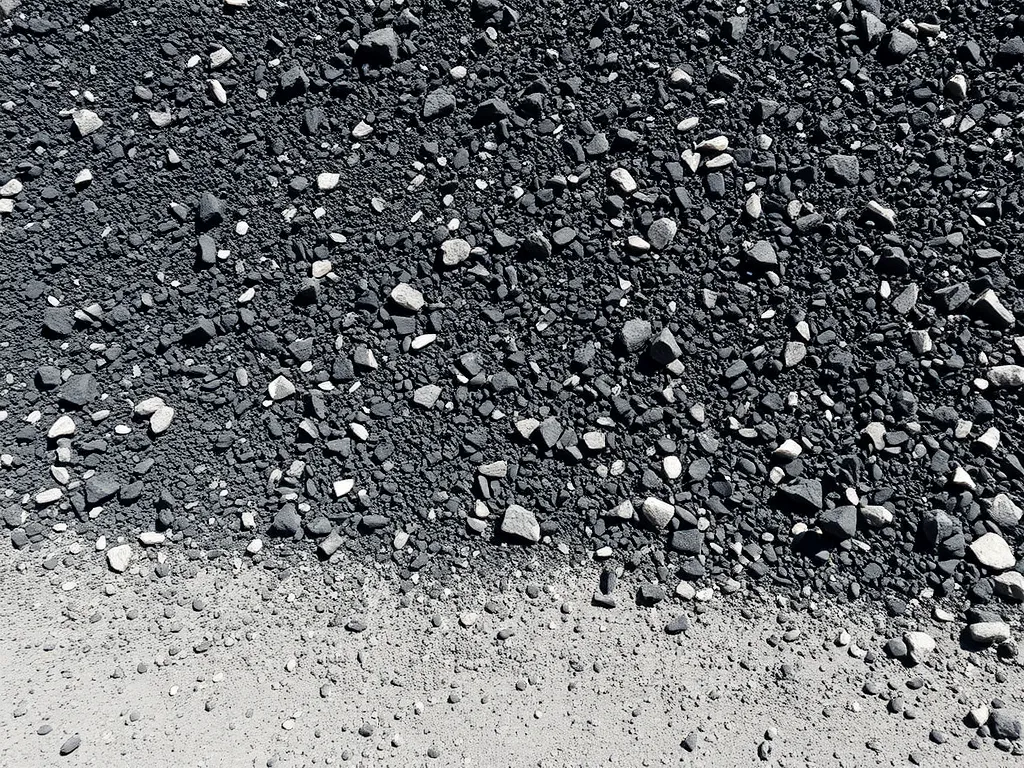
Asphalt mixtures demand precise aggregate specs to meet performance targets. The American Society for Testing Materials (ASTM) and American Association of State Highway Officials (AASHTO) set standards for gradation, shape, and mineral composition. Contractors test aggregates before mixing to verify compliance with project requirements.
Key Quality Parameters for Asphalt Aggregates
Five factors dictate aggregate quality: gradation, abrasion resistance, particle shape, cleanliness, and absorption. Gradation refers to particle size distribution – well-graded blends fill voids efficiently. The Los Angeles (LA) Abrasion Test measures hardness, with values below 35% loss preferred. Flat or elongated particles must stay under 10% to prevent mix instability. Aggregates with under 1% debris (clay, vegetation) and low water absorption (below 2%) perform best in binding.
Selecting Aggregates Based on Asphalt Type
Hot-mix asphalt (HMA) requires angular crushed stone (granite, trap rock) for high-traffic roads. Warm-mix asphalt (WMA) allows 20-30% reclaimed asphalt pavement (RAP) aggregates due to lower production temps. Stone matrix asphalt (SMA) uses 70-80% coarse aggregates (>4.75mm) for rut resistance. Porous asphalt mixes pair 3/8″ gravel with open-graded sand for drainage. Cold patch blends rely on sharp, angular sand (0.075-4.75mm) for cohesion without heat.
Proper aggregate selection cuts road maintenance costs by 15-40% over a 20-year lifecycle. Next, we break down how aggregates interact with binders in mix designs.
Also See: Comparison Of Heat Absorption Between Asphalt and Concrete
Composition Of Asphalt Mixtures: Aggregates Vs Binder
Asphalt mixtures balance two core components: aggregates (95% by weight) and binder (5%). Aggregates form the structural skeleton, while asphalt cement (PG binder) acts as glue. This ratio determines pavement strength, flexibility, and resistance to rutting or cracking.
Typical Aggregate Percentage in Asphalt Mixes
Aggregates account for 90%-95% of total asphalt weight. Hot-mix asphalt (HMA) uses 93%-97% aggregates, while cold-mix formulas reach 96%-98%. Reclaimed asphalt pavement (RAP) mixes reduce virgin aggregates by 20%-40%, depending on recycling rates.
| Mix Type | Aggregate % | Key Notes |
|---|---|---|
| HMA | 93-97% | Coarse aggregates dominate for heavy traffic |
| WMA | 94-96% | Lower temps require adjusted gradation |
| Cold-Mix | 96-98% | Higher fines for cohesion without heat |
| RAP Mix | 60-80% | 30% RAP replaces 25% virgin aggregates |
Includes both virgin and recycled aggregates
Optimal Asphalt Binder Content Guidelines
Binder content ranges from 4%-8% by weight. Superpave mix designs specify 5.3%-6.1% for highways. PG 64-22 binder dominates temperate climates, while PG 76-22 resists high heat. Over 6.5% binder increases rut risk; under 4.5% causes premature raveling.
Gradation dictates binder needs: gap-graded stone matrix asphalt uses 6%-8%, while dense-graded HMA needs 5%-6%. Binder costs $600-$800/ton, making it 40%-50% of material expenses. Proper content reduces lifecycle costs by 18%-22% through fewer repairs.
Pavement engineers balance aggregate angularity and binder viscosity using AASHTO T 304 and ASTM D946 standards. Next, we’ll explore how aggregate size shapes asphalt performance across surface courses and base layers.

Impact Of Aggregate Size on Asphalt Performance
Particle dimensions directly influence pavement strength, drainage, and ride quality. Larger stones boost structural capacity, while smaller particles fill gaps for compacted density. Proper sizing balances stability with flexibility under traffic loads.
Coarse Vs Fine Aggregates in Pavement Layers
Coarse aggregates (retained on 3/8-inch sieves) form the backbone of base layers. These 3/4-inch crushed stones interlock to bear truck weights up to 40,000 lbs. Fine aggregates (passing #4 sieve) dominate surface mixes, creating tight matrices that resist water infiltration. In hot mix asphalt, 55-65% coarse content prevents rutting, while 30-40% sand improves workability during paving.
Size Requirements for Different Asphalt Types
Stone matrix asphalt demands 100% crushed aggregates sized 3/4-inch for rut resistance. Open-graded friction courses use single-sized stones (1/2-inch) with 15-25% air voids for stormwater management. Dense-graded mixes blend multiple sizes: 1.5-inch NMAS (Nominal Maximum Aggregate Size) for highways vs 3/8-inch NMAS for bike paths. Superpave specifications tie size selection to traffic levels – ESALs (Equivalent Single Axle Loads) above 10 million require 1-inch NMAS.
Proper sizing sets the stage for gradation control – the next frontier in mix optimization.
Significance Of Gradation in Hot Mix Asphalt
Proper gradation determines how well aggregates interlock within hot mix asphalt. Particle size distribution directly impacts load-bearing capacity, drainage properties, and long-term wear resistance. Engineers use gradation curves matching specific mix designs like Superpave or Marshall methods to meet traffic needs.
Achieving Optimal Particle Distribution
Optimal gradation fills voids between coarse particles with finer materials. For dense-graded HMA, 95% density requires precise blending of stone (19mm-4.75mm), sand (4.75mm-0.075mm), and filler (<0.075mm). The Fuller curve model guides ideal proportions: n=0.45 for maximum compaction. Deviations cause rutting (too much fine) or raveling (excess coarse).
Washed Vs Dry Gradation Testing Methods
Two ASTM methods measure gradation accuracy. Washed gradation (ASTM C117) removes particles under 75µm using water filtration. Dry gradation (ASTM C136) screens materials without washing. Contractors use washed tests when binder content exceeds 5% to prevent fines from skewing results. Washed methods better predict voids in mineral aggregate (VMA), critical for mix stability.
Proper gradation ensures mixes meet performance targets. Next, explore how different combinations create varied asphalt types for specific uses.
Types Of Asphalt Mixes and Aggregate Applications
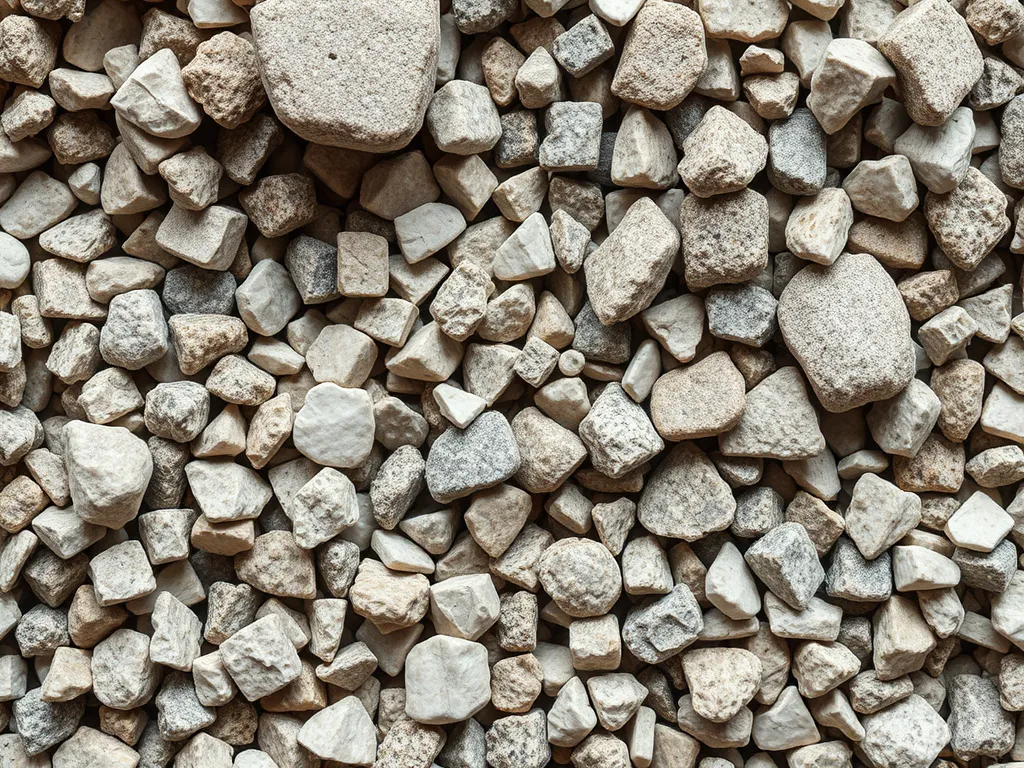
Distinct asphalt formulas call for specific aggregate traits. Mix designs adapt to climate, traffic, and project goals – with stone and sand acting as foundational parts. From high-temp paving to cold patches, rock fragments form 90-95% of most mixes by weight.
Aggregates in Hot-mix Asphalt (HMA)
HMA forms at 300-350°F using angular crushed stone (3/4” max size) for maximum structural capacity. Superpave specs demand tight gradation control – 95% passing 1” screens, 2-10% dust content. Granite or basalt work with PG 64-22 binders to handle heavy trucks. RAP (Reclaimed Asphalt Pavement) now makes up 20-30% of many HMA mixes without sacrificing Marshall Stability values above 1,500 lbs.
Aggregates in Warm-mix Asphalt (WMA)
WMA’s 225-275°F production needs aggregates with ≤3% moisture to bond with foamed binders. Smooth, rounded gravel (1/2” nominal size) pairs with wax additives for workability. Gradation follows AASHTO M 323 with 12.5mm NMAS (Nominal Maximum Aggregate Size). Using 40% RAP in WMA cuts fuel costs by 35% compared to HMA while maintaining 8-12 year service life.
Aggregates in Cold-mix Asphalt
Cold formulas rely on fine aggregates (≤3/8” stone) and sand (60-70% mix) to hold liquid asphalt binders. Angularity matters less – up to 45% natural round gravel works for temporary patches. Mixes stockpile for months if kept in airtight containers. Though less strong (500-800 psi stability), cold asphalt costs $25-$35/ton vs HMA’s $50-$80/ton.
Looking at how aggregates shape asphalt formulas aids in planning pavement builds. Upcoming calculations show how to translate rock specs into lasting roads.
Calculating Asphalt Mixture Properties
Precise calculations form the backbone of durable pavement. Engineers analyze aggregates in asphalt to predict performance under real-world conditions. Data-driven mix designs balance structural capacity with material costs.
Determining Aggregate Density in Mix Design
Aggregate density directly impacts asphalt’s weight and strength. Tests like the Rice method (ASTM D2041) measure bulk specific gravity – typically 2.4-2.9 g/cm³ for common aggregates. Higher-density materials like trap rock (2.9 g/cm³) require 8-12% less binder than lighter slag aggregates (2.4 g/cm³).
Mix designs account for aggregate absorption rates. Porous limestone may soak up 3-5% binder, while dense granite absorbs under 1%. This data determines optimal asphalt content – critical for preventing rutting or cracking.
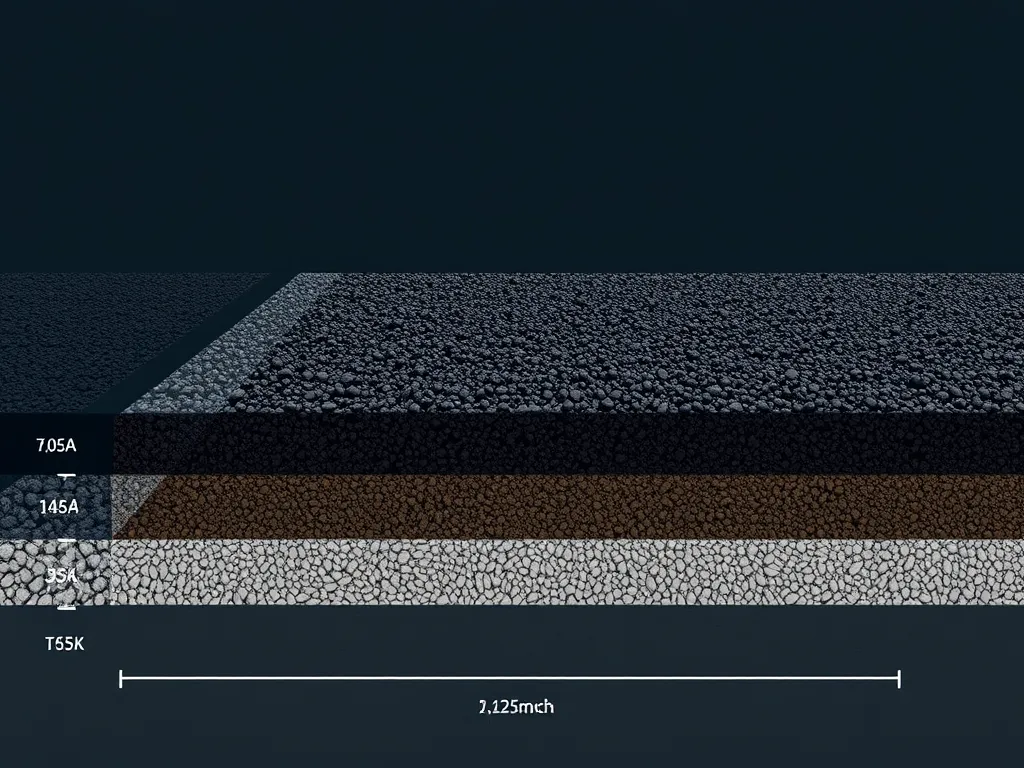
Estimating Thickness Based on Aggregate Composition
Aggregate size and gradation dictate pavement thickness. A base layer with 1.5″ crushed stone needs 6-8″ depth, while 3/8″ chips in surface courses work at 1.5-2″. The Hveem stability test shows mixes with 60% coarse aggregates withstand 4,000+ lb loads at 3″ thickness versus 2,500 lbs for fine-graded mixes.
Gradation curves predict compaction levels. Gap-graded stone matrix asphalt (SMA) achieves 94% density at 2″ thickness. Dense-graded Superpave mixes need 3″ for equivalent density. Field cores verify designs – typical specs allow ±0.15″ thickness variation from plans.
These calculations set the stage for smarter material choices. Next, we examine how aggregate selection influences environmental outcomes in pavement projects.
Environmental Considerations in Aggregate Selection
Choosing aggregates for asphalt mixes now requires balancing performance with ecological impact. Modern projects demand materials that meet technical specs while reducing carbon footprints.
Sustainable Sourcing Of Asphalt Aggregates
Local quarries cut transport distances by up to 50 miles per load, slashing CO₂ emissions by 30%. LEED-certified projects prioritize crushed limestone or granite from permitted sites within 30 miles. Recycled concrete aggregate (RCA) and steel slag now replace 15-20% of virgin stone in mixes, passing ASTM D692 standards for strength.
| Aggregate Source | Carbon Impact (kg CO₂/ton) |
|---|---|
| Local Crushed Stone | 8.2 |
| Recycled Concrete | 3.1 |
| Imported Gravel | 22.7 |
Recycling Aggregates in Asphalt Production
Reclaimed asphalt pavement (RAP) accounts for 41% of all recycled materials in U.S. construction. Modern plants blend 20-30% RAP into hot-mix asphalt without compromising PG 64-22 binder performance. Cold recycling techniques reuse 100% RAP for base layers, cutting material costs by $12-$18 per ton.
Recycled aggregates lower landfill waste by 75 million tons annually. They reduce virgin binder demand by 15% in Superpave mixes, maintaining Marshall stability above 1,500 lbs. New York’s I-87 reconstruction saved $4.8 million using 40% RAP in surface courses.
These eco-friendly practices set the stage for addressing common queries about aggregate performance. Let’s examine how material choices impact pavement longevity and costs.
FAQ: Common Questions About Asphalt Aggregates
What Percentage Of Asphalt is Aggregate?
Aggregates make up 90-95% of asphalt mixtures by weight. Depending on the specific type of asphalt being used, the percentage may vary slightly, with hot-mix asphalt generally utilizing between 93-97% aggregates.
How Does Aggregate Size Affect Pavement Longevity?
Aggregate size significantly impacts pavement longevity. Larger aggregates provide structural support and stability, reducing the likelihood of deformation and damage under heavy loads. Conversely, smaller aggregates fill voids and increase density, which can improve durability against environmental factors. A well-optimized mix using the appropriate sizes helps enhance the overall life span of the pavement.
What Are the Environmental Benefits Of Using Recycled Aggregates in Asphalt?
Using recycled aggregates, such as reclaimed asphalt pavement (RAP), not only conserves natural resources but also reduces landfill waste and carbon emissions. Incorporating recycled materials can lower the overall material costs and promote sustainable paving practices while maintaining desired performance levels in asphalt mix designs.
How Do Aggregate Types Influence Asphalt’s Performance Under Different Weather Conditions?
Different types of aggregates possess unique properties that affect asphalt performance under various weather conditions. For instance, aggregates with high freeze-thaw resistance are preferred in colder climates to prevent cracking, while aggregates with good drainage properties are vital for warmer, rain-prone areas. Selecting appropriate aggregates based on the local climate enhances asphalt durability and performance.
What Role Does Aggregate Shape Play in Asphalt Mix Stability?
The shape of the aggregates is crucial for mix stability. Angular aggregates create better interlocking and friction, promoting a stable and resilient asphalt mix. In contrast, rounded aggregates can reduce interlock and lead to instability, especially under heavy loads. Therefore, the shape is a key consideration in designing asphalt mixtures for specific traffic conditions.
Can Aggregate Quality Affect Asphalt Maintenance Costs?
Yes, the quality of aggregates used in asphalt mixtures can significantly influence long-term maintenance costs. Higher-quality aggregates that meet stringent performance specifications lead to more durable pavements, requiring fewer repairs and resulting in lower lifecycle costs. In contrast, inferior aggregates may necessitate more frequent maintenance, thereby increasing overall expenditures.
Closing Thoughts
Aggregates play a vital role in the performance and longevity of asphalt pavements. They provide structural support, enhance durability, and improve surface characteristics, making them indispensable to any asphalt mix. Different types of aggregates, from crushed stone to reclaimed asphalt pavement (RAP), offer unique benefits and can significantly influence the quality of the finished product.
Understanding the optimal specifications and gradation of aggregates is essential for achieving the desired asphalt performance. This knowledge guides the selection of materials, ensuring that the final asphalt mix meets the required standards for strength, stability, and sustainability.
For detailed information and tools to help you optimize your asphalt projects, visit Asphalt Calculator USA. Here, you’ll find resources that refine your asphalt knowledge and enhance your project outcomes.