
Residential Vs Commercial Asphalt Lifespan Differences
Published on: April 4, 2026 | Last Updated: April 14, 2025
Written By: George Voss
Residential asphalt driveways typically last 15-25 years, while commercial parking lots average 8-15 years due to differences in traffic loads, maintenance practices, and material specifications. Both use similar asphalt mixes containing aggregates and bitumen binders but face distinct wear patterns based on usage demands. Home driveways handle lighter vehicles and infrequent use, whereas commercial pavements endure heavy trucks, constant traffic, and harsh weather—key factors shaping lifespan gaps.
This article breaks down how asphalt composition, installation methods, and maintenance routines affect longevity for homes versus businesses. Learn why commercial surfaces require thicker bases (6-8 inches vs. 2-4 inches for residential), how climate impacts cracking rates, and when to budget for resealing or overlays. We compare costs per square foot, environmental impacts of recycling, and strategies to extend pavement life through sealcoating and drainage fixes.
Contents
- Understanding Asphalt Composition and Function
- Residential Asphalt Lifespan Explained
- Commercial Asphalt Lifespan Explained
- Key Differences Between Residential and Commercial Asphalt Lifespans
- Asphalt Vs Concrete: Comparing Lifespan and Performance
- Best Practices to Extend Asphalt Lifespan
- Cost Considerations for Residential and Commercial Asphalt
- Environmental Impact Of Asphalt Maintenance and Replacement
- Frequently Asked Questions (FAQ)
- Closing Thoughts
- Additional Resources for You:
Understanding Asphalt Composition and Function
Asphalt is a flexible pavement mix of aggregates (crushed stone, sand, gravel) bound by bitumen. This petroleum-based binder acts as glue, creating smooth surfaces for driveways, parking lots, and roads. Both residential and commercial projects use asphalt, but material specifications differ to match usage demands.

- ✓
- ✓
- ✓


What is Asphalt?
Modern asphalt contains 90-95% aggregates and 5-10% bitumen. Commercial mixes often include additives like polymer-modified binders or recycled asphalt pavement (RAP) to handle heavier loads. Residential driveways typically use standard PG 58-28 or PG 64-22 binders (Performance Grade ratings indicating temperature resistance), while commercial lots may require PG 76-22 for high-traffic areas.

Key Components Affecting Asphalt Durability
Four elements directly impact how long asphalt lasts in residential vs commercial settings:
- Aggregate Gradation: Commercial mixes use larger, angular stones (1/2″ to 3/4″) for load distribution. Residential driveways rely on smaller aggregates (3/8″ to 1/2″) for smoother surfaces.
- Binder Type: Polymer-modified binders in commercial asphalt increase flexibility under heavy trucks, adding 15-30% to material costs. Residential projects often use plain bitumen.
- Layer Thickness: Commercial pavements install 3-4″ base layers with 2-3″ surface courses. Residential driveways average 2-3″ total thickness.
- Compaction Density: Proper compaction (92-96% density for residential vs 95-98% for commercial) prevents premature cracking under weight stress.
These variations explain why commercial asphalt lifespan often exceeds residential by 5-10 years despite heavier use. Next, we’ll break down specific lifespan ranges for each application type.
Transition Statement for Next Section: Now that we’ve explored how asphalt composition varies between home and business uses, let’s examine specific lifespan expectations for residential driveways.
Residential Asphalt Lifespan Explained
Home driveways face unique stresses that shape their lifespan. Learn how use, build quality, and weather decide how long your blacktop lasts.
Average Lifespan Of Residential Asphalt
Most home driveways last 15-25 years. Thin layers (2-3 inches) and light base prep cut this to 12-18 years. Proper 4-6 inch base layers with 3-inch topcoats push life spans past 20 years.
Factors Influencing Residential Asphalt Longevity
Three core elements decide if your drive cracks in a decade or holds strong for 30 years.
Traffic Volume and Driving Habits
Two cars daily cause less wear than RVs or frequent stops. Tire turns scrape the surface, while oil leaks break down binders. Homes with teen drivers see 20% faster wear due to sharp turns and hard brakes.
Pavement Thickness and Installation Quality
Cheap jobs use 1.5-inch layers over 3-inch bases—these fail in 8-12 years. Pro crews lay 3-inch topcoats on 6-inch stone bases, lasting 25+ years. Proper compaction (95% density) stops sink spots.
Climate and Weather Impact
Freeze-thaw cycles crack thin asphalt in 3-5 winters. Southern UV exposure fades surfaces but causes less heaving. Sloped drives drain better, adding 5-7 years vs flat pads pooling water.
While homes need tough asphalt, commercial lots face heavier beats. See how truck loads and daily abuse slash pavement life spans.
Commercial Asphalt Lifespan Explained
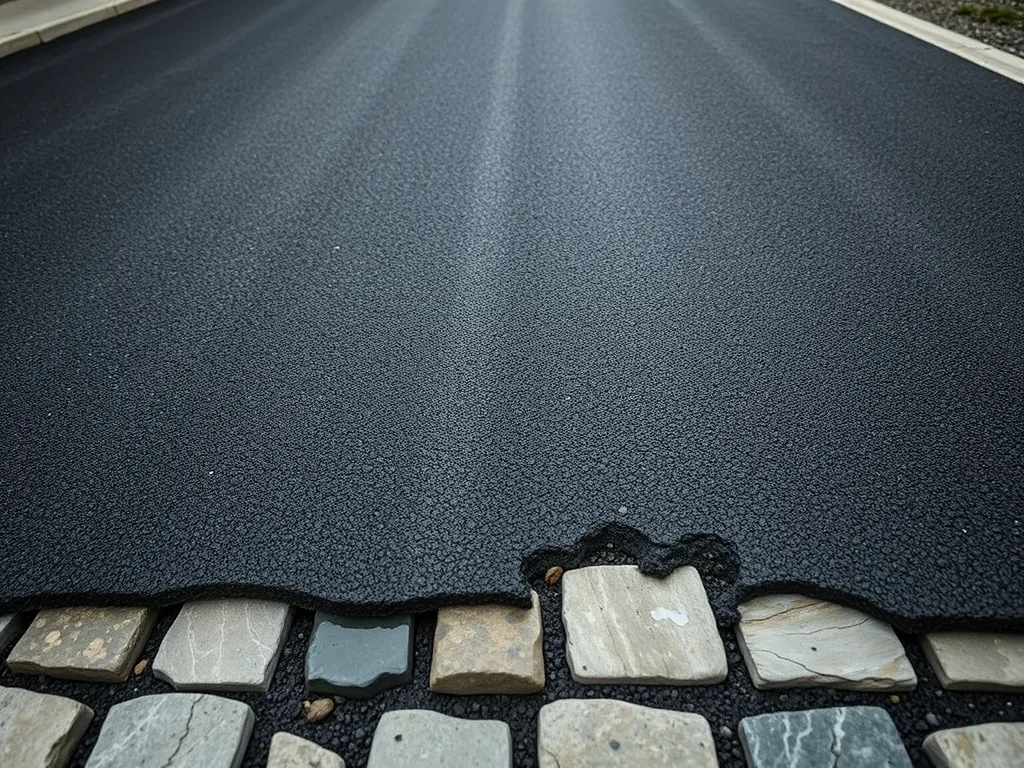
Commercial asphalt faces tougher conditions than residential driveways. From heavy trucks to constant foot traffic, these surfaces need stronger designs and frequent care to meet demands.
Average Lifespan Of Commercial Asphalt
Commercial asphalt lasts 10-20 years with proper care. High-traffic parking lots average 12-15 years, while industrial yards with semi-trucks may need replacement in 8-10 years. Polymer-modified binders and 6-8-inch bases boost durability. Full-depth reclamation costs $3-$7 per sq ft when replacement becomes necessary.
Factors Impacting Commercial Asphalt Durability
Three elements dictate commercial pavement longevity: structural strength, maintenance rigor, and surface specialization. Each plays a role in resisting wear.
Heavy Traffic and Load Capacity
Delivery trucks and forklifts exert 50-80 PSI, crushing residential-grade asphalt. Commercial pavements use PG 64-22 binders and 6-8-inch aggregate bases to handle loads. A Walmart parking lot endures 1,000+ daily vehicle passes – 10x residential driveways.
Maintenance Schedules and Repair Frequency
Sealcoating every 12-24 months prevents oxidation in commercial zones. Infrared repairs fix 30% more potholes per shift than traditional methods. Budget $0.15-$0.35 per sq ft annually for upkeep – 40% higher than residential costs due to faster wear cycles.
Surface Type and Usage Demands
Fuel-resistant SMA mixes protect gas stations, while porous asphalt in mall lots manages 500+ gallons of stormwater hourly. Airport tarmacs use 12-inch layers with 95% density – twice the thickness of warehouse driveways. Thermal stress tests show commercial surfaces need R-values above 5.0 for freeze-thaw resilience.
These variables set commercial asphalt apart from residential surfaces. Next, we’ll break down direct comparisons in load capacity and maintenance costs between the two.
Also See: Importance Of Maintaining Proper Drainage to Prevent Damage
Key Differences Between Residential and Commercial Asphalt Lifespans
Asphalt surfaces serve distinct purposes in homes and businesses. These differences directly impact how long pavements last. Let’s break down three core factors driving lifespan gaps.
Load-bearing Requirements
Commercial asphalt handles heavier loads. Delivery trucks, forklifts, and constant traffic demand thicker bases. Engineers design commercial lots with 6-8 inch aggregate bases and 3-4 inch asphalt layers. Residential driveways typically use 4-6 inch bases and 2-3 inch surfaces. A Walmart parking lot withstands 50,000+ PSI daily, while a home driveway faces 3,000-5,000 PSI from passenger vehicles.
| Feature | Residential | Commercial |
|---|---|---|
| Load Capacity | 3,000-5,000 PSI | 50,000+ PSI |
| Base Thickness | 4-6 inches | 6-8 inches |
| Traffic Type | Passenger vehicles | Trucks, heavy equipment |
Maintenance Practices and Costs
Commercial lots need aggressive upkeep. Shopping centers sealcoat annually ($0.15-$0.25 per sq.ft.) and repair cracks monthly. Homeowners sealcoat every 3-5 years ($0.10-$0.20 per sq.ft.). A commercial property might spend $5,000 yearly on maintenance, while residential costs average $300-$700. Neglect hits commercial pavements harder – unrepaired cracks can expand 300% faster under heavy loads.
Expected Lifespan Ranges
Residential asphalt lasts 15-25 years with proper care. Commercial surfaces last 8-15 years. Climate shifts these numbers – Phoenix heat may shorten commercial lifespans to 6-10 years. High-traffic gas stations often replace asphalt every 7 years. Home driveways in mild climates can hit 30 years with biannual sealcoating and drainage management.
These lifespan differences stem from design choices, material specs, and maintenance rigor. Next, let’s examine how asphalt compares to concrete in durability and cost over time.
Asphalt Vs Concrete: Comparing Lifespan and Performance
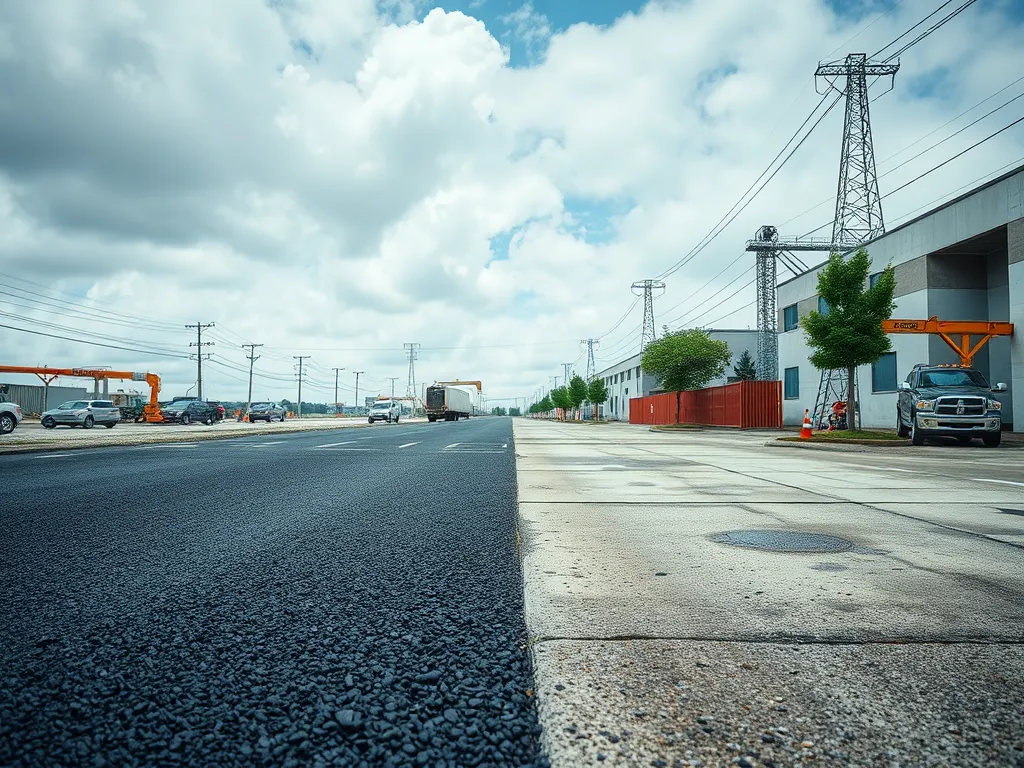
Property owners frequently compare asphalt and concrete for paving needs. Both materials perform differently in home driveways versus business parking lots, with climate, traffic, and maintenance shaping their longevity.
Residential Surface Showdown
Residential asphalt driveways typically last 15-25 years when sealed every 3-5 years. Concrete alternatives average 20-40 years but cost 30-50% more initially. Asphalt cracks more easily in extreme heat but handles freeze-thaw cycles better due to its flexibility. Homeowners spend $2-$5 per square foot for asphalt repairs versus $4-$8 for concrete slab replacements.
Commercial Pavement Battle
Commercial asphalt parking lots survive 20-30 years with proper base construction (4-8” compacted aggregate) and PG 64-22 polymer-modified binders. Concrete lasts 25-50 years in commercial settings but requires 6-8” slabs with 4000 PSI compressive strength. Asphalt permits same-day pothole fixes, while concrete needs 3-7 days curing – a key factor for busy retail centers.
| Material | Residential Lifespan | Residential Cost/SF | Commercial Lifespan | Commercial Cost/SF |
|---|---|---|---|---|
| Asphalt | 15-25 years | $3-$7 | 20-30 years | $4-$8 |
| Concrete | 20-40 years | $6-$12 | 25-50 years | $8-$15 |
While concrete boasts longer lifespans, 78% of commercial properties choose asphalt for its faster repair times and 40% lower lifecycle costs. Residential selections often depend on regional weather patterns and immediate budget constraints.
Maximizing pavement longevity requires tailored care strategies. Explore industry-approved methods to protect both residential and commercial asphalt investments.
Best Practices to Extend Asphalt Lifespan
Maximizing pavement durability requires tailored strategies for residential vs commercial surfaces. While both benefit from core maintenance principles, application methods and frequencies vary based on usage demands.
Regular Sealcoating and Crack Filling
Residential driveways typically need sealcoating every 3-5 years using coal tar or asphalt-based emulsions. Commercial lots with heavy traffic require high-performance polymer-modified sealants applied annually. Crack filling differs too: residential projects often use pourable rubberized asphalt, while commercial sites opt for hot-applied crack sealants rated for -30°F to 160°F temperature swings. A well-sealed commercial surface can last 12-15 years vs 8-12 for residential under proper care.
Proper Drainage and Surface Cleaning
Commercial asphalt needs 2% minimum slope grades and catch basins to handle stormwater from large paved areas. Residential driveways work with 1-2% slopes toward street gutters. Both surfaces require debris removal, but gas/oil spills demand faster cleanup on commercial lots to prevent binder degradation. Pressure washing commercial surfaces every 90 days removes embedded contaminants that accelerate wear.
Timely Repairs and Professional Inspections
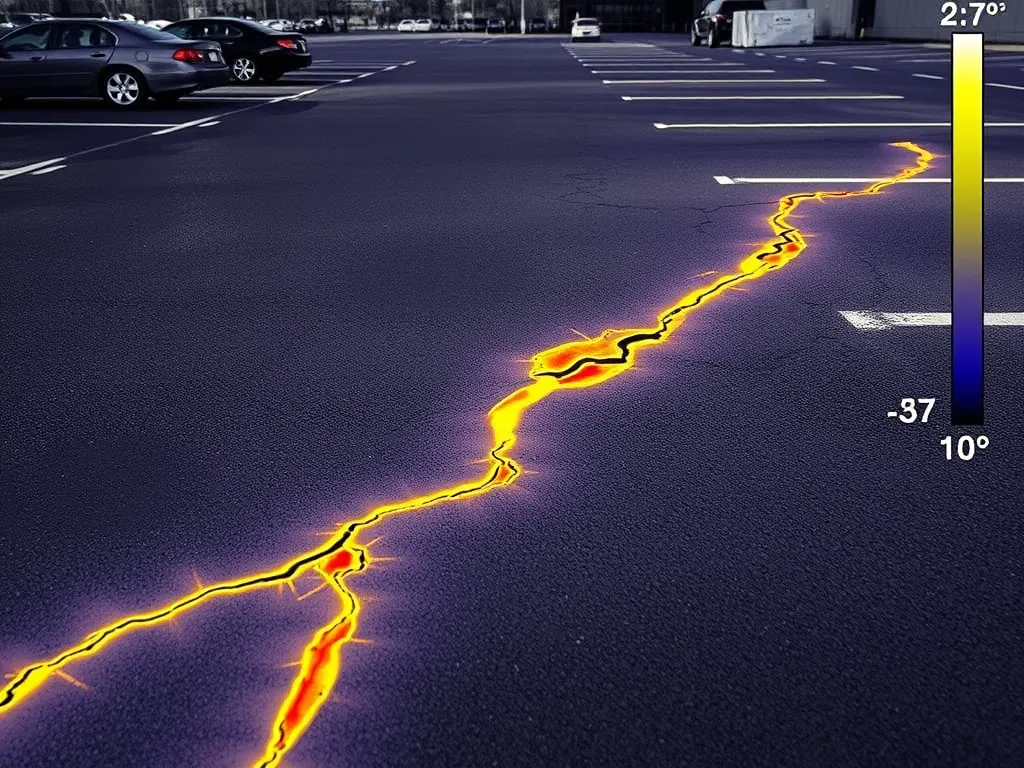
Residential driveways can tolerate ¼” cracks for 30-60 days before repair. Commercial lots require same-week fixes for any cracks over ⅛” to prevent water intrusion under heavy loads. Thermographic surveys detect subsurface voids in commercial asphalt, while residential inspections focus on surface defects. Annual core sampling checks commercial pavement structural capacity using ASTM D5361 standards.
These targeted approaches directly impact the asphalt lifespan residential vs commercial comparison. Next, let’s break down how these practices affect long-term budget planning for both property types.
Cost Considerations for Residential and Commercial Asphalt
Asphalt costs vary sharply between homes and businesses due to design differences impacting lifespan. Installation methods, material specs, and maintenance cycles create distinct financial profiles over 15-30 years.
Initial Installation Costs
Residential driveways typically use 2-3″ asphalt layers costing $3-$5 per sqft. Commercial lots require 3-4″ base layers with polymer-modified PG 76-28 binders, pushing prices to $4-$7 per sqft. Heavy-duty pavers and vibratory rollers add $1,500-$3,000 daily for commercial projects. A 10,000 sqft parking lot often hits $45,000-$70,000 versus $30,000-$50,000 for equivalent residential work.
Long-term Maintenance Expenses
Sealcoating residential asphalt every 3-5 years costs $0.15-$0.25 per sqft. Commercial lots needing annual crack filling and biennial sealcoating spend $0.50-$1.50 per sqft yearly. Semi-truck traffic accelerates rutting – repairs cost 40% more for commercial surfaces. Over 20 years, lifecycle costs average $8-$12 per sqft for homes versus $15-$25 for businesses.
These cost patterns directly tie to lifespan gaps. Next, we examine how maintenance choices affect environmental outcomes.
Environmental Impact Of Asphalt Maintenance and Replacement
Shorter commercial asphalt lifespans (8-15 years) versus residential surfaces (15-25 years) create distinct environmental footprints. Frequent commercial replacements generate 2.3x more material waste annually compared to residential projects. Each ton of new asphalt production releases 400 lbs of CO₂, making repeated installations a climate concern.
Commercial projects offset impacts through high recycling rates – 90% of removed pavement gets reused as Recycled Asphalt Pavement (RAP). Residential jobs lag at 35% RAP adoption, sending 65 million tons of material to landfills yearly. Hot mix asphalt production for repairs emits 20% fewer greenhouse gases when using 30% RAP blends.
Maintenance frequency alters ecological outcomes. Commercial lots require annual sealcoating with coal-tar emulsions, which studies link to aquatic toxicity. Residential driveways often use safer asphalt-based sealants every 3 years. Both sectors increasingly adopt porous asphalt systems, reducing stormwater runoff by 70-80% in parking lots and 50% in driveways.
Heat island effects differ sharply. Commercial blacktops covering 5+ acres can elevate local temperatures by 7°F, increasing HVAC energy use. Residential areas mitigate this with shaded driveways and smaller paved zones. New cool asphalt technologies with infrared-reflective coatings cut surface temps by 10°F, now appearing in 12% of commercial projects versus 4% of home installations.
Explore cost-effective strategies to balance pavement performance with planetary care in the FAQ section below.
Frequently Asked Questions (FAQ)
How Does Climate Affect Asphalt Lifespan?
Climate significantly influences asphalt durability. In colder regions, freeze-thaw cycles can create cracks and worsen damage, potentially shortening the lifespan of asphalt. Conversely, in hotter climates, UV exposure and high temperatures can cause the asphalt to degrade faster. Regular maintenance, including sealcoating, can help mitigate these effects regardless of the climate.
Can Asphalt Lifespan Be Extended Beyond Average Expectations?
Yes, the lifespan of asphalt can often be extended beyond average expectations through regular maintenance practices. Implementing timely repairs, maintaining proper drainage, and performing routine sealcoating can significantly enhance the longevity of both residential and commercial asphalt surfaces.
What Are the Signs That Asphalt Needs Replacement?
Key indicators that asphalt may need replacement include extensive cracking, visible depression, surface peeling, and large potholes. If multiple areas show severe damage and repair costs become too high, a replacement might be the most cost-effective solution.
How Do Different Usage Patterns Affect Maintenance Needs?
Residential asphalt typically requires less frequent maintenance due to lower traffic volumes, while commercial asphalt, which endures heavy loads and frequent use, requires more rigorous and regular upkeep to prevent rapid wear and damage. Understanding these usage patterns helps in strategizing maintenance schedules effectively.
Are There Eco-friendly Options for Asphalt Pavement?
Absolutely! Using Recycled Asphalt Pavement (RAP) in new asphalt mixtures significantly reduces environmental impact. Additionally, adopting porous asphalt systems can mitigate stormwater runoff and decrease local temperatures. Some manufacturers also offer warm-mix asphalt, which creates less environmental pollution during production.
What is the Role Of Sealcoating in Prolonging Asphalt Life?
Sealcoating acts as a protective layer over asphalt, shielding it from UV rays, water, oil spills, and other damaging elements. By replenishing this layer every few years, property owners can dramatically extend the life of their asphalt surfaces, preventing premature deterioration and saving on costly repairs in the long run.
Closing Thoughts
Understanding the differences in lifespan between residential and commercial asphalt is vital for making informed decisions regarding your paving needs. Residential asphalt typically lasts around 15-20 years, while commercial asphalt can endure 20-30 years based on factors like traffic volume and maintenance practices.
Load-bearing requirements, frequency of use, and maintenance strategies play significant roles in longevity. Residential areas experience lighter traffic, while commercial spaces face heavier loads, increasing wear and tear. Proper installation and regular upkeep are essential in both scenarios to maximize asphalt’s lifespan.
For more information on asphalt, cost calculations, and maintenance recommendations, visit Asphalt Calculator USA. Your journey to optimal asphalt performance starts here!
Additional Resources for You:
- The Asphalt Institute. (2007). MS-4: The Asphalt Handbook. Lexington, KY: Asphalt Institute.
- Is There Any Difference Between Commercial & Residential Asphalt Paving? – Garden State Paving & Seal Coating, LLC
- What Is the Life Expectancy of Asphalt? | Danny’s Asphalt Paving Inc.
- Differences Between Commercial-Grade Asphalt and Residential
- The differences between residential and commercial asphalt paving

