Recycled Asphalt Cost Savings: Maximizing Value in Pavement Projects
Published on: March 31, 2026 | Last Updated: April 14, 2025
Written By: George Voss
Recycled asphalt cost savings let property owners and municipalities reduce pavement expenses by 25-40% compared to new asphalt. Made from reprocessed materials like millings (crushed old pavement) and RAP (Reclaimed Asphalt Pavement), this sustainable option lowers landfill waste while matching fresh asphalt’s durability. Projects using recycled materials cut $8-$15 per ton on average, with long-term maintenance costs dropping up to 30% due to improved weather resistance.
This guide covers recycled asphalt pricing per ton, regional savings in states like California and Florida, and practical uses for driveways, roads, and parking lots. Learn how to calculate material needs, compare performance against gravel, and apply proper compaction techniques. We’ll also break down environmental benefits and situations where fresh asphalt remains necessary.
Contents
- What is Recycled Asphalt?
- Cost Analysis Of Recycled Asphalt
- Practical Applications for Cost Efficiency
- Determining Quantity and Coverage
- Material Comparisons
- Installation Considerations
- Performance Advantages
- Environmental Impact Overview
- Key Challenges and Limitations
- FAQs: Recycled Asphalt Cost Savings
- Closing Thoughts
- Additional Resources for You:
What is Recycled Asphalt?
Recycled asphalt (RAP) refers to reprocessed pavement materials from roads, parking lots, or driveways. It retains aggregates and bitumen from its original state, making it a budget-friendly option for fresh projects. The production process starts by milling existing asphalt surfaces. Crushing, screening, and blending with fresh binders or additives follow to meet project specs.
Definition and Production Process
RAP contains 95% aggregates and asphalt binder from demolished pavements. During recycling, aged material gets pulverized into 0.5-2 inch pieces. Plants heat it to 300°F, mixing in 3-5% new liquid asphalt to restore flexibility. This cuts raw material needs by 20-30%, directly lowering production costs. No virgin aggregates mean fewer quarrying expenses—a core driver of recycled asphalt cost benefits.
Common Forms (Millings, RAP, Etc.)
Millings are loose, gravel-like chunks from pavement grinding. Priced at $10-$20 per ton, they’re ideal for driveways or pothole repairs. RAP (Reclaimed Asphalt Pavement) refers to processed material for hot-mix asphalt, slashing paving costs by 15-40%. RAS (Recycled Asphalt Shingles) adds roofing waste into mixes, boosting binder content. Each form targets specific savings: millings reduce labor, RAP lowers mix expenses, RAS minimizes binder purchases.
With material types clarified, let’s break down the dollars. Next, we’ll compare recycled asphalt prices against new pavement—and see how regional markets stack up.
Cost Analysis Of Recycled Asphalt
Let’s break down the numbers. Recycled asphalt cuts costs while keeping strength. Key factors shape pricing per ton, install fees, and regional deals.
Price Per Ton Vs. New Asphalt
New asphalt runs $60-$100 per ton. Recycled millings cost $10-$20 per ton. RAP (Reclaimed Asphalt Pavement) costs even less at $8-$18 per ton.
Average Recycled Asphalt Millings Price
Millings vary by source. Virgin rock-free millings hit $12-$25 per ton. Mixed-grade stockpiles drop to $8-$15. Add $2-$5 per ton for screening if needed.
Installed Cost Comparison
Installed new asphalt costs $3-$5 per square foot. Recycled millings install for $1-$3 per square foot. Hot-in-place recycling slashes road work costs by 30-50% versus full-depth rebuilds.
| Material | Per Ton | Per Sq.Ft. |
|---|---|---|
| New Asphalt | $80 | $4.50 |
| Millings | $15 | $2.00 |
Regional Cost Savings Breakdown
Local rock sources and dump fees shape deals. High-traffic states save more through RAP programs.
Recycled Asphalt Savings in California
Caltrans saved $21 per ton on 2021 road jobs. LA County cut parking lot costs by 35% using 60% RAP mixes. PG 64-22 binder millings cost $18-$28 per ton here.
Recycled Asphalt Savings in Florida
FDOT saved $14M in 2022 by using 30% RAP in I-95 work. Driveway millings run $10-$15 per ton with $1.50 per sq.ft. install fees. Lime rock base adds $0.30 per sq.ft. versus $0.80 for fresh mix.
2021-2022 Road Project Savings Data
Federal data shows 28% average savings on 157 recycled jobs. Texas saved $9.2M on 200 miles of FM roads. Ohio cut I-70 resurfacing costs by 41% using 50% RAP content.
| State | Miles Treated | Savings |
|---|---|---|
| TX | 200 | $9.2M |
| OH | 45 | $4.1M |
These numbers set the stage for real-world uses. Next, we’ll show how driveways, roads, and lots gain from recycled asphalt cost cuts.
Practical Applications for Cost Efficiency
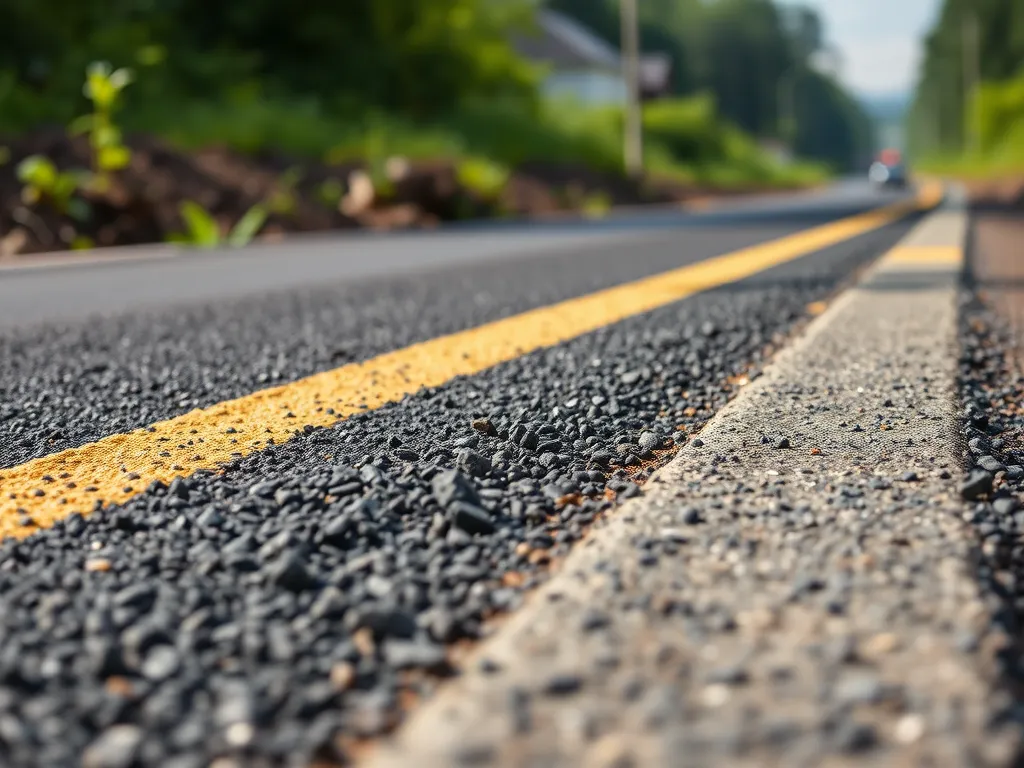
Recycled asphalt shines in real-world projects where budgets matter. Three key areas deliver measurable savings: residential driveways, road infrastructure, and commercial parking areas.
Driveway Construction With Asphalt Millings
Asphalt millings cut driveway costs by 50-70% compared to new asphalt. At $15-$30 per ton installed, they undercut virgin asphalt’s $100-$150 price tag. Contractors compact layers 2-4 inches thick using standard rollers, bonding crushed particles into solid surfaces. This method skips pricey hot-mix plants, slashing labor fees. A 500-square-foot driveway costs $750-$1,500 with millings versus $3,000-$5,000 for traditional paving. Properly compacted millings withstand freeze-thaw cycles for 7-12 years.
Road Repairs and Resurfacing
State DOTs save 20-40% using Reclaimed Asphalt Pavement (RAP) in road projects. Florida’s 2021 I-95 resurfacing used 30% RAP, trimming $2.8 million from costs. Hot-in-place recycling—heating existing pavement, adding 15-20% new binder—costs $35-$55 per ton versus $80-$120 for full-depth replacement. Millings fill potholes at $10-$15 per square foot, lasting 5-8 years with emulsion additives. Federal Highway Administration data shows RAP mixes reduce annual road maintenance budgets by 18%.
Parking Lot Maintenance
Property managers patch potholes with millings for $8-$12 per square foot—60% cheaper than new asphalt. Full overlays using 3/4-inch recycled layers cost $1.50-$2.50 per square foot installed, extending pavement life 6-10 years. Atlanta’s 2022 parking lot study found millings cut annual upkeep costs by 42% versus gravel. Adding 5% PG 64-22 binder boosts load-bearing capacity to 3,500 PSI, handling delivery trucks without rutting.
Precise quantity calculations ensure these savings stick. Let’s break down how to measure needs for driveways, roads, and lots.
Also See: Hot Mix Asphalt Vs Cold Mix: Key Differences
Determining Quantity and Coverage
Accurate quantity planning directly impacts recycled asphalt cost savings. Knowing how much material your project requires avoids surplus spending and optimizes bulk purchasing discounts.
How Much Does 1 Ton Of Recycled Asphalt Cover?
One ton of asphalt millings covers 80-100 square feet at a 2-inch depth. Coverage shifts with compaction: a 4-inch layer spans 40-50 sq ft, while a 1-inch application spans 160-200 sq ft. Factors like moisture content and compaction method impact final coverage. At $10-$20 per ton (uninstalled), this translates to $0.10-$0.25 per sq ft—half the asphalt millings price per ton installed compared to virgin asphalt.
Calculating Needs for Driveways and Roads
Use this formula: Square footage ÷ coverage per ton = tons required. A 600 sq ft driveway at 2” depth needs 6-7.5 tons. For roads, add 10-15% extra material to account for uneven surfaces. Bulk projects gain bigger savings: road jobs using 100+ tons often cut asphalt millings cost by 18-22%.
| Project Type | Area (sq ft) | Depth | Tons Needed | Cost Savings |
|---|---|---|---|---|
| Driveway | 1,200 | 3″ | 15-19 | 25-30% |
| Road | 5,000 | 4″ | 125-155 | 32-38% |
Compared to virgin asphalt, based on 2021-2022 road project data
Matching tonnage to project size unlocks maximum asphalt millings cost savings. Up next: stacking these savings against gravel and other rivals.
Material Comparisons
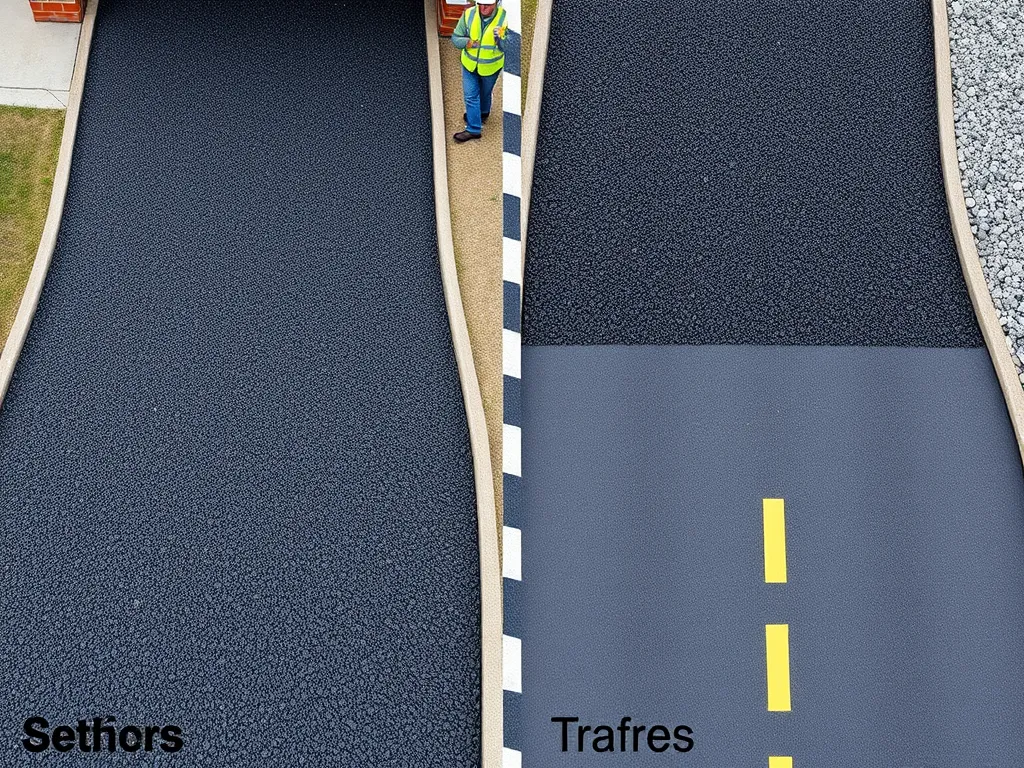
Choosing recycled asphalt depends on project needs and local options. Compare materials to find the best fit for your budget and goals.
Recycled Asphalt Vs. Gravel: Cost and Performance
Gravel costs $10-$20 per ton. Recycled asphalt runs $12-$18 per ton. While gravel seems cheaper upfront, asphalt millings last longer. Gravel washes away in rain. It needs yearly topping. Recycled asphalt bonds when compacted, forming a solid surface. Over 5 years, gravel maintenance adds $500-$1,000 per mile. Recycled asphalt needs 40% less upkeep.
| Factor | Gravel | Recycled Asphalt |
|---|---|---|
| Cost per ton | $10-$20 | $12-$18 |
| Installation | No compaction needed | Requires roller |
| Maintenance (5 yrs) | High | Low |
| Lifespan | 2-4 years | 7-10 years |
| Best for | Temp paths | Driveways, roads |
Alternatives to Asphalt Millings
Crushed concrete costs $15-$30 per ton. It lacks bitumen, so it won’t bind like millings. Fresh asphalt runs $70-$100 per ton but lasts 15+ years. Chip seal (tar-and-chip) costs $2-$5 per sq ft. It needs resealing every 3-5 years. For tight budgets, millings save 25% vs chip seal and 50% vs fresh asphalt.
Proper installation methods boost recycled asphalt’s value. Let’s explore key steps to lock in savings.
Installation Considerations
Proper installation maximizes recycled asphalt savings while ensuring performance matches fresh pavement. Two factors directly impact both upfront costs and long-term value: bonding agents and compaction methods.
Bonding Agents for Improved Durability
Recycled materials lack the binding properties of new asphalt due to aged bitumen. Adding bonding agents restores cohesion. PG binders (performance-graded polymers) or tack coats (thin emulsion layers) bridge gaps between millings. Costs range from $0.50 to $2.00 per square foot depending on product type. Project data shows using PG 64-22 binders reduces raveling by 40%, cutting maintenance expenses over five years.
- PG Binders: Boost thermal resistance; priced at $1.80–$2.30 per gallon
- Tack Coats: Improve layer bonding; costs $0.70–$1.10 per gallon
Forgetting bonding agents risks premature cracking, negating recycled asphalt savings. Contractors in high-traffic zones like Florida’s I-95 repairs prioritize these additives to meet DOT specs.
Compaction Techniques for Optimal Results
Density determines load-bearing capacity. Recycled asphalt requires 92–96% compaction for stability. Vibratory rollers set to 8–12 mph achieve this best. Under-compacted surfaces settle unevenly, increasing repair costs by up to 30% within three years.
- Lift thickness under 4 inches per layer
- Three roller passes minimum
- Moisture content kept below 3%
In Texas, crews compacting RAP (Reclaimed Asphalt Pavement) for parking lots saved 22% versus new mixes by following these steps. Properly compacted millings handle over 5,000 PSI—enough for delivery trucks or RVs.
Proper installation sets the stage for measuring recycled asphalt’s performance under real-world stress. Next: how it holds up against weather and weight.
Performance Advantages
Recycled asphalt cuts costs while matching new asphalt in key areas. Its strength and lifespan make it a top pick for roads, driveways, and lots.
Durability Under Heavy Traffic
Recycled asphalt handles heavy loads well. The blend of reused bitumen (asphalt binder) and stone forms a dense, tight layer. Tests show it bears over 20,000 lbs per axle—equal to fresh asphalt. Less cracks mean fewer repairs. This slashes upkeep costs by up to 30% over 10 years vs. new paving.
| Material | Repair Cycle (Years) | Cost per Sq Ft (5-Year) |
|---|---|---|
| Recycled Asphalt | 8-12 | $0.85 |
| New Asphalt | 6-10 | $1.20 |
Weather Resistance and Longevity
Recycled asphalt stands up to heat, cold, and rain. The aged binder resists rutting in temps up to 120°F. It also handles freeze-thaw cycles better than gravel, with 40% less cracking in cold zones. Properly laid, it lasts 15-20 years—close to new asphalt’s 20-25 years but at half the price.
In wet areas like Florida, its tight surface sheds water fast. This cuts pothole risks by 50% vs. loose stone. Less fixes mean more savings over time.
These perks show how recycled asphalt saves cash while holding strong. Next, let’s see how it helps the planet beyond your budget.
Environmental Impact Overview
Recycled asphalt cuts waste and costs. Its use links eco perks to cash savings. Let’s break down how.
Reduction in Material Waste
Old roads don’t go to dumps. 95% get reused as RAP (recycled asphalt pavement). This saves 60M tons of waste each year in the U.S. alone. Less new rock and bitumen are mined. That trims the asphalt millings price per ton by 30-50% vs new mix.
Jobs need 40% less raw stuff. Think: no haul fees for new stone, no extra binder buys. For a 500-ton job, this can mean $12,000 saved just on base costs.
Lower Carbon Footprint
New asphalt needs hot mix plants. These burn fuel at 300°F. Recycled blend? It’s warm mix, made at 50°F less. Each ton cuts CO2 by 20 lbs. A 10-mile road job with 80% RAP can slash 400 tons of emissions.
Less truck trips help too. Hauling millings from a nearby site vs new rock from 50 miles off? Fuel costs drop by half. That’s $8,000 saved per 1,000 tons moved.
Green perks boost the case for recycled asphalt. But smart plans must weigh its weak spots too.
Key Challenges and Limitations
While recycled asphalt offers clear cost benefits, certain limitations affect its use in pavement projects. Recognizing these factors ensures informed decision-making for long-term savings.
Potential Disadvantages Of Recycled Asphalt
Material inconsistencies pose the biggest hurdle. Recycled asphalt millings vary in composition based on source materials. Contaminants like dirt or debris may reduce structural integrity. Projects requiring precise engineering specifications (e.g., interstate highways) often demand fresh asphalt to meet PSI load ratings.
- Lower temperature tolerance: RAP (Recycled Asphalt Pavement) softens faster in extreme heat without polymer-modified binders
- Shorter lifespan: Untreated millings last 7-12 years vs. 15-20 years for new asphalt
- Compaction challenges: Poorly graded millings need additives like emulsified asphalt, raising asphalt millings price per ton installed by $8-$15
Situations Requiring Fresh Asphalt
New asphalt remains necessary when recycled materials can’t meet technical demands. State DOTs mandate virgin asphalt for roads carrying over 1,000 vehicles daily. High-stress zones like airport runways also require fresh mixes with PG 76-22 binders for rut resistance.
- Extreme climates: Regions with frequent freeze-thaw cycles need fresh asphalt’s thermal cracking resistance
- Aesthetic projects: Commercial properties prioritizing smooth finishes avoid millings’ granular texture
- Supply shortages: Limited local recycling plants may make hauling costs negate recycled asphalt savings
Balancing these factors against cost savings recycled asphalt offers is critical. Next, we’ll tackle common questions about performance and sourcing to streamline your planning.
FAQs: Recycled Asphalt Cost Savings
Is Recycled Asphalt Cheaper Than New Asphalt?
Yes, recycled asphalt is generally much cheaper than new asphalt. Prices can vary, but recycled asphalt millings typically cost between $10-$20 per ton, while new asphalt can range from $60-$100 per ton. This significant difference leads to substantial savings in both material costs and installation expenses.
How to Find Local Recycled Asphalt Suppliers?
To find local suppliers of recycled asphalt, you can start by searching online directories or construction material suppliers in your area. Additionally, local government agencies or waste management companies might also provide leads on where to obtain recycled materials, as they may be involved in local asphalt recycling programs.
Can Millings Handle Heavy Vehicle Traffic?
Yes, recycled asphalt millings can handle heavy vehicle traffic effectively when properly installed. The compressed structure of the millings, combined with the binding qualities of the asphalt, provides a robust surface capable of supporting heavy loads, similar to new asphalt.
Does Age Affect Recycled Asphalt Performance?
Yes, the age of recycled asphalt can influence its performance. Older asphalt may have reduced flexibility and binding properties due to weathering and degradation over time. However, when properly processed and mixed with fresh materials, recycled asphalt can maintain strong performance characteristics, despite its age.
Closing Thoughts
Recycled asphalt offers significant cost savings for pavement projects, making it a smart choice for both residential and commercial applications. With average savings of up to 25% compared to new asphalt, the benefits are clear. Plus, its durability and environmental advantages further enhance its value.
Projects like driveway construction, road resurfacing, and parking lot maintenance can all leverage the efficiency of recycled asphalt. Understanding how much you need and exploring local suppliers can maximize these cost benefits.
For comprehensive information on asphalt, including calculators for your specific project needs, visit Asphalt Calculator USA. Equip yourself with the knowledge to make informed choices that benefit both your budget and the environment.