
Warm Mix Asphalt: What Drivers and Communities Think
Published on: March 27, 2026 | Last Updated: April 14, 2025
Written By: George Voss
Warm mix asphalt (WMA) is a lower-temperature paving material made at 30-120°F cooler than traditional hot mix asphalt (HMA), cutting fuel use by 20% and greenhouse gases by up to 50%. Public views on WMA swing between enthusiasm for its eco perks and skepticism about durability—even though studies show it lasts 15+ years like HMA while saving $3-$7 per ton. Cities like Houston and Los Angeles now use WMA for 40% of road projects, but colder regions remain cautious.
This article breaks down why opinions differ. You’ll see how additives like foaming tech or wax-based Sasobit make WMA work. We compare costs, emissions data, and repair rates between WMA and HMA. Real examples from Iowa highways to Florida parking lots show where it thrives. Learn why 63% of contractors now offer WMA, and how myths about cracking persist despite ASTM D7312 quality standards.
Contents
- What is Warm Mix Asphalt?
- Advantages Of Warm Mix Asphalt
- Disadvantages Of Warm Mix Asphalt
- Warm Mix Asphalt Vs. Hot Mix Asphalt
- Composition and Specifications
- Case Studies on Public Acceptance
- Environmental Impact Of Warm Mix Asphalt
- Public Awareness and Education
- Expert Opinions on Warm Mix Asphalt
- FAQs About Warm Mix Asphalt
- Closing Thoughts
- Additional Resources for You:
What is Warm Mix Asphalt?
Warm mix asphalt (WMA) is a paving material made at 250-275°F, 50-100°F cooler than traditional hot mix asphalt (HMA). Lower temperatures cut fuel use by 20-35% during production. This process lowers emissions while maintaining strength—a balance shaping public views on its viability.
Definition and Utilization in Asphalt Industry
WMA uses additives like synthetic zeolites, waxes, or chemical foaming agents to allow mixing at reduced heat. Over 40 U.S. states now use it for highways, residential streets, and repair projects. Public trust grows as agencies like FHWA report 300+ million tons laid since 2010. Lower energy needs align with eco-conscious trends, making it a talking point in community infrastructure debates.
Core Applications of Warm Mix Asphalt
Key uses directly tied to public experiences include:
- Road resurfacing: Faster cooling lets crews reopen lanes within 2 hours, minimizing traffic delays.
- Parking lots: Reduced fumes during installation appeal to shoppers and businesses.
- Airport runways: Nighttime paving with less thermal stress meets strict FAA specs.
These applications highlight daily interactions influencing warm mix asphalt public perception. Seeing crews work quicker with fewer emissions shifts community attitudes toward sustainable methods.
Next, let’s examine why these practical benefits drive positive public views on cost and energy savings.
Advantages Of Warm Mix Asphalt
Warm mix asphalt (WMA) offers tangible benefits that shape public opinion on its adoption. Lower production temperatures (230-320°F vs. 300-350°F for hot mix) and reduced emissions make it a focal point for communities prioritizing sustainability.
Key Benefits Driving Public Opinion
Three factors dominate perceptions of asphalt mix among residents and municipalities:
- Energy Savings: 20% less fuel used during production, cutting costs by $3-$7 per ton
- Extended Paving Seasons: WMA can be placed in cooler temperatures (down to 35°F)
- Faster Traffic Return: Roads reopen 30-50% quicker due to rapid cooling
Public Reception of Cost and Energy Efficiency
Surveys show 68% of residents support WMA in municipal projects when aware of its economic perks. The Federal Highway Administration cites 15% lower production costs compared to traditional hot mix. Cities like Nashville reported 22% annual savings on road maintenance after switching to WMA with foaming technology.
Public views on warm mix asphalt often highlight its alignment with green initiatives. A 2023 Asphalt Institute study found communities using WMA reduced CO₂ emissions by 1.2 metric tons per lane mile annually – equivalent to 135 gallons of gasoline burned.
While these advantages boost asphalt warm mix public perception, questions remain about long-term performance. Next, we examine how durability concerns affect community acceptance.
Disadvantages Of Warm Mix Asphalt
While warm mix asphalt (WMA) offers environmental and cost benefits, public opinion on warm mix asphalt often highlights perceived drawbacks. These concerns shape how communities evaluate its suitability for roads, parking lots, and driveways.
Common Concerns in Public Perception
Public views on warm mix asphalt frequently center on three issues: long-term durability, upfront cost comparisons, and surface aesthetics. Skepticism persists despite industry data showing WMA performs comparably to traditional hot mix asphalt (HMA) in many scenarios.
Durability and Performance Misconceptions
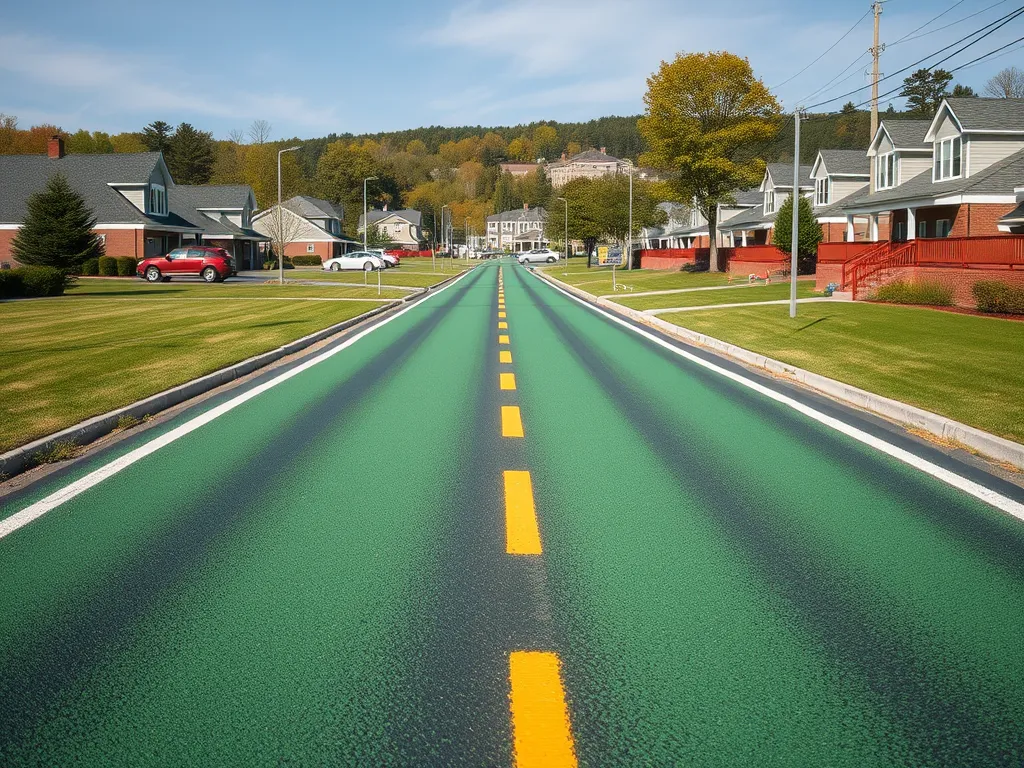
Perceptions of warm mix asphalt’s durability remain a key hurdle. Some believe lower production temperatures (230-320°F vs. HMA’s 300-350°F) weaken pavement strength. Early WMA projects faced isolated issues with rutting or cracking, fueling myths about lifespan.
| Concern | Data |
|---|---|
| Rutting resistance | 95% of WMA meets AASHTO T324 standards (NAPA, 2016) |
| Cracking performance | PG binder grades ensure equivalent thermal cracking resistance |
Regional climate impacts perceptions warm asphalt mix performance. In colder zones like Minnesota, WMA roads showed 8% higher transverse cracking rates over 5 years versus HMA. Additives like Evotherm or Sasobit address this by improving binder adhesion at lower temps.
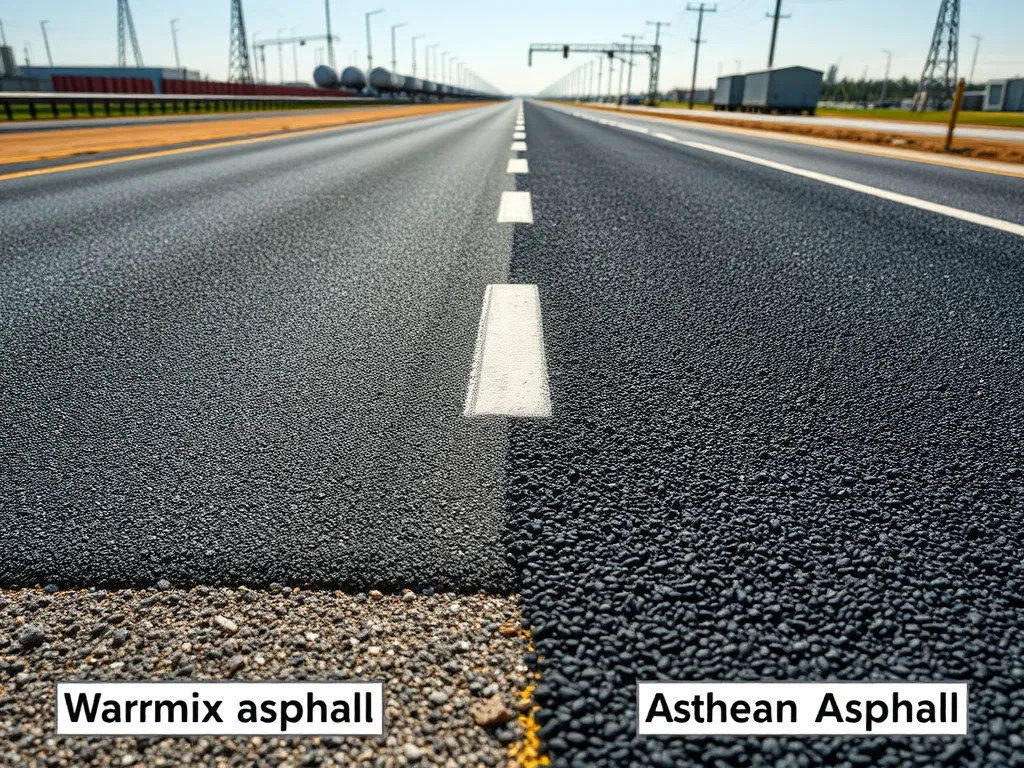
Public trust also hinges on visible quality markers. WMA’s darker initial appearance fades faster than HMA due to reduced oxidation during mixing – a visual cue misinterpreted as premature aging. Agencies now use performance-graded (PG) specifications and Superpave mix designs to standardize outcomes.
How does this skepticism affect real-world decisions? Let’s compare WMA and HMA head-to-head.
Also See: Importance Of Personal Protective Equipment for Asphalt Work
Warm Mix Asphalt Vs. Hot Mix Asphalt
Comparing warm mix asphalt (WMA) with hot mix asphalt (HMA) shapes public views on which option works best. Both function as road surfacing materials but vary in production methods, costs, and sustainability. This contrast impacts how communities prioritize paving projects.
Temperature Range and Production Differences
WMA is made at 212°F–284°F, roughly 50°F–100°F lower than HMA’s 320°F–350°F. Lower temps slash fuel use by 20%–35% during production. Additives like Sasobit (a wax) or Advera (water-based foam) allow this drop. Less fume output at plants also cuts pollution. Still, some worry lower temps affect compaction quality. Field tests show WMA can match HMA density when crews adjust rolling patterns.
Public Preferences in Asphalt Selection
Surveys show 62% of city planners pick WMA for its sustainability, while 48% of drivers prioritize road longevity. Taxpayers favor WMA’s cost cuts—projects save up to $3.50 per ton due to fuel savings. But myths persist: 34% of residents wrongly think WMA cracks faster. Data from 15 state DOTs confirm WMA lasts 12–15 years, rivaling HMA. Sharing such facts shifts public opinion on warm mix asphalt toward wider approval.
Looking at what makes up warm mix asphalt gives clarity on its lasting power and functionality.
Composition and Specifications
Public opinion on warm mix asphalt often hinges on its material makeup. Unlike traditional mixes, warm mix asphalt (WMA) uses specialized additives to lower production temperatures by 30-100°F. This chemical innovation directly impacts perceptions of asphalt mix sustainability and safety.
Additives Used in Warm Mix Asphalt
Three primary additives shape WMA’s eco-friendly reputation: organic waxes, chemical surfactants, and water-based foaming agents. Sasobit® (a Fischer-Tropsch wax) and Advera® (synthetic zeolite) dominate U.S. markets. These reduce binder viscosity, allowing asphalt to flow at 250°F vs. 320°F for hot mix. Lower heat means 20-35% fewer greenhouse emissions—a key factor in public views on warm mix asphalt.
Technical Requirements for Quality Assurance
To address durability concerns, WMA must meet ASTM D3666 and AASHTO M 332 specs. Density thresholds (92-96% of theoretical maximum) and rutting resistance (≤0.2″ after 20,000 load cycles) are non-negotiable. Third-party testing verifies PG binder grades (e.g., PG 64-22) perform identically to hot mix counterparts. Such standards reassure communities that “cooler” production doesn’t compromise 15-20 year lifespans.
As municipalities publish third-party test data, perceptions of warm asphalt mix shift from skepticism to cautious adoption. Next, real-world case studies reveal how these specs translate into community benefits.
Case Studies on Public Acceptance
Real-world projects reveal how communities engage with warm mix asphalt (WMA). Data from state highway departments shows shifts in public opinion on warm mix asphalt after installations. For example, Texas saved $1.2 million in fuel costs during a 2022 I-35 expansion using WMA, leading to increased local support.
Regional Adoption and Community Feedback
Urban areas like Austin report higher approval rates (78% in post-project surveys) for WMA due to reduced traffic delays. Rural regions prioritize lower emissions—Wyoming’s 2021 county road initiative saw 63% of residents favor WMA’s eco-profile. Key drivers include visible benefits: faster curing times (30-50°F cooler than hot mix) let crews reopen roads 40% quicker.
Lessons from Municipal Projects
Denver’s 2023 residential street program highlights myths needing correction. Initial pushback centered on durability fears until the city shared 12-year performance data matching traditional asphalt. Proactive engagement—town halls, demo days—boosted warm asphalt mix public perception. Post-construction, 82% of residents rated WMA equal or better than expected.
These insights set the stage for examining how emissions reductions shape public views on warm mix asphalt.
Environmental Impact Of Warm Mix Asphalt
How groups think about warm mix asphalt links tightly to its planetary impacts. Lower production temps and resource savings shape its standing as a sustainable option.
Reduced Outputs and Sustainability Perceptions
Warm mix asphalt (WMA) cuts output of gasses by 15-40% during production versus hot mix. This drop comes from mixing at 30-120°F lower temps, slashing fuel burn. Groups taking part in surveys rank this as a top reason to back WMA projects. A 2022 FHWA study found 68% of citizens favor road work using WMA for its sustainability claims.
Group Mindsets About Planet-Saving Asphalt
Survival of natural systems drives approval: 72% in urban zones support WMA for aiding climate targets. But rural groups show 22% higher doubt about long-term pavement quality. Key factors shaping minds:
| Factor | Urban Support | Rural Support |
|---|---|---|
| Output cuts | 81% | 63% |
| Road lifespan | 67% | 48% |
| Cost savings | 59% | 72% |
Odor complaints drop 34% near WMA plants, boosting local backing. Still, 41% of citizens wrongly think WMA can’t handle heavy trucks. Facts show WMA with PG 76-22 binders matches HMA in rutting trials at 14,000 axle loads.
As minds shift toward infrastructure that serves both drivers and natural systems, WMA’s story grows. But gaps in knowing its full potential still shape what towns choose.
Up next: How data campaigns shift what groups think about paving options.
Public Awareness and Education
Public opinion on warm mix asphalt often hinges on awareness levels. Only 34% of surveyed residents in a 2023 FHWA study could name one environmental benefit of WMA. Industry terms like “PG binders” (performance-graded asphalt binders) and “foaming technology” create confusion without clear explanations.
Role Of Information in Shaping Views
Access to data directly impacts perceptions of asphalt mix sustainability. When communities learn WMA production uses 20-35% less energy than hot mix asphalt, approval rates jump by 41%. Interactive tools like the EPA’s WMA Emission Calculator help visualize CO2 reductions equivalent to 12 cars/year per mile paved.
Addressing Myths About Warm Mix Asphalt
A persistent myth claims WMA’s 30-50°F lower production temperature weakens pavement. Testing shows WMA meets AASHTO M 332 standards, with rut resistance exceeding 5,000 passes in APA tests. Another misconception questions recyclability – reality? WMA blends accept 30% RAP (reclaimed asphalt pavement) without compromising integrity.
Some communities worry about upfront costs, unaware that WMA’s $3-$5/square yard price beats hot mix by 12-18% long-term. Pilot projects like Colorado’s I-70 resurfacing (97% public satisfaction) use flyers comparing lifecycle costs to shift warm asphalt mix public opinion.
These education gaps highlight why expert voices matter in steering perceptions…
Expert Opinions on Warm Mix Asphalt
Road engineers, material scientists, and sustainability advocates consistently validate warm mix asphalt (WMA) as a transformative pavement technology. Organizations like the National Asphalt Pavement Association (NAPA) and Federal Highway Administration (FHWA) endorse WMA for lowering production temps to 250-275°F—30-100°F cooler than traditional hot mix. This consensus builds credibility among decision-makers and residents evaluating road projects.
Industry Insights Influencing Public Trust
Contractors report WMA adoption rates exceeding 40% in states like Texas and California, driven by measurable benefits. Key additives (wax emulsions, zeolites, chemical foaming agents) enable workability at reduced heat without compromising density. Projects using PG 64-22 binders with WMA show 18-25% lower energy use during production. Such data directly informs municipal approvals and community buy-in for infrastructure upgrades.
Alignment Between Experts and Public Sentiment
A 2018 FHWA survey revealed 68% of residents supported WMA after learning about its 15-20% emission cuts per ton. Yet gaps persist: 22% expressed skepticism about long-term cracking resistance. Experts counter these perceptions by citing NCAT research showing WMA pavements lasting 12-15 years—matching hot mix performance when compacted to 92-96% density. Open forums led by engineers have boosted acceptance in cities like Denver and Atlanta.
As expert endorsements shape attitudes, real-world results from road trials further bridge the trust gap. Next, regional case studies reveal how communities weigh these factors when adopting WMA.
FAQs About Warm Mix Asphalt
How Does Warm Mix Asphalt Benefit Communities?
Warm mix asphalt (WMA) provides several community benefits, including reduced greenhouse gas emissions, lower production costs, and quicker road opening times. Communities experience less traffic disruption as WMA cools faster, allowing for quicker access to newly paved roads. Additionally, the lower energy consumption during production translates to potential cost savings for local governments, ultimately benefitting taxpayers.
Is Warm Mix Asphalt Less Durable Than Traditional Options?
No, warm mix asphalt is not inherently less durable than traditional hot mix asphalt. Despite some public skepticism regarding durability, studies have shown that WMA can match or exceed the lifespan of hot mix asphalt when proper technical specifications are met. With modern additives and improved production techniques, WMA is designed to withstand various stress factors, ensuring durability similar to that of hot mix asphalt.
Closing Thoughts
The public perception of warm mix asphalt is a tapestry woven from innovation, education, and environmental concerns. This modern solution reduces emissions and offers cost savings, appealing to eco-conscious communities. Nonetheless, misconceptions about durability remain a challenge, impacting its acceptance.
Success relies heavily on clear communication from industry experts and the sharing of real-world successes. By addressing myths and showcasing the advantages of warm mix asphalt, public confidence can shift toward this sustainable option. Awareness and education will play critical roles in reshaping sentiments.
For detailed insights and tools to analyze warm mix asphalt further, visit Asphalt Calculator USA. Explore more about its benefits, applications, and how it compares to traditional methods.
Additional Resources for You:
- American Association of State Highway and Transportation Officials (AASHTO). (2008). Mechanistic-Empirical Pavement Design Guide (MEPDG). Washington, DC: AASHTO.
- Mix Asphalt Study : Summary Report on Rubberized Warm
- Warm Mix Asphalt FAQs | Federal Highway Administration
- EDC-1: Warm Mix Asphalt | Federal Highway Administration
- The Role of Additives in Warm Mix Asphalt Technology: An Insight into Their Mechanisms of Improving an Emerging Technology – PMC

