
Properties Of Aggregate Materials in Asphalt
Published on: March 26, 2026 | Last Updated: April 14, 2025
Written By: George Voss
Aggregate materials in asphalt are crushed stone, sand, or gravel that form 90-95% of pavement mixtures. Their physical traits (particle size, shape), mechanical strength (load resistance), and chemical stability (reactivity with binders) dictate pavement durability. Engineers classify aggregates by gradation—size distribution measured through sieve analysis—and test properties like water absorption (up to 2% max in most mixes) to ensure quality.
This article breaks down how aggregates impact asphalt performance. You’ll learn why angular particles improve stability and how the Los Angeles Abrasion Test predicts wear. We’ll cover mix-specific requirements for hot asphalt (140-160°F production temps) versus cold mixes, plus environmental benefits of using 30-50% recycled aggregates. Get ready to explore lab tests, field applications, and sustainability strategies.
Contents
- Key Characteristics Of Aggregates for Asphalt
- Testing Methods for Asphalt Aggregate Properties
- Aggregate Requirements in Asphalt Mix Types
- Impact Of Aggregate Properties on Asphalt Performance
- Environmental Considerations for Asphalt Aggregates
- FAQs: Aggregate Properties in Asphalt Applications
- Closing Thoughts
- Useful References for You:
Key Characteristics Of Aggregates for Asphalt
Aggregates form 90-95% of asphalt mix mass, dictating pavement performance through intrinsic traits. Physical, mechanical, and chemical factors all shape how rocks interact with bitumen binders.
Physical Properties Of Aggregates
Visual and structural traits impacting mix workability and longevity start with physical aggregate material characteristics.
Particle Size and Gradation (Sieve Analysis)
Sieve tests sort aggregates from 0.075mm (No. 200 sieve) to 25mm (1”). Tight gradation curves with 2-5% voids boost density. Gaps in sizing risk poor compaction or drain-off issues.
Shape and Surface Texture in Asphalt Bonding
Angular chunks with rough faces grip bitumen 40% better than smooth, round rocks. Cubical grains create stone-on-stone contact points, cutting rutting by half compared to flat slabs.
Specific Gravity and Bulk Density for Mix Design
Typical specific gravity ranges from 2.4-2.9 for granite or limestone. High bulk density (1,500-1,800 kg/m³) signals minimal voids—vital for calculating binder content within ±0.5% accuracy.
Water Absorption Impact on Asphalt Binder
Aggregates soaking up >2% water by mass can strip bitumen off surfaces. Porous volcanic rocks may absorb 5%, requiring 0.3% extra binder per 1% absorption to maintain film thickness.
Mechanical Properties Of Aggregates
Load-bearing capacity stems from aggregate strength properties that withstand traffic forces without crumbling.
Crushing Strength for Pavement Load-Bearing
Granite and trap rock show crushing values below 25%, ideal for highways handling 18,000 lb axle loads. Soft limestone (35%+) suits parking lots with lighter traffic.
Angularity and Surface Roughness for Stability
Angularity index above 45/100 prevents shoving in hot climates. Rough-textured aggregates boost skid numbers by 15-20 points compared to polished river gravel.
Los Angeles Abrasion Resistance in Asphalt Layers
LA abrasion limits (max 40% loss) screen out weak rocks. Aggregates losing >50% mass in the steel drum test crack under truck braking forces within 5 years.
Toughness Against Traffic-Induced Stress
Aggregate impact value tests simulate 10-ton truck hits. Top-performing quartzite shows <10% fracture rates, while brittle shale fails at 30%+.
Chemical Properties Of Aggregates
Mineral makeup affects bonding and aging. Harmful reactions can strip binders or spawn cracks.
Chemical Reactivity with Asphalt Binders
High-silica aggregates may form weak bonds with acidic bitumen. Lime pretreatment or anti-strip additives (0.3-0.5% by mass) fix adhesion issues.
Soundness Against Freeze-Thaw Damage
Magnesium sulfate soundness tests cycle samples 5 times. Rocks losing >12% mass get rejected for northern roads facing 30+ annual freeze-thaws.
Adhesion Properties for Binder-Aggregate Bonding
Zeta potential measurements predict electrostatic attraction. Positively charged limestone bonds 25% faster to bitumen than negatively charged quartz.
With physical, mechanical, and chemical traits mapped, quality confirmation comes next—rigorous lab tests validate if aggregates meet asphalt’s strict demands.
Testing Methods for Asphalt Aggregate Properties
Engineers use standardized tests to verify aggregate material characteristics meet asphalt mix requirements. These methods evaluate aggregate strength properties and predict pavement performance under real-world conditions.
Los Angeles Abrasion Test for Durability
The LA Abrasion Test (ASTM C131) measures resistance to wear. Aggregates rotate with steel balls in a drum for 500 revolutions at 33 rpm. Results show mass loss percentages – lower values mean tougher materials. Asphalt mixes typically require aggregates with 30-45% loss values.
| Aggregate Type | Max Allowable Loss |
|---|---|
| Base Layers | ≤45% |
| Surface Layers | ≤35% |
Micro-deval Test for Polish Resistance
This test (AASHTO T 327) assesses surface texture retention under friction. Aggregates tumble in water with steel balls for 2 hours. Lower Micro-Deval values (≤15%) indicate aggregates maintain skid resistance better under traffic polishing.
Soundness Test (Magnesium Sulfate/freeze-thaw Cycles)
Aggregates undergo five cycles of magnesium sulfate immersion or freeze-thaw exposure (ASTM C88). Weight loss exceeding 12% signals poor resistance to weathering. Granite typically shows 2-5% loss, while some sandstones reach 18%.
Flat &Amp; Elongated Particles Test for Workability
The proportional caliper method (AASHTO T 81) identifies particles with length-to-width ratios exceeding 5:1. High percentages (≥10%) reduce compaction density and increase voids. Cubical aggregates produce mixes with better interlock and stability.
Sand Equivalent Test for Fine Aggregate Quality
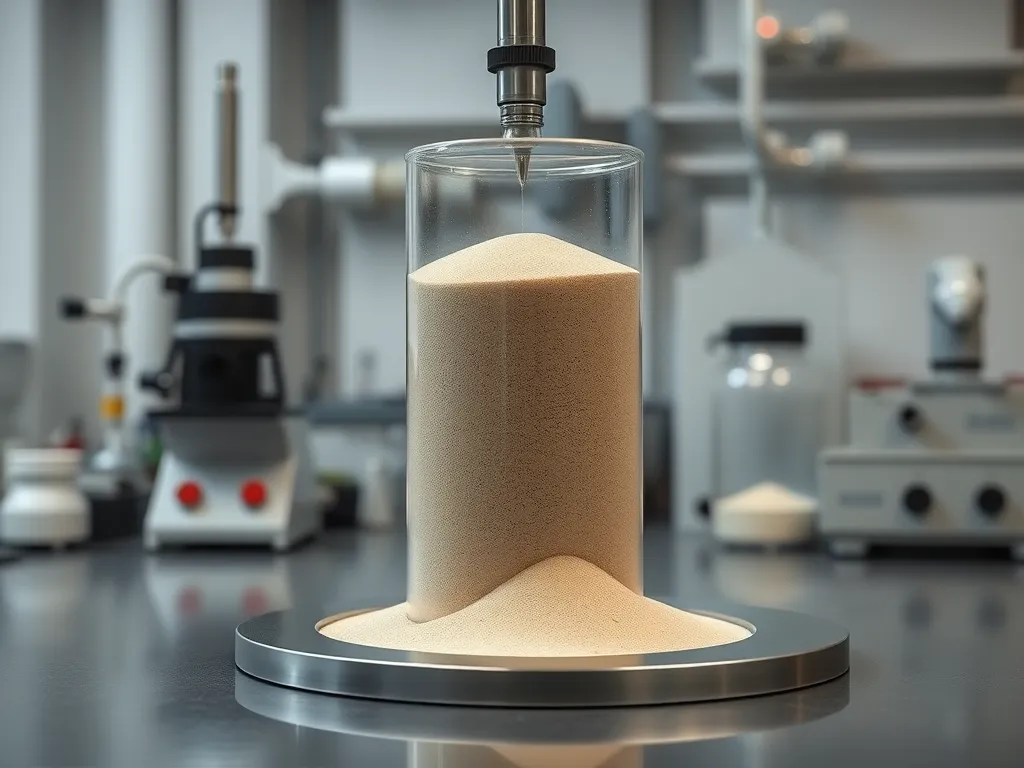
This rapid test (ASTM D2419) measures clay content in sands. A 4″ diameter cylinder separates sand from suspended clays through 20 minutes of settling. Values below 70 indicate excessive fines that weaken asphalt binder bonds.
Proper evaluation of aggregate material properties ensures pavements meet design life targets. Next, we’ll examine how these characteristics align with requirements for different asphalt mix types.
Aggregate Requirements in Asphalt Mix Types
Each asphalt mix type needs specific aggregate traits to meet job demands. From heat-treated blends to eco-friendly pours, stone specs shape road life and function.
Hot Mix Asphalt (HMA) Aggregate Specifications
HMA uses stone with high crush strength (90%+ LA abrasion loss max). Sharp, angular shapes lock tight under rollers. Gradation follows Superpave rules – 3/4-inch max stone size for base layers. Low water soak (under 2%) keeps PG binders stuck strong in 300°F heat.
Cold Mix Asphalt Aggregate Characteristics
No heat? No problem. Cold mixes need stone that bonds at 40°F. Rounder shapes work here (flat/elongated under 10%). Higher fines (up to 8% pass #200 sieve) fill voids. Additives like emulsified binders need stone with 1.5% max water take-in.
Reclaimed Asphalt Pavement (RAP) Material Properties
RAP blends old and new stone. Key traits: 95% crushed faces for grip, 3-7% aged binder content. Sieve tests check gradation shifts. Quality RAP meets same specs as virgin stone – LA abrasion under 40%, soundness loss below 12% after 5 freeze cycles.
Porous Asphalt Aggregate Gradation Needs
Drainage drives porous mix designs. Single-size stone (3/8” to 3/4”) creates 20%+ voids. Zero fines allowed – sand equivalent over 70%. Granite or slag works best due to high PSV (60+) for wet skid safety. 100% crushed faces prevent settling.
Get the stone specs right, and the road holds strong. Next, see how these traits shape real-world pave jobs – from rut fights to rain battles.
Also See: Effect Of Weather on Asphalt Pouring Outcomes
Impact Of Aggregate Properties on Asphalt Performance
Aggregate material characteristics directly impact how asphalt pavements hold up under traffic, weather, and time. From gradation to angularity, physical and mechanical properties of aggregates shape road quality from the ground up.
Gradation Control for Optimal Density &Amp; Voids
Particle size distribution (gradation) determines how tightly aggregates lock together. A mix with 40-60% coarse aggregates (retained on #4 sieve) creates a solid skeleton. Fine aggregates fill voids – but too much sand (over 10% passing #200 sieve) weakens the mix. Proper gradation hits 3-5% air voids for balance: dense enough to block moisture, porous enough to avoid rutting.
Surface Texture’s Role in Skid Resistance
Rough aggregate faces boost tire grip. Granite with a Micro-Deval polish resistance below 15% loss maintains skid numbers above 35. Smooth river rock? Skid values drop 30% within 2 years. Angular crushed stone (fractured faces over 90%) outperforms round gravel in wet braking tests by 40 feet at 50 mph.
Thermal Expansion Compatibility With Binders
- Limestone: 4.5 x10⁻⁶ in/in/°F
- Asphalt binder: 28 x10-6 in/in/°F
- Granite: 5.8 x10⁻⁶ in/in/°F
Mismatched thermal rates cause cracks. Quartz-rich aggregates (high expansion) paired with PG 64-22 binder fail 3x faster in thermal cycling tests than limestone mixes.
Durability in High-traffic Pavement Layers
Interstate asphalt needs aggregates surviving 20 million+ truck passes. Los Angeles Abrasion values under 35% prevent rutting. Basalt with 12,000 psi crushing strength outlasts sandstone (7,500 psi) by 8-12 years in right-lane applications. Shape matters: cubical particles handle 45% more axial stress than flat ones.
With aggregate material properties dictating pavement success, their sourcing and testing form the next vital link in sustainable roadbuilding practices.

Environmental Considerations for Asphalt Aggregates
Modern asphalt mixes balance performance with ecological responsibility. Aggregate selection now weighs environmental impact alongside traditional engineering criteria.
Recycled Material Content in Sustainable Mixes
Reclaimed Asphalt Pavement (RAP) and Recycled Concrete Aggregate (RCA) now form 20-30% of typical mixes. These materials must meet strict gradation standards and binder compatibility tests. Successful integration requires evaluating:
- Residual asphalt content in RAP (typically 3-5%)
- Crushing resistance of RCA particles
- Moisture susceptibility of recycled aggregates
High-quality RAP can reduce virgin binder needs by 15%, cutting costs by $3-5 per ton while maintaining Marshall Stability values above 8 kN.
Local Aggregate Sourcing for Reduced Emissions
Transportation accounts for 40% of aggregate-related emissions. Sourcing within 50 miles cuts CO₂ output by 1.2 lbs per ton-mile. Regional quarries now provide:
- Granite aggregates in Northeastern states
- Limestone in Midwestern pavements
- Basalt for coastal freeze-thaw zones
Local materials must still pass Micro-Deval tests (max 17% loss) and soundness testing (max 10% weight loss after 5 sulfate cycles).
Reclaimed Asphalt Shingles (RAS) Compatibility
Post-consumer shingles contribute 15-20% asphalt cement content but require careful processing. RAS particles under ½” size blend best with virgin aggregates. Key factors include:
- Fiber content analysis (max 0.5% by weight)
- Aged binder softening point testing (min 140°F)
- Thermal cracking resistance at -18°F
Properly processed RAS can improve PG binder grade by one temperature class while reducing mix costs by $8-12 per ton.
These ecological strategies directly influence how engineers evaluate aggregate strength properties and physical characteristics. Next, we’ll examine how testing protocols verify critical performance metrics.
FAQs: Aggregate Properties in Asphalt Applications
What Are the Most Critical Aggregate Properties for Asphalt?
The most critical aggregate properties for asphalt include physical characteristics like particle size, shape, and gradation; mechanical properties such as crushing strength and toughness; and chemical properties like reactivity with asphalt binders. These properties ensure optimal bonding with asphalt and durability under load and environmental conditions.
How Does Aggregate Angularity Affect Asphalt Stability?
Aggregate angularity plays a significant role in the stability of asphalt mixtures. Angular aggregates interlock better, providing improved shear strength and stability under dynamic loads compared to rounded aggregates. This interlocking reduces the potential for movement and deformation under traffic stresses.
Why is Specific Gravity Vital in Asphalt Mix Design?
Specific gravity is vital in asphalt mix design because it helps determine the appropriate binder content needed for optimal performance. It allows engineers to calculate the volume of aggregate in a mix, ensuring that the correct amount of asphalt binder is applied to achieve the desired density and voids, which directly affects the longevity and integrity of the pavement.
What Tests Verify Aggregate Durability for Asphalt?
Several tests verify aggregate durability for asphalt, including the Los Angeles Abrasion Test, which measures wear resistance; the Micro-Deval Test, which assesses polish resistance; and the Soundness Test, which examines resistance to freeze-thaw conditions. Aggregate that meets these durability standards is essential for maintaining pavement performance over time.
Closing Thoughts
Understanding the properties of aggregate materials is vital for optimizing asphalt performance. From particle size and shape to mechanical strength and chemical reactivity, each characteristic influences the overall quality of asphalt. Proper selection ensures durability, stability, and longevity, meeting the demands of various applications.
As you consider aggregate options, keep in mind the environmental implications as well. Utilizing recycled materials and sourcing locally benefits both performance and sustainability. Knowledge of testing methods can further assure that the aggregates meet necessary standards.
For more insights and tools regarding asphalt calculations and specifications, check out Asphalt Calculator USA. Your journey towards achieving high-quality asphalt begins with the right aggregates!
Useful References for You:
- The Asphalt Institute (Technical Resources & Standards)
- What is aggregate? What are the properties of aggregate? – Çimsa
- Aggregate Properties You Need to Know: Strength & Durability – Gilson Co.
- What are the Different Types of Aggregates and Their Uses? | Armstrongs Aggregate & Stone Quarry Suppliers
- What Are Aggregates and How Are They Used? | CEMEX USA – Cemex USA – CEMEX

