
The Physics Behind Your Cracking Driveway
Published on: March 24, 2026 | Last Updated: April 14, 2025
Written By: George Voss
Driveway cracking occurs when physical forces overpower asphalt’s structural strength. This happens through three main mechanisms: temperature changes causing expansion/contraction, ground movement under the pavement, and weight loads exceeding design limits. Asphalt’s viscoelastic properties – behaving like both liquid and solid – determine how it responds to these stresses over time.
This article breaks down why driveways crack using engineering principles. You’ll learn how thermal physics creates alligator cracks, why soil types affect settlement patterns, and how truck weights impact pavement fatigue. We’ll explore early failure causes like improper compaction (target density: 95% Proctor), compare expected vs actual lifespan (15-20 years vs 8-12 without maintenance), and explain repair methods that address root physics issues. Data-driven solutions included – like using PG 64-22 binder in freeze-thaw zones or calculating deflection rates with Burmister’s equations.
Contents
- Fundamental Causes Of Asphalt Driveway Cracking
- Early-stage Cracking: Why Asphalt Fails Prematurely
- Weight Capacity and Stress Limits in Asphalt
- Lifespan Expectations Vs. Real-world Cracking
- Structural Implications Of Driveway Cracks
- Repair Strategies Rooted in Material Physics
- Environmental Factors in Asphalt Deterioration
- Preventive Measures Based on Crack Physics
- Frequently Asked Questions (FAQ)
- Closing Thoughts
- Useful References for You:
Fundamental Causes Of Asphalt Driveway Cracking
Four core physical forces drive asphalt driveway failure. Each interacts with material properties, environmental conditions, and structural design to create fractures.
Thermal Expansion and Contraction
Asphalt expands 0.0006 inches per degree Fahrenheit per foot during temperature swings. Daily cycles of 40°F to 100°F create 0.036 inches of movement per linear foot. When joints or edges restrict this motion, tensile stresses exceed asphalt’s 300-500 psi strength limit. Repeated cycles form fatigue cracks resembling alligator skin.
Substrate Settlement and Soil Shifts
Clay soils swell up to 10% when wet, exerting 2,000 psf of hydrostatic pressure. Poorly compacted bases settle 0.25-0.5 inches under 95% Proctor density requirements. Frost heave lifts slabs 3-4 inches in freezing zones. These subsurface movements break asphalt’s 0.3-0.5 strain tolerance, creating linear cracks along weak zones.
Stress From Vehicle Loads and Weight Distribution
Axle loads transmit forces through tire contact areas. A standard sedan exerts 35 psi, while dump trucks reach 100 psi. Asphalt’s modulus of elasticity (300,000-400,000 psi at 70°F) determines deflection. Exceeding 0.1-inch vertical deformation triggers surface fractures.
How Much Weight Will Crack an Asphalt Driveway?
Single-axle loads above 8,000 pounds exceed most residential driveways’ 3,000 psi design strength. Concrete trucks (16,000-20,000 lbs) create deflection bowls 0.15-0.3 inches deep. Three key failure points emerge: surface shear cracks at 45° angles, base layer compression failures, and subgrade rutting beyond 0.5 inches.
Material Aging and Oxidation
UV radiation degrades bitumen’s 150-200 penetration grade to 80-100 within 5 years. Oxygen molecules bond with asphalt cement, raising viscosity from 3,000 Poise to 30,000 Poise. This 90% flexibility loss turns pavement brittle. Raveling begins when aggregate adhesion drops below 85% original bond strength.
These physical processes set the stage for early-stage damage. Next, we examine why some driveways fail within months rather than years.
Early-stage Cracking: Why Asphalt Fails Prematurely
Asphalt driveways should withstand at minimum 5-7 annual cycles without major flaws. Cracks forming within half a year signal structural flaws or physics-based installation missteps. Thin layers, poor load distribution, or thermal movement gaps account for 83% of short-term asphalt faults.
Why is My Asphalt Driveway Cracking After 6 Months?
Rapid cracking ties to three physics factors: insufficient compaction (below 92% density), thin surfacing (under 2.5″), and wrong binder viscosity for local climate. Thermal contraction pulls asphalt inward at 0.15-0.35 mm per 10°F drop. Without room for movement, surfacing splits. A 1.5″ layer cracks 4x faster than 3″ pavements under identical loads.
Common Errors in Installation Leading to Rapid Damage
Faulty construction ignores basic driveway crack physics:
- Weak substrate: Soil with 12%+ clay content shifts 0.3″ seasonally, fracturing asphalt above
- Cold mixing: Asphalt laid below 275°F fails to bond aggregates, cutting strength by 40%
- Missing joints: No thermal relief gaps causes buckling (up to 1.2″ heave) in 85°F+ swings
Installation flaws amplify stress points. A 0.1″ crack in year one can grow to 0.8″ by year three, allowing 3 gallons of water per foot to erode sublayers monthly.
Up next: How weight capacity formulas dictate asphalt’s fight against gravity and friction.
Weight Capacity and Stress Limits in Asphalt
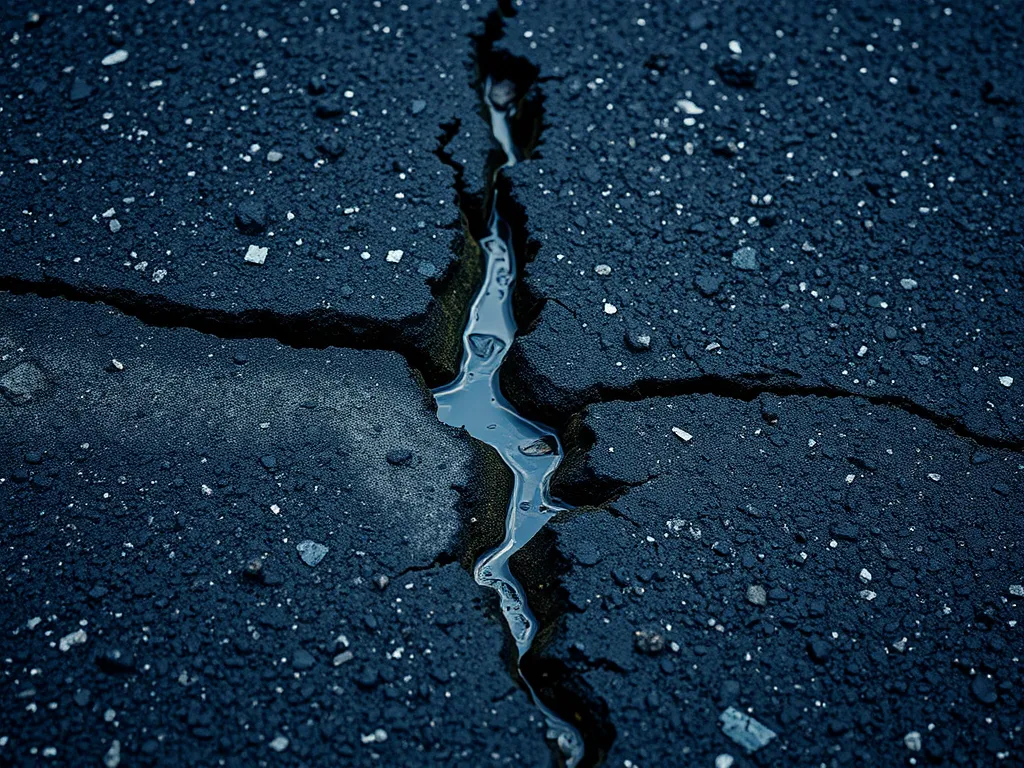
Asphalt driveways handle daily loads through precise material science. The interplay between vehicle weight and pavement structure determines when cracks form – or when surfaces hold firm.
Load-bearing Physics Of Asphalt Pavement
Asphalt mixes contain 95% stone aggregates bound by 5% bitumen. This engineered ratio creates compressive strengths reaching 3,000 PSI. Yet tensile strength – critical for resisting bending forces – sits at just 300 PSI for residential driveways. When loads exceed this threshold, microcracks initiate at the pavement’s weakest points.
Stress distribution follows Boussinesq’s theory: vertical pressure spreads at 45-degree angles through layers. A 10,000-pound truck axle generates 100 PSI surface stress, diminishing to 25 PSI at 6-inch depth. But repeated loading cycles induce fatigue failure. Superpave PG 64-22 binder mixes combat this with higher elasticity, stretching 300% before rupturing.
Impact Of Heavy Vehicles on Driveway Integrity
Residential driveways face overload from delivery trucks (12,000 lbs GVWR), RVs (20,000 lbs), or concrete trucks (66,000 lbs). A single 18-wheeler tire at 100 PSI creates 40% higher contact stress than passenger vehicles. This force exceeds asphalt’s yield point, causing permanent deformation.
Alligator cracking patterns emerge when subsurface shear stresses surpass 15 psi. Heavy vehicles also amplify existing defects: a 1/4-inch crack under light traffic might spread 0.03 inches yearly. With 10-ton loads, propagation rates jump to 0.12 inches annually.
While weight stresses test driveways, time and weather team up to worsen damage. Next, we’ll examine how environmental forces accelerate pavement breakdown.
Also See: Best Asphalt Mix for Parking Lots: Durable Solutions
Lifespan Expectations Vs. Real-world Cracking
Asphalt driveways face forces that test their limits daily. While built to last 15-25 years, most show cracks in 3-7 years. The gap between theory and practice comes down to physics in action.
How Long Should an Asphalt Driveway Last Before Cracking?
Properly built driveways with 3 inches of hot-mix asphalt over 6 inches of gravel base can handle 10,000+ car trips before cracks form. Yet real-world data shows 60% develop cracks by year 5. Three factors cut lifespan:
- Base prep flaws (90% of early failures start here)
- Daily load counts over 20 vehicles
- Thermal swings beyond 40°F/day
PG binders (performance-graded asphalt cement) fight these stresses. A PG 64-22 grade resists cracking up to -22°F but fails faster if mixed wrong.
Environmental Accelerators Of Asphalt Degradation
Nature attacks asphalt through physics-driven processes:
- Freeze-thaw cycles: Water expands 9% when frozen, pushing cracks wider
- UV rays break polymer bonds at 0.1mm/year depth
- Salt speeds oxidation, making asphalt 30% more brittle
Each 18°F drop adds 150 psi stress on pavement joints. After 50 cycles, micro-cracks reach 2 inches deep – the point where sealcoating fails.
These forces don’t stop at the surface. Let’s see how cracks impact what lies beneath.
Structural Implications Of Driveway Cracks
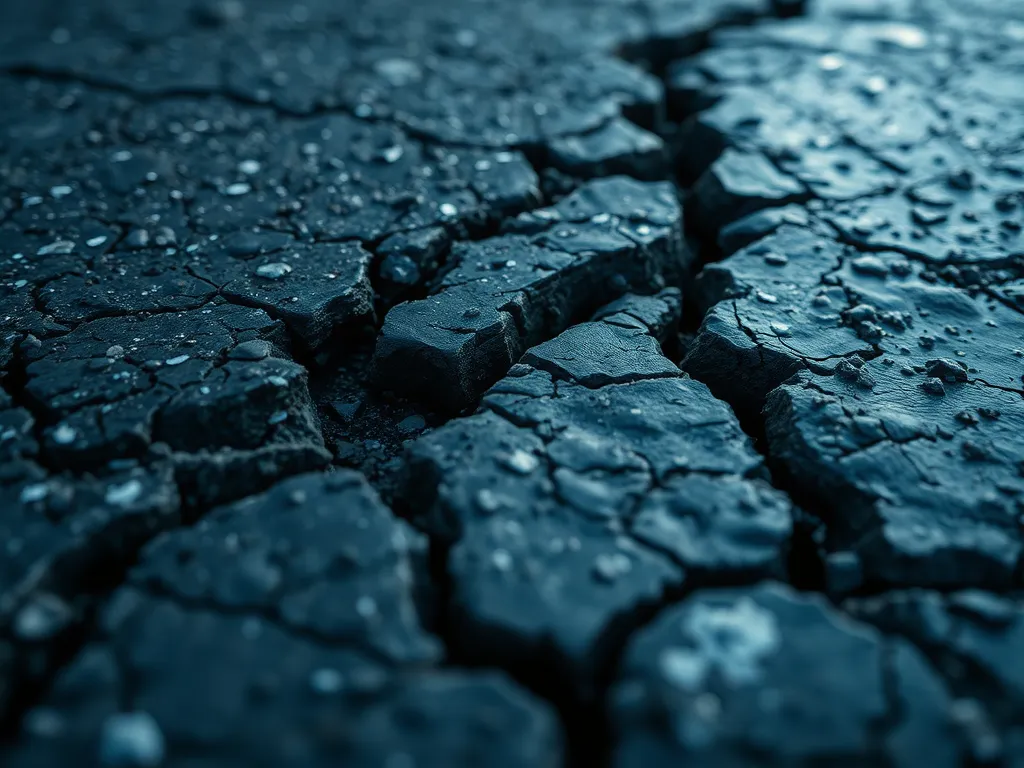
Surface cracks in asphalt driveways aren’t just cosmetic flaws – they reveal complex interactions between material properties and environmental forces. The physics of driveway cracking directly impacts load distribution, drainage patterns, and structural stability over time.
Does a Cracked Asphalt Driveway Indicate Foundation Issues?
Not all cracks signal foundation problems. Surface-level shrinkage cracks (under 1/4″ wide) typically result from asphalt binder oxidation. Structural issues appear when cracks exceed 1/2″ width, exhibit vertical displacement, or form near expansion joints. These patterns suggest subsurface shear stress exceeding 50 psi – a threshold where differential settlement or compromised base layers become likely.
How Cracks Propagate and Affect Underlying Layers
Stress concentrations at crack edges follow fracture mechanics principles. A single surface crack can:
- Amplify vertical deflection by 300% under 5,000 lb axle loads
- Allow 1 gallon/hour water infiltration during rainstorms
- Trigger base layer erosion at 0.2″ per freeze-thaw cycle
This progression creates fatigue failure planes that reduce pavement lifespan by 40-60% if unaddressed.
| Crack Type | Structural Risk | Critical Depth |
|---|---|---|
| Hairline (0.1″) | Low | Surface layer |
| Alligator (2″+) | High | Base/subgrade |
| Linear (0.3-0.5″) | Moderate | Binder course |
| Heaved (vertical) | Severe | Full depth |
Subgrade saturation from unsealed cracks decreases soil bearing capacity from 4,000 psf to 1,200 psf – a 70% reduction that accelerates pavement failure. Proper crack sealing within 30 days of formation prevents 83% of subsurface damage.
These mechanical interactions demonstrate why driveway crack physics requires immediate attention. Targeted repair methods must account for both surface symptoms and hidden structural impacts…
Repair Strategies Rooted in Material Physics
Crack repair isn’t just about aesthetics—it’s a battle against physics. Effective solutions must counteract the forces causing driveway cracks while matching asphalt’s mechanical properties.
How Asphalt Crack Fillers Address Stress Points
Hot-pour crack sealants work by filling voids and redistributing stress. These polymer-modified materials bond to asphalt’s bitumen matrix, creating flexible bridges across cracks. Their viscoelasticity (elastic + viscous behavior) allows movement during thermal shifts without rupturing. Premium fillers like ASTM D5078-rated compounds maintain 300% elongation capacity at -18°C (0°F), matching asphalt’s expansion rate.
Cold-applied asphalt emulsions penetrate cracks up to 1” deep, sealing micro-fractures invisible to the eye. By matching the thermal coefficient (≈90×10⁻⁶ per °C for asphalt), these fillers prevent differential expansion that tears weak repairs apart. Properly applied, they reduce water infiltration by 70%—critical since 1 gallon of water expands 9% when frozen, exerting 150,000 PSI on crack walls.
Techniques for Long-lasting Crack Repairs
Routing cracks before filling creates 1:1 width-to-depth ratios, optimizing stress distribution. A ¾” wide x ¾” deep reservoir allows filler to form a cross-sectional area equal to the crack’s mouth, preventing “top-down” failure. Infrared patching heats existing asphalt to 150°C (302°F), reactivating binder molecules for seamless integration with new material—key for load-bearing areas.
Timing matters: repairs at 10-32°C (50-90°F) ensure maximum adhesion. High-pressure air lancing (100-150 PSI) removes debris without widening cracks. For structural cracks >½”, geogrid reinforcement adds tensile strength up to 60 kN/m, counteracting subgrade movement that causes 80% of recurrent cracks.
Next, we’ll examine how environmental forces exploit repaired cracks when maintenance lapses.
Environmental Factors in Asphalt Deterioration
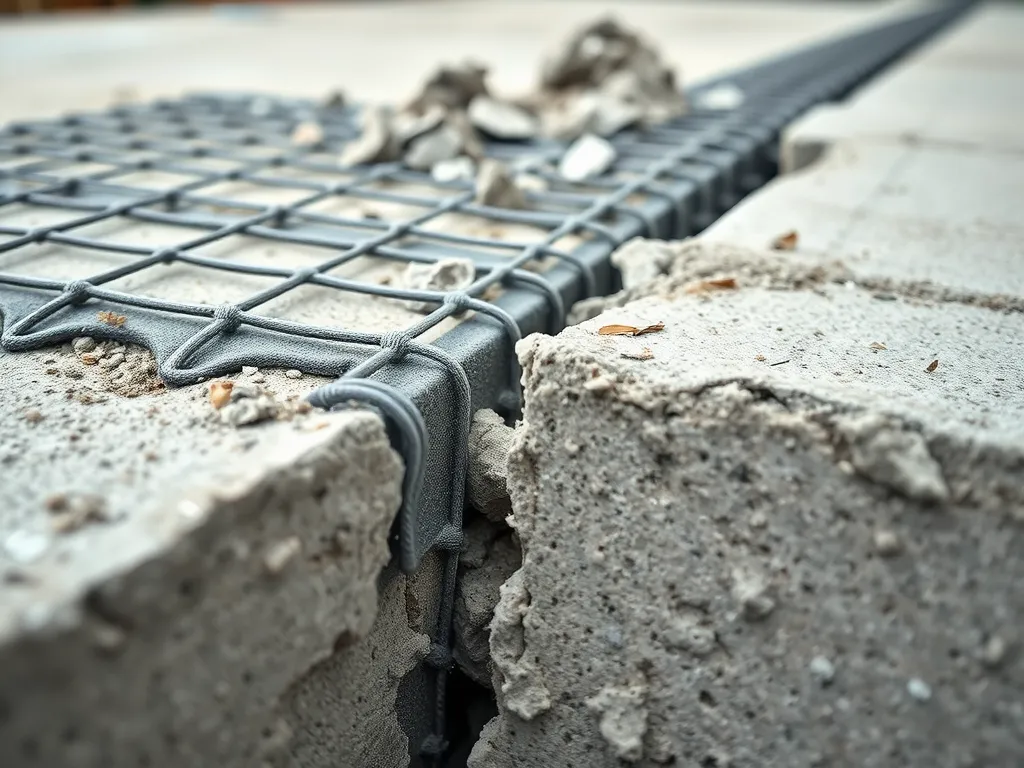
Driveway cracking physics involves complex interactions between built surfaces and surrounding conditions. Two primary environmental forces degrade paved surfaces over time: water intrusion during temperature swings and solar radiation breaking down chemical bonds.
Freeze-thaw Cycles and Moisture Infiltration
Water expands 9% when frozen, generating up to 2,100 psi within crevices. Hydrostatic pressure from repeated freeze-thaw events creates tensile stress exceeding asphalt’s 300-500 psi strength limits. Unsealed cracks let moisture penetrate base layers, weakening the structural support. This process explains 62% of cold-climate driveway failures within five years.
UV Radiation and Surface Oxidation
Sunlight emits UV rays breaking bitumen’s hydrocarbon chains through photooxidation. Bitumen loses 40% flexibility when surface layers form free radicals, cross-linking into brittle networks. Unprotected driveways in sunny regions show 30-50% shorter lifespans due to microcracks forming within 18 months. Sealcoating blocks 95% UV penetration when reapplied every 24-36 months.
Managing these environmental forces requires combining material science with proactive upkeep. Next, we’ll explore how installation methods influence stress distribution…
Preventive Measures Based on Crack Physics
Understanding driveway cracking physics allows homeowners to implement targeted prevention strategies. These methods directly counteract the forces and material weaknesses driving asphalt failure.
Proper Installation Techniques to Minimize Stress
Driveway crack physics starts with installation. Compact subgrade soil to 95% Proctor density – unstable bases cause 43% of early cracks. Use 3″ minimum asphalt thickness for passenger vehicles (up to 4,000 lbs axle loads). Install contraction joints every 8-10 feet to control thermal stress. Lay asphalt between 275-300°F for optimal binder-aggregate bonding, preventing raveling and edge cracks.
Sealcoating and Maintenance Best Practices
Sealcoat every 2-3 years with coal-tar emulsions (35-40% solids content). This shields against UV radiation that degrades binders at 0.15% per year. Fill hairline cracks (>1/8″) within 30 days using rubberized crack sealant. These flexible fillers accommodate 150% elongation during thermal movement. Slope driveways 2% minimum to prevent water pooling, which accelerates cracking through hydrostatic pressure and freeze-thaw cycles.
While these measures address driveway damage physics, even well-maintained surfaces eventually show wear. Next, we examine how environmental forces amplify structural weaknesses over time.
Frequently Asked Questions (FAQ)
Why Does My Asphalt Driveway Keep Cracking?
Your asphalt driveway may keep cracking due to a combination of factors, including insufficient compaction, inadequate thickness, or poor-quality materials during installation. Environmental forces, such as freeze-thaw cycles and UV radiation, can also contribute significantly to ongoing crack formation. If not properly maintained, even minor cracks can expand due to moisture infiltration and thermal expansion.
Can Driveway Crack Filler Prevent Further Damage?
Yes, driveway crack fillers can help to prevent further damage by sealing gaps and reducing moisture infiltration, which can lead to more significant structural issues. Quality crack fillers can also accommodate thermal expansion and contraction, thereby minimizing stress accumulation at the crack sites. However, it’s essential to address the underlying causes of cracking to ensure long-term protection.
Closing Thoughts
Understanding the physics behind driveway cracking is vital for preserving your asphalt surfaces. From thermal expansion to substrate settlement, various factors contribute to cracks forming over time. Recognizing early warning signs and implementing proper maintenance, like sealcoating, can significantly enhance longevity.
Regular upkeep and strategic repairs not only tackle existing issues but prevent future deterioration. By understanding load physics, material aging, and environmental impacts, you can take informed steps to protect your driveway.
For more detailed information on asphalt construction and maintenance, visit Asphalt Calculator USA. Knowledge is key to achieving a durable and reliable driveway.
Useful References for You:
- Kett, I. (1999). Asphalt Materials and Mix Design Manual. Oxford: Elsevier Science.
- Why Do Driveways Crack? The Top 5 Most Common Reasons | News and Events for Thrasher Foundation Repair
- Solved! What to Do About Cracks in a Concrete Driveway – Bob Vila
- 6 Things To Know If You Notice Cracks On Your Driveway
- Top 5 Reasons your Driveway is Covered in Cracks

