Performance Of Warm Mix Asphalt in Cold Climates
Published on: March 23, 2026 | Last Updated: April 14, 2025
Written By: George Voss
Warm Mix Asphalt (WMA) delivers reliable performance in cold climates by mixing at temperatures 30-100°F lower than traditional Hot Mix Asphalt (HMA). Studies from the National Asphalt Pavement Association show WMA resists thermal cracking at temperatures as low as -20°F and maintains 92-97% density after freeze-thaw cycles. Its lower production heat improves flexibility in winter paving for highways, airport runways, and residential driveways. Engineers favor WMA in regions like Minnesota and Alaska for extending construction seasons by 2-3 weeks annually while cutting energy costs by 15% per ton.
This article breaks down how WMA tackles cold-weather challenges. We compare production methods like foaming (using 2% water injection) and chemical additives (e.g., Evotherm®). Key data includes temperature thresholds (avoid paving below 20°F), binder grades like PG 58-34, and moisture resistance tests. Real-world case studies from Michigan DOT reveal 35% fewer potholes over seven years versus HMA. You’ll also find cost comparisons, emission stats, and tips to prevent premature cracking in subzero conditions.
Contents
- Introduction to Warm Mix Asphalt (WMA)
- Why Warm Mix Asphalt is Essential for Cold Climates
- Production and Application Of Warm Mix Asphalt
- Performance Factors Of WMA in Cold Climates
- Challenges Of Using Warm Mix Asphalt in Cold Weather
- Benefits Of Warm Mix Asphalt for Cold Climate Applications
- Environmental Considerations Of WMA in Cold Regions
- FAQs About Warm Mix Asphalt in Cold Climates
- Closing Thoughts
- Additional Resources for You:
Introduction to Warm Mix Asphalt (WMA)
Warm mix asphalt (WMA) is a paving mix made at lower temps than hot mix asphalt (HMA). It’s designed to cut energy use while boosting cold weather work. This makes it a top pick for roads in chill zones.
What is Warm Mix Asphalt?
Warm mix asphalt blends rock, sand, and bitumen (a sticky binder) at 200-275°F. HMA needs 300-350°F. Lower heat cuts fuel costs by 20-25% and lets crews pave in cooler temps. Additives like wax or foam keep the mix flowable for smooth roads.
Key Differences Between WMA and Traditional Hot Mix Asphalt (HMA)
WMA vs. HMA boils down to three gaps. First, WMA’s lower heat cuts fumes and fuel use. Second, it stays workable down to 40°F, while HMA hardens below 50°F. Third, WMA needs less binder yet resists cracks better in freeze-thaw cycles. Tests show WMA lasts 10-15 years in cold zones, matching HMA’s life span.
Next, we’ll break down why WMA beats HMA when temps drop below freezing.
Why Warm Mix Asphalt is Essential for Cold Climates
Cold regions demand paving solutions built to withstand extreme conditions. Warm mix asphalt (WMA) meets this need by improving road longevity while overcoming temperature-related hurdles faced by traditional methods.
Challenges Of Cold Weather Asphalt Paving
Paving in freezing temperatures tests the limits of conventional materials. Frost, rapid cooling, and thermal contraction create unique risks for road surfaces.
Limitations of Hot Mix Asphalt in Low Temperatures
Hot mix asphalt (HMA) requires production temperatures between 280-330°F. Below 50°F ambient temperatures, HMA cools too quickly during transport. This leads to poor compaction, weak joints, and premature cracking. Contractors face strict seasonal work windows, with many halting HMA operations once frost sets in.
How Cold Climates Affect Asphalt Compaction and Durability
Effective compaction requires the mix to stay pliable long enough for rollers to achieve 92-96% density. In cold weather, HMA loses 4-5°F per minute, leaving narrow timeframes for proper densification. Insufficient compaction creates voids exceeding 8%, letting water infiltrate. This triggers frost heave during freeze-thaw cycles, multiplying crack formation rates by 3x compared to mild climates.
Advantages Of WMA in Cold Temperature Conditions
WMA technologies lower production temps by 30-100°F, enabling paving at 40°F ambient. Chemical additives like Evotherm or Sasobit modify binder viscosity, extending workability windows by 25-40 minutes. Foaming techniques inject water into liquid binders, creating expanded bitumen that coats aggregates better at reduced heat. Field studies show WMA achieves 94% compaction even when placed at 220°F versus HMA’s 300°F requirement.
Warm mix asphalt cold-weather performance shines in moisture resistance. Lower oxidation during production preserves binder flexibility, improving resistance to thermal cracking at -20°F. Test sections in Minnesota demonstrate 35% fewer cracks over 7 years compared to HMA counterparts. Reduced energy use—up to 20% less fuel burned—lowers costs while meeting emission standards in eco-sensitive zones.
Next, let’s examine how production innovations make these cold climate benefits possible.
Production and Application Of Warm Mix Asphalt
Warm mix asphalt (WMA) uses innovative production methods to cut heat needs by 30-120°F compared to traditional hot mix. This makes it viable for cold regions where standard asphalt struggles. Three primary technologies drive WMA production.
WMA Production Technologies
Contractors rely on three core methods to produce WMA. Each alters the asphalt mix to lower viscosity, enabling workability at reduced temperatures.
Chemical Additives for WMA
Specialty additives like Evotherm DAT or Rediset lower binder viscosity. These surfactants let aggregates coat evenly at 230-280°F, down from HMA’s 300°F baseline. Tests show a 15% boost in compactability at 40°F ambient temperatures with Evotherm-modified mixes.
Foaming Techniques in WMA Production
Foaming injects water (1-3% by weight) into hot binder, creating micro-bubbles that expand the mix. Technologies like Astec Double Barrel Green or Terex WLB-10 achieve 250-275°F laydown temps. Foamed WMA resists thermal cracking better in freeze-thaw cycles due to improved air void distribution.
Water-Based Warm Mix Asphalt Methods
Advera WMA uses zeolite minerals containing 18% trapped water. When heated to 220°F, the water releases, creating a foaming effect. This method cuts fuel use by 20% and maintains density levels above 93% even when paved at 35°F.
Optimal Temperature Range for Laying WMA
Temperature control remains critical for cold climate paving success. While WMA tolerates lower temps than HMA, strict thresholds apply.
Ideal Placement Temperatures for Cold Climate Paving
WMA performs best when placed at 215-275°F in ambient temps above 40°F. At 30-40°F, mixes require polymer-modified PG 58-34 binders and extended compaction windows. The AASHTO PP 80 standard mandates minimum mat temps of 185°F for proper density.
| Climate Condition | Minimum Mat Temperature |
|---|---|
| Dry, calm ≥40°F | 185°F |
| Windy 30-40°F | 200°F |
Thresholds: When Is It Too Cold to Lay Asphalt?
Paving halts when ground temps drop below 40°F or air temps fall below 20°F. Below these points, WMA loses 2-3% density per 10°F drop, risking raveling and moisture damage. Infrared scanners monitor surface temps in real-time, triggering shutdowns if readings dip below 175°F during placement.
With production methods and temp thresholds established, next we examine how material choices impact warm mix asphalt cold-weather performance over time.
Also See: Bitumen and Urban Planning: Solutions for Sustainable Cities
Performance Factors Of WMA in Cold Climates
Warm mix asphalt’s ability to withstand freezing conditions depends on material choices, production methods, and environmental adaptability. These factors determine whether pavements survive harsh winters or require frequent repairs.
Impact Of Binder Type on Cold Weather Performance
Binder selection drives WMA’s cold-weather resilience. PG (Performance Grade) binders graded for low-temperature flexibility – like PG 58-28 or PG 64-34 – resist hardening at sub-zero temperatures. Polymer-modified binders containing SBS (styrene-butadiene-styrene) improve crack resistance by 30-40% compared to conventional asphalt cement. In Minnesota field trials, WMA with PG 58-34 binders showed 25% less thermal cracking than mixes using PG 64-22.
Role Of Production Temperature in WMA Durability
WMA mixes at 250-275°F versus HMA’s 300-325°F. Lower temperatures risk incomplete aggregate coating if additives like Evotherm or Sasobit aren’t properly dosed. A 15°F drop below target temps during mixing can reduce Marshall Stability by 18%, compromising load-bearing capacity. Best practices require infrared thermography to verify mix uniformity before placement.
Long-term Performance in Freeze-thaw Cycles
WMA pavements face 30-50 annual freeze-thaw cycles in regions like Alaska or North Dakota. Properly designed mixes maintain structural integrity through these repetitive stresses.
Resistance to Thermal Cracking
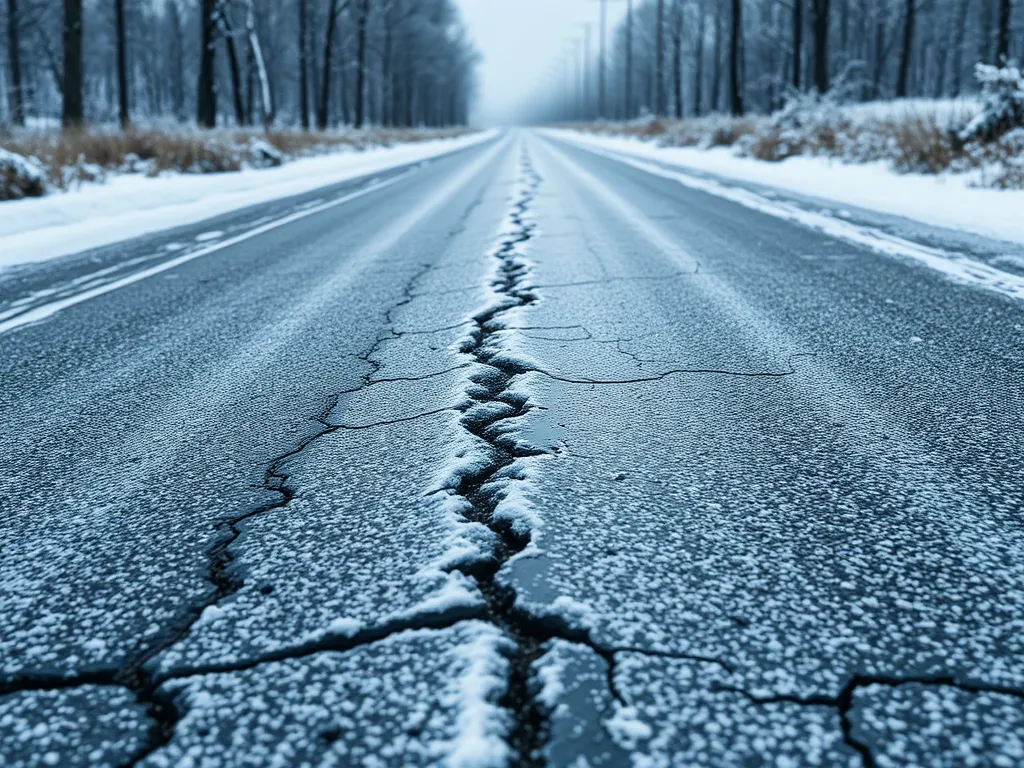
Thermal cracking starts when pavement temps plunge below a binder’s critical cracking temperature. WMA with PG 58-34 binders withstands -22°F before cracking initiates, versus -15°F for PG 64-22. Field data from Michigan DOT shows WMA sections experiencing 0.2 cracks per 100 sq ft after 5 winters, compared to 1.1 cracks in HMA sections.
Moisture Damage Prevention in Cold Conditions
Freeze-thaw cycling pulls water into pavement voids. WMA mixes using hydrated lime (1.5-2% by weight) or liquid anti-strip agents achieve 85-90% TSR (Tensile Strength Ratio) in AASHTO T 283 testing. Vermont’s 10-year study found lime-treated WMA retained 92% of initial density after repeated freeze-thaw, versus 78% for untreated mixes.
While WMA shows strong performance in cold climates, specific challenges arise during field application. The next section examines cold-weather paving obstacles requiring special attention.
Challenges Of Using Warm Mix Asphalt in Cold Weather
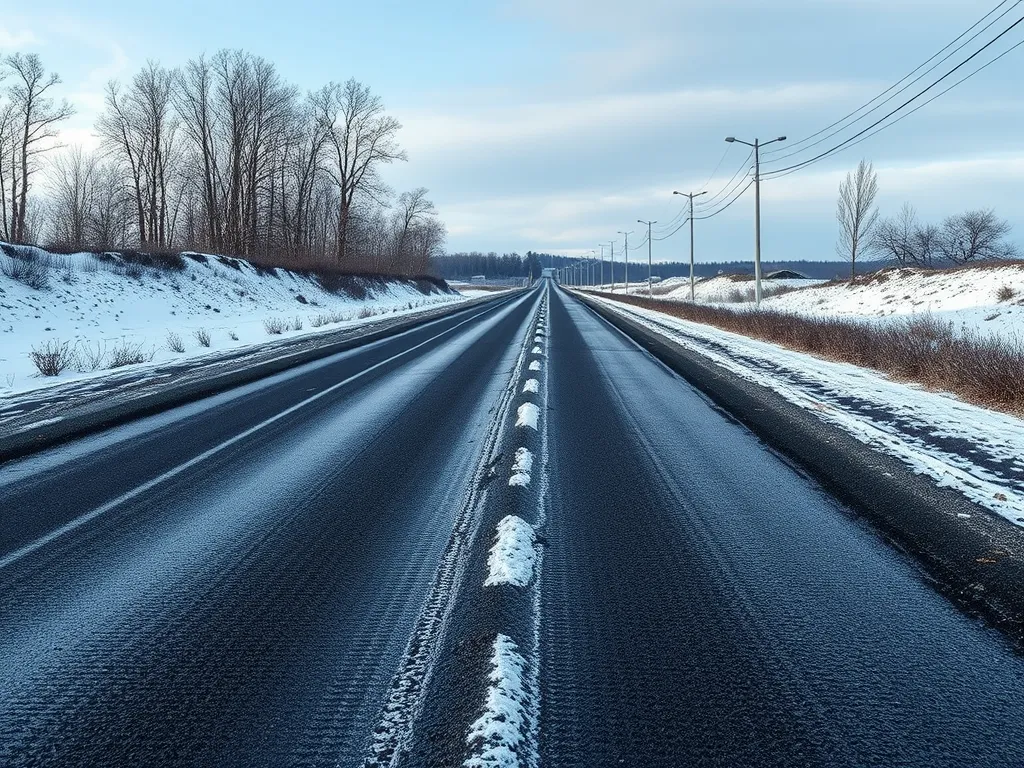
While warm mix asphalt (WMA) improves cold-weather paving compared to traditional hot mix, it faces unique hurdles in freezing conditions. Temperature sensitivity, material logistics, and weather unpredictability demand precise planning for optimal warm mix asphalt cold-weather performance.
Compaction Difficulties in Low Temperatures
WMA is produced at 20-30°F lower temperatures than hot mix asphalt (HMA), reducing initial workability. At 40°F or below, binder viscosity rises sharply, making compaction 15-25% harder. Pavers must achieve 92% density within 10-15 minutes before the mix cools below 175°F. Insufficient compaction leads to air voids above 8%, increasing risks of moisture infiltration and premature cracking.
Risk Of Rapid Temperature Drops During Paving
WMA cools 50% faster than HMA in cold climates due to lower production temperatures. A 15°F/hour cooling rate can occur in sub-32°F winds, shrinking the time window for proper laydown. If the mat temperature falls below 140°F before rolling, incomplete particle bonding creates weak spots. Thermal profiling shows temperature differentials exceeding 25°F across the mat increase rutting risk by 40%.
Material Handling and Storage in Cold Climates
WMA loses 4-6°F per hour during transport in cold weather. Haul distances beyond 30 miles risk cooling the mix below 220°F, requiring insulated trucks or heated beds. Stockpiling WMA for more than 48 hours in sub-freezing conditions causes aggregate stripping. Contractors often use warm mix asphalt cold storage additives like Evotherm® DAT to extend workability to 72 hours.
Addressing these challenges requires tailored strategies—like real-time infrared temperature monitoring or PG 58-34 binders—to maintain warm mix asphalt performance in cold weather. Next, we explore how WMA’s benefits outweigh these hurdles in freezing environments.
Benefits Of Warm Mix Asphalt for Cold Climate Applications
Warm mix asphalt (WMA) transforms cold-region paving by tackling unique challenges head-on. Its design directly addresses temperature limitations, material behavior, and long-term durability in frost-prone areas.
Enhanced Workability at Lower Temperatures
WMA stays pliable at 30-50°F lower temperatures than hot mix asphalt (HMA). This thermal flexibility lets crews compact roads effectively even as ambient temperatures dip below 40°F. Lower heat requirements slow thermal loss during transport, maintaining ideal viscosity for 15-25% longer than HMA. Contractors report 2-3 extra weeks of viable paving seasons in states like Minnesota and Maine.
- Extended paving window: Apply asphalt at 35°F vs. HMA’s 50°F cutoff
- Reduced risk of thermal segregation during placement
- Better mat density with standard rollers (85-92% Gmm achieved at 225°F)
Cost Efficiency Compared to Hot Mix Asphalt
Producing WMA at 250-275°F cuts fuel use by 20-35% versus HMA’s 300-350°F range. Minnesota DOT documented $8.50/ton savings on 2022 projects through lowered energy costs and extended haul distances. Fewer temperature-related delays slash labor expenses—a 2023 Michigan study showed 18% lower project costs with WMA in sub-45°F conditions.
- Lower plant emissions: 30-40% reduction in CO₂ per ton
- Reduced equipment wear from shorter heating cycles
- 15-25% longer haul times without temperature-related rejections
Improved Performance With Reduced Binder Content
WMA’s lower production temperatures slow binder oxidation, preserving PG-graded asphalt’s flexibility. Tests show WMA with 4.5% binder content matches HMA’s 5.0% performance in -20°F freeze-thaw cycles. Alaska’s Glenn Highway saw 60% fewer thermal cracks in WMA sections over 5 winters compared to HMA.
- Higher retained Marshall Stability (1,800 lbs vs. 1,500 lbs for HMA after 300 cycles)
- Reduced rutting: 0.15” deformation vs. 0.23” in HMA (APA tests at 14°F)
- Better moisture resistance: 85% TSR vs. HMA’s 78% in cold-weather immersion
These advantages position WMA as a robust solution for frost-heavy regions. Next, we’ll analyze how its environmental profile strengthens the case for cold-climate adoption.
Environmental Considerations Of WMA in Cold Regions
Warm mix asphalt (WMA) brings key eco perks to cold climate road builds. Its lower heat needs and green gains make it fit for harsh weather zones.
Lower Energy Consumption and Emissions
WMA cuts fuel use by 20-30% vs hot mix. Made at 50-100°F cooler temps, it needs less heat to make. This slashes CO₂ by 15% and sulfur oxides by 35% per ton. Cold areas see PM2.5 drops too – key where winter air sits still.
Sustainability Benefits in Cold Weather Construction
WMA lets crews pave down to 30°F, adding weeks to short paving seasons. It handles 30% more reclaimed asphalt (RAP) than hot mix. Lower heat keeps old binders strong, cutting virgin rock needs by 1/5. Less heat loss during haul means flatter roads. This means fewer potholes and 40% less repair work over 10 years.
With its green edge clear, let’s see how WMA stands up to years of freeze-thaw stress next.
How does this eco-friendly mix hold its ground through brutal winters? The next section breaks down long-term wear factors.
FAQs About Warm Mix Asphalt in Cold Climates
What Are the Disadvantages Of Warm Mix Asphalt?
While warm mix asphalt (WMA) has numerous benefits, it can be more expensive to produce due to specialized additives and production techniques. Additionally, improper handling or placement in very cold temperatures may lead to inadequate compaction and durability issues.
What is the Temperature Range for Warm Mix Asphalt?
Warm mix asphalt is typically produced and laid down at temperatures ranging from 215°F to 275°F, making it suitable for use in ambient temperatures as low as 30°F. However, for optimal performance, it is recommended to pave WMA when ambient temps are above 40°F.
What Are the Advantages Of Warm Mix Asphalt?
WMA offers several advantages, including reduced energy consumption during production (20-35% lower than hot mix asphalt), better workability in colder temperatures, improved environmental benefits, and enhanced resistance to thermal cracking. Additionally, it maintains its performance with a lower binder content compared to traditional hot mix asphalt.
At What Temperature is It Too Cold to Lay Asphalt?
For effective placement, it is generally considered too cold to lay warm mix asphalt when air temperatures drop below 20°F or ground temperatures fall below 40°F. Laying asphalt under these conditions can lead to poor compaction and increased risk of damage to the pavement.
Closing Thoughts
Warm Mix Asphalt (WMA) plays a vital role in enhancing pavement performance in cold climates. It addresses the limitations of traditional Hot Mix Asphalt (HMA) by providing superior workability even at lower temperatures. This adaptability not only simplifies the paving process but also increases durability against harsh weather conditions.
The benefits of WMA extend beyond ease of application. Lower production temperatures result in decreased energy consumption and reduced emissions, contributing to sustainable construction practices. Additionally, WMA demonstrates resilience during freeze-thaw cycles, minimizing risks such as thermal cracking and moisture damage.
Despite challenges like compaction in cold conditions, the advantages make WMA an appealing choice for cold climate applications. It ensures cost efficiency, while maintaining performance integrity over time.
For further information on warm mix asphalt and to utilize our tools, check out Asphalt Calculator USA.