
Maintenance Impact on Asphalt Performance: Key Factors and Strategies
Published on: March 14, 2026 | Last Updated: April 14, 2025
Written By: George Voss
Maintenance directly controls how asphalt pavement withstands traffic, weather, and time. Regular care prevents cracks, potholes, and surface failures by addressing wear before structural damage occurs – with properly maintained asphalt lasting 20-30 years versus 12-15 years for neglected surfaces. Strategic upkeep combines preventative methods like sealcoating with timely repairs, improving skid resistance and load-bearing capacity while reducing long-term costs by 30-50%.
This guide explains how maintenance choices affect pavement life and function. You’ll learn how climate, traffic loads, and material quality interact with maintenance schedules. We detail specific techniques like infrared patching (repairs 6” deep in 15 minutes) and crack sealing (prevents 80% of water infiltration). Explore cost comparisons between treatments – sealcoating costs $0.14-$0.25 per square foot versus $3-$7 for full replacements. Technical specifications include PG 64-22 binders (common in temperate zones) and 92% compaction density for durable bases. Seasonal strategies and environmental factors like freeze-thaw cycles are analyzed through real-world performance data.
Contents
- Understanding Asphalt Performance and Maintenance Basics
- How Long Does Asphalt Last Without Maintenance?
- How Often Should Asphalt Driveways Be Maintained?
- What Makes Asphalt Stronger?
- Essential Maintenance Strategies for Asphalt Pavement
- Cost-effective Asphalt Maintenance Solutions
- Environmental Impacts on Asphalt Performance
- FAQ: Asphalt Maintenance Impact on Performance
- Closing Thoughts
- Additional Resources for You:
Understanding Asphalt Performance and Maintenance Basics
Long-lasting roads start with knowing how care shapes pavement. Quality installation forms a strong foundation, but daily conditions and traffic slowly chip away at surfaces. Action taken today directly impacts tomorrow’s driving conditions.
What Determines Asphalt Pavement Longevity?
Four factors control how long asphalt lasts: mix design, local climate, traffic loads, and maintenance habits. High-traffic roads handling 20,000+ cars daily fail 50% faster without care than residential streets. Freeze-thaw cycles in northern states crack pavements twice as quickly as dry southern climates. Routine fixes like crack filling add 5-8 years to a surface’s usability.
Core Components Of Asphalt Durability
Three pillars uphold pavement strength: aggregates (crushed rock), PG binders (asphalt cement graded for local temps), and compaction density. Maintenance preserves these parts:
- Sealcoating blocks UV rays that oxidize binders
- Filling 1/4″+ cracks stops water from washing out aggregates
- Patching potholes maintains 95%+ compaction rates
Arizona’s DOT found pavements with annual inspections last 22 years vs 14 years for unmaintained roads. Oxidation from sun exposure alone can slash lifespan by 30-40% without coatings.
These factors set the stage for grasping why skipping care risks costly rebuilds. Up next: what occurs when pavments go without vital upkeep.
How Long Does Asphalt Last Without Maintenance?
Fresh asphalt surfaces typically last 12-25 years with proper care. Without maintenance, lifespan drops sharply. Climate, traffic patterns, and base preparation dictate how fast degradation occurs. Let’s examine what speeds up wear and tear.
Factors Accelerating Asphalt Deterioration
Three elements dominate asphalt breakdown: environmental stress, traffic volume, and material quality. Missing even basic upkeep allows these forces to compound structural damage.
Weather Exposure and Traffic Load Effects
UV rays oxidize asphalt binders, making surfaces brittle. A single freeze-thaw cycle can expand cracks by 0.25 inches. Heavy trucks exert 10,000x more stress per axle than passenger cars. Combined, these factors create a destructive cycle:
| Factor | Impact | Data Point |
|---|---|---|
| UV Exposure | Binder Degradation | 1-3% annual stiffness increase |
| Freeze-Thaw | Crack Propagation | 30-50% lifespan reduction |
| Heavy Traffic | Rutting | 1 truck = 9,600 car equivalents |
Typical Lifespan Of Unmaintained Asphalt Surfaces
Unsealed residential driveways show raveling within 5 years. Commercial parking lots with daily truck traffic often require full reconstruction by year 8. Data reveals stark contrasts between maintained vs. neglected pavements:
| Surface Type | Maintained Lifespan | Unmaintained Lifespan |
|---|---|---|
| Residential Driveway | 20-25 years | 8-12 years |
| Arterial Road | 15-20 years | 6-10 years |
| Distribution Center Lot | 10-15 years | 5-8 years |
Each year of deferred maintenance increases repair costs by 30-50%. A $500 sealcoat job left undone could lead to $15,000 in reconstruction expenses within 5 years.
Spotting early distress signs makes all the difference. Next, we’ll explore how to time interventions for maximum cost efficiency.
How Often Should Asphalt Driveways Be Maintained?
Effective asphalt maintenance impact hinges on consistent scheduling. Residential driveways require annual inspections with targeted interventions every 2-3 years. Commercial lots with heavier traffic need biannual checks and annual sealcoating.
Seasonal Maintenance Requirements
Temperature shifts dictate specific actions. Spring demands crack sealing after freeze-thaw cycles. Summer suits sealcoating when temperatures exceed 50°F. Fall requires debris removal to prevent drainage issues. Winter calls for prompt snow clearing without metal blades.
Post-Winter Damage Prevention
Address winter’s toll within 30 days of thaw. Repair cracks wider than 1/4″ using rubberized asphalt emulsion. Inspect drainage slopes – aim for 2% grade to divert water. Sealcoat if surface oxidation exceeds 10% area coverage. Ignoring these steps accelerates base layer erosion by 300%.
Signs Your Asphalt Needs Immediate Attention
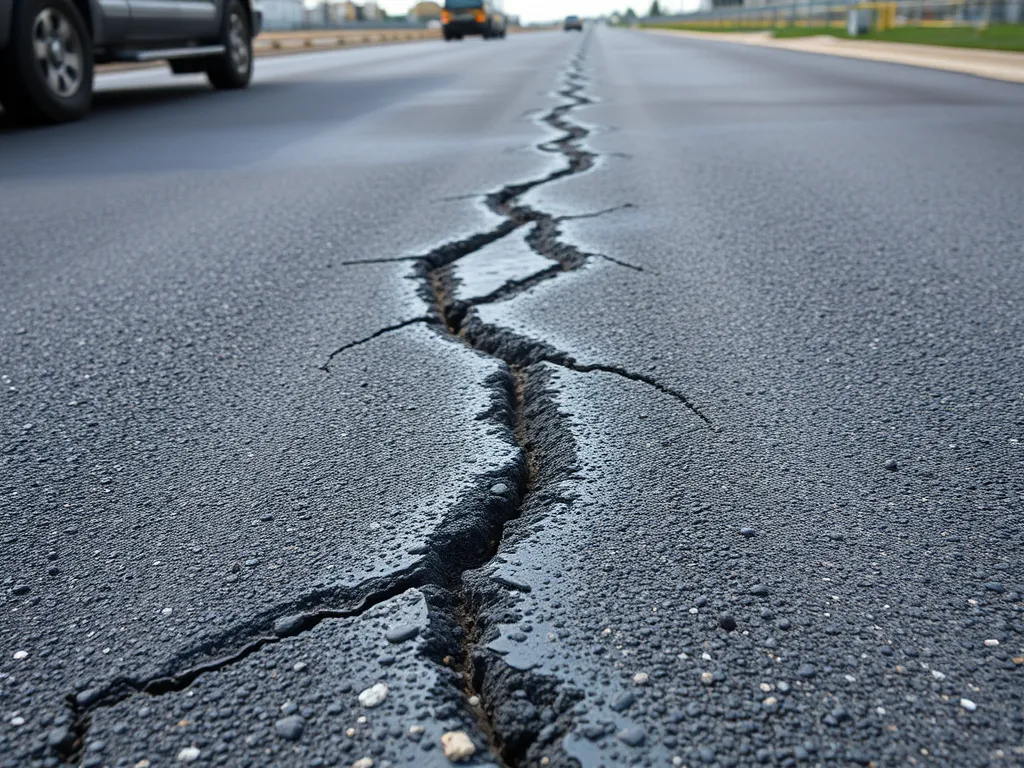
Four red flags demand urgent action: Alligator cracking: Interconnected cracks forming hexagonal patterns signal base failure. Potholes deeper than 2″: These allow water penetration to subgrade layers. Pooling water: Standing beyond 48 hours indicates compromised drainage. Faded surface: Graying asphalt loses 40% of its UV resistance. Address these within 72 hours to prevent 5x repair cost escalations.
Proactive maintenance asphalt performance strategies prevent 80% of premature failures. Up next: How material science boosts pavement strength through advanced aggregates and binder technologies.
Also See: Hot Mix Asphalt Surface Treatments: Key Benefits
What Makes Asphalt Stronger?
Asphalt strength stems from material science and precise installation methods. Both factors determine how well pavements handle weight, weather, and wear over time.
Material Enhancements for Improved Performance
Modern mixes use advanced aggregates and binders to boost durability. These components directly affect crack resistance, rutting potential, and maintenance needs.
Aggregate Quality and Binder Selection
High-quality crushed stone (95% of asphalt volume) with angular edges creates interlocking friction. Aggregates scoring under 35% on the Los Angeles Abrasion test withstand traffic better. Binders like PG 64-22 (common in temperate zones) or polymer-modified PG 76-22 (for heavy trucks) adapt to temperature shifts. Recycled asphalt pavement (RAP) mixes up to 30% cut costs while maintaining structural integrity.
Construction Techniques Affecting Strength
Even premium materials fail without proper installation. Density achieved during paving determines long-term resistance to water infiltration and load-bearing capacity.
Importance of Proper Compaction
Rollers must achieve 92-96% density relative to lab-tested maximum specific gravity. Under-compacted asphalt (below 90%) develops 8-12% air voids, inviting moisture damage. Vibratory rollers applied at 275°F ensure particle alignment, reducing future raveling and potholes. A 1% density increase can extend pavement life by up to 10%.
Strategic material upgrades and precision paving set the stage—but without regular maintenance, even robust asphalt loses its edge. Next, let’s explore preservation tactics that lock in these strength gains.
Essential Maintenance Strategies for Asphalt Pavement
Proactive care determines how well paved surfaces withstand wear over time. Two primary methods dominate modern practice: stopping issues before they grow versus fixing existing damage.
Preventative Maintenance Approaches
Early intervention preserves structural integrity while minimizing long-term costs. Studies show properly maintained roads last 15-20 years versus 8-12 years without care.
Crack Sealing Methods
Fill fractures under 0.5 inches wide using rubberized binders or polymer-modified emulsions. Properly sealed cracks block moisture intrusion, cutting subsurface erosion by 70%. Costs range $0.15-$0.50 per linear foot based on material choice.
Sealcoating Applications
Coating surfaces every 3-5 years shields against UV rays, oxidation, and fuel spills. Coal tar seals provide superior chemical resistance, while asphalt-based options offer quicker curing. One gallon covers 80-100 sq ft, with typical driveways costing $250-$500 per service.
Corrective Maintenance Techniques
Once damage exceeds 10% of the paved area, restoration becomes critical. Timely repairs prevent localized failures from spreading.
Pothole Repair Best Practices
Remove debris, square edges, then compact hot mix (300°F+) or cold patch material. Full-depth fixes using infrared heaters bond new patches to existing pavement, lasting 3-5 times longer than temporary fills. Labor accounts for 60% of pothole repair costs.
Surface Overlay Implementation
Laying 1.5-2 inches of fresh mix rejuvenates worn pavements with minor base issues. PG 64-22 binders work for most climates, while polymer-modified grades handle extreme temperature swings. Overlays extend service life by 8-12 years at $2-$4 per sq ft installed.
While these methods boost performance, balancing upfront costs with long-term savings requires careful planning. Next, we’ll examine budget-friendly options that maximize value without compromising results.
Cost-effective Asphalt Maintenance Solutions
Preserving pavement quality doesn’t require overspending. Strategic methods balance upfront costs with lasting results, directly influencing maintenance asphalt performance. Focused care prevents minor issues from escalating into costly rebuilds.
Budget-friendly Preservation Methods
Low-cost interventions protect structural integrity while maximizing budgets. Prioritizing high-impact treatments extends service life by 5-7 years on average.
Edge Crack Filling Strategies
Edge cracks form within 18-24 months due to poor drainage or base shifting. Filling them with polymer-modified sealants costs $0.50-$1.20 per linear foot—up to 70% cheaper than full-depth repairs. Properly sealed edges block moisture infiltration, reducing subsurface erosion by 40%.
Ultra-Thin Overlay Benefits
- Adds 0.75” wear layer using stone matrix mixtures
- Restores ride quality for $2.50-$4.00 per sq ft
- Extends lifespan 8-10 years with 3-hour installation
These overlays use recycled materials in 20-30% of mixes, cutting material costs without sacrificing skid resistance.
Long-term Value Of Routine Maintenance
Sealing cracks every 24-36 months prevents 80% of potholes. Proactive programs lower lifetime costs by 60% compared to reactive fixes. For context, rebuilding failed pavement costs $8-$12 per sq ft versus $1-$3 for yearly sealcoating.
Weather patterns heavily influence preservation timelines. Next, we’ll examine how climate shapes maintenance asphalt performance impact.
Environmental Impacts on Asphalt Performance
Weather and eco-factors shape how well asphalt holds up over time. Heat, cold, rain, and sun speed wear if left unchecked. Smart fixes keep roads strong while cutting harm to nature.
Climate-related Maintenance Challenges
Hot zones bake asphalt at 140°F+, softening blacktop. Cold snaps below 20°F make pavements brittle. Wet areas face 50% more cracks from freeze-thaw cycles. Each climate needs tailored care plans.
UV Radiation and Oxidation Effects
Sun rays break down binders in asphalt over time. UV exposure causes 80% of surface aging in warm states. Sealcoats with UV blockers add 3-5 years to pavements. Crack fills stop water from washing out stone mixes.
Sustainable Maintenance Practices
Recycled asphalt (RAP) makes up 95% of reused road stuff. Warm-mix cuts fuel use by 30% during patching. Porous asphalt soaks up 5 gal/water per minute, easing flood risks. Green sealants with low VOC keep air clean during repairs.
These earth-smart steps boost road life while meeting EPA rules. Next, let’s break down costs for keeping asphalt in top shape.
FAQ: Asphalt Maintenance Impact on Performance
Can Proper Maintenance Double Asphalt Lifespan?
While proper maintenance can significantly extend the lifespan of asphalt, doubling it depends on various factors, such as the initial quality of the asphalt, the local climate, and traffic conditions. Regular maintenance can often extend the life of asphalt significantly compared to unmaintained surfaces, which can lead to savings on replacement costs in the long run.
Does Sealcoating Prevent Structural Damage?
Sealcoating acts as a protective layer against UV rays, chemical spills, and moisture, which can all accelerate deterioration. While it doesn’t prevent all forms of structural damage, it significantly reduces the likelihood of cracks and surface degradation, thus preserving the underlying asphalt and extending its service life.
How Does Weather Affect Maintenance Frequency?
Weather conditions play a vital role in determining the frequency of maintenance. For instance, regions with extreme temperatures may require more frequent inspections and interventions to address issues such as freeze-thaw cycles or UV damage. Regular maintenance schedules should be adjusted based on seasonal weather patterns to ensure optimal pavement performance.
Closing Thoughts
Asphalt performance heavily relies on consistent and appropriate maintenance. Proper upkeep not only extends the lifespan of asphalt pavements but also enhances their durability and safety. Identifying early signs of wear and implementing proactive measures, such as crack sealing and sealcoating, are vital steps in preserving asphalt integrity.
Moreover, understanding how environmental factors impact asphalt can guide maintenance choices effectively. Adopting budget-friendly strategies ensures that roadways remain safe and functional while being cost-effective. Make asphalt maintenance a priority to maximize performance and reduce long-term costs.
For more insights and calculations on asphalt maintenance and performance, visit Asphalt Calculator USA.

