
Low Temperature Asphalt Cracking: Causes, Prevention, and Repair Methods
Published on: March 13, 2026 | Last Updated: April 14, 2025
Written By: George Voss
Low temperature asphalt cracking occurs when cold weather causes pavement to contract and split, creating fissures that compromise road safety and lifespan. This thermal cracking results from rapid temperature drops below 40°F, weak binder materials, and poor compaction during installation. Left unaddressed, these cracks allow water infiltration that erodes base layers, accelerates pothole formation, and shortens pavement life by 3-5 years. Prevention focuses on using cold-rated binders like PG 58-34, achieving 95% compaction density, and installing proper drainage systems.
This article explains how winter destroys asphalt surfaces and how to protect them. You’ll learn why specific temperature thresholds trigger cracking, which binder grades perform best in freezing conditions, and how repair methods like infrared patching or crack sealing work. We break down material science basics, construction best practices, and cost-effective maintenance strategies for climates with harsh winters.
Contents
- Understanding Low Temperature Asphalt Cracking
- Causes Of Low Temperature Asphalt Cracking
- Preventing Low Temperature Asphalt Cracking
- Effects Of Low Temperature Cracks on Pavements
- Low Temperature Asphalt Cracking Repair Methods
- Environmental Considerations in Cold Climate Asphalt Performance
- FAQ: Low Temperature Asphalt Cracking
- Closing Thoughts
- Useful References for You:
Understanding Low Temperature Asphalt Cracking
Cold climates pose unique challenges for asphalt pavements. When temperatures plunge, roads develop fractures called low temperature asphalt cracking. These cracks form linear patterns perpendicular to traffic flow, typically spaced 10-30 feet apart.
What is Low Temperature Asphalt Cracking?
Low temperature asphalt cracking occurs when thermal stress exceeds the material’s strength. Unlike fatigue cracks caused by traffic loads, these fractures stem directly from cold weather. The issue worsens in regions with prolonged freezing cycles or sudden temperature drops below 20°F.
Mechanisms Of Asphalt Cracking at Low Temperatures
Two primary forces drive asphalt cracking at low temperatures: thermal contraction and binder stiffness changes. These mechanisms interact with pavement structure and material properties to create failure points.
Thermal Contraction and Stress Accumulation
Asphalt shrinks 0.00001 inches per inch for every 1°F temperature decrease. When pavement cannot contract freely due to friction with underlying layers, stress builds at rates up to 2 psi/°F. Rapid cooling events (>2°F per hour) accelerate this process, creating tension that fractures rigid pavements.
Role of Asphalt Binder Stiffness
Binders stiffen exponentially in cold conditions. A PG 58-34 binder at 70°F has 150 Pa·s viscosity – at -34°F, this jumps to 300,000 Pa·s. This viscosity spike reduces stress relaxation capacity by 90%, transforming flexible pavement into brittle material prone to low temp asphalt cracking. Polymer-modified binders improve cold-weather performance by maintaining ductility below freezing.
Material selection alone cannot solve cold-weather pavement failures. Upcoming sections explore how construction practices and environmental factors combine to create asphalt cracking at low temperatures.
Causes Of Low Temperature Asphalt Cracking
Multiple factors combine to create cracks when asphalt faces cold stress. These range from weather patterns to choices made during pavement construction.
Environmental Factors
Weather plays a direct role in thermal cracking. Two key conditions accelerate damage in cold climates.
Rapid Temperature Drops
Sudden freezes trigger thermal shock. Asphalt contracts faster than the base layer, creating tensile stress exceeding the material’s strength. For example, a 20°F drop within 24 hours can initiate transverse cracks spaced 10-30 feet apart. Regions with dramatic day-night winter cycles face higher risks.
Extended Exposure to Sub-Freezing Conditions
Prolonged cold makes asphalt brittle. Binders reach glass transition temperatures (-20°F to 0°F), losing flexibility. Repeated freeze-thaw cycles widen existing microcracks. Areas with 60+ days below freezing annually often show advanced crack networks.
Material and Construction Factors
Pavement durability starts with design choices. Three common errors worsen cold-weather performance.
Inadequate Asphalt Mix Design for Cold Climates
Using stiff binders or improper aggregates accelerates failure. PG (Performance Graded) binders rated for local temps are critical. A PG 58-28 binder withstands -28°C, while PG 64-22 fails below -22°C. Rounded aggregates also reduce mix flexibility versus angular crushed stone.
| Binder Grade | Minimum Temp Rating |
|---|---|
| PG 58-28 | -28°C (-18°F) |
| PG 64-22 | -22°C (-8°F) |
Poor Compaction During Installation
Air voids above 7% let water penetrate and freeze. Proper compaction achieves 92-96% density. Cold weather paving below 50°F often results in under-compacted layers with 10-12% voids, doubling crack risks.
Weak Interlayer Bonding in Pavement Structure
Layers separating under stress create failure points. Tack coat application below 0.05 gal/yd² or installing layers in cold temps reduces bonding strength by 40-60%. This weakness allows cracks to propagate vertically through the pavement.
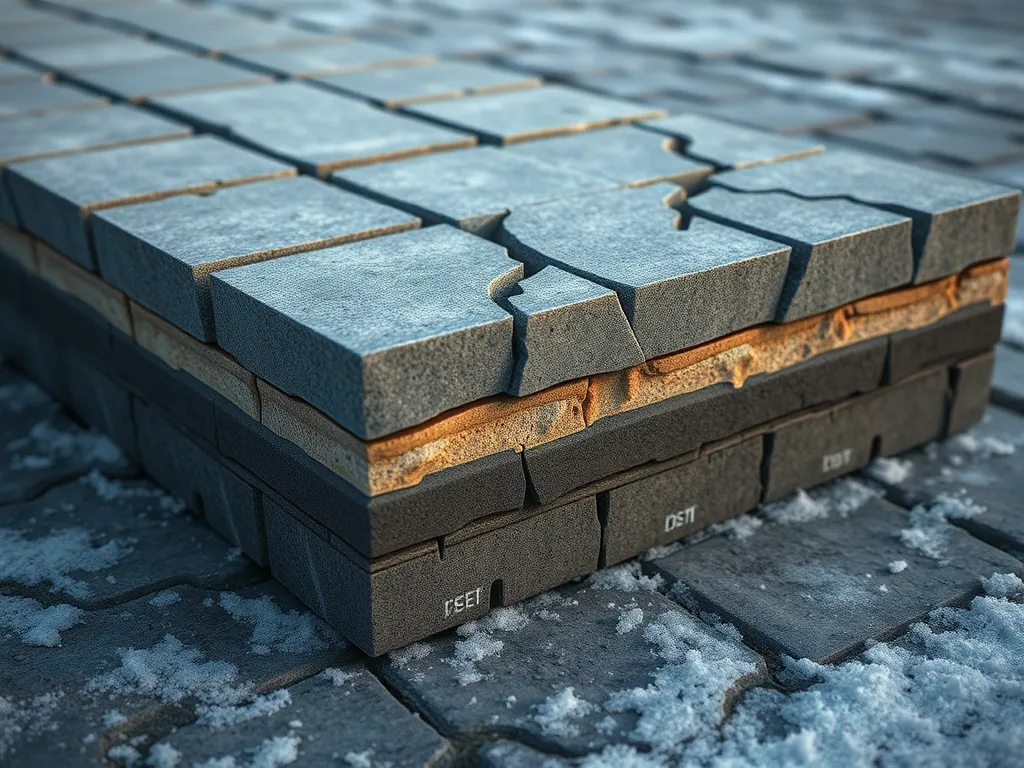
Recognizing these root causes prepares pavement teams to implement targeted solutions. Next, we explore strategies to combat cold-induced damage before it starts.
Preventing Low Temperature Asphalt Cracking
Effective prevention requires strategic material choices and precise construction methods. These approaches minimize thermal stress and maintain pavement flexibility in freezing conditions.
Material Selection and Mix Design
Cold-climate asphalt demands specialized mixes. Engineers use performance-graded (PG) binders rated for specific temperature ranges, like PG 58-34, which withstands -34°C (-29°F) without fracturing.
Low Temperature Asphalt Binder Specifications
The Superpave system determines binder grades through bending beam rheometer tests. Lower PG numbers (e.g., PG 64-28 vs. PG 58-34) indicate better cold-temperature performance. Northern states like Minnesota mandate PG 58-34 binders for highways.
Polymer-Modified Binders for Enhanced Flexibility
Styrene-butadiene-styrene (SBS) polymers increase binder elasticity by 300-500%. Modified mixes:
- Resist crack initiation at -20°C (-4°F)
- Reduce crack propagation rates by 40-60%
- Extend pavement life by 8-12 years in freeze-thaw zones
Costs run $8-$12/ton higher than conventional asphalt but yield long-term savings.
Construction Best Practices
Even premium materials fail without proper installation. Temperature control and compaction are non-negotiable.
Optimal Paving Temperatures for Asphalt Placement
Hot mix asphalt requires 275-325°F (135-163°C) during laydown. Below 250°F (121°C), thermal segregation occurs, creating weak zones prone to low temp asphalt cracking. Infrared cameras monitor mat temperature, ensuring ±15°F uniformity.
Proper Layer Thickness and Compaction Techniques
Thin lifts (1.5-2 inches) cool too quickly, while thick layers (4+ inches) trap heat unevenly. Ideal thickness: 2.5-3 inches per lift. Pneumatic rollers achieve 92-95% density in 4-6 passes—below 90% density increases cracking risk by 70%.
While these methods reduce low temperature asphalt cracking risks, existing damage still impacts pavement durability. Next, we explore how untreated cracks compromise structural integrity.
Also See: 10 Common Mistakes in Asphalt Repair You Should Avoid
Effects Of Low Temperature Cracks on Pavements
Thermal fractures in pavements create more than just surface flaws. These fissures trigger chain reactions that impact performance, safety, and budgets – particularly in regions with harsh winters.
Structural Integrity Concerns
Low temp fractures let moisture penetrate pavement layers. When water freezes beneath the surface, it expands by 9% volume – pushing cracks wider. Repeated freeze-thaw cycles erode base materials, causing 20-35% loss in load-bearing capacity over three winters. Severe cases develop alligator cracking, signaling complete structural failure.
Safety Risks From Crack-induced Surface Defects
Untreated thermal cracks become driving hazards within months. Ice forms inside fissures, reducing skid resistance by up to 40%. Raveling – the loss of surface stones – creates uneven textures that hydroplane vehicles. Potholes emerging from cracked zones cost U.S. drivers $6.4 billion yearly in tire/wheel repairs.
Increased Maintenance Costs Over Pavement Lifespan
Every 1” of unsealed crack costs $12 per linear foot in future repairs. Compare that to $0.80/ft for timely sealing. Agencies spending $25k/km on crack prevention avoid $150k/km reconstruction costs later. Delayed interventions cut pavement life by 3-7 years, forcing more frequent overlays.
Next: Explore proven techniques to fix existing thermal fractures while protecting against new ones.

Low Temperature Asphalt Cracking Repair Methods
Fix low temp asphalt cracks fast to stop more harm. Pick the right fix based on crack width, depth, and site needs.
Crack Sealing and Filling Techniques
Seal or fill cracks under 1 inch wide. Use rubberized asphalt, hot-pour sealants, or cold-applied fillers. Clean cracks first with air blasts or wire brushes.
Temperature Requirements for Effective Sealant Application
Apply sealants between 40°F and 85°F. Below 40°F, sealants won’t stick well. Above 85°F, they may sag. For hot-pour sealants, heat to 350°F-400°F during use.
Surface Treatments and Overlays
Stop water entry with chip seals (stone + binder) or slurry seals (sand + emulsion). Add thin asphalt layers (0.5″-1.5″) over cracked zones. Use PG 58-34 or PMA binders for cold zones.
Full-depth Repairs for Severe Cracking
Cut out cracked spots 6+ inches deep. Replace with new mix using PG 52-40 binder. Compact layers to 92% density. Costs $8-$15 per sq.ft. based on site access and repair size.
Each fix has trade-offs. Sealants last 2-5 years. Overlays last 5-10 years. Full repairs last 15+ years. Track freeze-thaw cycles to plan fixes.
Up next: How eco-friendly materials boost asphalt life in cold zones while cutting waste.
Environmental Considerations in Cold Climate Asphalt Performance
Cold conditions impact not just asphalt functionality but also its long-term sustainability. Balancing durability with planetary impacts requires smart material picks and tackling recycling hurdles in frost-prone zones.
Sustainable Material Choices for Low Temp Asphalt
Choosing asphalt components for cold climates starts with PG (Paving Grade) binders. PG 58-34 or PG 64-40 binders work in sub-freezing zones, maintaining flexibility down to -34°F. Adding 3-5% crumb rubber or 2% SBS polymers boosts crack resistance without raising production temps above 300°F.
Warm-mix asphalt (WMA) cuts fuel consumption by 20% during mixing. Using 30% RAP (Recycled Asphalt Pavement) in WMA maintains structural stability while shrinking carbon output. Porous asphalt with 16-22% air voids allows drainage, minimizing frost heave risks in areas with frequent freeze-thaw cycles.
Recycling Challenges in Cracked Asphalt Pavements
Reusing asphalt with low temp cracks poses unique issues. Fractured pavements often contain 10-15% moisture content, requiring costly drying before processing. Binder aging from thermal stress reduces RAP’s binding capacity, limiting fresh mix contributions to 25% max.
| Challenge | Cold Climate Impact | Typical Cost Increase |
|---|---|---|
| Fractionation | Split aggregates from thermal cycles | 12-18% |
| Binder Reactivation | Reduced bonding at 50°F or below | 22-30% |
| Contaminant Removal | Salt/de-icer residues in cracks | 8-15% |
New infrared scanning tools now map crack depth in RAP stockpiles, improving sorting accuracy by 40% and cutting waste.
Up next: Tactics for fixing cold-weather cracks without harming surroundings.
FAQ: Low Temperature Asphalt Cracking
Why Does My Asphalt Keep Cracking in Winter?
Asphalt cracking in winter is primarily due to thermal contraction and the material’s stiffening properties in cold weather. Low temperatures create tensile stresses that can exceed the asphalt’s strength, leading to cracks. Environmental factors, such as rapid temperature fluctuations and prolonged cold exposure, contribute significantly to this issue.
What is the Lowest Temperature for Pouring Asphalt?
Asphalt can generally be poured at temperatures as low as 40°F (4°C). However, for optimal performance and to minimize the chances of cracking, it is advisable to work under 50°F (10°C). It is also essential to monitor weather conditions closely.
What Temperature is Needed for Crack Sealing?
For effective crack sealing, temperatures should ideally be between 40°F and 85°F (4°C to 29°C). At temperatures below 40°F, the sealant may not adhere properly, while at temperatures above 85°F, the sealant may not set correctly. Ensuring the right temperature range is crucial for long-lasting repairs.
How Does Thermal Cracking Differ From Other Asphalt Cracks?
Thermal cracking primarily results from the contraction of asphalt due to low temperatures, leading to fissures that are typically perpendicular to traffic flow. In contrast, other types of asphalt cracks, such as fatigue or reflective cracks, often arise from traffic loads, structural deficiencies, or moisture infiltration, showcasing distinct patterns and causes.
Closing Thoughts
Low temperature asphalt cracking poses significant challenges for pavement durability and safety. Understanding its mechanisms and causes helps in selecting the right materials and implementing effective construction practices. Early prevention through proper mix designs and adherence to best practices can mitigate risks associated with cold weather.
Repairing low temperature cracks promptly ensures structural integrity and prolongs the lifespan of the pavement. Techniques such as crack sealing, surface treatments, and full-depth repairs are vital for managing damage and maintaining smooth surfaces.
For more detailed information on this topic and related asphalt concerns, visit Asphalt Calculator USA. Stay informed and keep your asphalt projects resilient against the challenges of cold climates.
Useful References for You:
- Federal Highway Administration (FHWA) – Asphalt Pavement Technologies
- Transverse (Thermal) Cracking | Washington Asphalt Pavement Association
- Factors affecting low-temperature cracking of asphalt pavements: analysis of field observations using the ordered logistic model: International Journal of Pavement Engineering: Vol 24, No 2
- Investigation of low-temperature cracking resistance of asphalt mixtures by conducting Disc-Shaped Compact Tension (DC(T)) and Semi-Circular Bend (SCB) tests – ScienceDirect
- Low Temperature Cracking of Asphalt Concrete Pavement | Center for Transportation Studies

