How Asphalt Shapes Your Community: Local Impacts Explained
Published on: March 11, 2026 | Last Updated: April 14, 2025
Written By: George Voss
Local impacts of asphalt usage describe how producing and applying this common material affects nearby environments, public health, economies, and city planning. From odor complaints near plants to smoother commutes on fresh roads, asphalt directly shapes daily life. Key factors include plant emissions (like sulfur dioxide and VOCs), worker exposure risks during 300°F paving, infrastructure costs ($3-$7 per square foot for residential driveways), and urban heat islands that spike street temperatures up to 150°F.
This article explores asphalt’s complex role in communities. You’ll learn how modern mixes like Warm-Mix Asphalt cut production temps by 50°F, reducing fumes. We’ll compare economic gains—the U.S. asphalt industry employs 300,000+ workers—against health challenges for those living within 1,500 feet of plants. Later sections cover solutions: porous asphalt absorbs 5 gallons of stormwater per minute, while recycled pavement can save $1.50 per ton in material costs.
Contents
- Understanding Asphalt Composition and Applications
- Health and Safety Considerations Of Asphalt Usage
- Urban Planning Benefits Of Asphalt Pavement
- Local Environmental Effects Of Asphalt Production and Usage
- Sustainable Practices to Reduce Asphalt’s Environmental Footprint
- Frequently Asked Questions (FAQ)
- Closing Thoughts
- Additional Resources for You:
Understanding Asphalt Composition and Applications
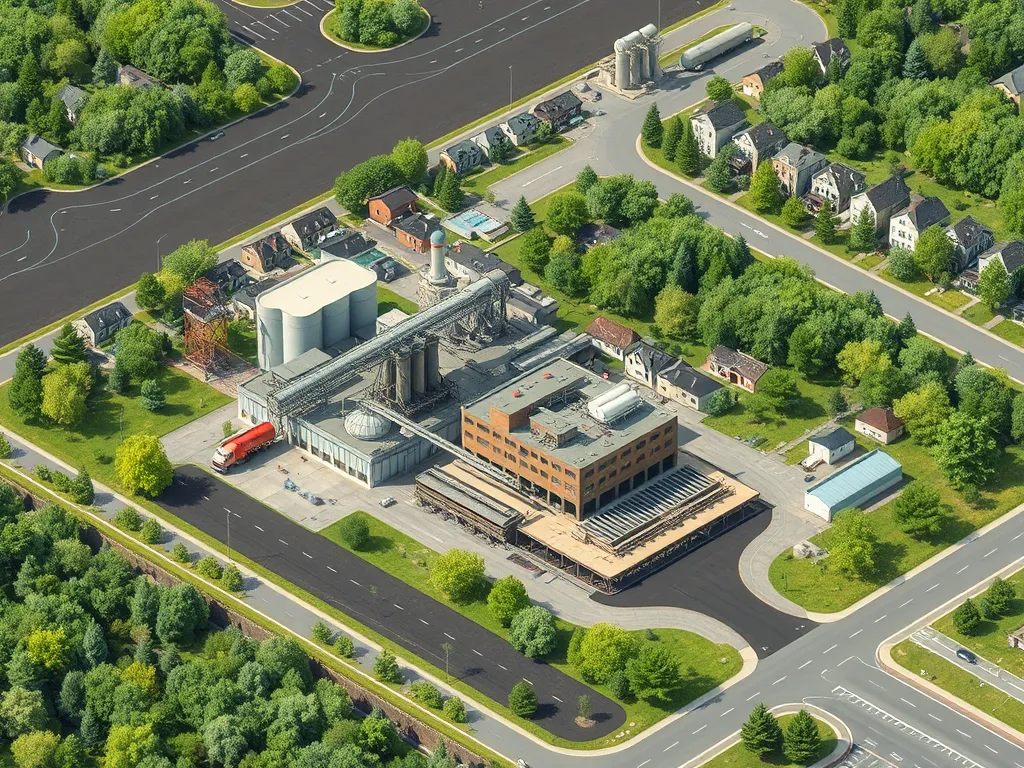
Asphalt combines aggregates (crushed stone, sand) with bitumen, a sticky petroleum byproduct. Local plants often source materials within 50 miles to cut transportation emissions. Production heats this mix to 300-350°F, creating pavement-ready material. Performance-graded (PG) binders ensure regional adaptability, while Superpave designs optimize durability for local climates.
What is Asphalt and How is It Produced Locally?
Local asphalt plants prioritize proximity to construction sites. A typical facility processes 200-400 tons per hour, using reclaimed asphalt pavement (RAP) at 15-30% rates. Bitumen content ranges from 4-7% by weight, balancing flexibility and strength. Plants must meet EPA Tier 4 standards, reducing particulate emissions by 80% compared to older models. Localized production slashes hauling distances, cutting fuel use by 12-18% per project.
Common Uses Of Asphalt in Local Infrastructure
Over 94% of U.S. paved roads use asphalt due to rapid installation and repair capabilities. Communities rely on it for driveways, parking lots, and bike paths. Porous asphalt systems manage stormwater, reducing runoff by up to 75%. Noise-reducing mixes lower traffic sounds by 3-5 decibels. These applications lower maintenance costs by 20-30% compared to concrete, freeing municipal budgets for other services.
While asphalt’s local benefits are clear, its production and usage raise community concerns. Next, we’ll examine health and safety factors tied to asphalt operations.
Health and Safety Considerations Of Asphalt Usage
Asphalt production and application create specific challenges for worker safety and public health. These concerns require attention to protect both labor forces and nearby residents.
Occupational Hazards for Asphalt Workers
Workers handling hot mix asphalt (HMA) face exposure to fumes containing polycyclic aromatic hydrocarbons (PAHs) and hydrogen sulfide (H2S). Temperatures exceeding 300°F during paving increase risks of burns. Prolonged contact with bitumen—a key binder in asphalt cement—can cause skin irritation. OSHA mandates respirators, heat-resistant gloves, and routine air quality checks to reduce these dangers. Engineering controls like enclosed mixing systems cut fume exposure by up to 65%.
Community Health Risks Near Asphalt Plants
Residents within 1 mile of asphalt plants report higher rates of respiratory issues due to airborne pollutants. Volatile organic compounds (VOCs) and fine particulate matter (PM2.5) released during production correlate with asthma flare-ups and chronic bronchitis. A 2019 study found communities near plants had 12% more emergency room visits for breathing problems. Children and older adults face elevated risks from sulfur dioxide emissions, which exceed EPA thresholds near 28% of U.S. facilities.
Safe Distance Guidelines From Asphalt Production Facilities
The EPA recommends maintaining at least 500 feet between homes and asphalt plants to minimize exposure. States like Texas enforce stricter 1,200-foot buffers under air quality laws. Zoning codes often pair these rules with tree barriers that absorb 20-30% of particulate emissions. Local planners use dispersion modeling—tracking wind patterns and terrain—to site new plants away from schools or hospitals.
Balancing asphalt’s role in infrastructure with these health measures sets the stage for exploring its urban planning benefits.
Urban Planning Benefits Of Asphalt Pavement
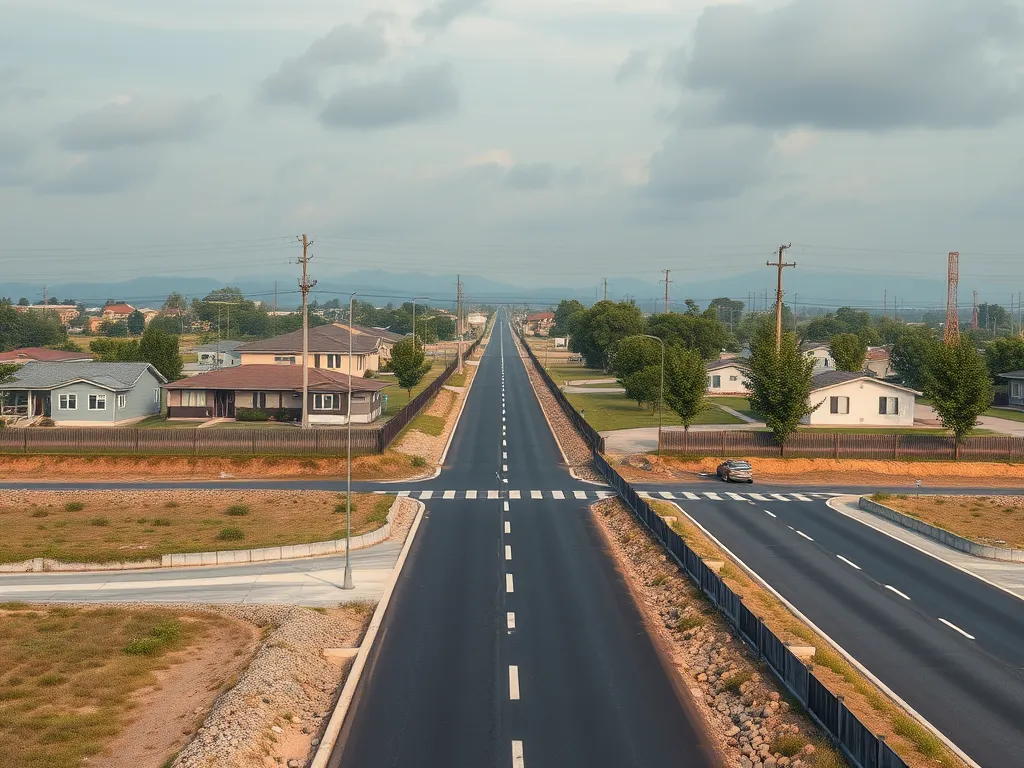
Modern cities rely on robust infrastructure to support growing populations. Asphalt pavement plays a vital role in shaping livable, efficient urban spaces while balancing long-term performance needs.
Enhancing Road Safety and Durability With Asphalt
Roads built with asphalt provide 40-50% better skid resistance compared to concrete, lowering collision risks during wet conditions. Performance-graded (PG) binders—engineered for specific climates—prevent cracks in freezing winters or soften in extreme heat. Noise levels drop by 3-5 decibels due to asphalt’s porous texture, reducing sound pollution near schools or residential zones.
With proper maintenance, asphalt roads last 15-20 years. Techniques like infrared patching fix potholes within hours, minimizing traffic disruptions. Rutting resistance keeps surfaces smooth, cutting vehicle repair costs by up to 22% for drivers.
Economic and Social Advantages for Local Communities
Over 94% of U.S. paved roads use asphalt, creating jobs for 300,000 workers in production, laying, and maintenance. Recycled asphalt pavement (RAP) mixes save $30-80 per ton versus virgin materials, freeing budgets for parks or public services. Towns using RAP report 25% lower project costs without sacrificing quality.
Smooth roads shorten emergency response times by 17% in urban zones. Retail corridors with well-maintained pavements see 12-19% higher foot traffic, boosting local businesses. Permeable asphalt options reduce stormwater fees by managing runoff onsite, saving cities up to $50,000 annually per mile.
While urban planning benefits are significant, the production process presents unique challenges for nearby ecosystems.
Also See: Common Compaction Errors and How to Fix Them Quickly
Local Environmental Effects Of Asphalt Production and Usage
Asphalt production and application create distinct environmental pressures at the community level. From emissions to heat retention, these effects shape local ecosystems and living conditions.
Emissions From Asphalt Plants: Key Pollutants Identified
Hot-mix asphalt plants release 6-10 pounds of CO₂ per ton of material produced. Primary pollutants include volatile organic compounds (VOCs), sulfur oxides (SOₓ), and fine particulate matter (PM2.5). During high-temperature mixing (300–350°F), binders release polycyclic aromatic hydrocarbons (PAHs)—a known respiratory irritant. Modern facilities using PG (Performance Graded) binders cut VOC emissions by 20-40% compared to conventional plants.
Impact Of Asphalt on Local Air Quality and Ecosystems
Within a 2-mile radius of asphalt plants, PM2.5 concentrations average 12-15 µg/m³—exceeding EPA’s 12 µg/m³ annual standard. VOC emissions react with nitrogen oxides (NOₓ) to form ground-level ozone, a key component of smog. Acid deposition from SOₓ alters soil pH, reducing biodiversity in nearby forests by 8-12% according to a 2023 Michigan State study.
Heat Island Effect and Stormwater Runoff Challenges
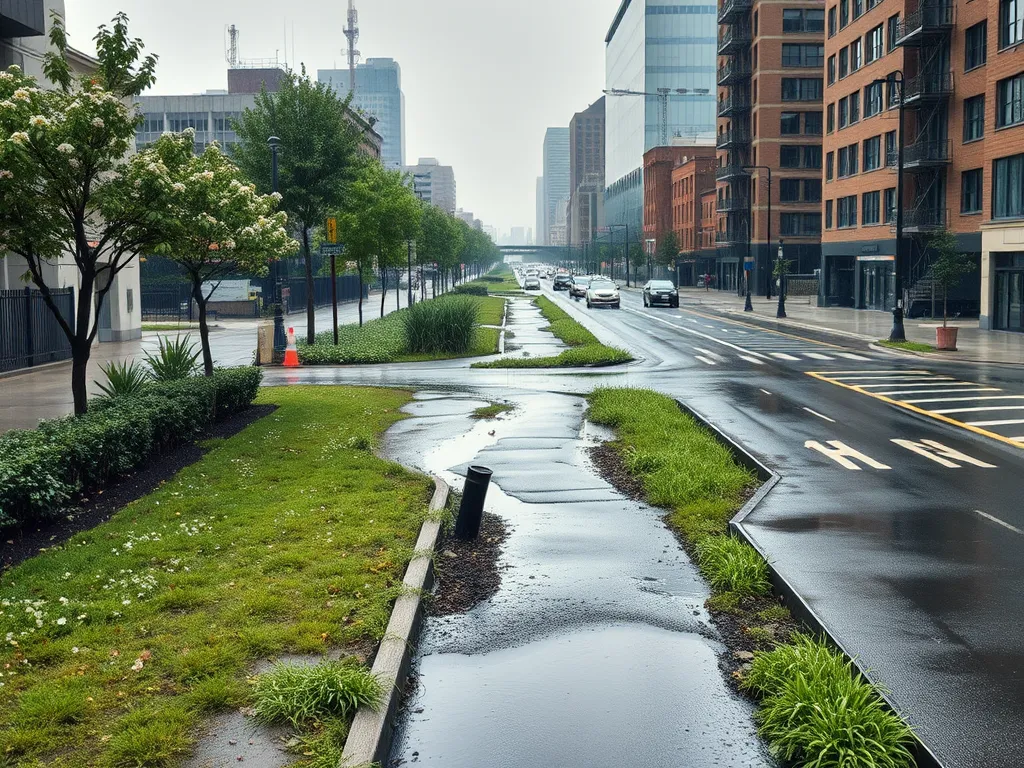
Asphalt pavements absorb 85-95% of solar radiation, elevating surface temperatures by 5-7°F in metro areas. This increases cooling energy demand by 18% during summer months. Impermeable surfaces also redirect 55-60% of rainfall as runoff—5x higher than natural ground cover. Combined sewer systems in cities like Philadelphia face 25% overflow spikes during storms due to asphalt-dominated landscapes.
New permeable asphalt mixes allow 300-500 inches/hour infiltration, cutting runoff by 70-80%. Raleigh, NC, reported a 1.5°F neighborhood temperature drop after replacing standard asphalt with high-albedo mixes in 2022.
These challenges demand targeted solutions. Next, we’ll explore methods to balance asphalt’s infrastructure benefits with ecological responsibility.
Sustainable Practices to Reduce Asphalt’s Environmental Footprint
Local asphalt usage drives infrastructure growth but demands eco-conscious strategies. Cutting-edge methods now tackle the asphalt environmental impact while maintaining pavement performance.
Recycling Asphalt Millings for Waste Reduction
Recycled Asphalt Pavement (RAP) repurposes milled material from old roads. Over 95 million tons get reused annually across U.S. projects. This process:
- Lowers landfill waste by 40-60% per mile of resurfacing
- Reduces material costs by 20-25% for local governments
- Maintains 90-95% of original asphalt cement properties
RAP mixes now form 15-30% of new pavements in states like California and Texas. Cold recycling techniques cut energy use by 50% compared to traditional hot-mix plants.
Low-temperature Asphalt Mixes and Emission Control
Warm Mix Asphalt (WMA) technologies slash production temps to 230-275°F – 50-100°F cooler than standard mixes. Key local benefits include:
- 20-35% lower CO² emissions per ton produced
- 15-20% fuel savings at batch plants
- Reduced VOC releases near residential zones
Foaming additives and organic waxes enable workability at lower temps. Pennsylvania DOT reported 28% fewer particulates at WMA sites versus conventional paving.
These innovations show how technical advances can align pavement needs with ecological priorities. Next, we’ll examine policy frameworks helping towns implement these solutions effectively.
Frequently Asked Questions (FAQ)
What Are the Primary Environmental Concerns With Local Asphalt Usage?
The primary concerns include air quality degradation due to emissions from asphalt plants, such as volatile organic compounds (VOCs) and particulate matter (PM2.5). These pollutants can adversely affect both local ecosystems and public health, contributing to respiratory issues and exacerbating climate change. Additional environmental risks include the urban heat island effect and increased stormwater runoff associated with impervious asphalt surfaces.
How Can Communities Mitigate Asphalt-related Health Risks?
Communities can mitigate health risks by enforcing zoning laws that maintain safe distances between homes and asphalt production facilities. Implementing vegetation buffers around plants can help absorb emissions and improve air quality. Additionally, promoting the use of modern technology such as Warm-Mix Asphalt (WMA) can lower emissions during production, while encouraging regular air quality monitoring and community health assessments can help identify and address potential concerns early.
Closing Thoughts
Asphalt is integral to local infrastructure, providing safe and durable surfaces for roads and parking lots. While it offers numerous benefits, such as economic growth and improved safety, it also brings challenges. Communities must consider health risks, environmental impacts, and the urban heat island effect associated with asphalt usage.
Adopting sustainable practices, like recycling asphalt and using low-temperature mixes, can minimize these negative effects. Awareness and active participation from local residents and planners alike can lead to balanced decisions regarding asphalt applications.
For more information on asphalt usage and its impacts, visit Asphalt Calculator USA.
Additional Resources for You:
- Lavin, P. (2003). Asphalt Pavements: A Practical Guide to Design, Production, and Maintenance for Engineers and Architects. London: Taylor & Francis.
- Environmental impacts of reclaimed asphalt pavement on leaching of metals into groundwater – PMC
- The Environmental Impact of Asphalt Plants