The Legacy Of Asphalt in Urban Development
Published on: March 7, 2026 | Last Updated: April 14, 2025
Written By: George Voss
The legacy of asphalt in urban development lies in its role as the foundation of modern cityscapes. Since the 1800s, asphalt pavement—a mix of stone aggregates and sticky bitumen—transformed dirt roads into durable surfaces. This shift enabled faster transportation, fueled automobile culture, and shaped sprawling suburbs. Yet asphalt’s dominance also brought challenges: impermeable surfaces increased stormwater runoff by up to 75% in paved areas, while dark asphalt absorbs 80-95% of sunlight, raising city temperatures by 5-7°F compared to rural zones.
This article explores how asphalt shaped urban growth and its environmental costs. We’ll trace its history from Paris’s 19th-century boulevards to Houston’s car-centric highways. You’ll learn how asphalt influenced suburban sprawl, created heat islands, and spurred recycling solutions like reclaimed asphalt pavement (RAP). Case studies from Tokyo to New York reveal trade-offs between economic growth and sustainability. Finally, we’ll compare asphalt to concrete and show how cities calculate paving needs using tools like the Asphalt Institute’s thickness formulas.
Contents
- History Of Asphalt in Urban Infrastructure
- Asphalt’s Impact on Urban Planning and Design
- Asphalt-driven Urban Growth and Challenges
- Environmental Legacy Of Asphalt in Cities
- Asphalt Vs. Modern Urban Materials
- Case Studies: Cities Shaped by Asphalt
- FAQs: Asphalt’s Role in Urban Development
- Closing Thoughts
- Additional Resources for You:
History Of Asphalt in Urban Infrastructure
From ancient pathways to modern highways, asphalt’s journey shaped cities. Its legacy lies in transforming rough terrain into structured networks that fueled urban progress.
Origins Of Asphalt As a Paving Material
Natural asphalt deposits were first used in 625 BCE for Babylonian roads. By the 1800s, refined bitumen—a sticky binder derived from crude oil—revolutionized paving. Belgium laid the first modern asphalt road in 1824, while Newark, New Jersey, built America’s initial asphalt street in 1870 using Trinidad Lake asphalt.
Early Adoption in Roadway Construction
Cities quickly embraced asphalt over cobblestones and gravel. Key milestones:
- Paris paved Champs-Élysées with asphalt in 1854, boosting pedestrian mobility
- New York City resurfaced Fifth Avenue in 1872, cutting maintenance costs by 60%
- Electric streetcars required smooth asphalt tracks, accelerating urban transit
By 1900, asphalt became the default choice for streets in growing industrial hubs.
20th-century Expansion Of Asphalt Use
Post-WWI automobile demand triggered asphalt’s golden age. The 1956 Federal-Aid Highway Act funded 41,000 miles of asphalt interstate roads. Cities redesigned around cars, with asphalt enabling:
- Faster commutes (average speeds tripled from 10 mph to 30 mph)
- Suburban sprawl, as seen in Levittown’s 1,400 miles of asphalt roads
- Parking infrastructure, with 800 million sq ft of asphalt lots built by 1975
Role in Automobile-Centric Urban Growth
Asphalt dictated 20th-century city layouts. Los Angeles expanded its asphalt road network by 300% between 1920-1950 to accommodate 1 million cars. Drive-in theaters, shopping malls, and gas stations relied on asphalt’s affordability—$2.50 per sq yd versus concrete’s $4.20 in 1950s pricing.
Today, 94% of U.S. paved roads use asphalt, supporting 72% of freight transport.
As cities evolved around asphalt roads, planners faced new challenges balancing mobility with livability—a tension that reshaped modern urban design principles.
Asphalt’s Impact on Urban Planning and Design
From grid layouts to traffic flow systems, bituminous mixtures directed how cities evolved. Flexible pavement properties enabled engineers to mold thoroughfares around existing terrain—not the reverse. This fluidity let planners prioritize connectivity over rigid geometric patterns.
Shaping Modern Road Networks
Post-war suburban expansion relied heavily on fast, low-cost surfacing. With 95% of U.S. paved roads using bitumen blends by 1970, developers could rapidly construct mile-long streets for $25,000 per lane-mile. These networks supported single-family zoning patterns still seen today.
Asphalt’s Role in Suburban Development
Cul-de-sacs winding through subdivisions exemplify bitumen’s influence. Its quick curing time—often under 24 hours—let builders complete entire neighborhoods within months. Communities like Levittown housed 17,000 families by 1951, connected via 150 miles of fresh blacktop.
Integration With Public Spaces
Beyond mobility, bituminous materials transformed civic landscapes. Plazas featuring dark pavers mirror road-building techniques, while rubberized track surfaces derive from highway innovations. These adaptations blurred lines between transit zones and gathering spots.
Parks, Sidewalks, and Asphalt Accessibility
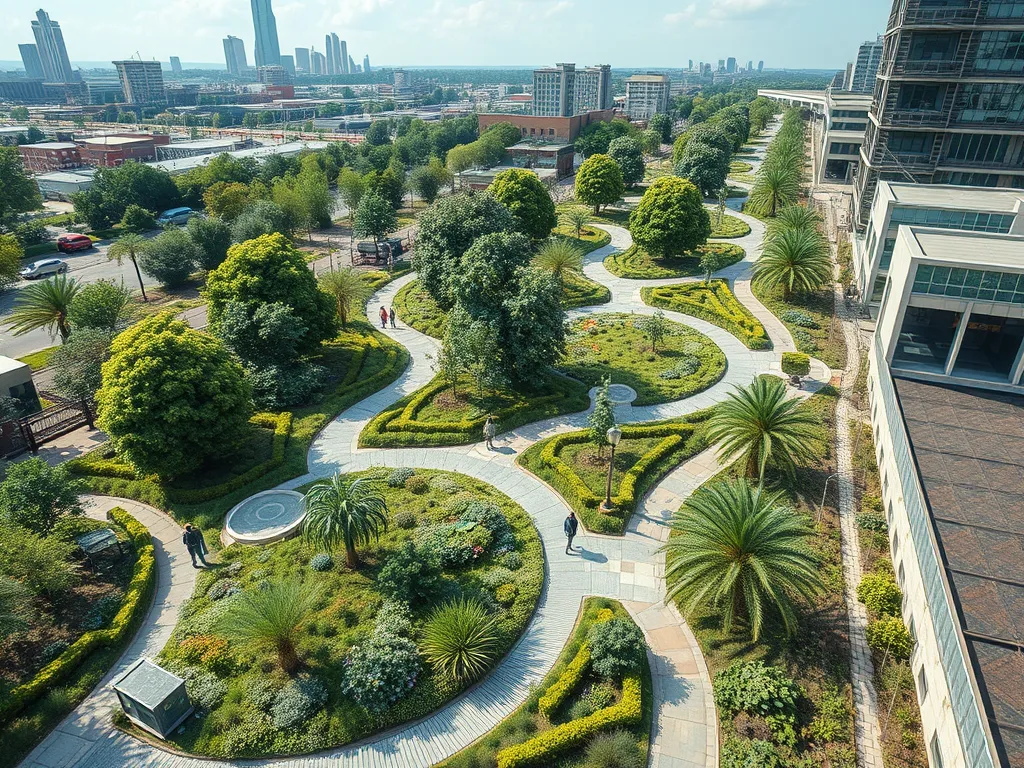
Central Park’s 58 miles of pedestrian paths? Mostly recycled mix since 1980. Modern permeable varieties now manage stormwater in 72% of new urban green spaces. Skate parks like Venice Beach’s showcase textured finishes with 0.3mm friction coefficients—proving versatility beyond basic pavement.
While bitumen’s imprint on cityscapes remains undeniable, its widespread use brings complex trade-offs. Next, we’ll examine how this material fueled economic progress while creating new environmental puzzles.
Asphalt-driven Urban Growth and Challenges
From boosting local finances to altering city climates, asphalt’s mark on urbanization spans both progress and complexity. Its role in shaping modern cities sits at a crossroads of industrial ambition and ecological adaptation.
Economic Benefits Of Asphalt Infrastructure
City growth links directly to asphalt’s affordability and rapid installation. Municipalities saved 30-40% on road costs compared to brick or cobblestone during 20th-century infrastructure booms. This cost gap allowed faster expansion of transit networks, fueling commerce.
Job Creation and Industrial Expansion
Asphalt production supported 500,000+ U.S. jobs by 1975, spanning quarrying, refining, and paving. Cities like Detroit saw asphalt plants double in capacity from 1950-1970 to meet road demand. Key sectors thrived:
| Industry | Growth (1950-1980) |
|---|---|
| Road Construction | 220% |
| Bitumen Refining | 180% |
| Trucking & Logistics | 150% |
Urban Heat Island Effect
Dark asphalt surfaces absorb up to 95% of solar radiation, a trait that reshapes city climates. Phoenix reported 5-7°F higher nighttime temps in asphalt-heavy zones by 2010. This thermal gain impacts air quality and cooling costs.
Asphalt’s Contribution to Rising City Temperatures
With a typical albedo of 0.05-0.10, asphalt stores far more heat than grass (0.25) or concrete (0.35). Cities now test coatings that reflect 30% more light, aiming to cut surface temps by 12°F. Atlanta’s 2022 pilot project saw a 6°F drop using modified binders.
Balancing asphalt’s practicality with climatic impacts remains pivotal as cities adapt. Up next: how urban planning tackles asphalt’s runoff and recycling in an warming world.
Also See: EN 14023 (Specification for Polymer Modified Bitumens)
Environmental Legacy Of Asphalt in Cities
The legacy of asphalt in urban development extends beyond visible infrastructure. Its environmental footprint shapes city ecosystems, water systems, and material life cycles. From stormwater struggles to recycling breakthroughs, asphalt’s ecological story reveals both challenges and innovations.
Stormwater Runoff and Pollution
Impermeable asphalt surfaces redirect 75% of rainfall as runoff, compared to 50% from natural ground. This forces drainage systems to handle 5-10 times more water during storms, increasing flood risks in dense urban areas.
Asphalt Surfaces and Water Management Challenges
Every mile of asphalt road sends 28,000 gallons of polluted runoff into waterways annually. Engineered solutions like permeable asphalt mixes now absorb 500 gallons per hour per square yard. Cities like Philadelphia combine porous pavements with bioswales to cut runoff by 80% in pilot zones.
Recyclability and Sustainability Efforts
95 million tons of reclaimed asphalt pavement (RAP) get reused yearly in US projects. This recycling rate tops 99% for asphalt roads, saving 60 million barrels of bitumen annually. New warm-mix asphalt tech lowers production temps to 250°F, slashing CO₂ emissions by 30%.
Reclaimed Asphalt in Modern Infrastructure
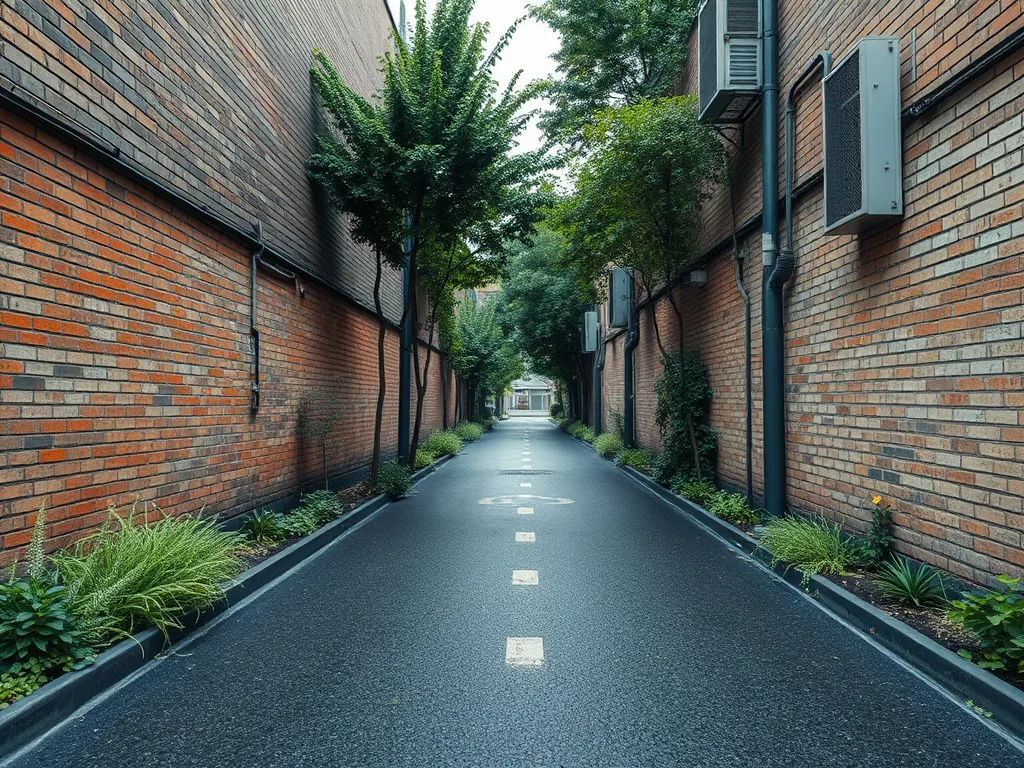
Urban rebuilds now blend 40% RAP into fresh mixes without losing durability. Chicago’s “Green Alley” program uses 100% recycled asphalt for permeable alleys, reducing repair costs by 40%. Advanced polymer-modified binders let engineers reuse materials across multiple pavement life cycles.
As cities weigh asphalt’s environmental past against greener methods, material science reshapes what’s possible. Next, we’ll compare how traditional asphalt stacks up against emerging urban construction materials.
Asphalt Vs. Modern Urban Materials
Road surfaces define city growth. While newer options like permeable pavers or composite materials emerge, asphalt remains the backbone of urban infrastructure. Its legacy stems from unique performance traits that balance durability, cost, and adaptability.
Durability Compared to Concrete Alternatives
Asphalt withstands freeze-thaw cycles better than rigid concrete slabs. PG (Performance-Graded) binders—specially formulated bitumen blends—allow pavements to flex under traffic loads, reducing cracks. Superpave mix designs, developed in the 1990s, optimize aggregate size and binder content for specific climates. A well-built asphalt road lasts 15-20 years before major repairs, while concrete lasts 30-40 years but costs 40% more upfront. Cities like Chicago prioritize asphalt for its ability to handle heavy plowing without surface spalling.
Cost-effectiveness in Municipal Projects
Asphalt dominates municipal budgets due to rapid installation and lower initial costs. Paving crews can lay 10,000 tons daily—enough for 1 mile of two-lane road—at $2-$5 per square foot. Concrete averages $4-$10 per square foot and requires 7-14 days curing. Detroit saved $3.2 million in 2022 by choosing asphalt for 78 lane-miles of residential streets. Savings let cities fund wider road networks, fueling suburban expansion during the 20th century.
Long-Term Maintenance of Asphalt Roads
Sealcoating every 3-5 years and overlays every 10-15 years keep asphalt roads functional for decades. Maintenance costs average $0.25-$0.50 per square foot—30-50% cheaper than concrete joint repairs. Over 99% of reclaimed asphalt gets reused in new mixes, cutting material waste. Phoenix’s 10-Year Street Maintenance Plan budgets $500 million for asphalt preservation, avoiding full reconstruction costs of $1.1 billion.
From colonial cobblestones to smart cities, asphalt’s legacy lies in balancing practicality with progress. Next, we explore how specific cities leveraged this material to shape their growth.
Case Studies: Cities Shaped by Asphalt
From grand boulevards to endless highways, asphalt has molded cities into hubs of movement and trade. These three urban centers show how blacktop built modern life.
Paris: Asphalt’s Role in Haussmann’s Renovation
Paris rebuilt itself in the 1850s with asphalt at its core. Baron Haussmann’s plan tore down cramped streets. In their place rose wide boulevards paved with asphalt mix (95% stone, 5% bitumen). These roads let troops move fast, reduced fire risks, and linked train stations. The Champs-Élysées became a model for cities worldwide. By 1900, 80% of Paris roads used asphalt.
Houston: Automobile Infrastructure and Urban Sprawl
Houston’s growth exploded post-WWII with asphalt as its fuel. Builders laid 500 miles of new roads yearly by 1960. Loop 610 and I-10 turned farms into suburbs. Cheap asphalt ( $3.50 per sq yd in 1970) let the city spread thin. Today, Houston has 16,000+ lane miles. But heat islands and floods now challenge this car-first model.
Tokyo: Balancing Density With Asphalt Networks
Tokyo packs 14 million people yet moves them smoothly. Multi-level asphalt roads like the Shuto Expressway handle 400,000 cars daily. City crews repave key routes every 5 years using 60% recycled asphalt. Narrow lanes (10-12 ft wide) save space without cutting traffic flow. Porous asphalt on 30% of sidewalks reduces flood risks in monsoon season.
These cities prove asphalt’s power to drive growth. Yet each also faces trade-offs—heat, floods, decay—that test its long-term role. Next, we examine how cities tackle asphalt’s environmental costs head-on.
FAQs: Asphalt’s Role in Urban Development
How Has Asphalt Benefited Urban Society?
Asphalt has significantly contributed to urban society by enabling efficient transportation networks, supporting economic growth through job creation, and facilitating the development of suburban areas. Its affordability and rapid installation have transformed cities, allowing for the swift construction of essential infrastructure that enhances connectivity and mobility.
Does Asphalt Contribute to Climate Change?
Yes, asphalt can contribute to climate change, primarily through the urban heat island effect, where dark asphalt surfaces absorb and retain heat more than other materials, leading to increased temperatures in urban areas. This effect can exacerbate energy consumption for cooling and impact local climates.
Why is Asphalt Still Preferred for City Roads?
Asphalt remains the preferred material for city roads due to its cost-effectiveness, rapid installation time, and durability. It can withstand various weather conditions and heavy traffic loads while offering a smoother surface for vehicles. Additionally, ongoing advancements in asphalt technology, such as recycled materials and warm-mix asphalt, continue to enhance its appeal.
How to Calculate Asphalt Needs for Urban Projects?
Calculating asphalt needs for urban projects involves assessing road dimensions, including length and width, and determining the required thickness based on traffic loads and environmental factors. Tools such as the Asphalt Institute’s thickness design charts can be used, along with local standards and practices, to ensure accurate estimates for project specifications.
Closing Thoughts
The legacy of asphalt in urban development is profound and multifaceted. From its origins as a paving material to its role in shaping modern cities, asphalt has transformed urban infrastructure. It has facilitated connectivity, fostered economic growth, and contributed to the aesthetic appeal of public spaces.
Yet, along with these benefits, asphalt presents challenges like the urban heat island effect and water management issues. Addressing these obstacles requires innovation and sustainable practices, including the recycling of asphalt for future projects.
As cities continue to evolve, asphalt remains a critical component. Its cost-effectiveness and durability ensure its ongoing use. Cities can learn from asphalt’s history to design more sustainable, efficient infrastructures that consider both environmental impact and urban needs.
For more information on asphalt and its pivotal role in urban planning, visit Asphalt Calculator USA.