Is Asphalt a Liquid? Defining Its State and Properties
Published on: March 5, 2026 | Last Updated: April 14, 2025
Written By: George Voss
Asphalt isn’t a pure liquid but a viscoelastic material that behaves like a solid at room temperature and flows under extreme heat. This mix of crushed stone, sand, and bitumen (a sticky petroleum binder) acts rigid under car tires yet softens when heated to 300°F+ during paving. Unlike water or oil, asphalt’s viscosity changes dramatically with temperature – flowing like syrup at 250°F but hardening into pavement within hours of cooling.
This article explores how temperature transforms asphalt from solid to semi-liquid, why its “PG graded” binders resist cracking in winter, and how road crews use viscosity measurements (typically 1,500-3,000 poise at 140°F) to time paving jobs. You’ll learn why asphalt defies simple liquid/solid labels, how its non-Newtonian properties affect highway durability, and what happens when it faces Arizona heatwaves or Alaskan freezes.
Contents
- Introduction to Asphalt’s Physical State
- The Science Behind Asphalt’s State Of Matter
- Temperature’s Role in Asphalt’s Behavior
- Asphalt As a Non-newtonian Fluid
- Asphalt Vs. Bitumen: Clarifying Terminology
- Real-world Applications Of Asphalt States
- Environmental Considerations
- Frequently Asked Questions
- Closing Thoughts
- Useful References for You:
Introduction to Asphalt’s Physical State
Asphalt’s physical state challenges simple classification. At room temperature, it appears solid underfoot but flows imperceptibly over decades. This duality stems from its composition: 95% stone/sand aggregates held together by 5% bitumen binder.
Is Asphalt a Solid, Liquid, or Something Else?
Asphalt behaves as a viscoelastic solid—exhibiting both viscous (liquid-like) and elastic (solid-like) properties. The bitumen binder acts as a high-viscosity fluid (1011 poise at 68°F) that flows minimally under gravity. When mixed with aggregates, this creates a material stiff enough to support 40,000-pound truck loads yet flexible enough to expand/contract with temperature shifts up to ±1.5 inches per 100 feet annually.
Why the Confusion Exists About Asphalt’s Classification
Three factors drive the “is asphalt a liquid or solid” debate:
- Thermal sensitivity: At 300°F, asphalt becomes a pourable liquid for paving. At 40°F, it stiffens to 1,000 MPa modulus.
- Industry terminology: Phrases like “liquid asphalt” refer to emulsified bitumen (60% bitumen + 40% water), not bulk pavement.
- Long-term creep: Over 20-30 years, asphalt roads show 0.1-0.3% permanent deformation from slow shear flow.
These complexities set the stage for examining asphalt’s scientific properties. Temperature emerges as the key variable governing its state—a theme we’ll explore next through viscosity curves and phase transitions.
The Science Behind Asphalt’s State Of Matter
Asphalt defies simple solid/liquid labels. Its behavior depends on temperature, composition, and external forces. Let’s examine the physics governing its unique material state.
Is Asphalt a Solid or a Liquid? Breaking Down the Basics
At 70°F, asphalt behaves as a viscoelastic solid – rigid enough to support vehicles but flexible enough to resist cracking. This dual nature stems from its makeup:
- Bitumen (asphalt binder): A semi-solid hydrocarbon with viscosity ranging from 1,000 to 30,000 poise at room temp
- Aggregates: Crushed stone/sand providing structural rigidity
Below its glass transition temperature (~32-50°F), asphalt becomes brittle. Above 200°F, the bitumen softens, allowing the material to flow during paving operations.
Is Asphalt Considered a Fluid? Understanding Viscosity
Asphalt meets fluid dynamics criteria through its temperature-dependent viscosity. The Superpave performance grading (PG) system classifies binders by their resistance to flow:
- PG 64-22: Works between 64°C (147°F) and -22°C (-7.6°F)
- Kinematic viscosity must stay below 3,000 centistokes at 275°F
At 300°F, liquid asphalt cement flows like thick syrup (viscosity ~200 centipoise). Pavers maintain this optimal state using heated trucks and rollers to achieve 92-96% compaction density.
Is Asphalt Always a Liquid? Debunking Common Myths
Three persistent myths need clarification:
- Myth 1: “Asphalt flows like lava” – Only true above 400°F, far beyond normal use temperatures
- Myth 2: “All asphalt is liquid” – Cold mix asphalt contains emulsified bitumen but remains workable below 100°F
- Myth 3: “Roads sag over time” – Properly compacted asphalt shows <1% deformation after 20 years under traffic loads
Field studies using rheometers prove aged asphalt retains >85% of its original stiffness at 70°F.
These material properties directly affect how asphalt performs under different thermal conditions. Let’s examine how temperature shifts alter its physical state.
Temperature’s Role in Asphalt’s Behavior
Asphalt’s physical state depends entirely on thermal conditions. This temperature sensitivity creates confusion about whether it’s solid or liquid. Let’s break down how heat and cold reshape its behavior.
How Does the State Of Asphalt Change With Temperature?
Asphalt acts like a stiff solid at room temperature but flows like thick syrup when heated. These shifts occur due to its viscoelastic nature – blending viscosity (liquid-like flow) and elasticity (solid-like recovery).
The Softening Point: When Asphalt Transitions States
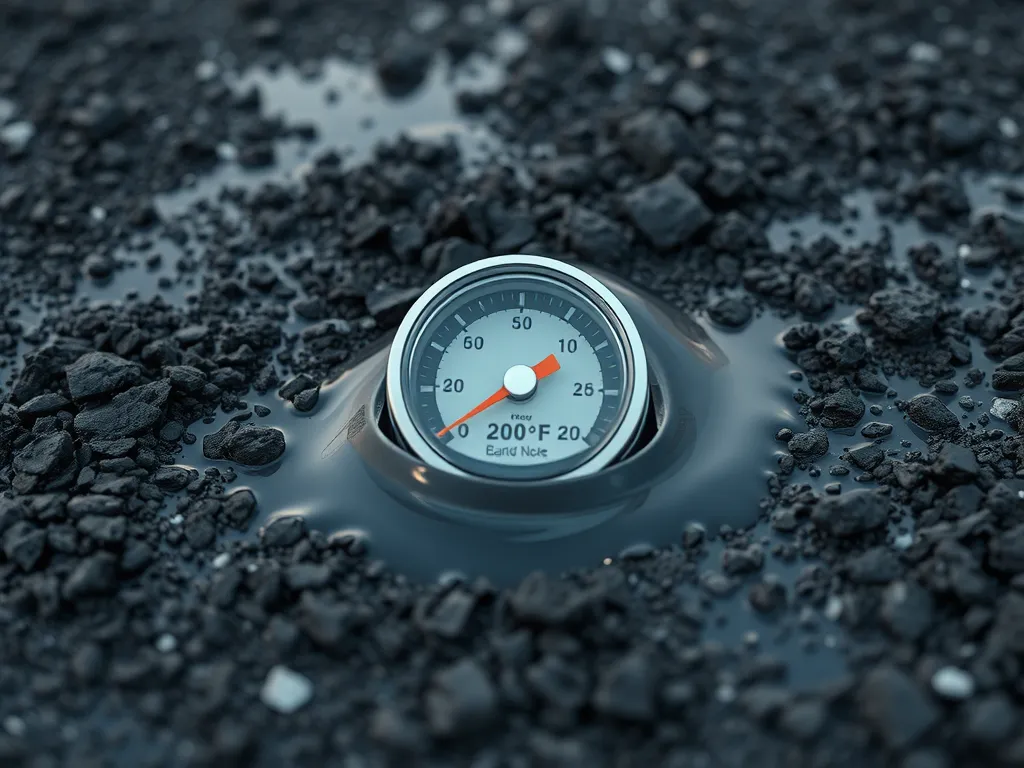
The softening point marks asphalt’s shift from rigid to pliable. For standard paving mixes, this happens between 140°F and 350°F. At 300°F, hot-mix asphalt becomes workable for road laying. Below 100°F, it hardens into a load-bearing surface.
Cold Weather Effects: Does Asphalt Become Brittle?
Yes. Below 40°F, asphalt reaches its glass transition temperature. Polymers in the bitumen binder stiffen, reducing flexibility. This brittleness increases cracking risks under freeze-thaw cycles or heavy traffic loads.
Asphalt at Extreme Temperatures: From Molten to Solid
At production temperatures (275-325°F), asphalt behaves as a viscous liquid. Crews compact it within this “thermal window” to achieve 92-96% density. Once cooled below 70°F, it solidifies completely. In arctic conditions (-30°F), asphalt pavements can contract by 0.003 inches per foot, creating stress fractures.
While temperature dictates asphalt’s phase changes, its flow properties involve more than just heat. Up next: how asphalt defies standard fluid classifications as a non-Newtonian material.
Also See: How Local Climate Affects Driveway Maintenance Needs
Asphalt As a Non-newtonian Fluid
Asphalt defies simple labels. Its flow acts unlike water or syrup. Under stress, it shifts from thick to thin—a key trait of non-Newtonian fluids.
Is Asphalt a Non-newtonian Fluid? Exploring Shear Sensitivity
Yes, asphalt is a shear-thinning fluid. Force makes it less viscous. Think ketchup: shake the bottle, and it flows. Similarly, rollers compact hot asphalt (300°F) by reducing its thickness. PG binders (performance-graded asphalt) are tested for shear response in Superpave mix designs. This ensures roads stay smooth under traffic loads without rutting.
Practical Implications Of Asphalt’s Flow Properties
Paving crews use asphalt’s shear traits to their benefit. At 1500-3000 cP (centipoise), hot mix asphalt spreads evenly but firms up fast. Recycled asphalt (RAP) needs less new binder—up to 25% cost savings—since aged material still flows under high shear. Cold climates demand polymers in mixes to resist cracking when temps drop below 40°F. Proper viscosity control prevents road flaws like bleeding or raveling.
These traits also shape repair methods. Pothole patches bind best when asphalt’s liquid-like under tamping force. Next, let’s untangle terms like “asphalt” versus “bitumen” to clarify its true nature.
Asphalt Vs. Bitumen: Clarifying Terminology
Confusion between asphalt and bitumen fuels debates about asphalt’s liquid status. Both play distinct roles in road construction but share overlapping traits that blur definitions. Let’s separate fact from jargon.
What is the Difference Between Asphalt and Bitumen?
Bitumen acts as the glue in asphalt mixtures. This thick hydrocarbon forms during crude oil refining, existing as a sticky semi-solid or high-viscosity liquid. Asphalt combines bitumen (5-10%) with aggregates like crushed stone and sand. Think of bitumen as the binder and asphalt as the finished composite material.
- Bitumen: Pure petroleum-based binder (PG 64-22 or PG 76-16 grades common in the US)
- Asphalt: Engineered mix containing 90-95% aggregates bound by bitumen
Regional terminology adds confusion. In British English, “bitumen” often refers to asphalt concrete. US usage strictly separates the terms.
Liquid Asphalt Cement: How It Relates to Both Materials
Liquid asphalt cement bridges the gap between raw bitumen and paving-grade asphalt. Heated to 300°F (149°C), this flowable form of bitumen coats aggregates during mixing. Once cooled below 185°F (85°C), it regains solid properties through thermal contraction.
Key traits of liquid asphalt cement:
- Penetration grade 60/70 or viscosity grade AC-20
- Flash point above 400°F (204°C) for safety
- Acts as temporary liquid during paving operations
This phase change enables road crews to work the material before it sets into rigid pavement. Viscosity modifiers like polymers extend the optimal 275-325°F (135-163°C) working range.
Mastering these material relationships informs better paving decisions. Next, we’ll examine how crews harness asphalt’s shifting states during real-world road projects.
Real-world Applications Of Asphalt States
Asphalt’s ability to shift between states drives its versatility in infrastructure projects. Contractors exploit these phase changes to create roads that last decades while adapting to local climate demands.
How Liquid Asphalt is Used in Paving Operations
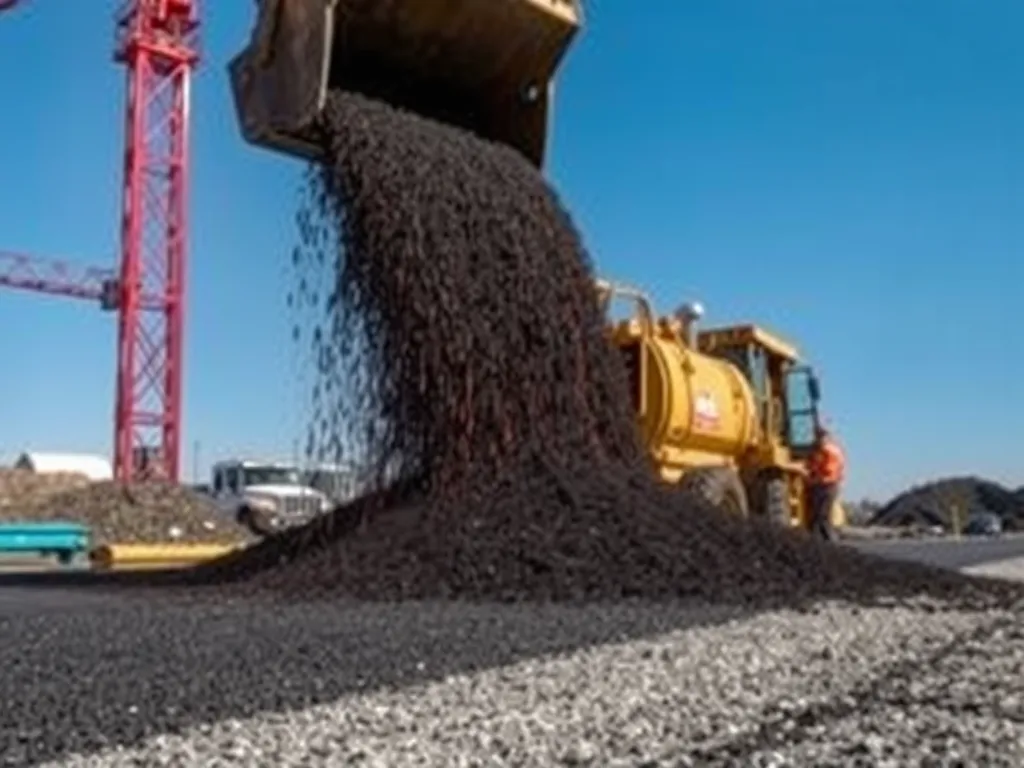
Heated to 275-325°F, asphalt becomes a pourable liquid for mixing with crushed stone (95% aggregates + 5% bitumen). This hot liquid binds materials into workable pavement layers. Spray applications use emulsified asphalt (liquid droplets suspended in water) for chip seals or pothole repairs. Recycled asphalt pavement (RAP) gets blended with fresh liquid binder, cutting material costs by 20-25%.
| Application | Temperature Range | Key Benefit |
|---|---|---|
| Hot Mix Asphalt | 275-325°F | High durability |
| Emulsions | 120-180°F | Cold-weather flexibility |
| RAP Blending | 250-300°F | Cost savings |
The Importance Of Viscosity Control in Road Construction
Viscosity (resistance to flow) determines how asphalt spreads during paving. Too thin? Aggregates sink. Too thick? Compaction fails. PG (Performance Grade) binders meet specific viscosity ranges tested via ASTM D4402 rotational viscometers. In Alaska, crews heat mixes to 330°F for proper flow, while Arizona projects drop to 265°F. Polymer-modified binders maintain optimal viscosity across -40°F to 150°F temperature swings.
Pro Tip: A 10°F drop below target mix temperature reduces compaction density by 1.5%, cutting pavement life by 3 years.
While viscosity control ensures smooth roads, it also influences emissions during heating – a key factor in environmental safety debates.
Environmental Considerations
Asphalt’s shifting physical form impacts how it interacts with natural surroundings. Its capacity to flow as a thick fluid during paving affects both application methods and long-term impacts on soil, water, and air quality.
Does Asphalt’s Liquid State Impact Environmental Safety?
At high temps (300°F+), asphalt acts as a thick fluid. This liquid form allows proper road binding but raises concerns about runoff during installation. Modern mix designs now contain polymer modifiers that boost viscosity control, limiting material spread into non-target zones.
Solidified asphalt poses minimal risk – its rigid matrix locks in components like polycyclic aromatic hydrocarbons (PAHs). Studies show PAH leaching stays below 0.1 parts per million when asphalt cools fully. Hot liquid asphalt emits volatiles, prompting strict OSHA limits: workers can’t stay near fresh pours past 15 minutes without N95 masks.
New warm-mix asphalt tech slashes production temps by 50°F. This cuts fume output by 30% while maintaining workability. Some states mandate its use near watersheds. Permeable asphalt designs now drain 500 gallons of stormwater hourly per square yard, minimizing flood risks without compromising structural integrity.
Industry recycling stats highlight another layer of protection. Over 95 million tons of old pavement get reused yearly in US projects. This circular approach avoids mining 60 million tons of virgin aggregates annually. Recycled material costs $2.50 less per ton than new asphalt, pushing adoption rates above 80% for federal highway jobs.
Up next: How material science tackles asphalt’s dual nature through advanced testing and mixture innovation.
Frequently Asked Questions
Is Asphalt Technically a Liquid at Room Temperature?
No, asphalt is not considered a liquid at room temperature. It behaves as a viscoelastic solid, meaning it has properties of both solid and liquid. While it does not flow like a liquid at normal temperatures, it can gradually deform over time under sustained weight or pressure.
Can Asphalt Be Both Solid and Liquid Simultaneously?
Asphalt can exhibit both solid and liquid characteristics depending on external conditions such as temperature. At elevated temperatures, asphalt can flow like a liquid, while at lower temperatures, it maintains a solid-like structure. This dual behavior is due to its unique viscoelastic properties.
Closing Thoughts
Asphalt exists in a unique state that can be both solid and liquid, largely depending on temperature and pressure. While it hardens under cooler conditions, it becomes malleable and flowable when heated. This duality contributes to the confusion surrounding its classification.
Understanding asphalt’s properties, including its behavior as a non-Newtonian fluid, is vital for its applications in paving and construction. Key factors like viscosity and temperature play crucial roles in determining how asphalt performs in real-world situations. From road construction to maintenance, leveraging its unique characteristics ensures durability and efficiency.
To deepen your knowledge of asphalt and explore related topics, visit Asphalt Calculator USA. Your journey into the world of asphalt starts here!
Useful References for You:
- Yoder, E. J., & Witczak, M. W. (1975). Principles of Pavement Design (2nd ed.). New York, NY: Wiley.
- What’s in Your Asphalt? | FHWA
- » Liquid Asphalt
- How Asphalt Is Made at Bituminous Roadways, Inc. | Bituminous Roadways Blog
- r/facts on Reddit: Asphalt, is in fact a liquid.