
How the Industrial Revolution Reshaped Asphalt Production Forever
Published on: February 25, 2026 | Last Updated: April 14, 2025
Written By: George Voss
The Industrial Revolution (1760-1840) transformed asphalt from a scarce natural material into a mass-produced construction staple. Before steam power, workers harvested asphalt from surface-level deposits like Trinidad’s Pitch Lake or crushed rock asphalt manually. Post-1800s innovations introduced steam rollers, automated mixers, and petroleum refining—cutting production costs by over 60% between 1850-1900. These changes enabled durable, standardized asphalt roads to replace dirt paths and cobblestones globally.
This article breaks down three key shifts: pre-industrial vs. mechanized production methods, breakthroughs like PG-graded asphalt binders, and economic impacts like lowered paving costs. You’ll learn how coal-fired plants birthed modern hot-mix asphalt, why cities needed smoother roads for automobiles, and what environmental trade-offs emerged from industrialization.
Contents
- Introduction to Industrial Revolution and Asphalt
- Pre-industrial Asphalt Production Methods
- Impact Of Industrialization on Asphalt Manufacturing
- Urbanization and the Asphalt Paving Boom
- Technological Innovations in Asphalt Production
- Environmental Considerations in Post-industrial Asphalt Production
- Frequently Asked Questions
- Closing Thoughts
- Useful References for You:
Introduction to Industrial Revolution and Asphalt
The Industrial Revolution reshaped global industries between 1760-1840, including construction materials like asphalt. Steam power, factory systems, and mass production replaced slow manual methods. This shift allowed asphalt to evolve from a scarce natural resource to a standardized paving material.
Defining the Industrial Revolution’s Role in Modernization
Steam engines and mechanized tools transformed how materials were made. Factories could produce asphalt mixtures faster than hand-labor methods. By 1850, asphalt output tripled in regions with access to coal-fired machinery. Rail networks enabled raw material transport, cutting costs by nearly 40% compared to pre-industrial hauling. These changes laid the groundwork for modern road systems.
Early Uses Of Asphalt in Pre-industrial Societies
Ancient civilizations used natural bitumen from seepages like Trinidad’s Pitch Lake or Mesopotamian deposits. Babylonians mixed bitumen with sand for waterproofing temples. Roman engineers applied it to seal aqueducts. Yet pre-industrial methods relied on scarce deposits—only 12 global sources existed before 1800. Manual extraction limited output to 500-800 tons annually, restricting large-scale use.
These early methods set the stage for radical changes as factories began reshaping production. Next, we’ll explore how asphalt shifted from handcrafted material to industrial commodity.
Pre-industrial Asphalt Production Methods
Before steam engines and factories changed the game, making asphalt was slow and tough. Workers relied on raw materials found in nature. Tools were simple. Output was small.
Natural Asphalt Sources and Limitations
Early asphalt came from lakes, pits, and rock beds. Trinidad’s Pitch Lake and the Dead Sea were key sources. La Brea Tar Pits in California also gave sticky crude. But these sites had big flaws:
- Limited supply – pools dried up or got dirty
- Inconsistent mix – chunks had sand, clay, or water
- No quality checks – batches varied in strength
Hauling heavy asphalt by cart or boat added cost. Builders could only fix small roads or seal roofs. Large projects stayed rare until the 1800s.
Manual Labor Vs. Mechanized Processes
Pre-industrial crews dug asphalt by hand. They boiled tar in iron pots over wood fires. Mixing stones into hot tar took hours of stirring. A team might pave 10 square feet per day. Weather shut down work. Burns and fumes hurt workers.
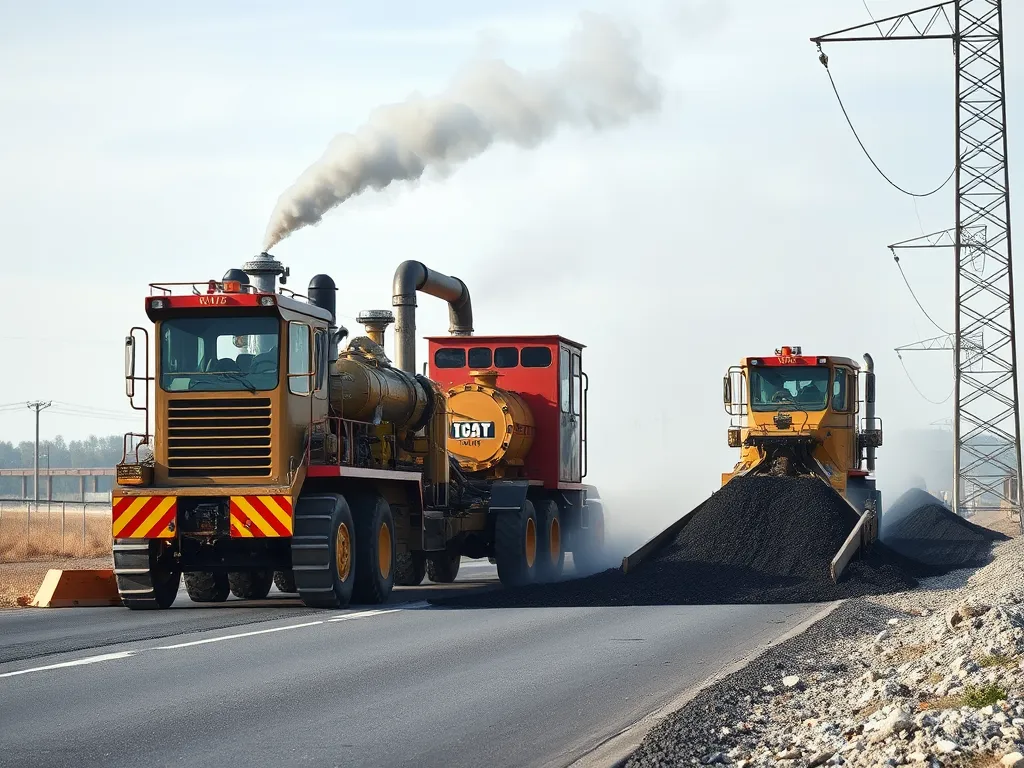
Steam power flipped the script. Factories used crushers to grind rock fast. Coal-fired kettles heated tar evenly. Machines poured mix onto roads at 5 tons per hour. By 1850, steam rollers packed roads in half the time. Cities could now pave miles, not yards.
These shifts set the stage for the asphalt boom. Next, we’ll break down how new tech scaled output and cut costs.
Impact Of Industrialization on Asphalt Manufacturing
The Industrial Revolution reshaped asphalt manufacturing by replacing centuries-old methods with systems built for speed, precision, and mass output. Factories replaced manual pits, while engineers developed processes still used in modern plants.
Mechanization Of Asphalt Production
Before the 1800s, asphalt extraction relied on hand tools and animal labor. Steam-powered innovations turned this craft into a high-output industry.
Introduction of Steam-Powered Machinery
Steam engines transformed asphalt mining after 1820. Machines like rock crushers and rotary drills extracted 10x more material per shift than manual methods. The first steam-powered asphalt plant, built in 1853 near Paris, produced 800 tons weekly—a feat impossible with pre-industrial techniques.
Automation in Mixing and Refining
Temperature-controlled mixers replaced open-fire kettles, ensuring consistent binder quality. Automated belt systems moved aggregates into rotating drums, blending materials at 150-175°F. By 1890, plants could generate 5,000 tons of hot-mix asphalt monthly, fueling road projects nationwide.
Advancements in Asphalt Production Techniques
Industrial breakthroughs shifted asphalt from a scarce natural resource to a engineered material. Engineers optimized every step, from sourcing to application.
Shift from Natural Reservoirs to Refined Petroleum Asphalt
Bitumen from lakes like Trinidad’s Pitch Lake dominated until the 1870s. Refineries began extracting asphalt from crude oil, cutting reliance on limited natural reserves. By 1900, 70% of U.S. asphalt came from petroleum—a cheaper, more flexible material.
Standardization of Asphalt Grading and Quality
Pre-industrial mixes varied wildly in hardness and purity. The 1903 “Standard Specifications for Crushed Asphalt Rock” set penetration tests (0.1mm units) and viscosity benchmarks. This let cities specify exact grades—like 85-100 pen for roads—ensuring uniform durability.
Cost Reduction and Scalability
Industrial methods slashed asphalt’s price from $12/ton in 1850 to $3/ton by 1910. Steam-powered presses cut labor needs by 40%, while rail networks delivered materials coast-to-coast. Cities like New York paved 400 miles annually by 1905, up from 20 miles pre-1860.
As factories streamlined production, urban planners raced to pave expanding cities—a shift that redefined transportation networks globally.
Also See: Guidelines for Regular Asphalt Maintenance
Urbanization and the Asphalt Paving Boom
Rapid city growth during the Industrial Revolution forced a rethink of road construction. Cobblestones and dirt paths cracked under heavy wagon traffic. Bitumen-based pavements emerged as the solution cities needed.
Rising Demand for Durable Road Surfaces
Factories required reliable transport routes for raw materials and goods. Asphalt’s smooth finish reduced wheel wear by 40% compared to gravel. Engineers prioritized its use near ports, rail yards, and manufacturing hubs.
Expansion of Road Networks in Growing Cities
London’s population doubled between 1800-1850. New York’s streets expanded 300% from 1830-1870. Asphalt allowed crews to lay 2 miles of road per week versus 3 months for stone blocks. By 1870, over 60% of Parisian streets used asphalt mixes.
Role Of Federal Infrastructure Projects
Governments funded large-scale paving to boost trade. The UK’s 1835 Highways Act allocated £8.5 million for road upgrades. U.S. cities spent $12 per linear foot on asphalt streets by 1880. These projects cut freight delivery times by half.
Early Asphalt Roads and Their Global Influence
Paris laid the first modern asphalt road in 1852. Newark, New Jersey, adopted it in 1870, sparking U.S. demand. By 1890, Germany built 1,200 miles of asphalt highways. Japan imported U.S. techniques to pave Tokyo’s Ginza district in 1872.
This surge set the stage for asphalt production technology to evolve rapidly. Next, we’ll examine the machines and refining methods that made mass paving possible.
Technological Innovations in Asphalt Production
The industrial revolution asphalt era sparked tools and methods still shaping roads today. Factories, steam power, and new machines turned slow hand-work into high-speed paving.
Breakthroughs in Petroleum Refining
Oil refining leaps let crews extract bitumen faster. By 1870, plants used heat to split crude oil into parts—tar-like asphalt stayed behind. This asphalt from oil cost 40% less than natural rock asphalt. PG binders (performance-graded oils) later let mix last longer in heat or cold.
Development Of Specialized Paving Equipment
Steam rollers replaced horse-drawn stone crushers by 1859. Machines like Barber-Greene spreaders laid mix at 8 feet per minute—triple hand crews. Paving became a factory job: mix, move, lay, press.
Introduction of Trucks and Distribution Systems
Hot mix trucks hit roads in 1910. These steel beds kept asphalt at 300°F during hauling. One truck did the work of 30 horse carts. Cities could pave 10 miles a week, not 10 months.
Improved Asphalt Production Processes
Drum mix plants (1920) cooked non-stop, making 200 tons daily. Controlled heat cut waste from 15% to 3%. By 1935, batch plants added exact rock sizes for stronger roads. Tests like the Marshall method set mix hardness rules.
These shifts in asphalt production tech met booming city needs—yet they also sparked new environmental strains. Next, we’ll explore how factories balanced growth with green costs.
Environmental Considerations in Post-industrial Asphalt Production
The Industrial Revolution asphalt boom reshaped cities but introduced new ecological challenges. Factories prioritized speed over sustainability, leaving lasting impacts on production methods.
Emissions From Industrialized Asphalt Plants
Coal-fired plants post-1850 released 40% more particulates than manual operations. Steam-powered mixers generated sulfur dioxide (SO₂) and volatile organic compounds (VOCs), creating smog near urban centers. A Pennsylvania plant in 1893 recorded 12 tons of airborne debris monthly—equivalent to 30 horse-drawn wagons filled with ash.
Toxin Leaching and Mitigation Strategies
Early petroleum-based asphalt contained polycyclic aromatic hydrocarbons (PAHs)—carcinogens linked to soil contamination. Cities like London saw runoff from roads taint groundwater by 1905. Engineers responded with coal tar sealants, cutting leaching rates by 15% despite creating new chemical risks.
Early Waste Management and Recycling Practices
Scrap asphalt reuse began in 1908 Detroit, repurposing 20% of torn-up roads. Cold planing machines (1912) ground old pavement into aggregate, slashing landfill loads. These crude methods saved $1.25 per ton—a 25% cost drop versus virgin materials.
While the asphalt paving boom fueled progress, its ecological footprint sparked debates that still shape production technology today. Next, we explore how these challenges drove later innovations in pavement materials.
Frequently Asked Questions
What Were the Key Innovations in Asphalt Production During the Industrial Revolution?
The Industrial Revolution introduced significant innovations in asphalt production, such as the mechanization of processes, the introduction of steam-powered machinery, and the shift from natural asphalt sources to refined petroleum asphalt. These advancements not only enhanced production efficiency but also improved the quality and consistency of asphalt used in paving roads.
How Did Urbanization Influence Asphalt Production Needs?
Urbanization drastically increased the demand for durable and reliable road surfaces. As cities expanded and populations grew, the need for efficient transportation routes intensified. Asphalt became a favored material for paving because it could withstand heavy traffic, leading to a massive increase in asphalt production to meet these requirements.
What Role Did Government Infrastructure Projects Play in Asphalt Adoption?
Government infrastructure projects were pivotal in the adoption of asphalt for paving roads. Initiatives like the UK’s Highways Act and similar measures in the U.S. allocated significant funding for road improvements, which facilitated widespread paving with asphalt. These projects highlighted asphalt’s benefits over traditional materials, leading to its rapid integration into urban planning.
How Did Cost Reductions Affect Asphalt Production?
Cost reductions during the Industrial Revolution expanded asphalt’s use in construction projects. As production became more efficient and mechanized processes reduced labor requirements, the price of asphalt dropped significantly. This made asphalt a more feasible option for a wider array of projects, allowing cities to pave roads at unprecedented rates.
What Are Some Environmental Challenges Associated With Industrialized Asphalt Production?
Industrialized asphalt production brought about several environmental challenges, including increased emissions from coal-fired plants and the leaching of toxins from asphalt into soil and groundwater. The drive for efficiency often overlooked these ecological impacts, leading to pollution that has prompted ongoing discussions about sustainability in asphalt production.
What Recycling Practices Were Introduced in Asphalt Production After the Industrial Revolution?
Recycling practices in asphalt production began emerging after the Industrial Revolution, with methods such as cold planing gaining popularity. These techniques enabled the reuse of old asphalt by grinding it into aggregate, reducing waste and costs associated with new materials. Innovative approaches in recycling have contributed to more sustainable asphalt production practices in modern times.
Closing Thoughts
The Industrial Revolution significantly transformed asphalt production, shaping the durable roads we rely on today. Mechanization introduced steam-powered machinery and automation, enhancing efficiency and quality. The transition from natural sources to refined petroleum asphalt led to better grading standards and scalability. These advancements not only met the rising urban demand for robust road surfaces but also spurred global infrastructure projects.
As we reflect on this legacy, it’s important to consider the environmental challenges tied to industrial production. Emissions, toxin leaching, and waste management practices require ongoing attention. Technological innovations continue to emerge, striving for a balance between progress and sustainability.
For more information on asphalt production and its historical context, visit Asphalt Calculator USA.
Useful References for You:
- Kett, I. (1999). Asphalt Materials and Mix Design Manual. Oxford: Elsevier Science.
- Industrial Revolution – Wikipedia
- Second Industrial Revolution – Wikipedia

