Why Sealcoating is Vital for Commercial Asphalt Longevity
Published on: February 22, 2026 | Last Updated: April 14, 2025
Written By: George Voss
Sealcoating applies a protective layer (typically coal tar or asphalt emulsion) to commercial asphalt surfaces, blocking UV rays, preventing water infiltration, and resisting oil or chemical spills—extending pavement life by 2-3x while cutting repair costs by 50-75%. Unlike basic asphalt maintenance, sealcoating acts as a waterproof barrier, slows oxidation from sunlight, and restores faded surfaces to like-new black appearance within 24 hours of application.
This article explains how sealcoating protects against environmental damage like cracking and potholes, boosts durability against heavy traffic, and saves $3-$7 per square foot in long-term repair expenses. You’ll learn optimal application timing (55°F+ temperatures), risks of skipping treatments (up to 300% faster deterioration), and cost comparisons between professional ($0.15-$0.25/sq ft) vs DIY methods.
Contents
- Essential Benefits Of Sealcoating Commercial Asphalt
- Risks Of Avoiding Sealcoating on Asphalt Surfaces
- Core Purposes Of Sealcoating in Asphalt Preservation
- Optimal Timing and Methods for Commercial Sealcoating
- Environmental and Economic Advantages Of Sealcoating
- FAQs About Commercial Asphalt Sealcoating
- Closing Thoughts
- Useful References for You:
Essential Benefits Of Sealcoating Commercial Asphalt
Sealcoating acts as a shield for asphalt surfaces, delivering measurable advantages for parking lots, driveways, and loading zones. Let’s explore how this process safeguards pavement while cutting long-term expenses.
Protection Against Environmental Damage
Sun, rain, and temperature swings degrade asphalt over time. Sealcoating blocks these threats with a protective layer that preserves pavement integrity.
Shielding Asphalt from UV Rays and Oxidation
UV radiation breaks down bitumen—the sticky binder holding aggregates together. A quality coal-tar or asphalt-based sealcoat reflects 95% of ultraviolet light, slowing oxidation that causes brittleness and fading.
Preventing Water Infiltration and Moisture Damage
Unsealed asphalt absorbs water through tiny cracks. Freeze-thaw cycles then expand these gaps, leading to potholes and base erosion. Sealcoating fills surface voids, reducing water penetration by up to 90% according to NAPA studies.
Enhanced Durability and Longevity Of Asphalt
Commercial lots face heavy traffic, chemical spills, and weight loads. Sealcoating adds a resilient skin that combats daily wear.
Resisting Chemical Spills and De-Icing Agents
Gasoline, oil, and chloride-based deicers dissolve unsealed asphalt. Sealcoats with polymer additives create a chemical barrier, preventing surface pitting and binder degradation. Facilities using sealcoating report 60% fewer spill-related repairs.
Reducing Cracking and Surface Deterioration
Thermal expansion and heavy vehicles create stress cracks. Sealcoating maintains asphalt flexibility, absorbing impacts that cause alligator cracking. Data shows sealed lots develop 40% fewer cracks over 5 years versus untreated surfaces.
Cost-effective Maintenance for Commercial Asphalt
Sealcoating costs $0.15-$0.25 per square foot—far less than major repairs. Regular applications stretch pavement lifespan while keeping budgets predictable.
Minimizing Repair Costs Over Time
Every $1 spent on sealcoating saves $3-$5 in pothole patching, crack filling, and drainage repairs. Facilities applying sealant every 2-3 years spend 50-75% less on annual maintenance.
Delaying Expensive Asphalt Resurfacing
Properly sealed asphalt lasts 15-20 years before needing replacement. Neglected surfaces typically require full-depth reconstruction within 8-12 years, costing $3-$7 per square foot.
While sealcoating offers clear protective advantages, skipping this step invites rapid pavement decline. Let’s examine the risks of leaving commercial asphalt unsealed.
Risks Of Avoiding Sealcoating on Asphalt Surfaces
Neglecting sealcoating commercial asphalt invites avoidable damage that escalates maintenance demands. Unprotected surfaces face relentless assaults from traffic, weather, and chemical exposure, accelerating wear patterns that strain budgets.
Accelerated Asphalt Degradation Without Protection
Asphalt left bare loses 3-5 years of potential lifespan. The binder (bitumen) oxidizes rapidly, causing aggregates to loosen and surfaces to turn brittle. Within 12-18 months, unprotected lots show visible fading and texture changes.
Increased Vulnerability to Weather and Chemicals
UV rays break down bitumen molecules, while rainwater seeps into micro-cracks. De-icing salts, oil spills, and hydraulic fluids soften asphalt layers. A single freeze-thaw cycle can expand cracks by 200% without sealcoat’s waterproofing barrier.
Premature Cracking and Pothole Formation
Unsealed lots develop alligator cracks within two years. Heavy vehicles fracture weakened areas, creating potholes 3x faster than sealed surfaces. Emergency repairs cost 40% more per square foot versus scheduled maintenance.
Higher Long-term Costs for Asphalt Repairs
Delaying sealcoating commercial asphalt raises lifetime costs by 60-80%. A $0.25/sq.ft sealcoat application prevents $2.50/sq.ft overlays or $8+/sq.ft full-depth replacements.
Compromised Structural Integrity Leading to Overlays
Water-damaged base layers require milling and overlays. These projects average $3.50-$7.00/sq.ft and force parking lot closures for 3-5 days, disrupting business operations.
Loss of Aesthetic Appeal and Property Value
Faded, cracked lots reduce curb appeal – 68% of commercial tenants cite pavement condition as a leasing factor. Properties with unsealed asphalt sell for 15-20% less than well-maintained equivalents.
Proactive sealcoating preserves both function and profits. Next, we’ll examine how strategic sealcoat applications achieve these outcomes through specific preservation mechanisms.
Core Purposes Of Sealcoating in Asphalt Preservation
Sealcoating acts as a shield for commercial lots. It blocks harm from sun, rain, oil, and daily wear. This layer adds years to asphalt while keeping costs low.
Barrier Creation Against External Elements
A fresh sealcoat stops UV rays from breaking down binders in asphalt. Sunlight causes 80% of surface aging in unsealed lots. The coal tar or asphalt emulsion layer also repels water, ice melt salts, and oil leaks. One gallon covers 80-100 sq ft, forming a tight seal against cracks.
Maintaining Functional and Visual Quality
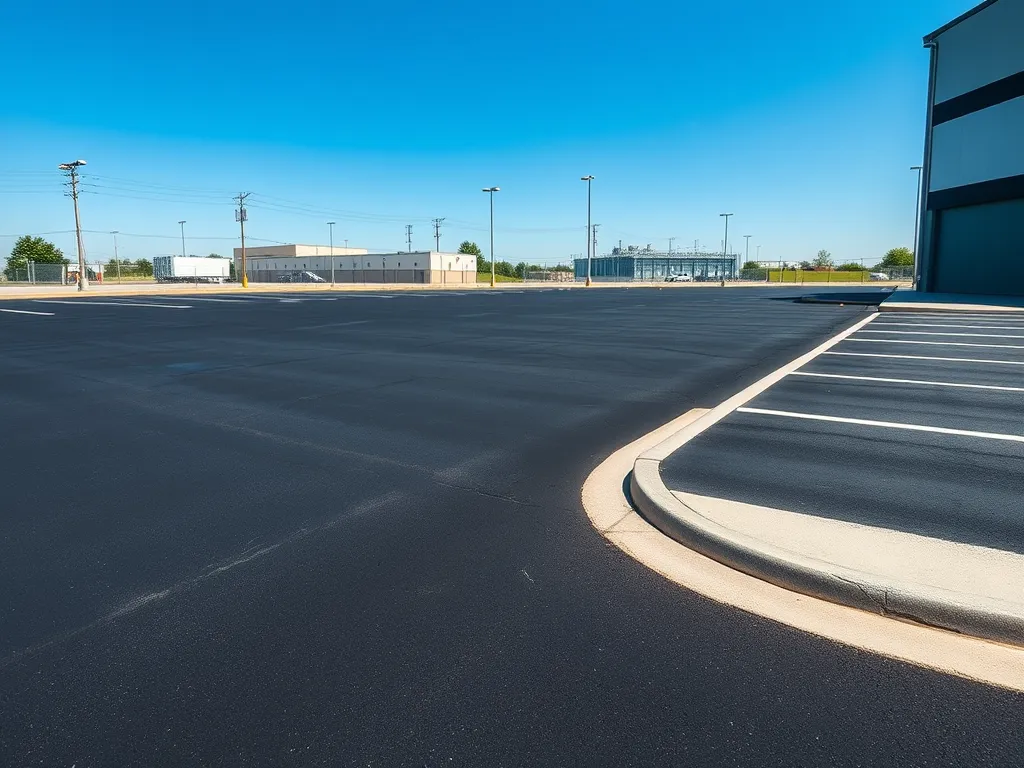
Sealed lots stay jet-black and smooth for safe driving. Faded asphalt loses 40% grip in wet conditions. Sealcoating fills tiny holes, restoring skid resistance. It also keeps lot lines bright for clear traffic flow. Property managers report 22% higher tenant satisfaction with well-kept pavements.
Prolonging Pavement Lifespan Economically
Sealcoating costs $0.15-$0.25 per sq ft versus $1.50-$3.00 for crack fixes. Regular sealing every 2-3 years can double a lot’s life from 10 to 20 years. This cuts long-term costs by 50% compared to unsealed surfaces.
| Action | Cost per Sq Ft | Frequency | 10-Year Cost |
|---|---|---|---|
| Sealcoating | $0.20 | 3 years | $0.80 |
| Patching | $2.00 | Yearly | $20.00 |
| Resurface | $4.00 | 10 years | $4.00 |
Based on 10,000 sq ft lot
Proper timing and methods make sealcoating work best. Learn how to plan treatments for max effect.
Also See: Adjusting Paver Machine Settings for Different Asphalt Mixes
Optimal Timing and Methods for Commercial Sealcoating
Effective commercial asphalt sealcoating requires precise timing and proven techniques. Proper execution ensures long-term protection while avoiding common pitfalls like premature wear or adhesion failure.
Ideal Conditions for Applying Asphalt Sealcoat
Sealcoat performance hinges on environmental factors. Commercial projects demand strict adherence to temperature, humidity, and surface requirements for optimal bonding.
Seasonal Considerations for Maximum Effectiveness
Apply sealcoat between 50°F and 90°F with dry weather forecast for 24-48 hours. Spring and fall are ideal in most regions—avoid extreme summer heat or freezing temperatures. Curing time doubles below 60°F, increasing vulnerability to foot traffic or rain.
Proper Surface Preparation Techniques
- Power wash to remove debris (minimum 3,500 PSI)
- Fill cracks >1/8″ wide with rubberized asphalt filler
- Allow 24-48 hours drying post-cleaning
- Repair potholes using cold-patch compounds
Professional Vs. DIY Asphalt Sealcoating Approaches
While DIY kits cost $0.15-$0.25 per sq ft, professional commercial asphalt sealcoating averages $0.20-$0.40 per sq ft with industrial-grade materials. Contractors use spray systems achieving 95% coverage vs. squeegee methods’ 70-80%.
Evaluating Cost, Time, and Quality Factors
Professional services complete parking lots in 1-2 days versus 3-5 days for DIY crews. Commercial-grade coal-tar emulsions last 3-5 years compared to consumer asphalt emulsions’ 1-3 years. Labor costs account for 60% of professional pricing.
Critical Steps in Commercial Sealcoating Application
- Mix sealant to 300-400 RPM for uniform consistency
- Apply 0.25-0.35 gallons per square yard
- Maintain 12″-18″ spray nozzle distance
- Cross-roll within 5 minutes for even distribution
While application methods directly impact sealcoating asphalt importance, the environmental advantages extend beyond surface protection.
Environmental and Economic Advantages Of Sealcoating
Applying a high-quality coat to parking lots and roads does more than just boost curb appeal. This approach tackles both planetary impacts and fiscal savings for property owners.
Reducing Asphalt Waste and Resource Consumption
Commercial asphalt sealcoating adds 7-10 years to a pavement’s functional span. This cuts annual asphalt waste by up to 22 million tons in North America. By shielding surfaces from cracks, firms avoid frequent patching that demands virgin aggregates (crushed stone, sand) and bitumen. A single coat application saves 3.5 tons of material per 10,000 sq ft compared to partial milling.
Recycling gains also matter. Preserved asphalt stays structurally sound longer, allowing 95% of old pavement to be reused in future paving. This slashes quarrying and mining by 30% for typical commercial projects.
Lowering Carbon Footprint Through Pavement Preservation
Less frequent resurfacing directly impacts fuel usage. Heavy machinery for asphalt production and laying emits 1.25 tons of CO2 per 100 sq yd. Sealcoating commercial asphalt triples intervals between major works, trimming carbon output by 30% over 15 years. Coal tar-free formulas now dominate, cutting VOC (volatile organic compound) releases by 80% versus traditional options.
Reflective coats also aid urban heat reduction. Light-toned slurry seals bounce 45% of solar radiation, lowering ambient temps in parking zones by 4-7°F during summer peaks.
Want to know how timing affects these gains? Up next: tactics to sync coat applications with seasonal shifts and traffic patterns.
FAQs About Commercial Asphalt Sealcoating
How Often Should Commercial Asphalt Be Sealcoated?
Commercial asphalt should generally be sealcoated every 2 to 3 years to maintain optimal protection and extend its lifespan. Factors such as climate, traffic patterns, and existing pavement conditions may influence the frequency of applications.
Can Sealcoating Address Existing Asphalt Damage?
Sealcoating cannot repair significant existing damage such as deep cracks or potholes. However, it can help to prevent further deterioration and protect against future damage. Prior to sealing, any major repairs should be conducted to ensure a smooth and effective sealcoat application.
What Determines Sealcoating Costs for Parking Lots?
Several factors influence the cost of sealcoating, including the size of the area being coated, the type of sealant used, the condition of the asphalt, and whether you choose a DIY application or hire a professional service. Costs typically range from $0.15 to $0.40 per square foot, depending on these variables.
Can Sealcoating Help With Aesthetic Improvements?
Yes, sealcoating significantly enhances the appearance of asphalt. A fresh sealcoat restores the deep black color of pavement, improves surface smoothness, and helps maintain clear line markings. This visual appeal is crucial for attracting customers and maintaining property value.
What Preparations Are Needed Before Sealcoating?
Before applying sealcoat, proper surface preparation is essential. This includes thoroughly cleaning the asphalt to remove debris, sweeping the surface, filling cracks, and repairing any significant damage. Ensuring the surface is clean and properly prepped promotes better adhesion of the sealant.
Are There Weather Conditions That Affect Sealcoating?
Yes, weather conditions play a critical role in the effectiveness of sealcoating. It is best to apply sealcoat during dry weather with temperatures between 50°F and 90°F. Rain or high humidity can compromise the bonding process, leading to poor results.
Is DIY Sealcoating a Good Option for Commercial Parking Lots?
While DIY sealcoating can be an economical choice, it often comes with risks such as improper application and shorter-lasting results. Professional contractors typically provide better coverage and use high-quality materials, which can be beneficial for larger commercial lots. Assessing cost versus quality is vital when considering DIY options.
Closing Thoughts
Sealcoating is not just a cosmetic upgrade; it’s a critical component in preserving commercial asphalt. By protecting against environmental damage, enhancing durability, and providing cost-effective maintenance, sealcoating ensures your asphalt investment lasts longer. Neglecting this essential process exposes surfaces to accelerated degradation, higher repair costs, and diminished property values.
Moreover, implementing a timely sealcoating schedule can significantly reduce the overall environmental impact of asphalt maintenance. The combination of aesthetic quality and structural integrity makes this practice an economic necessity for commercial property owners.
For more insights and tools related to asphalt care and maintenance, visit Asphalt Calculator USA.
Useful References for You:
- The Asphalt Institute. (2007). MS-4: The Asphalt Handbook. Lexington, KY: Asphalt Institute.
- Understanding Asphalt Sealcoating in California | GPM
- r/HomeImprovement on Reddit: Is Seal Coating Asphalt Actually Effective?
- 7 Sealcoating Facts That Show Cost Savings and Benefits For Your Asphalt Pavement
- Benefits of Sealcoating Asphalt | Asphalt Sealcoating Direct