The Importance Of Proper Drainage in Asphalt Driveway Longevity
Published on: February 21, 2026 | Last Updated: April 14, 2025
Written By: George Voss
Proper drainage keeps water from pooling under or on your asphalt driveway, preventing cracks, potholes, and base layer erosion. Water weakens asphalt by seeping into tiny cracks, freezing, and expanding—a process called freeze-thaw cycling. Solutions like a 2% slope, trench drains, or buried French drains redirect water away, adding 5-15 years to your driveway’s lifespan and cutting repair costs by 20-40%.
This article breaks down how drainage impacts asphalt durability, compares six common systems (including channel drains and drywells), and gives actionable fixes for standing water. You’ll learn slope standards (1/4″ per foot minimum), cost ranges ($500-$5,000+ based on system size), and how drainage protects nearby landscaping from runoff damage.
Contents
- Why Proper Drainage is Critical for Asphalt Driveways
- Key Benefits Of Effective Driveway Drainage Systems
- Types Of Drainage Systems for Asphalt Driveways
- Designing Drainage for Asphalt Driveways
- Fixing Common Asphalt Driveway Drainage Issues
- Cost Considerations for Drainage Solutions
- Environmental Benefits Of Proper Driveway Drainage
- FAQs About Asphalt Driveway Drainage
- Closing Thoughts
- Additional Resources for You:
Why Proper Drainage is Critical for Asphalt Driveways
Asphalt’s ability to hold up against daily traffic and harsh conditions hangs on keeping it dry. Without functional systems to drain water away from driveways, liquid buildup attacks both surfacing and foundational layers. This assault starts at the top but quickly works its way down.


Consequences Of Poor Drainage on Asphalt
Driveways lacking slope or drainage infrastructure face constant water contact. This triggers a chain reaction of harm that shortens pavement lifespan by 30-50% in many cases. Two primary failure modes dominate.
Premature Cracking and Surface Deterioration
Standing liquid infiltrates tiny voids in asphalt, pushing apart aggregate particles during freeze-thaw cycles. This creates alligator cracks within 2-3 winters. Raveling follows as loose stones dislodge, forming rough patches. UV rays then oxidize exposed bitumen, turning black surfaces gray and brittle.
Erosion of Base Layers Leading to Structural Failure
Water slipping past worn surfaces washes out the crushed stone base. A 6-inch layer can lose 40% of its mass in 5 years without protection. Weak subgrades sag under vehicle loads, causing potholes or sinkholes. Full-depth asphalt cracks signal imminent collapse, requiring full rebuilds costing $8-$12 per square foot.
Spotting ponding areas early allows fixes like regrading driveway slope or adding trench drains. Up next: how smart drainage design shields your pavement investment.
Key Benefits Of Effective Driveway Drainage Systems
Driveway drainage systems directly impact performance, safety, and maintenance needs. Let’s break down three core advantages.
Extended Lifespan Of Asphalt Surfaces
Proper drainage adds 15-30% more years to asphalt driveways. Water trapped beneath pavement weakens the base layers—crushed stone and compacted soil. This erosion creates voids, leading to cracks and sinkholes. Systems like 2% slope grading keep asphalt dry, preserving PG (Performance Grade) binders that resist rutting.

Prevention Of Water Pooling and Freeze-thaw Damage
Pooled water expands with 2,500 psi force when frozen, fracturing asphalt within 3-5 freeze cycles. Channel drains or trench systems move 12+ gallons per minute away from surfaces. This stops ice-jack cracking and prevents aggregate stripping—a common cause of driveway failure in northern states.
Reduced Risk Of Costly Repairs
Installing a French drain ($1,200-$3,000) beats replacing eroded bases ($5,000+). Drainage fixes address issues early: sealing 1/4″ cracks costs $0.15/sq ft versus $3.50/sq ft for full-depth patching. Permeable pavers or swales also cut flood risks, lowering insurance claims from washouts.
Smart drainage planning doesn’t just protect pavement—it safeguards budgets. Next, let’s examine specific systems that achieve these results.
Types Of Drainage Systems for Asphalt Driveways
Effective driveway drainage systems combat water damage through surface or subsurface methods. Choosing the right solution depends on soil type, local rainfall patterns, and existing landscape features.
Surface Drainage Solutions
Surface systems redirect water before it penetrates asphalt layers. These visible structures handle immediate runoff from rainstorms or melting snow.
Driveway Grading and Slope Optimization
A 1-2% slope away from structures ensures water flows toward designated drainage areas. Professionals use laser levels to achieve precise grading, preventing low spots that cause pooling. For standard 20-foot-wide driveways, a 2-4 inch elevation drop across the width maintains proper flow.
Trench Drains and Channel Systems
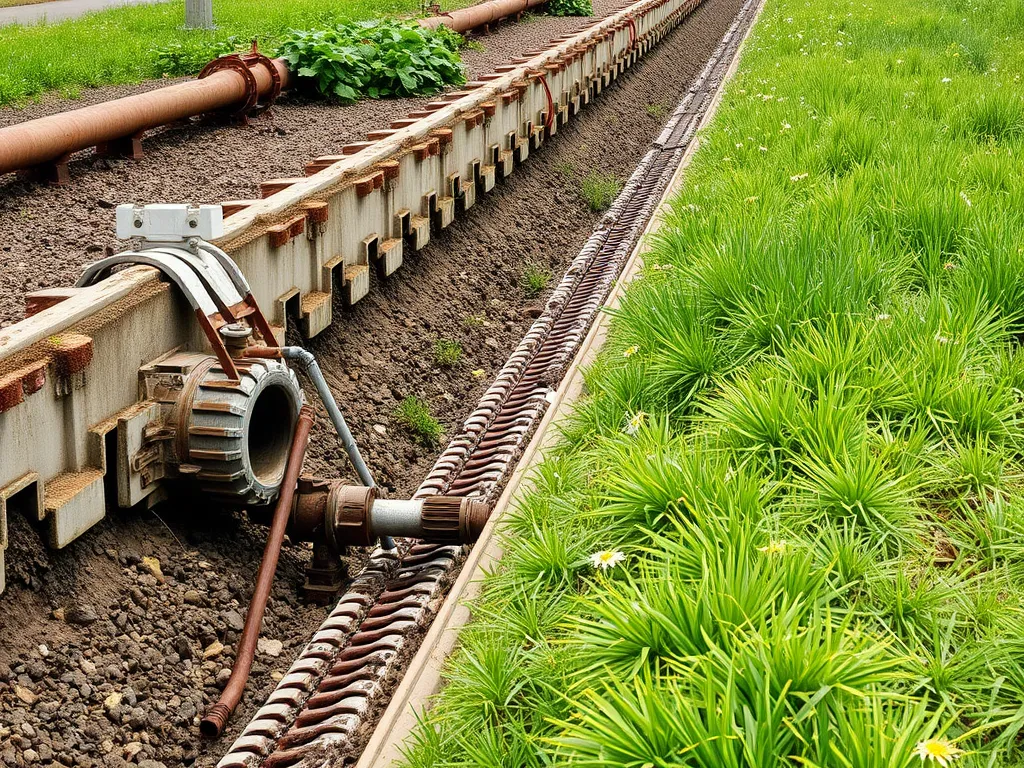
Linear trench drains with grated covers intercept water across driveway surfaces. Made from polymer concrete or galvanized steel, these channels handle 7-10 gallons per minute per foot during heavy rains. Installers position them along apron edges or transition zones where water accumulates.
Subsurface Drainage Systems
Hidden beneath the surface, these systems manage groundwater and prevent base layer saturation. They protect asphalt from beneath, where 70% of pavement failures originate.
French Drains for Asphalt Driveways
Perforated PVC pipes wrapped in geotextile fabric sit in gravel-filled trenches 12-18 inches deep. French drains parallel the driveway edge, capturing seepage from adjacent soil. A 4-inch-diameter pipe can move 15 gallons per minute, spaced 3-5 feet from pavement edges.
Drywell Installation and Functionality
Drywells store 50-300 gallons of runoff in underground chambers filled with crushed stone. These structures, typically 3-5 feet deep, release water slowly into permeable soil. Installers place them 10 feet minimum from driveways to prevent base erosion.
With drainage options mapped, the next step involves engineering these systems into your asphalt project. Proper design ensures components work together under peak weather loads.
Also See: How to Analyze Existing Pavement Conditions: A Quick Overview
Designing Drainage for Asphalt Driveways
Effective drainage design protects asphalt from water damage while maintaining structural integrity. Three elements form the foundation of flood-resistant driveways.
Optimal Slope Requirements for Asphalt
Asphalt driveways need a minimum 2% slope (1/4 inch per foot) to shed water efficiently. This angle directs runoff toward designated drainage areas without eroding the base layer. Flatter slopes risk ponding water, while steeper grades above 10% may cause soil washout under the pavement. Use laser levels during driveway grading to verify slope accuracy before asphalt installation.
Integrating Retaining Walls and Swales
Retaining walls (concrete, stone, or timber) stabilize sloped properties by preventing soil shifts that crack asphalt. Pair them with swales—gentle, vegetated ditches that redirect runoff. A 6-inch-deep swale with 5-8% slope channels 500+ gallons of water per hour away from pavement edges. For driveways near embankments, combine walls with perforated pipe systems to manage groundwater seepage.
Calculating Runoff Capacity for Heavy Rains
Size drainage systems using the rational method formula: Q = C × i × A.
- C (Runoff coefficient): 0.95 for asphalt
- i (Rainfall intensity): 3.5 inches/hour for 100-year storms in most US regions
- A (Driveway area): 1,000 sq.ft. average
Example: 0.95 × 3.5 × 1,000 = 3,325 cubic feet/hour. Install trench drains or catch basins rated for 30+ GPM (gallons per minute) to handle this volume.
Even robust designs need upkeep. Next, we’ll explore troubleshooting persistent poor driveway drainage before it compromises your pavement.
Fixing Common Asphalt Driveway Drainage Issues
Spotting and fixing drainage flaws stops minor issues from turning into major asphalt failures. Proactive solutions shield your pavement from harm linked to standing water or soil shifts.
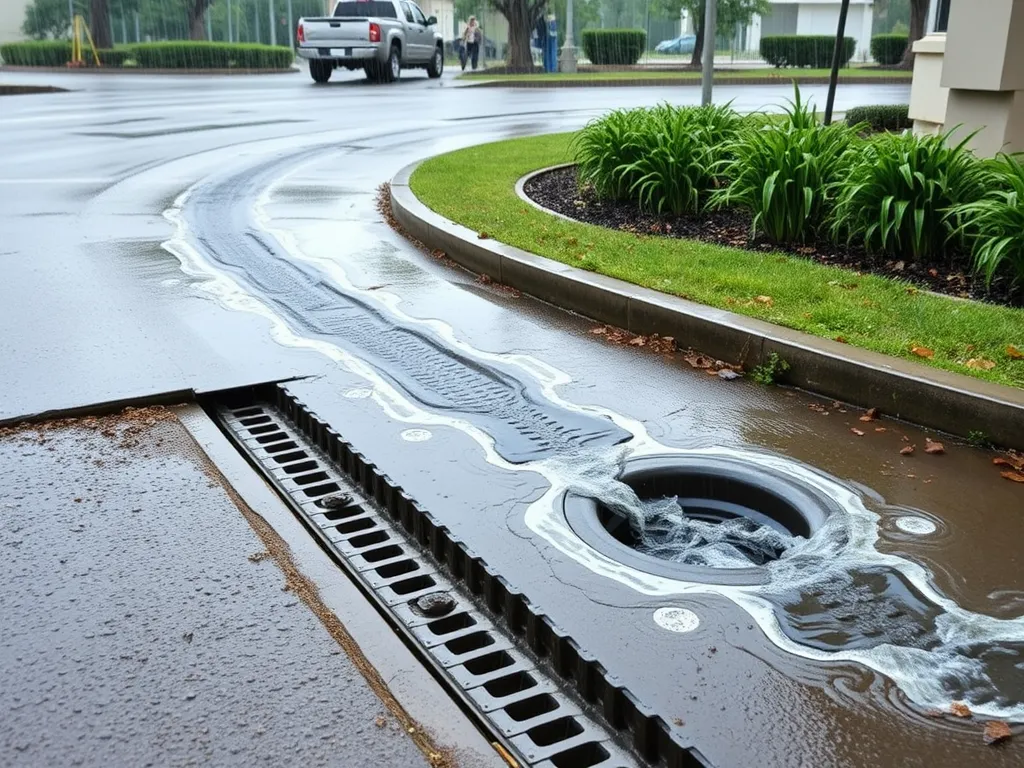
Resolving Water Pooling and Flood Risks
Standing water breaks down asphalt binders and weakens sublayers. Fast action with tactical fixes maintains structural solidity.
Regrading Existing Driveway Surfaces
A slope of 2-3% directs runoff away from pavement. Heavy machinery like motor graders adjusts crown height, fixing low spots that trap H2O. This costs $3-$7 per sq.ft., varying with soil type and labor.
Installing Supplemental Drainage Channels
Trench drains (6-12” width) or slot drains work next to driveways. Pair with catch basins to move 15-20 gallons per minute during storms. Plastic or polymer channels last 15+ years with minimal upkeep.
Repairing Cracks Caused by Water Damage
Untreated gaps let H2O seep into base materials, causing frost heave or sinkholes. Sealants block infiltration while restoring surface continuity.
Sealing Joints and Surface Gaps
Hot-applied rubberized asphalt filler bonds tightly at 300°F, filling splits up to 1” wide. Apply in dry conditions above 50°F for optimal adhesion. Annual inspections catch 90% of early-stage cracks.
Smart fixes today stop tomorrow’s headaches. Up next: balancing upfront costs against lasting savings from drainage upgrades.
Cost Considerations for Drainage Solutions
Smart planning for driveway drainage systems requires balancing upfront expenses against future benefits. The right approach protects asphalt surfaces while keeping budgets manageable.
Factors Affecting Installation Costs
Driveway drainage costs range from $1,500 to $8,000 based on these key elements:
| Factor | Cost Impact |
|---|---|
| Drain type (surface vs subsurface) | Channel systems: $25-$50/linear ft vs French drains: $20-$30/linear ft |
| Material choices | PVC vs concrete trench drains: 15-20% price difference |
| Driveway slope adjustments | Regrading costs: $1,000-$3,000 for standard 50′ driveways |
| Labor requirements | Excavation work adds $75-$150/hour |
Driveway grading often proves most cost-effective, requiring only 2% minimum slope (1/4″ per foot) for proper water runoff.
Long-term Savings From Proactive Drainage
Quality drainage design slashes repair frequency and severity. Asphalt driveways with poor drainage require 40% more maintenance over 10 years compared to properly sloped surfaces. Consider these savings:
- Pothole repairs drop from $150-$400 per incident to near-zero
- Base layer replacements delayed by 8-12 years
- Sealcoating intervals extend from 3 to 5 years
A $3,000 French drain installation can prevent $8,000+ in structural repairs over two decades.
With costs and benefits clarified, let’s examine how effective drainage protects surrounding ecosystems beyond your property line.
Environmental Benefits Of Proper Driveway Drainage
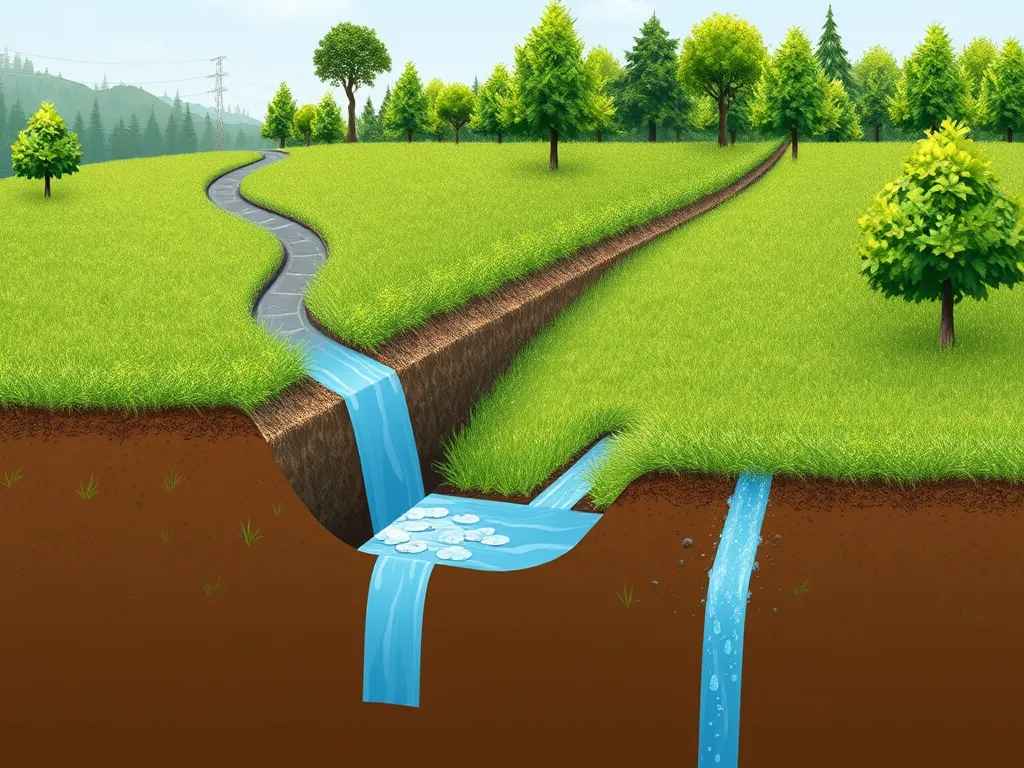
Driveways with smart water flow plans do more than protect pavement. They shield local streams, soil, and plants from harm.
Reducing Stormwater Runoff Pollution
Rain hitting solid surfaces picks up oil spots, loose gravel, and road salts. Without proper drains, this mix flows into storm drains – straight to rivers. A 12-foot driveway can send 900 gallons of dirty water downstream in one storm.
| Pollutant | Source | Drain Fix |
|---|---|---|
| Motor oil | Car leaks | Grassy swales |
| De-icing salt | Winter care | Dry wells |
| Fertilizer | Lawn care | Permeable edges |
Preventing Soil Erosion Around Asphalt Surfaces
Fast water flow eats at soil under driveways. Just 2 inches of lost dirt can let asphalt sink or crack. Proper slopes and french drains cut erosion rates by 60% compared to flat pads.
Gravel trenches along drive edges act like speed bumps for water. They let rain soak in slowly, keeping soil in place. Pair these with 2% slope grading to stop washouts.
These drainage steps not only keep driveways firm but help yards stay lush. Now let’s explore how to build these systems right – from slope math to pipe picks.
FAQs About Asphalt Driveway Drainage
What Are the Long-term Benefits Of Investing in a Proper Drainage System for My Driveway?
Investing in a proper drainage system can significantly extend the lifespan of your asphalt driveway, potentially adding 15 to 30% more years before replacement is necessary. It also mitigates the risk of costly repairs caused by water damage, as well as enhances the overall safety and usability of your driveway during inclement weather.
How Does Improper Drainage Affect My Asphalt Driveway’s Surface?
Improper drainage can lead to water pooling on the surface of your asphalt driveway, which increases the risk of freeze-thaw damage, causing cracks and raveling. Over time, these conditions can degrade the asphalt binder, resulting in a rough and uneven driving surface.
What Maintenance is Required for Drainage Systems in Asphalt Driveways?
Regular inspections and maintenance of drainage systems are crucial. This can include clearing debris from surface drains or ensuring that French drains remain unobstructed. You may need to address any signs of water pooling or erosion promptly to maintain effective drainage and protect your asphalt driveway.
Can Landscaping Affect My Driveway Drainage?
Yes, landscaping can greatly influence driveway drainage. Features such as trees, shrubs, and slopes can redirect water flow. Proper planning should ensure that landscaping complements drainage systems, directing water away from the driveway and preventing blockages or erosion underneath.
Are There Eco-friendly Options for Improving Driveway Drainage?
Yes, eco-friendly options include permeable paving materials that allow water to drain through, reducing stormwater runoff. Additionally, incorporating rain gardens or vegetated swales can help absorb excess water and filter pollutants before they reach local waterways.
Closing Thoughts
Ensuring proper drainage is vital to the longevity of your asphalt driveway. It safeguards against premature cracking, surface deterioration, and costly repairs while enhancing overall durability. Effective drainage systems, whether surface or subsurface, play a crucial role in managing water runoff. A well-designed drainage solution protects the base layers and prevents issues like freeze-thaw damage.
Investing in quality drainage not only lengthens the lifespan of your driveway but also brings long-term savings by minimizing repair costs. By addressing drainage from the outset, you secure a solid foundation for your asphalt surfaces.
For more information on maintaining your asphalt, be sure to check out Asphalt Calculator USA.