Importance Of Asphalt Temperature Adaptability
Published on: February 19, 2026 | Last Updated: April 14, 2025
Written By: George Voss
Asphalt temperature adaptability is the material’s ability to handle heat expansion and cold contraction without cracking or deforming. Unlike rigid surfaces like concrete, asphalt flexes under stress—bending in summer heat up to 160°F and shrinking in winter freezes below 0°F. This flexibility prevents rutting from heavy traffic in hot weather and stops brittle cracks during cold snaps, directly extending pavement lifespan by 15-20 years.
This article explores how temperature shifts impact asphalt roads and driveways. We’ll break down thermal expansion science, explain why laying asphalt between 275-325°F matters, and show how polymer-modified binders boost cold resistance. You’ll also see how cold mix asphalt works at 40°F for winter repairs and why recycled materials cut production energy by 20%. Builders, engineers, and homeowners gain actionable insights for durable surfaces in any climate.
Contents
- Understanding Asphalt Temperature Adaptability
- Impact Of Temperature on Asphalt Performance
- Critical Temperature Guidelines for Asphalt Installation
- Advantages Of Temperature-adaptable Asphalt
- Technological Advances in Asphalt Temperature Adjustment
- Environmental and Operational Efficiency
- Frequently Asked Questions (FAQs)
- Closing Thoughts
- Useful References for You:
Understanding Asphalt Temperature Adaptability
Road surfaces face daily tests from shifting weather. Temperature adaptability determines how well asphalt handles these changes without breaking down.


Definition Of Asphalt Temperature Resistance
Temperature resistance refers to asphalt’s capacity to maintain structural integrity under extreme heat or cold. This trait relies on binders like PG 64-22, designed to perform between -34°C (-29°F) and 76°C (169°F). Mixes meeting Superpave standards ensure optimal viscosity for bonding aggregates even under stress.
Role of Flexibility in Asphalt Performance
Flexibility prevents cracks when pavement bends under traffic or temperature shifts. Polymer-modified binders boost this trait, letting roads stretch up to 300% more than conventional mixes. Without it, repeated freezing-thawing cycles split surfaces within months.
How Temperature Variations Impact Asphalt Behavior
Daily swings of 20°C (36°F) or seasonal shifts over 50°C (90°F) strain pavements. Viscoelastic properties weaken in heat, while cold makes layers rigid. Both extremes trigger failures if mixes lack tailored designs.
Thermal Expansion and Contraction Mechanisms
Asphalt expands by 0.06% per 10°C (18°F) rise, pushing against joints or curbs. Contraction in cold pulls layers apart, creating voids. Proper compaction (92-96% density) and expansion joints reduce stress buildup, minimizing cracks.
Next, we’ll examine how specific temperature extremes degrade pavements over time.
Impact Of Temperature on Asphalt Performance
Asphalt faces stress from heat waves to deep freezes. How it handles these shifts shapes road life and safety.
Effects Of High Temperatures on Asphalt Integrity
Hot weather softens asphalt binders. This weakens the mix, making roads prone to flaws.

Risks of Softening and Rutting in Summer Heat
At 140°F (60°C), asphalt loses stiffness. Heavy trucks leave ruts up to 1 inch deep in weak spots. PG 64-22 binders help resist this flow. Roads in Texas and Arizona use these grades to cut rut risks by 40%.
Effects Of Low Temperatures on Asphalt Stability
Cold makes asphalt stiff and brittle. Cracks form when the mix can’t flex with frost heaves or ice.
Cold-Induced Brittle Cracking and Surface Damage
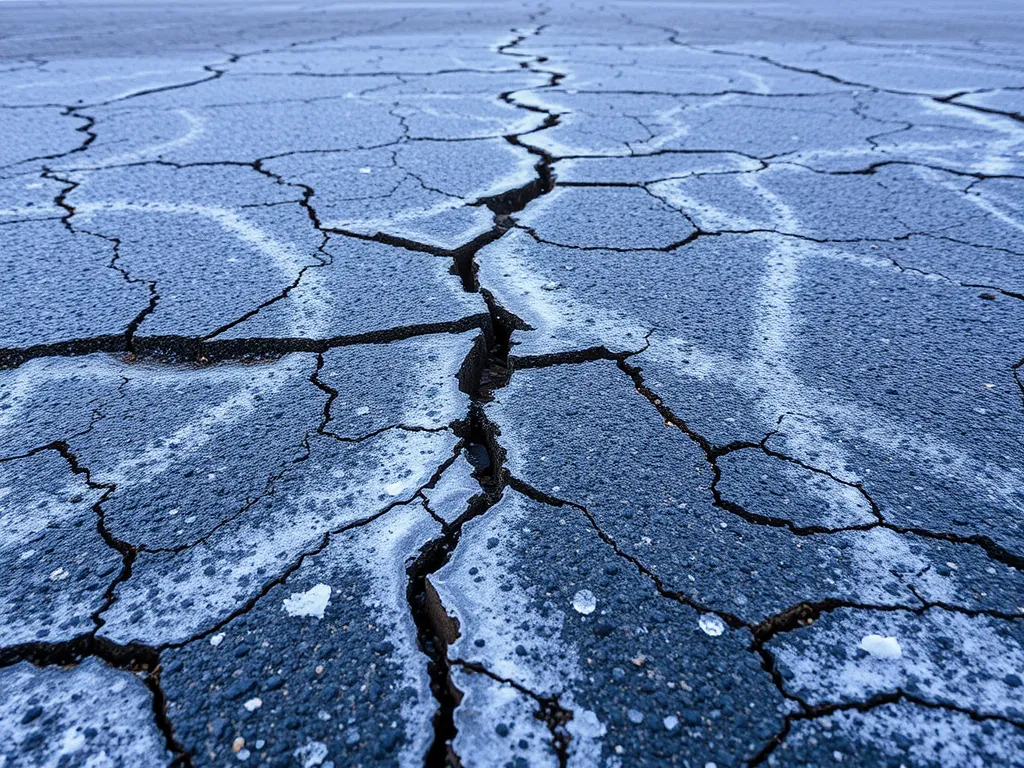
Below 32°F (0°C), thermal cracks split pavements. Air voids in the mix let water seep in, freeze, and widen gaps. Northern states like Minnesota use PG 58-34 binders to delay crack starts by 5-8 years.
These thermal risks show why asphalt must flex with the forecast. Next, learn the exact temps needed to lay roads that last.
Critical Temperature Guidelines for Asphalt Installation
Proper temperature management during asphalt installation determines pavement longevity. Deviations from established thermal thresholds accelerate cracking, rutting, and structural failure.
Minimum Temperature for Laying Asphalt
Hot mix asphalt requires ambient temperatures above 50°F (10°C) for installation. Below this threshold, rapid cooling prevents adequate compaction, creating voids that weaken structural integrity. Cold mix asphalt uses emulsified binders for winter repairs at temperatures as low as 20°F (-7°C).
Recommended Asphalt Laying Temperatures
Optimal application ranges vary by mix type. Standard hot mix asphalt demands 275-325°F (135-163°C) at discharge to maintain workability. Warm mix additives allow placement at 220-250°F (104-121°C), reducing energy use by 15-20%.
Celsius vs. Fahrenheit Standards
| Mix Type | °C Range | °F Range | Applications |
|---|---|---|---|
| Hot Mix | 135-163 | 275-325 | Highways, airports |
| Warm Mix | 104-121 | 220-250 | Residential, low-traffic |
| Cold Mix | -7 to 15 | 20-59 | Pothole repairs |
Typical Asphalt Temperature During Application
Surface temperatures must exceed 50°F (10°C) for proper adhesion. Infrared thermometers verify base layers before paving. In northern states like Minnesota, contractors often use heated screeds to maintain mix temperatures below 40°F (4°C).
Testing Asphalt Under Realistic Temperature Conditions
Performance-grade (PG) binders undergo testing at extreme temperatures. The Bending Beam Rheometer evaluates low-temperature flexibility at -40°F (-40°C), while the Dynamic Modulus Test assesses high-temperature stiffness at 130°F (54°C). ASTM D6816 specifies compaction protocols for thermal simulation.
These testing protocols directly influence material innovations like polymer-modified binders, which we’ll explore next.
Also See: Crack Sealing Process: Protect Your Pavement
Advantages Of Temperature-adaptable Asphalt
Asphalt that handles heat shifts well brings real perks. It cuts repair costs and keeps roads safe year-round.
Enhanced Resistance to Thermal Deformation
Heat waves make regular asphalt soft. Temp-adaptable mixes use polymer binders to stay firm. These binders (like PG 64-22) lock rocks and sand in place. Roads bend without breaking, even at 140°F. No ruts. No dips. Just smooth drives.
Improved Longevity in Variable Climates
Places with wild weather need tough pavement. Temp-flex asphalt lasts 15-20 years vs. 8-12 for standard mixes. How? It fights freeze-thaw cycles. Tiny air gaps let ice expand harmlessly. Less cracks. Less potholes. Save $3-$5 per sq.ft. in long-term fixes.
Cold Mix Asphalt: Benefits in Low-temperature Scenarios
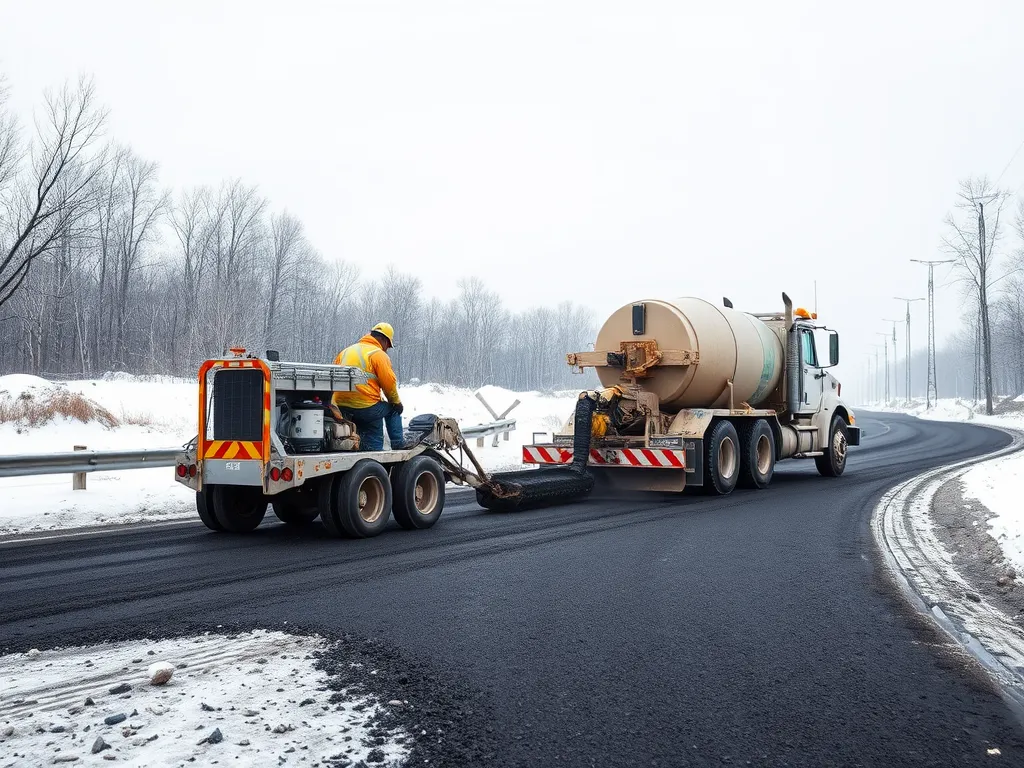
Cold mix works where hot mix fails. Made with emulsified bitumen, it stays workable at 40°F. Patch potholes in winter. Fix driveways in fall. No need for massive heaters or tight timelines.
Reduced Dependency on Seasonal Constraints
Traditional paving stops below 50°F. Cold mix breaks that rule. Crews lay it down at 20°F if needed. Projects finish on time. No spring backlog. Cut delays by 30% in northern states like Minnesota.
With these perks, roads stay strong through summer sizzle and winter chills. Next, we’ll explore how tech upgrades push asphalt’s heat-handling limits even further.
Technological Advances in Asphalt Temperature Adjustment
Modern innovations tackle asphalt’s thermal challenges head-on. From advanced binders to precision-engineered additives, new solutions ensure pavements withstand extreme heat waves and deep freezes.
Polymer-modified Binders for Flexibility
Polymer-modified binders (PMBs) like Styrene-Butadiene-Styrene (SBS) transform asphalt’s thermal response. These PG-rated binders (Performance Grade) boost elasticity by 40-60% compared to standard bitumen. In Phoenix summers, PMBs resist rutting at 160°F. During Minnesota winters, they prevent cracking at -30°F. Contractors pay $8-$12 per ton extra for PMB mixes but gain 7-10 more years of service life.
Additives Enhancing Asphalt Suspension Adaptability
Chemical additives fine-tune asphalt’s temperature thresholds. Warm-mix agents like Evotherm let crews lay pavements at 225°F instead of 300°F, cutting fuel use by 35%. Anti-strip additives improve adhesion in wet, 40°F conditions. For heavy traffic zones, 0.5% cellulose fibers added during mixing reduce thermal cracking by 22%. Crumb rubber from recycled tires—12% by weight—lowers road surface temps by 10°F in heat islands.
Performance Specifications for Temperature-resistant Mixes
Superpave standards (AASHTO M320) now mandate climate-specific testing. Mix designs must pass the Bending Beam Rheometer test at -12°F and Dynamic Shear Rheometer test at 158°F. High-altitude Colorado mixes require PG 58-34 binders, while Florida coastal roads use PG 76-22. These specs ensure pavements handle 300+ daily temperature swings without deformation.
These breakthroughs set the stage for eco-friendly methods that slash energy demands while maintaining thermal resilience.
Environmental and Operational Efficiency
Balancing asphalt temp adaptability with sustainability goals transforms how roads handle thermal shifts. Mix designs that adjust to hot and cold swings minimize long-term harm to roads and natural habitats.
Sustainable Practices for Thermal Stress Mitigation
Modern methods tackle thermal stress without sacrificing structural quality. Warm-mix asphalt (WMA), for instance, lowers production temps by 30-50°F compared to traditional hot-mix asphalt (HMA). This cuts fuel use by 15-20% and slashes CO2 output during manufacturing. Pairing WMA with recycled asphalt pavement (RAP)—which contains aged binders already acclimated to local climates—boosts a mix’s capacity to withstand temp swings.
Reducing Energy Consumption in Production
Lowering asphalt production temps directly links to asphalt adaptability to temperature variations. For example, mixing at 275°F instead of 320°F saves roughly 3.5 gallons of fuel per ton. Polymer-modified binders, like PG 76-22, allow mixes to stay workable at lower temps while maintaining rut resistance at 140°F. Such innovations trim annual CO2 emissions by up to 35% in large plants and lower costs by $1.50-$3.00 per ton.
- Warm-mix tech: 50°F lower laydown temps, 20% less fossil fuel burned
- High-RAP blends: 30% recycled material, cutting aggregate mining by 1.2 tons per lane mile
- Solar-powered drum plants: 40% grid power offset via on-site PV panels
As material science advances, next-gen solutions push boundaries in balancing asphalt temp adaptability with planetary limits. Upcoming tools focus on smart additives that self-adjust to ambient shifts.
Frequently Asked Questions (FAQs)
What is the Effect Of Temperature on Asphalt Durability?
Temperature variations directly impact asphalt durability. High temperatures can lead to softening, making the surface susceptible to rutting and deformation, while low temperatures can cause rigidity, leading to cracks and surface damage. Maintaining optimal temperature adaptability is crucial for the longevity of asphalt pavements.
Is Asphalt Sensitive to Temperature Fluctuations?
Yes, asphalt is quite sensitive to temperature fluctuations. As temperatures rise or fall, the material’s physical properties change, affecting its flexibility and stiffness. This sensitivity makes it essential to choose appropriate asphalt mixes based on the climate where they will be applied.
What Are the Advantages Of Cold Mix Asphalt?
Cold mix asphalt is advantageous for repairs in cold weather conditions because it remains workable at lower temperatures, often down to 20°F. This flexibility allows for timely repairs, minimizing the need for large heating equipment or waiting for warmer weather, thus reducing project delays.
How Does Direct Sunlight Affect Asphalt Temperature?
Direct sunlight significantly increases surface temperatures of asphalt, sometimes exceeding 150°F (65°C) or more. This elevated temperature can result in softening of the asphalt mix, leading to potential deformities such as ruts and structural failures if the material is not designed for high-temperature resilience.
Closing Thoughts
Asphalt temperature adaptability plays a pivotal role in ensuring the durability and performance of road surfaces. From the effects of thermal expansion and contraction to the importance of appropriate laying temperatures, understanding these dynamics is essential for effective installation and maintenance.
The advancements in asphalt technology, such as polymer-modified binders and innovative additives, enhance the material’s flexibility. This progress not only extends the lifespan of asphalt but also improves its resistance to the challenges posed by varying climates. Additionally, adopting sustainable practices in asphalt production can lead to reduced energy consumption, benefitting both the environment and operational efficiency.
For more information on asphalt temperature adaptability and related topics, visit Asphalt Calculator USA.
Useful References for You:
- The Asphalt Institute. (2007). MS-4: The Asphalt Handbook. Lexington, KY: Asphalt Institute.
- Asphalt Paving: Temperature & Timing | Alpha Paving
- AdSVIS – Adaptation of the road infrastructure to climate change | Umweltbundesamt