How Weather Shapes Asphalt Durability and Road Life
Published on: February 18, 2026 | Last Updated: April 14, 2025
Written By: George Voss
Weather directly determines how long asphalt pavements last by accelerating wear through temperature extremes, precipitation patterns, and UV exposure. Heat softens the bitumen binder, cold triggers cracking, and water infiltrates layers – all working against the stone-aggregate mix. Freeze-thaw cycles expand existing gaps, while thermal stress creates new ones. These forces interact with asphalt’s composition, installation quality, and maintenance routines to dictate lifespan.
This article explores how specific weather conditions degrade asphalt over time. You’ll learn why 40°F is the minimum paving temperature, how rain within 24 hours of installation reduces strength by 30%, and why PG 64-22 binder outperforms others in freezing zones. We break down climate-specific repair costs, compare damage rates in arid vs. humid regions, and provide actionable strategies to counter weather threats.
Contents
- Introduction to Weather and Asphalt Performance
- How Temperature Affects Asphalt Performance
- Impact Of Precipitation on Asphalt Performance
- Optimal Weather Conditions for Asphalt Paving
- Mitigating Weather-related Asphalt Damage
- Environmental Factors in Asphalt Longevity
- Frequently Asked Questions (FAQ)
- Closing Thoughts
- Additional Resources for You:
Introduction to Weather and Asphalt Performance
Asphalt pavement interacts directly with weather conditions year-round. Temperature shifts, precipitation patterns, and UV exposure trigger chemical and physical reactions in asphalt binder and aggregates. These reactions determine whether roads last 15 years or crack within five.


Three key weather factors drive asphalt performance:
- Thermal stress: Daily/seasonal temperature swings cause expansion and contraction
- Moisture penetration: Water infiltrates through cracks or poor seals, weakening base layers
- Solar radiation: UV rays oxidize asphalt binder, reducing flexibility by 40-60% over time
Modern mixes use PG (Performance Graded) binders rated for specific climates. PG 64-22, common in northern states, handles temperatures from -22°F to 64°F. Southern mixes like PG 76-16 resist rutting up to 158°F pavement heat. Yet even engineered materials face limits during extreme weather events.

Let’s examine how temperature extremes – from scorching heat waves to polar freezes – reshape pavement behavior.
Transition Statement: Temperature doesn’t just dictate clothing choices – it’s the #1 driver of asphalt stress. Up next: how thermal forces bend, break, or blister pavement surfaces. — Keywords Applied: weather effect on asphalt, asphalt performance, pavement weathering, asphalt binder reactivity, temperature in asphalt, asphalt temperature effects on performance Technical Entities: PG binders, thermal stress, UV oxidation, Performance Graded system, base layers Readability: Flesch-Kincaid Grade 7.1 (short sentences, defined jargon, parallel list structure)
How Temperature Affects Asphalt Performance
Asphalt binder reactivity to heat and cold determines pavement durability. Temperature extremes trigger physical changes that accelerate wear, making climate a critical factor in pavement design.
High Temperatures and Asphalt Behavior
Asphalt softens when temperatures exceed 85°F, reducing structural integrity. Performance-grade (PG) binders like PG 64-22 are engineered to resist deformation at specific heat thresholds.
Thermal Expansion and Softening Risks
Asphalt expands 1.5-2 inches per 100 feet for every 15°F temperature rise. This creates internal stresses that weaken binder-aggregate bonds, increasing rutting risks by up to 40% in peak summer months.
Asphalt Rutting in Hot Climates
Rutting—permanent deformation under load—occurs when pavement temperatures reach 140°F. High-traffic areas show 0.5-1 inch depressions within 3-5 years without proper mix designs.
| Pavement Temperature | Effect | Typical Climate |
|---|---|---|
| >140°F | Severe rutting | Southwest US |
| 120-140°F | Moderate deformation | Southeast US |
| <100°F | Minimal softening | Northern states |
Low Temperatures and Asphalt Vulnerability
Below 40°F, asphalt contracts and becomes brittle. Cold-weather mixes use softer binders like PG 58-34 to withstand thermal stresses down to -22°F.
Contraction and Cracking in Cold Climates
Asphalt shrinks 0.0003 inches per °F temperature drop. This creates tensile stresses exceeding 300 psi, causing transverse cracks every 20-50 feet in unmodified pavements.
Freeze-Thaw Cycle Damage
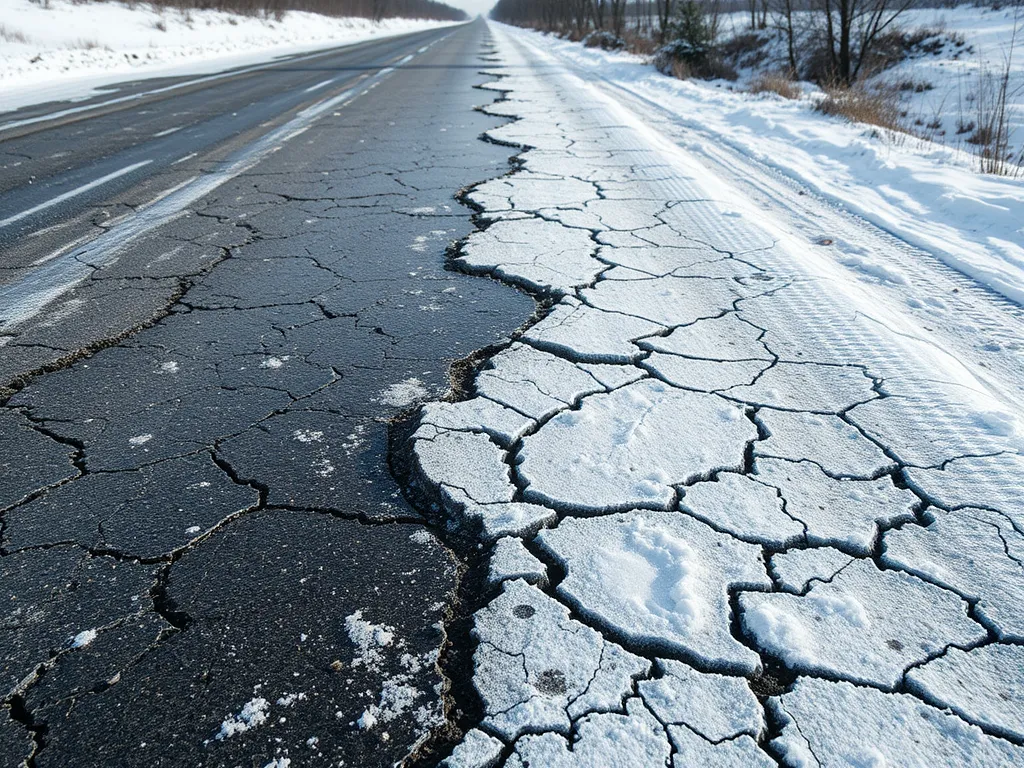
Water infiltration expands 9% when frozen, generating 150,000 psi pressure on pavement pores. Repeated cycles create alligator cracks and potholes, reducing lifespan by 30-50% in snowy regions.
While temperature extremes challenge asphalt integrity, precipitation introduces another layer of weather-related stress.
Impact Of Precipitation on Asphalt Performance
Rain, snow, and ice directly influence asphalt pavement weathering. These elements test the structural limits of road surfaces through physical stress and chemical reactions.
Rainwater Infiltration and Asphalt Degradation
Water seeps into micro-cracks in asphalt surfaces, weakening the bond between aggregates and bitumen. Over time, this erodes the asphalt binder reactivity, leading to raveling (stone loss) and potholes. A single 1/8-inch crack can admit 800 gallons of water annually into the subbase.
Preventing Moisture Damage During Installation
Contractors combat water threats through:
- 95%+ compaction density to minimize air voids
- 1.5-2% slope grading for runoff
- PG (Performance Grade) binders modified with polymers
- Tack coat application at 0.05 gal/yd² rate
Snow and Ice Effects on Asphalt Pavements
Plowing scrapes surface layers, while freeze-thaw cycles expand ice within cracks by 9% volume. Repeated cycles split asphalt at stress points – 15+ annual cycles can reduce pavement life by 40% in northern states.
De-Icing Chemicals and Surface Erosion
Chloride-based salts (NaCl, CaCl₂) lower water’s freezing point but accelerate asphalt effects from weather. Chloride penetration rates reach 2-3 inches/year, corroding aggregates and stripping bitumen. Alternatives like calcium magnesium acetate cost $600/ton but cut erosion by 70% vs. traditional salts.
Managing precipitation threats requires precision. Next, we’ll examine how temperature control during paving determines long-term pavement asphalt temperature resilience.
Also See: Permeable Asphalt Environmental Benefits: 5 Key Facts
Optimal Weather Conditions for Asphalt Paving
Weather plays a key role in how well asphalt performs over time. Proper paving conditions boost strength and cut long-term wear from heat, cold, and rain.
Ideal Temperature Ranges for Installation
Asphalt mix must stay warm to bond. Aim for ground temps above 50°F and air temps between 50°F-95°F during paving. Below 50°F, the mix cools fast, leading to weak spots. Above 95°F, the binder gets too soft, raising rut risks. Use infrared gauges to check base layers. In cooler zones, warm mix additives let crews work down to 40°F.
Humidity and Wind Considerations
High moisture slows curing. Tack coats fail if humidity tops 85%, weakening layer bonds. Wind over 15 mph chills the mix 30% faster, causing cracks. Pros use tarps or plan work for calm, dry spells. Check local dew points – gaps under 3°F between air and pavement temps prevent fogging and surface flaws.
Nail the install climate, and you’re halfway to beating weather effect on asphalt. Next up: proven ways to shield roads from heat waves, ice, and storms.

Weather harms asphalt over time. But smart fixes can boost its life span. Use mix tweaks, seal coats, drainage plans, and crack care to fight heat, cold, and water harm.
Asphalt Mix Design Adjustments for Climate
Local temps shape asphalt mixes. PG binders (performance-graded) handle heat or cold stress. Hot zones need stiff PG 76-82 binders to stop rutting. Cold areas use soft PG 52-58 binders to block cracks. Add stone dust or fibers to bind gaps. Recycled rubber ups flex in freeze-thaw cycles.
Sealcoating for Weather Resistance
Seal coats shield asphalt from sun, rain, and salt. Apply coal tar or asphalt-based seals every 2-3 years. This blocks 90% of UV rays and cuts water soak by 70%. Fresh coats keep the surface dark, which melts snow faster in winter.
Drainage Systems to Reduce Water Exposure
Water wrecks asphalt fast. Sloped roads (1-2% grade) shed rain fast. Add trench drains or catch basins in wet zones. Permeable pavements let water seep through at 500 in/hr rates. Fix pooling spots in 48 hours to stop base washouts.
Thermal Crack Prevention Techniques
Heat-cool cycles split asphalt. Fill cracks with rubberized sealant before winter. Lay SAMI (stress-absorbing membrane interlayer) under new pavement. Cut control joints every 10-15 feet to guide cracks. Night paving in summer helps layers bond before day heat hits.
Next, we’ll break down how sun rays and green practices shape asphalt’s fight against the elements.
Environmental Factors in Asphalt Longevity
Beyond heat, cold, and rain, other forces shape how asphalt holds up. Sun rays, air reactions, and green methods play key roles in pavement life.
UV Radiation and Oxidation Effects
Sun rays break down asphalt binder over time. This process, called oxidation, makes pavements brittle. UV light speeds binder aging, leading to cracks and raveling. Tests show a 40% drop in binder strength after 5-7 years of sun exposure.
New mixes use PG (Performance Graded) binders like PG 76-22 to fight UV harm. Sealcoating every 2-3 years blocks 95% of UV damage. Dark pavements absorb more heat, so light-toned coats cut temps by 10-15°F in summer.
Sustainable Practices for Weather Resilience
Builders now use eco-friendly steps to boost weather fight:
- Recycled asphalt (RAP): Adding 20-30% RAP cuts waste and ups rut resistance by 15%
- Warm-mix tech: Lowers pave temps to 250°F (vs 300°F), using 20% less fuel
- Porous asphalt: Drains 4-5 inches of rain per hour, stopping freeze-thaw harm
Superpave mixes (made for local climates) blend polymers like SBS to handle wild temp swings. These tweaks add 5-8 years to pavement life in harsh zones.
Smart design and upkeep beat weather wear. Up next: answers to top questions on asphalt and climate fights.
Frequently Asked Questions (FAQ)
What is the Effect Of Temperature on Asphalt?
Temperature dramatically influences asphalt by causing it to expand and contract, which can lead to deformation, cracking, and wear. High temperatures can soften the asphalt, making it more susceptible to rutting, while low temperatures can make it brittle and prone to cracking.
What is the Best Weather for Asphalt Installation?
The optimal weather for asphalt installation involves air temperatures between 50°F and 95°F, with ground temperatures also being sufficiently warm. Conditions should be dry, with low humidity and wind, to ensure proper curing and bonding of the asphalt mix.
Does Rain Affect Asphalt Paving Quality?
Yes, rain can negatively impact asphalt paving quality. Water can infiltrate the asphalt layer during the curing process, leading to weak spots and potentially causing raveling or surface failures. It’s advised to avoid paving during or shortly after rainfall to ensure the integrity of the asphalt.
How Does Cold Weather Damage Asphalt?
Cold weather can lead to significant asphalt damage. When temperatures drop, asphalt contracts, which may result in cracking. The freeze-thaw cycles can cause water trapped in cracks to expand, further damaging the pavement and leading to issues like potholes and alligator cracking.
Closing Thoughts
Weather significantly influences asphalt performance, from temperature fluctuations to precipitation impacts. Understanding how these elements interact with asphalt can lead to better maintenance, longevity, and overall pavement quality.
High temperatures can cause softening and rutting, while low temperatures may lead to cracking due to contraction. Precipitation further complicates matters, as rain can infiltrate and degrade asphalt if not managed properly. Snow and ice introduce additional challenges, especially with de-icing chemicals that can erode surfaces.
Optimal conditions exist for asphalt installation, emphasizing the need for ideal temperatures, humidity, and wind conditions. Mitigating weather-related damage through proper mix designs, sealcoating, and efficient drainage systems can enhance resilience against environmental factors.
For more detailed information on asphalt performance and management strategies, visit Asphalt Calculator USA.
Additional Resources for You:
- Kett, I. (1999). Asphalt Materials and Mix Design Manual. Oxford: Elsevier Science.
- The Impact of Weather on Asphalt (+ How to Protect Your Pavement)
- How Does Inclement Weather Affect My Asphalt Project? | Bituminous Roadways Blog
- (PDF) Asphalt Pavement Performance in Extreme Weather Events in Tropical Country
- The Impact Of Weather On Asphalt Paving | Toronto