The Impact Of Weather on Asphalt Condition
Published on: February 18, 2026 | Last Updated: April 14, 2025
Written By: George Voss
Weather damages asphalt through thermal expansion, moisture penetration, and UV exposure. Daily temperature swings make pavement expand and contract, creating cracks. Rain seeps into these cracks, eroding base layers. Winter freeze-thaw cycles push ice into cracks, widening them. Sunlight oxidizes asphalt binder—the sticky petroleum-based glue—turning flexible surfaces brittle. Proactive strategies like sealcoating every 2-3 years, crack filling with rubberized asphalt, and installing drainage systems combat these effects.
This article explains how specific weather conditions harm asphalt. Learn how summer heat softens pavement, causing tire ruts at 140°F+ surface temperatures. See why winter cold triggers alligator cracking below 40°F. Discover how rainfall overwhelms poorly sloped surfaces (aim for 2% minimum grade). We detail solutions: infrared patching for winter repairs, polymer-modified binders for high-traffic areas, and drainage upgrades like French drains. Whether facing Arizona sun or Minnesota winters, these tactics preserve pavement integrity.
Contents
- How Weather Conditions Affect Asphalt Performance
- Impact Of Rainfall on Asphalt
- Temperature Extremes and Asphalt Degradation
- Snowfall and Ice Effects on Asphalt
- UV Radiation and Asphalt Aging
- Optimal Weather Conditions for Asphalt Paving
- Mitigating Weather-related Asphalt Damage
- FAQs: Weather and Asphalt Interactions
- Final Thoughts
- Useful References for You:
How Weather Conditions Affect Asphalt Performance
Pavement surfaces face relentless stress from shifting weather patterns. Temperature swings, precipitation, ultraviolet exposure, and freeze-thaw cycles collectively determine how quickly roads degrade. Recognizing these forces helps optimize maintenance plans.


Key Environmental Factors Impacting Asphalt
Two primary elements drive weather-related wear: thermal movement and moisture intrusion. Combined with UV radiation, these processes trigger structural changes in pavement binders and aggregates over time.
Thermal Expansion and Contraction
Daily temperature shifts exceeding 30°F cause pavement to expand during heat waves and contract in cold snaps. This movement creates stress fractures, particularly in regions with extreme seasonal changes. Common issues include:
- Thermal cracking (3/8” to 1” wide fissures)
- Rutting in high-traffic zones during summer
- Joint separation near curbs or manholes
PG (Performance Grade) binders rated for local climate zones help minimize these effects. For instance, PG 64-22 binders perform best where temps range from 64°C to -22°C.
Moisture Penetration and Oxidation
Water infiltrates pavement through surface cracks or poor drainage systems. Over 60% of potholes form when trapped moisture freezes, expands, then thaws—loosening aggregate bonds. Simultaneously, UV rays oxidize the bitumen binder, turning flexible layers brittle. Modern solutions include:

- Polymer-modified binders slowing oxidation rates by up to 40%
- Superpave mix designs with tighter aggregate gradation
- Drainage mats beneath pavement bases
Proactive sealing within 6-12 months of installation blocks 70% of moisture intrusion, extending surface life by 3-5 years.
While thermal shifts and water damage weaken pavement internally, visible surface failures often stem from specific weather events. Next, we’ll examine how rainfall patterns directly influence deterioration rates.
Impact Of Rainfall on Asphalt
Rain ranks as a top cause of asphalt road damage. Water weakens pavement layers through physical wear and chemical changes. Without care, even small flaws can grow into costly issues.
Water Infiltration and Asphalt Deterioration
Asphalt mixes use stone, sand, and binder (bitumen) to form tight bonds. Rain seeps into cracks, washing away fines and loosening the mix. Over time, this leads to potholes, raveling, and base failures.
How Does Rain Affect Asphalt Pavement?
- Softens binder: Water breaks bitumen-aggregate bonds
- Washes out fines: Loses 5-15% surface material in heavy storms
- Triggers freeze-thaw damage: Ice widens cracks by 0.1-0.3 inches per cycle
Asphalt Road Damage Due to Poor Drainage
Standing water cuts asphalt life by up to 50%. Common issues:
- Alligator cracks from soaked base layers
- Edge rutting where water pools
- Potholes forming in low spots
Roads with bad slope (under 2% grade) face repair costs 40% higher than well-drained ones.
Preventing Rain Damage to Asphalt Surfaces
Three key steps stop water harm:
- Sealcoat every 2-3 years: Fills pores with coal tar or asphalt emulsion
- Fix cracks fast: Fill gaps wider than 0.25 inches within 48 hours
- Ensure flow: Keep drains clear and maintain 2% cross-slope
While rain poses major risks, extreme heat and cold bring their own challenges to pavement survival.
Temperature Extremes and Asphalt Degradation
Pavements face relentless stress from temperature fluctuations. Both scorching summers below freezing winters test the limits of bitumen-bound mixtures. These extremes trigger distinct failure modes tied to thermal expansion, contraction, below changes in binder viscosity.
High Temperatures: Softening and Rutting
When thermometers climb above 85°F, belowphalt surfaces begin losing structural rigidity. Rutting—permanent deformation under traffic loads—becomes visible within weeks in poorly designed mixes. PG 58-28 binders, common in southern states, soften at lower temps than northern PG 64-22 grades.
Effect of Summer Heat on Asphalt Binder Integrity
Bitumen behaves like viscous fluid under prolonged heat. Studies show binder viscosity drops 80% between 70°F below 120°F. This allows aggregate particles to shift, creating wheel-path depressions. Infrared thermography reveals surface temps reaching 160°F on black pavements—enough to initiate rut depths exceeding 0.6 inches per summer month in heavy traffic zones.
Low Temperatures: Cracking and Brittleness
Sub-32°F conditions turn flexible pavements into fragile sheets. Thermal contraction creates tensile stresses up to 300 psi—surpassing typical mix strengths. Transverse cracks form every 50-100 feet when temps plunge 40°F within 24 hours. Northern regions using PG 58-34 binders see 30% fewer thermal cracks than those with standard PG 64-22.
Cold Weather Asphalt Failure Mechanisms
Three processes dominate winter damage:
- Thermal fatigue from daily freeze-thaw cycles
- Binder embrittlement below glass transition temp (-15°F for most mixes)
- Joint/crack ice wedging generating pressures up to 2,400 psi
Field data indicates pavements lose 2-5% flexibility for every 10°F drop below freezing.
Frozen precipitation compounds these thermal stresses. Next, we examine how ice formation below de-icing chemicals interact with vulnerable pavements.
Also See: Bitumen Adhesion Mechanisms: Key to Stronger Roads
Snowfall and Ice Effects on Asphalt
Snow and ice hit asphalt hard. These winter foes trigger cracks, weaken layers, and speed up wear. Let’s break down how cold weather attacks pavement.
Freeze-thaw Cycles and Structural Damage
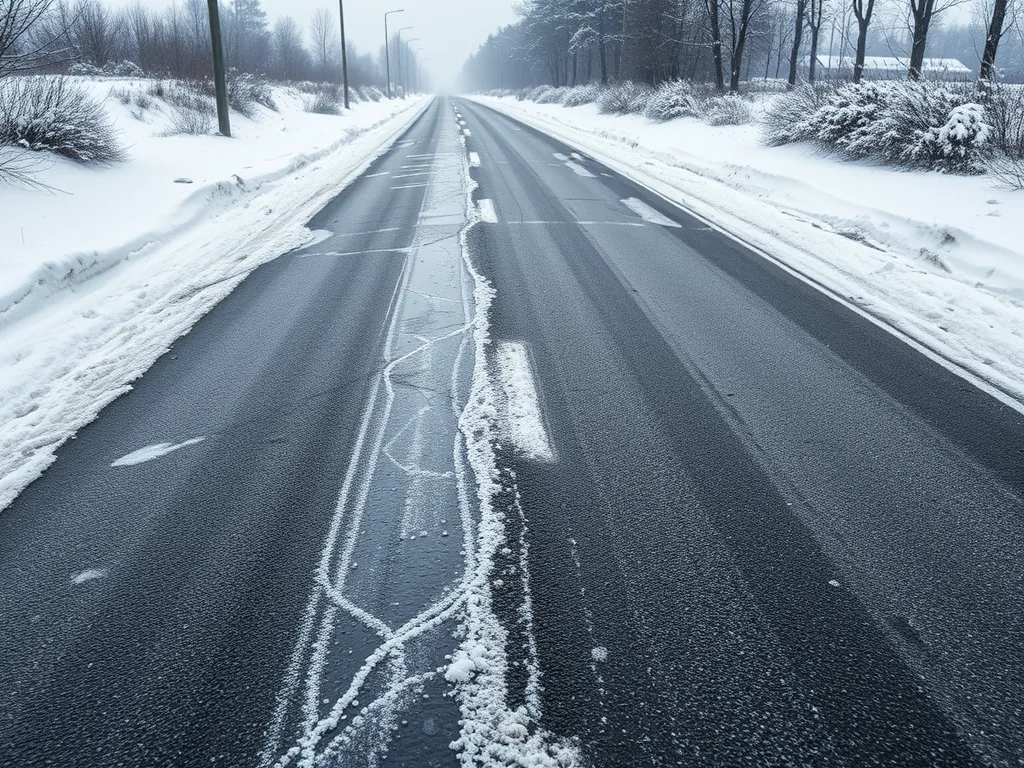
Water soaks into tiny cracks when temps rise above 32°F. At 20°F or lower, it freezes and expands by 9%, wedging gaps wider. Repeat this 15-20 times each winter, and even strong asphalt splits. You’ll see alligator cracks or lifted slabs by spring.
Asphalt Problems Caused by Snow Accumulation
Heavy snow piles add weight—up to 30 lbs per sq ft. This bends the base layer, creating dips. Snow plows scrape off the top 1/8 inch per pass, exposing rough stone. Meltwater then seeps under slabs, washing out support. Fixing these voids costs $3-$5 per sq ft.
De-icing Chemicals and Surface Corrosion
Road salt eats asphalt. Sodium chloride strips binder from stone, leaving loose gravel. Calcium chloride digs deeper, breaking bonds in 2-3 winters. Each ton of salt used cuts road life by 4 years. Swap to sand or beet brine mixes to curb corrosion. These options cut salt use by 30% while keeping roads safe.
While snow and ice pose winter risks, sun and heat bring their own threats. Up next: how UV rays age asphalt year-round.
UV Radiation and Asphalt Aging
Sunlight delivers more than heat to pavement surfaces. Ultraviolet rays trigger chemical changes in bitumen, the sticky binder holding asphalt together. Over time, this weakens the material’s flexibility, turning robust roads into brittle surfaces prone to cracking.
Sunlight-induced Oxidation Of Asphalt Binder
UV radiation breaks molecular bonds within bitumen through oxidation. This process strips the binder of volatile oils, leaving it stiff and less elastic. Performance Grade (PG) binders—like PG 64-22 used in moderate climates—lose viscosity when exposed to prolonged UV light. Roads in desert regions with 300+ sunny days yearly show surface degradation twice as fast as shaded pavements.
Long-Term Weathering of Pavement Surfaces
Continuous UV exposure combined with cyclic temperature shifts causes cumulative damage:
- Raveling: Loose aggregates form rough, uneven textures
- Microcracks expanding into alligator cracks
- Fading of surface color from rich black to gray
Studies show unsealed asphalt loses 40% of its structural integrity within 7 years under intense solar radiation. Sealcoating every 2-3 years blocks 95% of UV penetration, while polymer-modified binders extend service life by up to 15 years.
While UV exposure poses significant challenges, proper installation timing during cooler months reduces initial binder stress. Next, we’ll explore how temperature ranges during paving influence pavement longevity.
Optimal Weather Conditions for Asphalt Paving
Weather directly determines asphalt pavement quality during installation. Temperature, moisture levels, and humidity influence how binders set and aggregates bond. Ignoring these factors accelerates asphalt deterioration, shortening pavement lifespan by up to 40% in extreme cases.
Ideal Temperature Ranges for Installation
Asphalt mixes require ground temperatures above 50°F and air temperatures between 50-85°F for proper compaction. Below 45°F, binders stiffen too quickly, creating voids that invite water damage asphalt risks. Above 90°F, excessive softening causes rutting under roller weight. PG (Performance Grade) binders—engineered for regional climates—demand precise application heat to prevent thermal stress cracks.
Why Dry Conditions Matter During Paving
Rain or damp surfaces trap moisture beneath asphalt layers. This weakens the base, causing raveling (surface disintegration) or potholes within months. Contractors measure substrate moisture content before laying mixes—levels above 5% risk binder-aggregate separation. A single rain event during paving can reduce pavement life by 50% due to compromised density.
Humidity Considerations for Sealant Application
Sealcoating requires humidity below 50% for proper curing. High moisture in air slows solvent evaporation, creating tacky surfaces prone to premature wear. At 70% humidity, cure times double, increasing vulnerability to rain damage asphalt before sealing sets. Infrared thermometers verify pavement dryness—surface temps must exceed 60°F with dew point differentials of 30°F+ for optimal adhesion.
Proper installation conditions set the stage, but defending against weather effects on pavements demands vigilant maintenance. Next, we explore proactive strategies to shield asphalt from seasonal assaults.
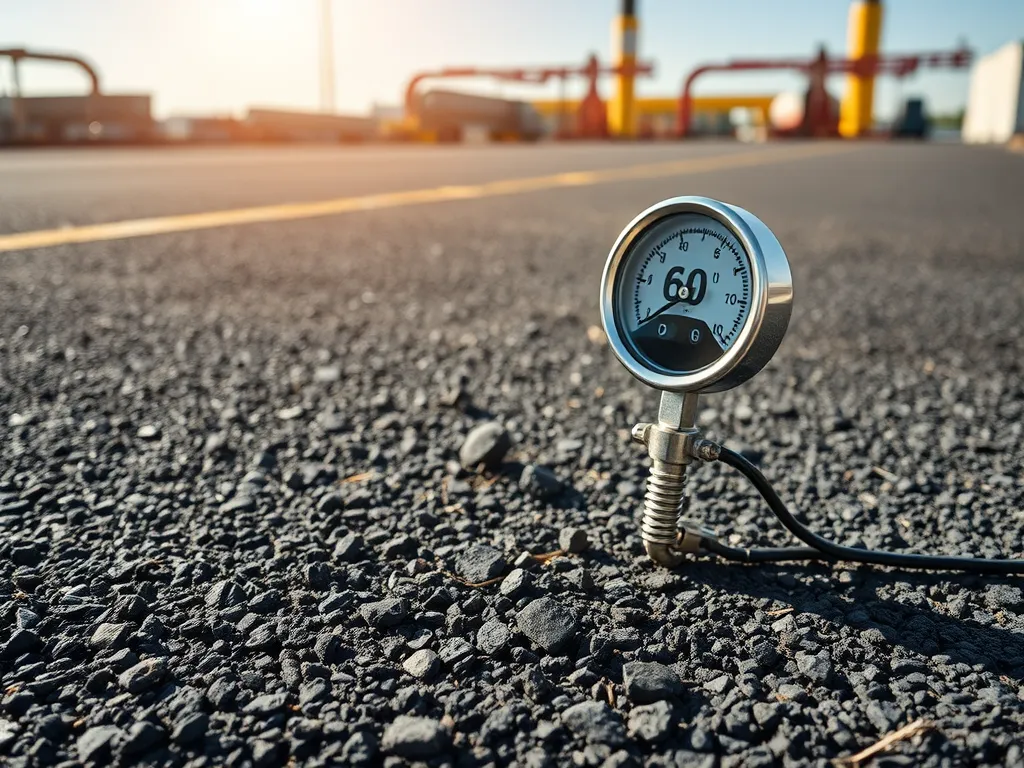
Combating pavement breakdown requires matching defensive tactics to local climate challenges. Three core methods block water intrusion, slow oxidation, and divert destructive forces before they reach critical thresholds.
Proactive Maintenance Strategies
Regular upkeep tailored to seasonal threats keeps surfaces intact longer. Two proven techniques form the foundation of resilient pavement systems.
Crack Sealing to Prevent Water Intrusion
Fissures wider than 1/8 inch become highways for moisture. Hot-pour rubberized sealants injected at 350-400°F bond tightly to block 90% of water penetration. Treating cracks within 48 hours of detection prevents subbase saturation that leads to frost heave or potholes.
Seasonal Sealcoating Schedules
Coal-tar emulsions or asphalt-based sealers applied every 2-3 years restore surface flexibility. Optimal timing balances temperature needs:
| Season | Temp Range | Coverage Rate |
|---|---|---|
| Spring | 50-70°F | 90-100 sq ft/gal |
| Fall | 45-65°F | 80-90 sq ft/gal |
Sealcoating in humid or wet conditions reduces bond strength by 60%, making weather monitoring critical.
Drainage System Design for Weatherproofing
Proper runoff management cuts water contact time by 75%. Key elements include:
- 2-3% crown slope for rapid sheet flow
- Permeable subbase layers transmitting 200-500 inches/hour
- Grated catch basins placed every 25-35 linear feet
Trench drains along pavement edges with 1.5-2% slope gradients move 5-10 gallons/minute away from vulnerable shoulders.
While these strategies form the first line of defense, their effectiveness depends on proper execution under specific…
FAQs: Weather and Asphalt Interactions
How Does Temperature Directly Affect Asphalt Durability?
Temperature significantly impacts asphalt durability through thermal expansion and contraction. Extreme heat can soften the asphalt, leading to deformation, while low temperatures can cause brittleness and cracking. Understanding the local climate helps in selecting appropriate asphalt mixtures that withstand these temperature variances.
Can Asphalt Be Effectively Repaired in Rainy Conditions?
While it is technically possible to perform asphalt repairs during light rain, it is not recommended. Rain can interfere with the adhesion of asphalt materials, leading to poor long-term performance. It’s best to schedule repairs during dry weather to ensure optimal bonding and curing of the materials.
What Makes Spring the Critical Season for Asphalt Maintenance?
Spring is critical for asphalt maintenance because the transition from winter to warmer weather leads to thawing and potential freezing cycles. This period reveals winter damage, such as cracks and potholes. Performing maintenance in spring ensures that the pavement is prepared for the increased traffic and moisture challenges that arise in the warmer months.
Final Thoughts
Weather plays a crucial role in determining the lifespan and performance of asphalt surfaces. Changes in temperature, moisture levels, and exposure to UV radiation can significantly influence the condition of asphalt, leading to challenges such as cracking, rutting, and deterioration.
Proactive maintenance strategies, including seasonal sealcoating and effective drainage design, are essential in combating weather-related damage. By understanding the specific impacts of various weather conditions, asphalt managers can implement tailored preservation techniques that extend the life of pavement while adhering to budget constraints.
For more information on asphalt management and to access helpful tools, check out Asphalt Calculator USA.
Useful References for You:
- Kett, I. (1999). Asphalt Materials and Mix Design Manual. Oxford: Elsevier Science.
- The Impact of Weather on Asphalt (+ How to Protect Your Pavement)
- The Weather’s Damaging Effects On Asphalt – Curcio Enterprises
- How Weather Can Affect Asphalt – ACPLM – 888-959-9637
- The Impact of Weather on Asphalt Paving: Best Practices for Hot and Cold Climates – Bennett Paving