Understanding the Impact Of Tree Roots on Asphalt Driveways
Published on: February 17, 2026 | Last Updated: April 14, 2025
Written By: George Voss
Tree roots damage asphalt driveways by exerting upward pressure and trapping moisture, leading to cracks, bumps, and structural failure. As roots grow beneath the surface, they can lift asphalt layers by 1-3 inches annually, creating visible fissures within 2-5 years. Moisture buildup around roots accelerates pavement degradation through freeze-thaw cycles, while acidic root secretions weaken asphalt binders. Common signs include serpentine cracks, raised sections, and pooling water near driveway edges.
This article explains how tree roots compromise asphalt integrity and provides actionable solutions. You’ll learn prevention strategies like root barrier installation, methods to identify early-stage damage, and repair options ranging from infrared patching ($150-$400) to full-depth replacements ($3-$7 per square foot). We’ll cover species selection, root pruning techniques, and how to balance driveway protection with tree health.
Contents
- How Tree Roots Damage Asphalt Driveways
- Preventing Tree Root Damage to Asphalt Driveways
- Identifying and Assessing Tree Root Damage in Asphalt
- Repairing Asphalt Driveways Affected by Tree Roots
- Root Barrier Systems for Asphalt Driveway Protection
- Environmental Considerations for Trees and Asphalt
- FAQs: Tree Roots and Asphalt Driveway Interactions
- Closing Thoughts
- Additional Resources for You:
How Tree Roots Damage Asphalt Driveways
Tree roots compromise asphalt driveways through physical force and environmental changes. Let’s break down the science behind these interactions.
Mechanisms Of Root-induced Asphalt Damage
Roots interact with asphalt in two primary ways: applying pressure and altering moisture levels. Both processes weaken structural integrity over time.
Root Growth Pressure on Asphalt Layers
As roots expand, they exert up to 130 psi laterally and vertically against asphalt layers. This force fractures the compacted aggregate base, creating voids that destabilize the surface. Even small roots measuring 0.5 inches thick can lift sections within three years.
Moisture Retention and Asphalt Degradation
Root systems trap water beneath driveways, keeping sublayers 20-30% more saturated than normal. Prolonged moisture softens the asphalt binder, accelerating raveling and pothole formation. This cycle worsens during freeze-thaw events in colder climates.
Common Signs Of Tree Root Damage in Asphalt
Early detection prevents costly repairs. Watch for these visible indicators of root intrusion.
Cracks and Fissures in Asphalt Surfaces
Linear cracks following root paths or spiderweb patterns near edges signal active growth. Roots under 1.5 inches wide typically create 0.25-0.75 inch-wide fissures. These gaps allow further water infiltration, compounding damage.
Uneven or Raised Asphalt Driveway Sections
Bulges exceeding 1.5 inches height difference across 10 feet often indicate root lifting. These raised areas disrupt drainage, pooling water that erodes the base at rates up to 3 inches per year in clay soils.
Spotting these issues early? The next section explores practical strategies to keep tree roots from harming your asphalt driveway.
Preventing Tree Root Damage to Asphalt Driveways
Proactive steps protect paved surfaces while preserving nearby trees. These methods combine landscape planning with structural safeguards.
Strategic Tree Placement Near Asphalt Surfaces
Tree species dictate root spread patterns. Fast-growing willows or poplars pose higher risks than slow-developing dogwoods. Consider mature canopy size when planting near paved areas.
Ideal Distance for Planting Trees from Asphalt Driveways
Maintain 15-30 feet between tree trunks and pavement edges. This buffer zone limits root intrusion:
- Small trees (under 25 ft tall): 15-20 feet clearance
- Large species (oaks, maples): 25-30+ feet clearance
Consult local nurseries for region-specific recommendations. Deep-rooted hickory or walnut trees often work better near driveways than shallow-rooted silver maples.
Installing Root Barriers for Asphalt Protection
Physical blockades redirect roots downward. Install these during driveway construction or tree planting for maximum effectiveness. Costs range from $8-$15 per linear foot.
Materials and Methods for Effective Root Barriers
Common barrier types include:
- HDPE plastic panels (40-60 mil thickness)
- Geotextile fabrics with chemical inhibitors
- Stainless steel mesh (0.04″ wire diameter)
Bury barriers 24-30 inches deep at 8-10 foot distances from pavement edges. Slope installations 15 degrees outward to guide roots downward.
Regular Maintenance to Minimize Root Intrusion
Inspect driveways twice yearly for early warning signs. Look for minor cracks or subtle lifting along edges.
Trimming Roots Near Asphalt Edges
Professional arborists cut intrusive roots using:
- Air spades for non-invasive excavation
- Root saws with sterilized blades
- Biodegradable growth inhibitors
Never remove more than 20% of root mass within the tree’s drip line. Schedule trimming during dormancy periods to reduce stress on trees.
While prevention reduces problems, existing root systems sometimes require detailed evaluation. The next section explores detection methods for hidden structural issues.
Identifying and Assessing Tree Root Damage in Asphalt
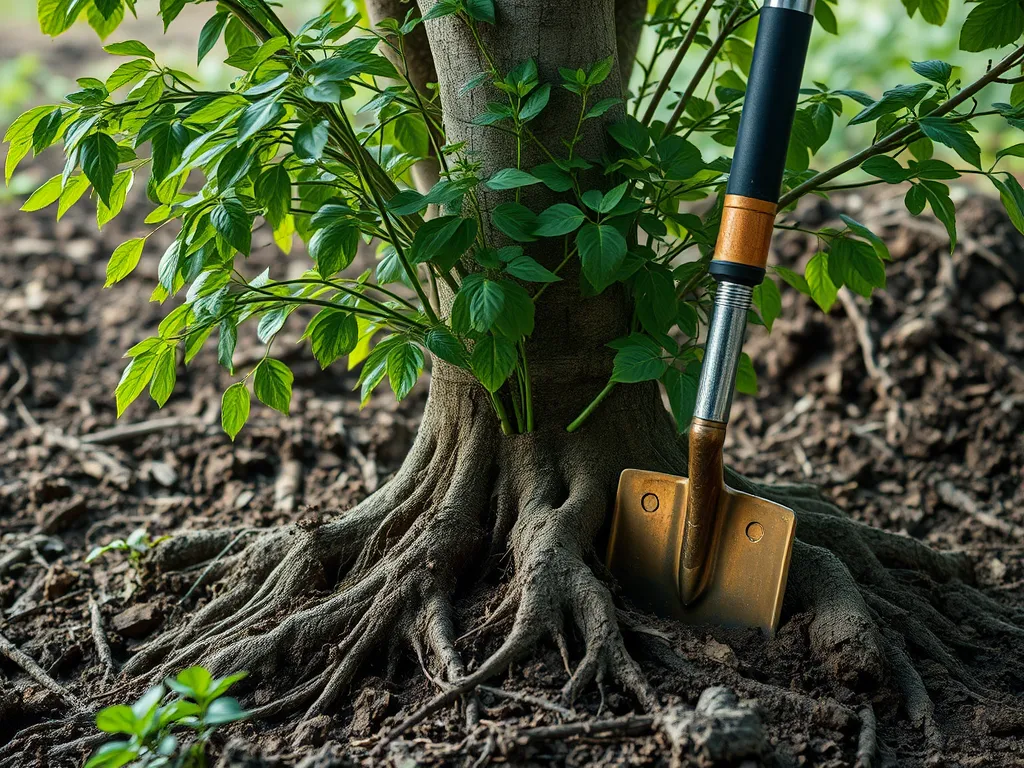
Spotting tree root damage early saves driveways from costly repairs. Look for visible changes in pavement texture, elevation, or drainage patterns. Address issues before roots compromise the asphalt’s structural base.
Visual Inspection Techniques for Asphalt Driveways
Homeowners can identify 80% of root-related asphalt issues through seasonal checks. Focus on surface irregularities near trees or shrubs. Use a flashlight at dawn/dusk to spot subtle shadows from raised areas.
Detecting Early-Stage Cracks and Warping
Hairline cracks (less than 1/8″ wide) often trace root paths beneath asphalt. Check for:
- Linear cracks running parallel to driveway edges
- Localized depressions holding water
- “Alligator cracking” (interconnected hexagonal patterns)
Measure warping with a 4-foot level – elevations exceeding 1/2 inch signal root activity. Document changes monthly using smartphone photos for comparison.
Professional Assessment Of Subsurface Root Growth
Arborists and pavement engineers use specialized tools to map hidden roots:
| Method | Depth Range | Cost Range |
|---|---|---|
| Ground-penetrating radar | Up to 6 feet | $300-$600 |
| Air-spade excavation | Surface to 18″ | $150-$400 |
| Resistivity testing | Up to 10 feet | $500-$1,200 |
Core sampling extracts 4″-diameter asphalt plugs to inspect root thickness and moisture content. Professionals measure root crown diameters – roots thicker than 2 inches often require removal.
With damage severity confirmed, targeted repair strategies become the priority. The next step involves choosing between partial fixes or full driveway overhauls.
Also See: Asphalt Manufacturing Processes: How It’s Made Simply
Repairing Asphalt Driveways Affected by Tree Roots
Roots breaking asphalt require immediate action to prevent structural failure. Three main approaches fix tree root damage asphalt issues: partial replacement, full resurfacing, or temporary patching. Material costs range from $2-$7 per square foot based on method and regional pricing.
Partial Asphalt Replacement for Localized Damage
Targeted repairs work best for isolated cracks or raised sections under 4 square feet. This preserves intact asphalt while removing compromised areas. Always remove invading roots before new installation.
Cutting and Removing Damaged Asphalt Sections
- Mark affected zones with chalk (minimum 6″ beyond visible damage)
- Cut through asphalt layers with a diamond saw (2-4″ depth typical)
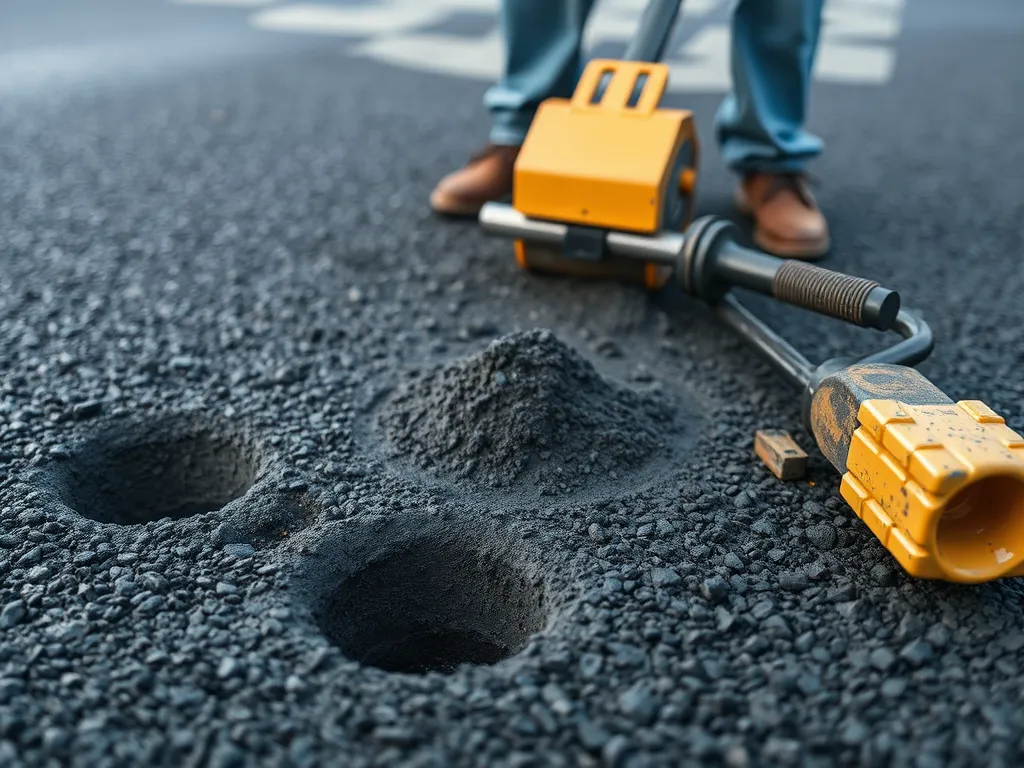
- Excavate base materials to 12″ depth using jackhammers or spades
- Apply root growth inhibitor to remaining underground roots
- Install fresh aggregate base and compact to 95% density
- Apply tack coat and new hot mix asphalt (HMA)
This process typically costs $3-$5 per square foot. Wait 24-48 hours before driving on repaired areas.
Full Asphalt Resurfacing for Widespread Issues
When over 30% of the driveway shows tree roots asphalt damage, resurfacing becomes cost-effective. Professionals mill the top 1.5-2″ of existing asphalt and lay new HMA over the entire surface. Key requirements:
- Stable base layer (no active root growth)
- Proper drainage slope (minimum 2% grade)
- Edge restraints for structural support
Resurfacing costs $2.50-$4 per square foot. Always pair with root barrier installation to prevent repeat damage.
Temporary Solutions: Patching Raised Asphalt Areas
Cold patch asphalt buys time for budgeting permanent repairs. Follow these steps for raised asphalt driveway sections:
- Clean debris from cracks with air compressor (100+ PSI)
- Pack cold mix material into voids
- Compact with hand tamper (150 lbs force minimum)
- Seal edges with asphalt emulsion
Expect temporary patches to last 6-12 months. Costs average $1-$3 per square foot. Monitor patched areas for new root activity.
While these methods address existing tree roots in asphalt driveways, long-term solutions require preventive measures. The next section explores physical barriers that redirect root growth away from asphalt surfaces.
Root Barrier Systems for Asphalt Driveway Protection
Root barriers create physical shields between tree roots and asphalt layers. These systems redirect root growth downward or away from paved surfaces, preventing cracks and upheaval. Properly installed barriers last 20-30 years, making them a cost-effective defense against tree root invasion asphalt issues.
Types Of Root Barriers Compatible With Asphalt
Two primary barrier types work with asphalt driveways: rigid plastic (HDPE) and permeable fabric. HDPE panels (18-24 inches wide) block roots through impenetrable surfaces, while geotextile fabrics slow growth via dense fiber matrices. Both options resist corrosion and maintain structural integrity when placed 6-12 inches from asphalt edges.
Vertical vs. Horizontal Barrier Installations
Vertical barriers (24-36 inches deep) stop lateral root spread near asphalt surfaces. Horizontal barriers (12-18 inches below grade) deflect downward growth. For existing tree roots asphalt damage, combine both: install vertical barriers at the driveway edge and horizontal sheets beneath vulnerable areas.
Step-by-step Root Barrier Installation Process
1. Mark barrier lines 2-3 feet from asphalt edges 2. Excavate trenches (6-12 inches wide) 3. Place barriers at specified depths 4. Backfill with compacted soil 5. Seal joints with asphalt-compatible sealant
Trenching Along Asphalt Driveway Edges
Use a walk-behind trencher to cut 30-inch-deep channels parallel to the driveway. Maintain a 6-inch gap between trenches and asphalt to avoid edge destabilization. Backfill with gravel (¾” minus) for drainage, reducing moisture retention that attracts roots under asphalt driveway zones.
While barriers significantly reduce roots breaking asphalt risks, combining them with smart tree selection enhances long-term results. Next, explore species with non-invasive root systems that coexist with paved surfaces.
Environmental Considerations for Trees and Asphalt
Healthy trees boost curb appeal and shade homes. Yet their roots can crack asphalt driveways. Smart planning keeps both trees and pavement strong.
Balancing Tree Health With Driveway Integrity
Trim roots with care to avoid tree stress. Use air spades for safe root cuts near asphalt. Add mulch 3-4 inches from the driveway edge to hold soil moisture. Test soil pH yearly—6.0-7.0 suits most trees and asphalt bases.
Selecting Deep-Rooted Species Near Asphalt
Choose trees with taproots over shallow spreaders. Deep roots grow down, not sideways into driveways. Top picks:
| Tree Type | Root Depth | Safe Distance |
|---|---|---|
| Oak | 3-5 ft | 15 ft |
| Pine | 4-6 ft | 20 ft |
| Hickory | 5-7 ft | 25 ft |
Minimum distance from driveway edge. Slow-growth types (1-2 ft/year) work best.
Avoid willows, maples, and poplars near asphalt. Their wide, shallow roots lift pavement in 3-5 years. For tight spaces, try shrubs like boxwood—roots stay under 2 ft deep.
Need to fix existing root issues? The next section covers repair methods for cracked or raised asphalt.
FAQs: Tree Roots and Asphalt Driveway Interactions
Can Tree Roots Damage an Asphalt Driveway?
Yes, tree roots can damage an asphalt driveway by applying upward pressure and causing moisture retention, which leads to cracks, warping, and structural failure over time.
What’s the Best Way to Repair Root-damaged Asphalt?
The best way to repair root-damaged asphalt involves assessing the extent of the damage. For localized issues, partial asphalt replacement is effective. For widespread damage, full resurfacing may be necessary. Temporary patches can also be done as an interim solution.
How Close Can Trees Safely Grow to Asphalt Driveways?
To minimize the risk of damage, keep trees at least 15-30 feet away from asphalt driveways, depending on the tree size. Smaller trees require less distance than larger species.
Are Root Barriers Effective for Asphalt Protection?
Yes, root barriers are effective in protecting asphalt driveways. They redirect root growth away from paved surfaces, preventing cracks and upheaval by physically blocking roots at critical depths.
Can Asphalt Be Laid Over Existing Tree Roots?
While it is technically possible to lay asphalt over existing tree roots, it is not advisable as roots will continue to grow and can cause further damage to the asphalt. It is best to remove or manage the roots before paving.
Closing Thoughts
Tree roots can significantly affect asphalt driveways, causing damage that ranges from cracks to uneven surfaces. Understanding the mechanisms of root growth and the signs of damage is crucial for any homeowner. Early detection and proactive strategies, like strategic tree placement and installing root barriers, can go a long way in preventing costly repairs.
Regular maintenance and professional assessment allow for timely interventions, preserving the integrity of both trees and driveways. If your driveway is experiencing issues, consider options such as partial replacements or resurfacing to restore its quality. With the right approach, you can balance the beauty of greenery with the functionality of your driveway.
For more detailed information and resources, visit Asphalt Calculator USA.
Additional Resources for You:
- American Association of State Highway and Transportation Officials (AASHTO). (2008). Mechanistic-Empirical Pavement Design Guide (MEPDG). Washington, DC: AASHTO.
- Tree Roots: A Threat To Asphalt Pavement – Action Asphalt & Concrete
- How to Repair a Driveway or Parking Lot Damaged by Tree Roots by CPEX
- How to Get Rid of Tree Roots Under Your Driveway (2025) | Today’s Homeowner
- How to Repair Tree Root Damage in Asphalt