
How Climate Shapes Asphalt Performance
Published on: February 14, 2026 | Last Updated: April 14, 2025
Written By: George Voss
Climate directly controls asphalt performance through temperature swings, water exposure, and daily thermal cycles. Extreme heat softens asphalt, creating ruts under heavy traffic, while freezing cold triggers cracks as binder materials contract. Rainfall seeps into tiny pavement gaps, weakening layers below during freeze-thaw cycles. Engineers use PG-graded binders (materials rated for specific temperature ranges) and drainage systems to combat these issues. Urban heat islands also play a role – asphalt surfaces can reach 160°F on summer days, accelerating aging.
This article breaks down climate’s effects on roads and solutions for lasting results. Learn how temperature extremes damage pavements in Phoenix summers or Minnesota winters. Explore why certain aggregates work better in wet regions like Florida. See how polymer-modified asphalt resists cracking in areas with wide daily temperature shifts. We’ll cover design strategies, maintenance tips, and tools like the Asphalt Calculator for climate-smart projects. Get data on repair costs, material innovations, and real-world examples from U.S. regions facing distinct weather challenges.
Contents
- Climate-asphalt Material Dynamics
- Temperature Effects on Asphalt Pavements
- Moisture and Precipitation Impacts
- Thermal Cycling and Fatigue Effects
- Climate-specific Design Considerations
- Performance Preservation Strategies
- Environmental Considerations
- Diagnostic Tools and Resources
- Frequently Asked Questions
- Closing Thoughts
- Useful References for You:
Climate-asphalt Material Dynamics
Road surfaces face constant battles with environmental forces. Heat waves, deep freezes, and repeated weather cycles reshape pavement at molecular levels through physical and chemical processes.
Fundamental Relationship Between Climate and Asphalt
Asphalt’s performance hinges on local temperature ranges, precipitation patterns, and freeze-thaw cycles. The binder-aggregate matrix responds differently to Phoenix’s 120°F summers versus Minnesota’s -30°F winters, demanding tailored engineering solutions.
Thermal Expansion and Contraction Mechanisms
Asphalt expands 1.5-2.5 inches per 100 feet for every 30°F temperature rise. This movement creates internal stresses reaching 150-300 psi in summer. Winter shrinkage pulls pavement apart, forming cracks that widen 0.1-0.3 inches annually without maintenance.
Asphalt Binder Behavior in Temperature Extremes
PG (Performance-Graded) binders soften at 140°F+ temperatures, reducing shear resistance by 40-60%. Below 40°F, binders become glass-like, with fracture energy dropping from 500 J/m² to under 200 J/m². Polymer-modified variants maintain flexibility down to -22°F while resisting rutting at 158°F.
These material behaviors set the stage for temperature-driven pavement failures explored next.
Temperature Effects on Asphalt Pavements
Asphalt pavements face intense stress from temperature swings. Extreme heat and cold alter material properties, triggering distinct failure modes. Engineers must account for these climate effects on asphalt to ensure road longevity.
High-temperature Impacts
Heat transforms asphalt from solid to semi-fluid. Binder viscosity drops by 90% between 50°F and 140°F, compromising structural integrity. Performance Grade (PG) binders—like PG 64-22 or PG 76-16—are formulated to resist specific temperature ranges.
Softening and Rutting in Hot Climates
At 120°F+, asphalt surfaces soften, causing permanent deformation under traffic. Rut depths exceeding 0.5 inches require repairs costing $5-$10 per square foot. Key factors:
- Binder viscosity below 1,000 Pascal-seconds
- Axle loads over 18,000 pounds
- Daily peak temperatures lasting 6+ hours
Surface Temperature Variations on Asphalt vs Natural Surfaces
Asphalt absorbs 95% of solar radiation versus 35% for grass. On a 90°F day, pavement hits 120-150°F—40-60°F hotter than shaded soil. This thermal loading accelerates aging, reducing pavement life by 15-20% in desert climates.
Low-temperature Challenges
Cold weather makes asphalt brittle. Below 40°F, binder stiffness increases exponentially. Thermal contraction rates of 1.5-2.0 x10⁻⁵ per °F create internal stresses surpassing 300 psi.
Thermal Cracking in Freezing Conditions
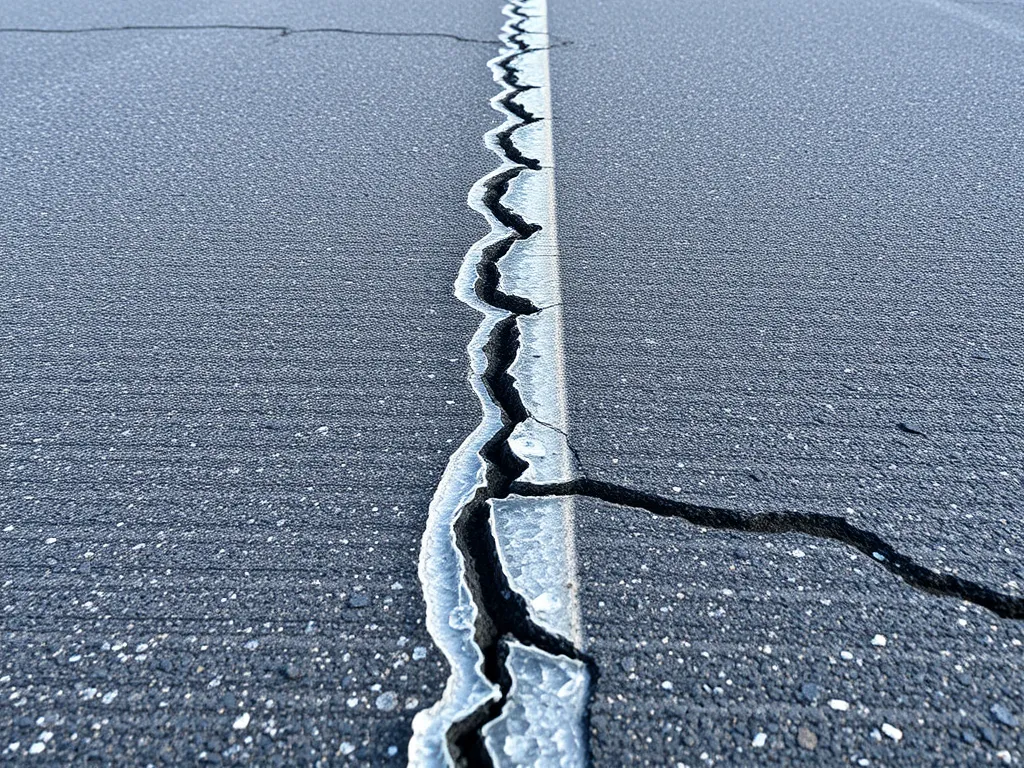
At -20°F, unmodified asphalt develops cracks every 20-30 feet. The AASHTO T322 test predicts cracking potential by measuring creep stiffness. Ideal binders maintain 300 MPa stiffness with 1.0 creep slope in subzero conditions.
Brittle Fracture Development
Repeated freeze-thaw cycles widen cracks through ice lens formation. Each 1% increase in pavement air voids raises frost susceptibility by 8%. Northern states use 4.5-7.0% air voids in mixes versus 3-5% in warm regions.
Temperature extremes test asphalt’s limits. Next, we examine how water infiltration compounds these thermal stresses.
Moisture and Precipitation Impacts
Water acts as a top factor harming road surfaces. Both rain and snow trigger unique forms of asphalt degradation tied to local climate conditions.
Rainwater Infiltration Damage Mechanisms
Rain soaks into voids in asphalt, causing two main issues:
- Stripping (bond loss): Moisture splits aggregates from bitumen, wearing away structural integrity
- Base saturation: Water pooling under pavement weakens load-bearing capacity
With 5-10% moisture content, asphalt loses 50% stiffness. Poor drainage worsens cracks, raising hydroplaning risk by up to 30%.
Snow/ice Impact on Pavement Structure
Frozen conditions bring distinct issues. Snow build-up adds weight (1 ft of snow = 3-5 psi stress). Ice forming in cracks widens gaps by 0.5-2 mm daily during cold spells.
Freeze-Thaw Cycle Damage Patterns
Winter’s worst pavement attacker: water invades cracks, freezes (9% growth), thaws, and repeats. This splits materials apart, causing:
- Alligator cracking (2-4” chunk loss per cycle)
- Frost heave (3-6” pavement lift in clay soils)
Areas with 50+ annual freeze-thaw cycles see 3x faster asphalt breakdown. Annual damage costs hit $3-5 billion in northern states.
Looking at how shifting warmth impacts roads shows why thermal cycling analysis matters for lasting pavements.
Shifting warmth patterns add another layer of stress, which brings us to thermal cycling’s role in asphalt fatigue.
Also See: Life Cycle Analysis Of Asphalt Materials: Key Insights
Thermal Cycling and Fatigue Effects
Repeated temperature swings create expansion-contraction cycles that test asphalt’s limits. These cycles generate cumulative stress, weakening pavement structure over time. Engineers call this process “thermal fatigue” – a key factor in climate-driven asphalt degradation.
Daily/seasonal Temperature Fluctuation Impacts
Daily shifts of 40°F-100°F stretch and compress asphalt surfaces like breathing. Seasonal swings amplify this effect: Minnesota pavements endure -30°F winters and 95°F summers. PG 58-28 binders help cold-climate mixes withstand these extremes, while PG 76-22 grades combat heat in Arizona.
Shrinkage Cracking Development
As asphalt cools, contraction creates tensile stress exceeding 300 psi – enough to split pavements. Transverse cracks form first, then spread laterally. Aggregate interlock (stone-on-stone contact) slows this process, but binder quality dictates outcomes. PG 64-22 mixes show 30% less cracking than standard grades after 10 freeze-thaw cycles.
Long-Term Structural Fatigue
Each thermal cycle creates micro-damage that accumulates beneath the surface. After 5,000+ cycles (≈15 years), pavements lose 20-40% flexural strength. Heavy truck traffic accelerates decline – 80kN axle loads multiply stress by 4x. Stone matrix asphalt mixes with 25% polymer-modified binder extend service life by 8-12 years in variable climates.
Addressing thermal fatigue demands more than durable materials – it requires smarter pavement systems. Next, explore how engineers tailor designs to combat specific weather threats.

Climate-specific Design Considerations
Building roads that survive extreme weather requires tailoring materials to local conditions. Engineers use specialized systems to match pavement components with regional temperature swings, moisture levels, and freeze-thaw cycles.
PG Grading System for Temperature Resistance
The Performance Graded (PG) system rates binders by their working temperature range. Each PG code shows the highest and lowest temperatures the material can handle without failing. For example, PG 64-22 performs between +64°C and -22°C.
| PG Grade | Temperature Range | Common Use Regions |
|---|---|---|
| PG 58-28 | +58°C to -28°C | Northern Midwest |
| PG 76-16 | +76°C to -16°C | Southwestern Deserts |
Selecting the correct PG grade cuts rutting risks by 40% in hot zones while preventing thermal cracks in freezing climates.
Material Selection for Regional Demands
Local stone sources must meet strict climate tests. Granite works well in wet environments due to low water absorption (under 2%), while limestone’s higher friction suits icy roads.
Frost Risks in Cold Zones
Frost-susceptible soils swell up to 15cm during freeze cycles, cracking pavements from below. Engineers combat this by:
- Using crushed rock with less than 3% fine particles
- Installing 30cm thick subsurface drainage layers
- Specifying binders with -34°C low-temperature ratings
These climate-smart design choices set the stage for exploring preservation techniques. Next, we’ll examine maintenance methods that extend pavement life despite weather challenges.
Performance Preservation Strategies
Maintaining asphalt integrity amid shifting climatic conditions requires proactive solutions. Two approaches dominate modern pavement management: advanced material formulations and timely upkeep tactics.
Climate-adaptive Mix Designs
Modern asphalt mixes now incorporate location-specific climate data. PG (Performance Graded) binders form the foundation, with high-temperature stability ratings matching regional heat patterns. In arid zones, mixes might contain 20-30% RAP (Recycled Asphalt Pavement) to boost thermal cracking resistance.
Polymer-Modified Asphalt Applications
Styrene-butadiene-styrene (SBS) modifiers transform conventional asphalt. These polymer blends:
- Raise softening points by 15-25°F
- Improve low-temp flexibility down to -40°F
- Cut rut depth by 50% in high-traffic zones
Installation costs run 20-35% higher than standard mixes but double service life in harsh climates.
| Climate Challenge | Standard Mix | Polymer-Modified |
|---|---|---|
| Rut Depth (Year 5) | 0.75″ | 0.32″ |
| Thermal Cracks/mile | 120 | 45 |
| Service Life | 8-12 years | 15-20 years |
Preventative Maintenance for Climate Resilience
Timely interventions combat weather impact on asphalt performance. A 2023 NAPA study found proper maintenance prolongs pavement life by 7-10 years in wet freeze climates.
Crack Sealing Best Practices
Effective sealing follows three rules:
- Apply at 50-70°F pavement temps
- Clean cracks to 1″ depth minimum
- Use rubberized asphalt with 300% stretch capacity
Properly sealed joints block 90% of moisture intrusion, critical in areas with 30+ freeze-thaw cycles annually.
Looking ahead, pavement diagnostics tools now allow monitoring of climate effects on asphalt in real time – a topic our next section explores in depth.

Environmental Considerations
Asphalt surfaces interact directly with environmental factors, creating challenges that extend beyond pavement durability. These interactions influence both local ecosystems and global sustainability goals.
Urban Heat Island Effect From Asphalt Surfaces
Asphalt absorbs up to 95% of solar radiation, releasing stored heat slowly. This raises surface temperatures by 40-60°F compared to natural landscapes. Dark pavements with low albedo (solar reflectivity) intensify urban heat islands, increasing cooling energy demands by 20% in cities like Phoenix or Houston. Cool pavement technologies, such as high-albedo coatings or open-graded mixes, can lower surface temps by 12°F. These solutions reduce ambient heat while maintaining load-bearing capacity.
Carbon Footprint Of Climate-related Repairs
Climate-driven damage forces repairs every 8-10 years in extreme regions, generating 25 tons of CO₂ per lane mile during reconstruction. Polymer-modified asphalt mixes last 50% longer in high-heat zones, cutting lifecycle emissions by 18%. Recycling milled asphalt (RAP) in repairs reduces material costs by $3-$5 per ton while lowering emissions by 20%. Projects using warm-mix asphalt tech decrease production temps by 50°F, trimming fuel use by 35%.
Balancing pavement performance with ecological impact demands data-driven strategies. Advanced tools now quantify these trade-offs, guiding smarter decisions for resilient infrastructure.
Diagnostic Tools and Resources
Tools that track how weather harms roads help pros build better asphalt. These systems mix climate stats with road design to fight heat, cold, and rain damage.
Asphalt Performance Prediction Models
New models like MEPDG forecast how roads hold up under sun, snow, or storms. They use past weather trends to guess where cracks or ruts may form. Tests show these tools cut repair costs by 18-32% in hot zones.
Climate Data Integration in Pavement Design
Road plans now add local weather stats like:
- Peak summer temps (e.g., 120°F in Phoenix)
- Yearly freeze-thaw cycles (e.g., 60+ in Minnesota)
- Rainfall levels (e.g., 60″ yearly in Gulf Coast)
Tools like NOAA’s Climate Data Portal feed into design software. This links asphalt mixes to site-specific risks.
Asphalt Calculator for Climate-specific Projects
Free online tools factor in local temps and rain to plan roads. For example:
- Inputs: Zip code, traffic load, base type
- Outputs: Layer depth, binder grade, cost per sq ft
A Florida job may need PG 76-22 binder to resist 90°F+ heat. The same tool picks PG 58-28 for North Dakota’s -30°F winters.
With the right data in hand, teams can tackle common questions about weather’s role in road wear.
Frequently Asked Questions
How Does Temperature Extremes Affect Asphalt Durability?
Temperature extremes can significantly impact asphalt durability by causing softening during high heat, leading to rutting, and increasing brittleness in cold temperatures, which results in cracking. Engineers must consider local climate conditions when designing asphalt to ensure long-lasting performance.
What Climate Factors Accelerate Asphalt Deterioration?
Several climate factors, including high temperatures, frequent freeze-thaw cycles, and heavy precipitation, can accelerate asphalt deterioration. Each of these elements contributes to different types of damage, such as softening, cracking, and stripping of the asphalt surface.
Does Asphalt Contribute to Urban Temperature Increases?
Yes, asphalt contributes to urban temperature increases through the urban heat island effect. Asphalt surfaces absorb and retain heat, causing city temperatures to rise significantly above those of surrounding rural areas, exacerbating energy consumption for cooling systems.
How Much Heat Do Asphalt Surfaces Retain Compared to Natural Surfaces?
Asphalt surfaces can retain significantly more heat than natural surfaces. For instance, while grass can reflect about 35% of solar energy, asphalt absorbs up to 95%, leading to surface temperatures that can exceed natural areas by 40-60°F on warm days.
Closing Thoughts
Climate significantly influences asphalt performance, impacting its durability and longevity. Variations in temperature and precipitation create unique challenges, from softening in heat to cracking in cold. Understanding these factors is crucial for optimal asphalt design and maintenance strategies.
Utilizing tools like the PG Grading System and adopting climate-adaptive mix designs can enhance asphalt resilience. Preventative maintenance, including crack sealing, plays a vital role in extending the life of pavement structures under varying climatic conditions.
For more in-depth information and resources on asphalt performance and climate impacts, visit Asphalt Calculator USA.
Useful References for You:
- Lavin, P. (2003). Asphalt Pavements: A Practical Guide to Design, Production, and Maintenance for Engineers and Architects. London: Taylor & Francis.
- Impact of climate change on pavement structural performance in the United States | Request PDF
- Climate change impact and adaptation for highway asphalt pavements: a literature review
- Pavement Thermal Performance And Contribution To Urban …
- Climate Change Impacts on Pavements and Resilience – Pavement Interactive

