How Climate Shapes Asphalt Durability: Weather’s Hidden Toll on Pavement
Published on: February 14, 2026 | Last Updated: April 14, 2025
Written By: George Voss
Climate directly impacts asphalt durability through temperature extremes, UV radiation, and precipitation patterns – factors that accelerate cracking, rutting, and structural failure. Hot climates soften asphalt binders (the glue holding pavement together), while freeze-thaw cycles in cold regions expand cracks up to 0.32 inches annually. Research from the National Asphalt Pavement Association shows temperature swings of 50°F+ per day increase thermal stress by 40% in untreated pavements.
This article examines how specific weather elements degrade asphalt surfaces. We analyze temperature thresholds for binder failure, UV oxidation rates, and water infiltration risks. Regional case studies reveal why Phoenix roads need different asphalt mixes than Minnesota highways. You’ll learn mitigation tactics like performance-graded (PG) binders designed for specific climates and Superpave mix designs that withstand temperature extremes. Future sections detail repair costs ($3-$7/sqft for climate-related damage) and advanced materials like polymer-modified asphalt used in extreme climates.
Contents
- Introduction to Climate-asphalt Interactions
- Climate Factors Affecting Asphalt Durability
- How Climate Change Intensifies Asphalt Degradation
- Asphalt’s Temperature Sensitivity
- Mitigation Strategies for Climate-related Damage
- Environmental Considerations in Asphalt Durability
- Frequently Asked Questions
- Closing Thoughts
- Additional Resources for You:
Introduction to Climate-asphalt Interactions
Asphalt pavement faces constant battles with weather. Temperature swings, UV rays, rain, and ice directly influence how long roads last. These climate-asphalt interactions shape cracking patterns, rut depths, and maintenance cycles.
Bitumen – asphalt’s sticky binder – softens at 140°F and becomes brittle below 40°F. Aggregates (crushed stone/sand) provide structure but weaken when water seeps in. Together, these components react to climate stresses through:
- Thermal expansion/contraction (up to 0.25″ movement per 100ft lane daily)
- Oxidation from sunlight breaking chemical bonds
- Moisture penetration causing base layer erosion
PG (Performance Graded) binders like PG 64-22 combat heat in Texas, while PG 58-28 handles Minnesota winters. A 2018 FHWA study found roads in freeze-thaw zones need 42% more repairs than arid regions. Phoenix pavements show rutting after 5-7 years, versus 12-15 years in temperate Seattle.
These interactions set the stage for deeper analysis of specific climate threats. Next, we examine how temperature extremes, UV exposure, and precipitation patterns dictate pavement survival rates.
Climate Factors Affecting Asphalt Durability
Road surfaces face daily battles with natural forces. Four key climatic factors dictate how long pavements last before showing cracks or rutting.
Temperature Extremes &Amp; Fluctuations
Asphalt’s oil-based binder reacts strongly to shifts in air warmth. Roads in Phoenix may soften at 160°F, while Alaskan pavements grow brittle below -40°F.
High-Temperature Effects on Asphalt Binder Softening
Bitumen – asphalt’s sticky glue – starts flowing at 140°F. This allows heavy trucks to leave permanent ruts. Modified binders like PG 76-22 (suitable for 76°C) resist deformation better than standard mixes.
Thermal Expansion/Contraction Stress in Pavements
Daily 40°F swings cause pavements to expand/contract 0.15 inches per 100 feet. Over years, this movement creates alligator cracks. Jointed sections help, but thermal fatigue still claims 12% of road failures annually.
UV Radiation &Amp; Oxidation
Sunlight doesn’t just fade pavements. UV photons break chemical bonds in bitumen at 0.5mm depth per year.
Surface Aging from Prolonged Sun Exposure
Photo-oxidation turns flexible binder into a brittle shell within 3-5 years. This “skin aging” leads to raveling – gravel loss costing $4.20/square yard to repair. Sealcoating blocks 90% UV damage when applied biannually.
Precipitation &Amp; Moisture Infiltration
Water is asphalt’s silent killer. Just 2% moisture in base layers cuts pavement life by half.
Water Damage in Asphalt Subsurface Layers
Hydrostatic pressure pushes H₂O into voids during storms. This strips binder from aggregates (stripping) and weakens road bases. Proper 2% cross-slope grading prevents 80% of moisture issues.
Freeze-thaw Cycle Impacts
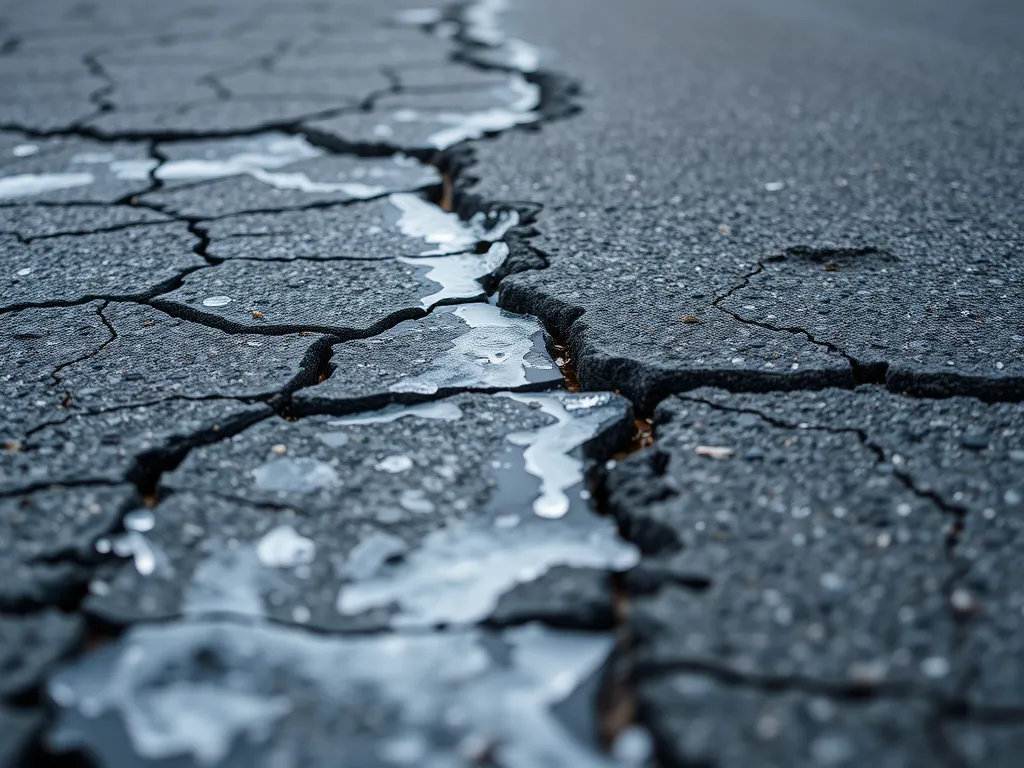
Winter brings a destructive duo: ice growth and salt corrosion. Each freeze cycle can widen cracks by 0.25 inches.
Ice Formation in Pavement Cracks
Water expands 9% when freezing. This force lifts asphalt slabs, creating frost heaves. Road crews fix 300,000+ potholes yearly in Chicago alone – most from ice damage. Air-entrained asphalt mixes reduce this risk by 30%.
While pavements adapt to local norms, shifting weather patterns bring new threats. Up next: how rising global temps and wild storms amplify these damage mechanisms.
How Climate Change Intensifies Asphalt Degradation
Shifts in global weather patterns push asphalt past design limits. Both daily wear and long-term decay speed up as climate shifts.
Increased Frequency Of Severe Weather Events
Storms now hit harder and more often. Heavy rains erode road bases 3x faster than in 1990. Flash floods lift asphalt layers, creating voids under pavement. After 2010, freeze-thaw cycles rose 18% in cold zones, widening cracks by 40% per winter.
- Hurricane-force rains wash out 15% of coastal roads yearly
- Hailstorms cause $1.2B in US asphalt damage annually
- 100-year floods now occur every 20 years, soaking pavement subgrades
Rising Global Temperatures &Amp; Pavement Performance
Asphalt softens when heat spikes. PG 64-22 binders fail at 122°F – a temp now common in Texas summers. Urban heat islands bake roads at 135°F surface temps, 15°F hotter than rural zones.
Rutting risks jump 70% for each 5°F over design specs. Phoenix roads face 100+ days/year above 100°F, needing 50% more repairs. Night temps staying high prevent asphalt from re-hardening.
These thermal stresses set the stage for deeper looks at asphalt’s heat limits. Next, we break down why temp swings hit pavements so hard.
Also See: Does Asphalt Absorb Water? Water Resistance Explained
Asphalt’s Temperature Sensitivity
Asphalt performance ties directly to ambient temps. The binder—a petroleum-based glue holding aggregates together—softens under heat and stiffens during cold. This creates two climate-linked failure modes: rutting in summer and cracking in winter.
Optimal Temperature Ranges for Asphalt Stability
PG (Performance Grade) binders specify temp thresholds for pavement stability. A PG 64-22 grade, for example, works between -22°F and 64°F. Within this range, the binder resists deformation while staying flexible enough to avoid brittleness. Exceeding the upper limit risks rutting; dropping below the lower threshold promotes thermal cracks.
Thermal Cracking Vs. Rutting Risks
Thermal cracking strikes when temps plummet below a binder’s grade. At -15°F, standard asphalt contracts, creating stress fractures. Rutting occurs above 140°F pavement temps, as traffic presses softened asphalt into grooves. Data shows each 18°F rise above design specs doubles rutting potential. Northern states report thermal cracks on 40% of roads within 2-5 years, while southern regions face 30% higher rut repair costs during heatwaves.
Balancing these extremes demands climate-specific mixes. Polymer-modified binders raise high-temp thresholds by 20-35°F, while recycled rubber additives improve cold flexibility. Next, let’s explore methods to counter temp-driven damage through material upgrades and maintenance tactics.

Proactive measures counter climate effects on asphalt durability. Tailored strategies address regional weather patterns and extreme events.
Climate-adaptive Maintenance Practices
Timely interventions prevent minor damage from escalating. Weather-driven schedules optimize repair effectiveness.
Crack Sealing Timing Based on Seasonal Conditions
Seal cracks in spring when temperatures range between 50-70°F. This allows sealants to penetrate deeply before summer heat expands pavement. Fall sealing (40-60°F) blocks winter moisture intrusion in freeze-thaw zones.
Targeted Sealcoating Approaches
Use coal-tar emulsions in wet climates for superior water resistance. Asphalt-based sealants work better in arid regions, reflecting UV rays with additives like titanium dioxide. Reapply every 2-3 years in high-sun areas versus 4-5 years in temperate zones.
Material Selection for Regional Climates
Binders and aggregates must match local climate stresses. PG (Performance-Graded) specifications ensure materials withstand site-specific temperatures.
Polymer-Modified Asphalt Binders
SBS (styrene-butadiene-styrene) polymers increase high-temperature rut resistance by 40% in hot climates. In cold regions, latex-modified binders reduce thermal cracking by maintaining flexibility below -20°F. These blends cost 15-25% more but double pavement lifespan.
Drainage System Enhancements
Effective water management prevents subsurface erosion. Key upgrades include:
- Permeable asphalt surfaces (25% void space) draining 500 inches/hour
- Slope adjustments from 2% to 5% grade in flood-prone areas
- French drains with 6-inch perforated pipes along pavement edges
These climate-specific adaptations set the stage for exploring sustainable practices that further strengthen asphalt against weather extremes.
Environmental Considerations in Asphalt Durability
Modern asphalt construction faces twin challenges: building pavements that withstand climate extremes while reducing environmental harm. Climate conditions impact asphalt durability through temperature swings, UV exposure, and water intrusion – factors intensified by shifting weather patterns.
Sustainable Practices for Climate Resilience
Recycled asphalt pavement (RAP) now constitutes 25-40% of new mixes in progressive projects. This cuts landfill waste by 95% compared to traditional methods while maintaining structural strength. Polymer-modified binders mixed with RAP create pavements that resist rutting at 122°F and cracking at -22°F.
Warm-mix asphalt technologies lower production temperatures by 50°F, slashing fuel use 30% and greenhouse gas emissions 20%. These mixes handle freeze-thaw cycles better than conventional hot-mix asphalt, reducing pothole formation rates by 18% in northern climates.
Permeable pavement systems combat precipitation impacts through 30% faster water drainage. Stone-rich subsurface bases paired with open-graded surfaces divert 4,500 gallons of stormwater hourly per acre from pavement structures. This prevents moisture damage while replenishing groundwater supplies.
Advanced sealants with 85% bio-based materials protect against UV radiation without petroleum derivatives. Field tests show these coatings slow surface oxidation by 40%, extending pavement life 7-10 years in high-sun regions.
These innovations demonstrate how climate-resilient design directly addresses the impact of weather on asphalt durability. Up next: Common questions about maintaining pavements in shifting climate conditions.

Frequently Asked Questions
How Does Weather Affect Asphalt Durability?
Weather impacts asphalt durability through temperature variations, moisture, and UV exposure. High temperatures can cause the asphalt to soften, leading to rutting, while cold temperatures may result in cracking. Additionally, rainfall can infiltrate the pavement structure, leading to erosion and structural weakening.
Does Climate Change Accelerate Pavement Deterioration?
Yes, climate change contributes to faster pavement deterioration by increasing the frequency of severe weather events. Intense storms and rising temperatures can exacerbate issues like cracking and moisture infiltration, shortening the lifespan of asphalt pavements.
Is Asphalt Performance Temperature-dependent?
Absolutely, asphalt performance is highly temperature-dependent. The binder in asphalt becomes softer in heat and stiffer in cold weather, leading to different types of failures such as rutting in high temperatures and cracking in low temperatures. Proper binder selection based on local temperature ranges is crucial for optimizing performance.
What Maintenance Strategies Are Effective for Climate-impacted Asphalt?
Effective maintenance strategies include timely crack sealing, targeted sealcoating based on local climate conditions, and regular inspections to identify and address issues early. Utilizing climate-adapted materials also helps prolong asphalt lifespan against weather-related damage.
What Are the Benefits Of Using Polymer-modified Asphalt?
Polymer-modified asphalt offers enhanced resistance to rutting at high temperatures and maintains flexibility at low temperatures, effectively reducing the risk of thermal cracking. These benefits can significantly extend the life of the pavement, particularly in regions with extreme temperature fluctuations.
How Can Drainage Improve Asphalt Durability?
Proper drainage systems are vital for asphalt durability as they prevent water accumulation and infiltration beneath the pavement. Enhancements such as permeable surfaces, sloped designs, and French drains can significantly reduce moisture-related damage, thereby extending the lifespan of the pavement.
What Role Does UV Radiation Play in Asphalt Deterioration?
UV radiation contributes to the oxidation of asphalt, leading to surface aging and brittleness. Prolonged exposure can cause the binder to lose its flexibility, resulting in raveling and cracking. Regular sealcoating can mitigate UV damage by providing a protective layer on the asphalt surface.
What Are the Cost Implications Of Climate-related Asphalt Damage?
Repairing climate-related asphalt damage can cost between $3 and $7 per square foot, depending on the severity of the damage and the repair method employed. Investing in quality materials and proper maintenance can help minimize these costs over time.
Are There Sustainable Practices to Combat Climate Effects on Asphalt?
Yes, sustainable practices such as using recycled asphalt pavement, adopting warm-mix asphalt technologies, and employing bio-based sealants can mitigate the effects of climate on asphalt. These methods not only improve asphalt durability but also reduce environmental impacts associated with asphalt production and maintenance.
Closing Thoughts
Climate significantly influences asphalt durability, leading to challenges that can affect road safety and longevity. From temperature extremes that soften asphalt binders to moisture infiltration causing subsurface damage, understanding these factors is vital. The ongoing impacts of climate change only intensify these issues, highlighting the need for proactive maintenance and smart material choices.
Implementing climate-adaptive practices, selecting appropriate materials, and enhancing drainage can mitigate damage and extend the lifespan of asphalt. These strategies ensure roads withstand the rigors of weather while promoting sustainability.
For more information on asphalt durability and maintenance strategies, visit Asphalt Calculator USA.
Additional Resources for You:
- The Asphalt Institute. (2007). MS-4: The Asphalt Handbook. Lexington, KY: Asphalt Institute.
- Federal Highway Administration
- Contribution of climate change and traffic load on asphalt pavement carbon emissions – ScienceDirect
- Countering climate change with cool pavements | MIT News | Massachusetts Institute of Technology
- Climate change impacts on asphalt road pavement construction and maintenance: An economic life cycle assessment of adaptation measures in the State of Virginia, United States – Qiao – 2020 – Journal of Industrial Ecology – Wiley Online Library