How to Remove Weeds From Asphalt Cracks: Expert Strategies
Published on: February 10, 2026 | Last Updated: April 14, 2025
Written By: George Voss
To remove weeds from asphalt cracks, use manual extraction, natural solutions like vinegar spray, or commercial herbicides paired with preventive sealcoating. Target roots with weeding tools, kill plants using boiling water or hydrogen peroxide (3% concentration), and block regrowth with sand fillers or asphalt crack sealants costing $0.15-$0.35 per linear foot. Immediate action stops root spread and pavement damage.
This guide covers six proven weed removal methods and four long-term prevention strategies. Learn step-by-step techniques for manual root extraction, safe herbicide use, and pressure washing (1,500-3,000 PSI recommended). Discover how vinegar-salt solutions kill 80-90% of weeds within 48 hours and why baking soda prevents moss regrowth. We’ll also explain when to use professional-grade treatments like glyphosate herbicides or steam cleaning at 175°F+.
Contents
Understanding Weed Growth in Asphalt Cracks
Asphalt cracks act like open doors for weeds. They thrive in these gaps, using them to sink roots and spread. Learn why this happens and how it harms your pavement.
Why Asphalt Cracks Attract Weeds
Cracks collect dirt, leaves, and rain. These bits form a thin soil layer where weed seeds sprout. Sun heats the asphalt, speeding up growth. Even tiny gaps (1/8 inch wide) let weeds like crabgrass or clover take root. Wind and feet drop seeds into cracks, starting new plants fast.
How Weeds Damage Asphalt Surfaces
Weed roots push cracks wider – a 1/4-inch gap can triple in size in one season. Trapped water freezes in cold, breaking asphalt chunks loose. Plant acids eat at bitumen (asphalt binder), weakening the top layer. Left unchecked, weeds turn small flaws into potholes needing $3-$5 per sq.ft. to fix.
Now that you see the risks, let’s explore proven ways to clear weeds and save your asphalt.
Effective Methods to Remove Weeds From Asphalt Cracks
Targeted strategies eliminate weeds while protecting asphalt integrity. Choose methods based on weed type, crack size, and environmental impact.
Manual Removal Techniques
Physical extraction works best for small-scale infestations. Wear gloves and work when soil is moist for easier root removal.
Using Weeding Tools for Deep Root Extraction
Hook-shaped dandelion diggers or crack weeder tools pry weeds from narrow gaps. Insert the tool 2-3″ deep to lift entire root systems. For taproots like dandelions, twist while pulling to prevent regrowth.
Scraping Debris from Cracks
Clear organic matter with stiff-bristle brushes or putty knives after weeding. Debris under 1/8″ thick can retain moisture for new weed seeds.
Natural &Amp; Homemade Solutions
Non-toxic options minimize chemical runoff. Most require 2-3 applications during dry weather.
Boiling Water Treatment
Pour water heated to 212°F directly into cracks. Effective for 90% of annual weeds but less reliable on perennials like crabgrass.
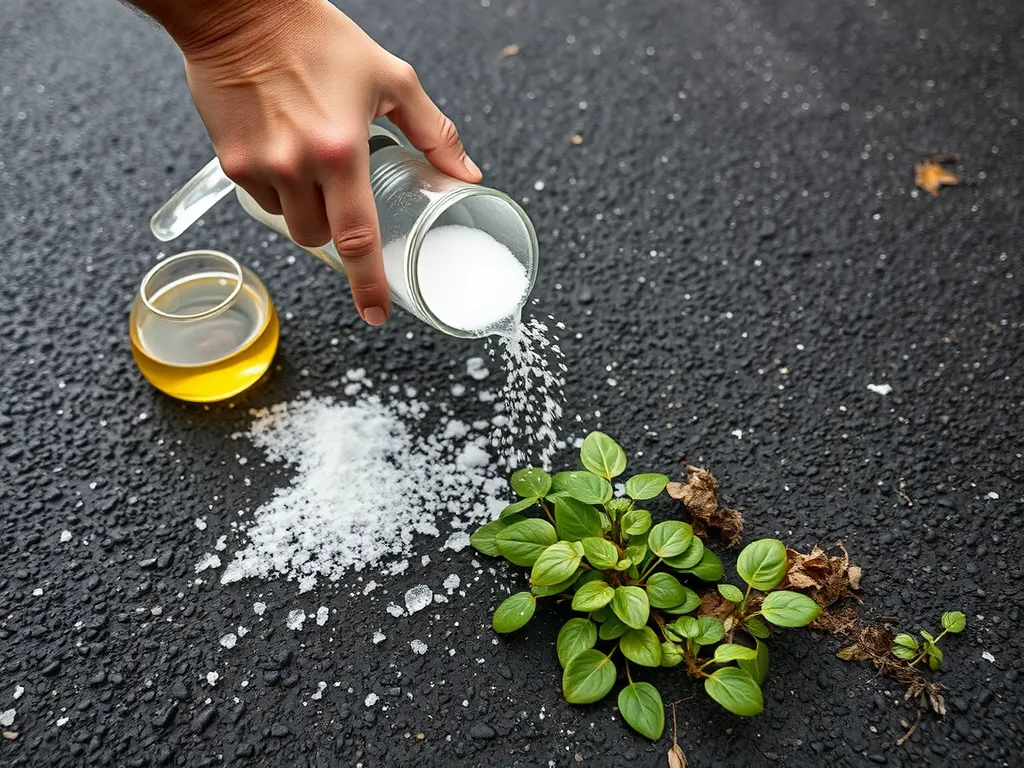
Vinegar and Salt Weed Killer Mix
Combine 1 gallon white vinegar (5% acidity), 1 cup salt, and 1 tsp dish soap. Spray into cracks—avoid surrounding vegetation. Salt content may temporarily increase asphalt porosity.
Baking Soda Application
Sprinkle sodium bicarbonate densely into cracks. Alters soil pH to prevent growth for 3-4 months. Rinse residue after 48 hours to protect asphalt binder.
Hydrogen Peroxide Spray
Use 3% solution undiluted. Oxidizes plant cells on contact. Reapply weekly for stubborn roots. Safe for pets after 1-hour drying time.
Commercial Herbicides for Asphalt
Chemical treatments suit large areas with dense weeds. Always verify product compatibility with bituminous surfaces.
Non-Selective Herbicides for Tough Weeds
Glyphosate-based formulas (18-23% concentration) kill all vegetation. Apply with crack-specific nozzles to limit overspray. Wait 48 hours before rain.
Eco-Friendly Chemical Alternatives
Citrus oil (d-limonene) or iron-based herbicides (FeHEDTA) target weeds without harming asphalt. Expect slower results—7-10 days for full effect.
Mechanical Solutions
Equipment-based methods clean cracks while removing weed remnants. Ideal for driveways with extensive damage.
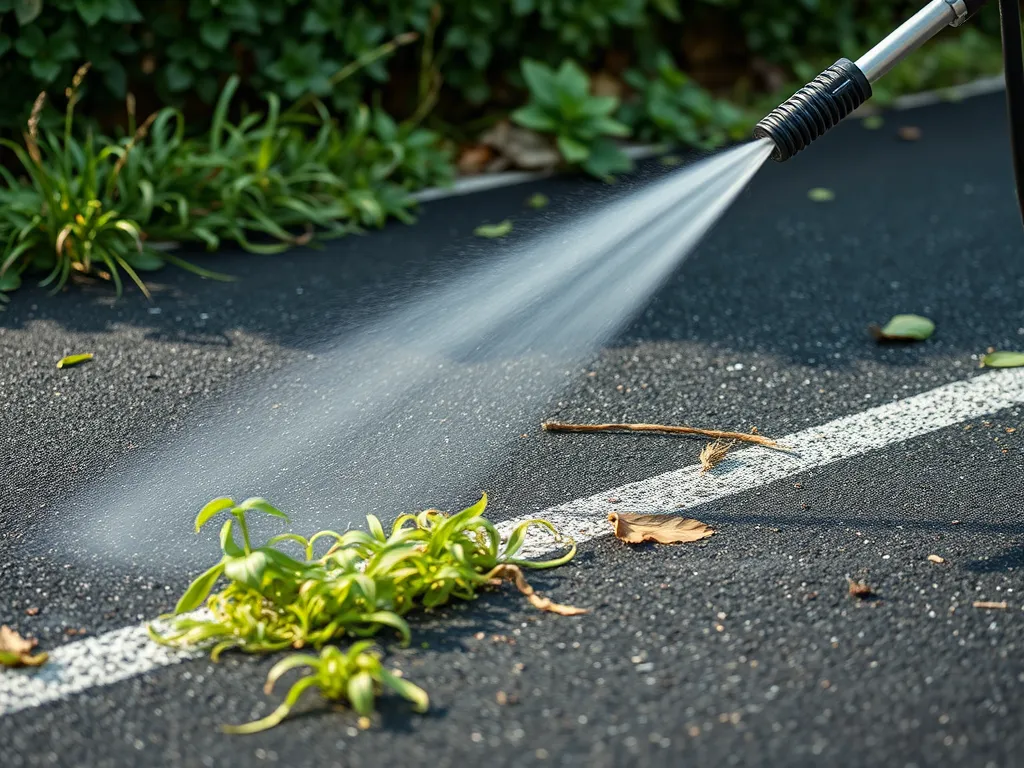
High-Pressure Washing for Driveway Cracks
Use 1,500-3,000 PSI washers with 15° nozzles. Maintain 6-8″ distance to prevent aggregate displacement. Removes 97% of surface weeds and 60% of roots.
Heat Treatment with Steam Cleaners
Industrial steam cleaners deliver 284°F+ heat to destroy weed cells. Penetrates 1/4″ into cracks. No water runoff versus pressure washing.
With weeds removed, the next challenge is stopping their return. Proactive measures ensure lasting results for your asphalt surfaces.
Preventing Weeds in Asphalt Cracks Long-term
Stopping weeds from returning requires proactive measures. These strategies protect asphalt integrity while minimizing future maintenance.
Asphalt Crack Sealing &Amp; Sealcoating
Sealcoating creates a protective layer against moisture and organic debris. Crack sealing uses specialized materials to fill gaps before weeds take root. Combined, they reduce weed growth by 60-80% in treated areas.
Choosing the Right Asphalt Sealant
Select sealants based on climate and crack width:
| Sealant Type | Best For | Cost per Sq.Ft. |
|---|---|---|
| Rubberized Crack Filler | Cracks >1/2″ | $0.25-$0.40 |
| Polymer-Modified Sealant | High-traffic areas | $0.30-$0.50 |
| Coal-Tar Emulsion | Extreme weather | $0.20-$0.35 |
Regular Maintenance Practices
Consistent upkeep prevents conditions that let weeds thrive in pavement cracks.
Sweeping to Prevent Dirt Buildup
Broom asphalt weekly with stiff-bristle push brooms. Remove organic debris within 48 hours of accumulation. This eliminates seed germination sites.
Immediate Crack Repair Strategies
Fill new cracks within 30 days using cold-pour asphalt repair compounds. For cracks under 1/4″, apply asphalt emulsion slurry ($12-$18 per gallon coverage).
Physical Barriers
Block weed growth through material-based solutions.
Using Sand or Gravel to Fill Gaps
Pack coarse sand (ASTM C33 grade) into cracks up to 1/8″ wide. For larger gaps, use angular gravel (3/8″ aggregate size). These materials limit sunlight penetration by 85%.
Installing Mesh Underlayers (For New Asphalt)
Geotextile grids (6 oz/sq.yd density) placed beneath fresh asphalt layers prevent upward weed growth. Reduces crack formation by 40% compared to standard installations.
While these methods significantly reduce weed recurrence, their effectiveness depends on environmental factors. Let’s examine eco-friendly approaches that balance weed control with environmental safety.
Also See: How to Calculate the Amount Of Asphalt Needed
Environmental Considerations for Asphalt Weed Control
Balancing effective weed removal with environmental protection requires smart choices. Harsh chemicals can harm nearby plants, contaminate groundwater, or disrupt soil ecosystems. Let’s explore safer approaches for getting rid of weeds in asphalt cracks without sacrificing sustainability.
Safe Disposal Of Chemical Residues
When using herbicides like glyphosate-based blacktop weed killers, never rinse equipment or excess product into storm drains. The EPA requires unused chemicals to be disposed at approved hazardous waste facilities. For small amounts:
- Mix leftover herbicide with cat litter to solidify it
- Place sealed containers in regular trash only if local regulations allow
- Rinse sprayers over soil away from waterways
Proper disposal prevents toxins from entering watersheds – critical for areas near gardens or water sources.
Prioritizing Natural Solutions for Eco-friendliness
Vinegar (20% acetic acid) kills weeds in driveway cracks for 2-3 months without soil contamination. Boiling water penetrates 3-4 inches into cracks, scalding roots instantly. For recurring growth:
- Combine 1 cup salt with 1 gallon vinegar for a potent asphalt driveway weed killer
- Apply baking soda directly to cracks – it dehydrates weeds in 48 hours
- Use steam cleaners at 200°F+ to destroy plant cells thermally
These methods cost $0.10-$0.50 per square foot versus $1.50+ for chemical treatments, making them budget and eco-friendly.
Ready to tackle stubborn cases? Up next: Answers to your top questions about removing weeds from asphalt cracks for good.
FAQs: Removing Weeds From Asphalt Cracks
How Do You Get Weeds Out Of Asphalt Cracks Permanently?
To achieve permanent removal, make sure to extract the entire root system, use effective weed killers, and apply preventative measures such as sealing cracks and regular maintenance. Consistent monitoring for new weeds can also help keep them at bay.
Does Vinegar Kill Weeds in Driveway Cracks Effectively?
Yes, vinegar can effectively kill weeds in driveway cracks, especially if used in a high-concentration form (like 20% acidity). It should be used carefully to avoid affecting surrounding plants.
What Tools Work Best for Removing Weeds From Asphalt?
Using specialized weeding tools like dandelion diggers, crack weeders, and stiff-bristle brushes is highly effective for removing weeds from asphalt cracks. These tools help access deep roots and clear debris efficiently.
Can Baking Soda Damage Asphalt When Killing Weeds?
No, baking soda is generally safe for asphalt. It can alter the soil pH to prevent weed growth while causing no harm to the asphalt surface when applied properly and rinsed after 48 hours.
Is Pressure Washing Safe for Asphalt Crack Weed Removal?
Yes, pressure washing is safe for removing weeds from asphalt, provided that the pressure is maintained between 1,500 to 3,000 PSI. However, it’s important to keep a safe distance to prevent damage to the asphalt surface.
Final Thoughts
Removing weeds from asphalt cracks is crucial for maintaining the integrity and appearance of your surfaces. Manual removal techniques can be effective for small infestations, while natural solutions like vinegar and boiling water provide eco-friendly alternatives. For persistent weeds, commercial herbicides or mechanical methods such as pressure washing may deliver faster results.
Implementing preventive measures, such as sealing cracks and regular maintenance, will help keep your asphalt weed-free in the long run. Maintaining your asphalt not only enhances its lifespan but also improves overall aesthetics and functionality.
For more information on how to care for your asphalt surfaces, check out Asphalt Calculator USA.
Useful References for You:
- ASTM International (Asphalt & Pavement Standards)
- How to Remove Persistent Weeds in Driveway, Patio, and Sidewalk Cracks | Eden Lawn Care and Snow Removal
- How To Rid Your Asphalt Of Unwanted Guests: Weeds! – Quality Asphalt Green Bay Blog
- Weed-Free Driveways and Sidewalks: The Ultimate Solution! – YouTube
- Getting Rid of Weeds, Grass in Driveway Cracks | Wikilawn