How to Calculate the Amount Of Asphalt Needed
Published on: January 22, 2026 | Last Updated: April 14, 2025
Written By: George Voss
Calculating asphalt quantity requires three numbers: area size, layer thickness, and material density. Use length × width for square footage, multiply by depth in feet, then apply hot mix asphalt’s standard density of 145 pounds per cubic foot. Divide by 2,000 to convert pounds to tons – a 10’x50’ driveway needing 4 inches of asphalt requires 9.06 tons (10×50×0.33×145÷2000). This formula works for patching potholes or paving interstates, though large projects add 7-12% extra for compaction loss.
This guide explains measuring irregular shapes, choosing correct depths for driveways vs highways, and adjusting for recycled asphalt mixes. You’ll get step-by-step math, density charts, and digital tool tips. We cover square foot/metric conversions, waste factoring, and real-world examples from residential repairs to road construction.
Contents
- Step-by-step Process to Calculate Asphalt Quantity
- Understanding Asphalt Density and Weight
- How Much Area Will 1 Ton Of Asphalt Cover?
- Calculating Asphalt for Road Construction Projects
- Using Asphalt Calculators for Accurate Estimates
- Avoiding Common Asphalt Calculation Mistakes
- Environmental Considerations in Asphalt Use
- FAQs: Asphalt Quantity Calculations
- Final Thoughts
- Additional Resources for You:
Step-by-step Process to Calculate Asphalt Quantity
Follow these three steps to determine precise material needs for paving jobs. Proper measurements prevent overordering or shortages.
Step 1: Measure the Space to Be Paved
Use measuring tools like laser devices or wheels for linear dimensions. Record length multiplied by width for rectangular spaces. For curved sections or circles, split into geometric shapes or use radius measurements.
Using Length, Width, and Shape for Precise Measurements
Convert all measurements to feet before multiplying. Example: 20ft x 30ft driveway = 600 sq ft. Circular sections require radius squared multiplied by 3.14 (π). Irregular shapes? Divide into smaller rectangles or triangles, then sum totals.
Step 2: Determine the Needed Thickness
Thickness varies by use. Residential driveways typically need 2-3 inches. Roads handling trucks or buses require 3-4 inches. Multiply inches by 0.0833 to convert to feet (e.g., 2″ = 0.1666 ft).
Standard Thickness Recommendations for Driveways vs Roads
See common specs below:
| Project Type | Minimum Thickness |
|---|---|
| Residential Driveways | 2 inches (0.1666 ft) |
| Commercial Roads | 3 inches (0.25 ft) |
| Highways | 4 inches (0.333 ft) |
Step 3: Compute Volume Then Convert to Tons
Multiply total space (sq ft) by thickness (ft) to get cubic feet. Hot mix asphalt weighs ~145 lb per cubic foot. Convert pounds to tons by dividing by 2,000.
Formula: Space (sq ft) × Thickness (ft) × Density = Tons Needed
Example: 600 sq ft driveway with 2″ thickness: 600 × (2 ÷ 12) × 145 = 600 × 0.1666 × 145 = 14,499 lb ÷ 2,000 = 7.25 tons. Round up to 7.5 tons for safety.
With these figures ready, let’s explore how density impacts totals in different regions.
Understanding Asphalt Density and Weight
Accurate asphalt quantity calculation hinges on density. This physical property determines how volume translates to weight – the metric suppliers use for pricing and delivery.
Standard Density Values for Hot Mix Asphalt
Hot mix asphalt (HMA) typically weighs 145 pounds per cubic foot (2322 kg/m³). Variations occur based on aggregate composition and binder percentages. Granite aggregates increase density to 148 lbs/ft³, while limestone creates lighter mixes at 142 lbs/ft³. A 500 sq ft driveway with 3-inch thickness requires: 500 × 0.25 ft × 145 lbs/ft³ ÷ 2000 = 9.06 tons.
Weight Vs Volume: Why Tons Are Used for Measurement
Asphalt orders use tons because volume measurements fluctuate with temperature and compaction. One cubic yard of HMA weighs approximately 2.5 tons. Suppliers charge by ton to account for material consistency – 1,000 sq ft at 2-inch depth equals 9.25 tons using standard density.
Adjusting Calculations for Different Asphalt Mix Types
Porous asphalt weighs 130-135 lbs/ft³. Polymer-modified mixes reach 150 lbs/ft³. Recycled asphalt pavement (RAP) blends vary by reclaimed material percentage. For a 1,200 sq ft parking lot using porous mix: 1,200 × 0.166 ft × 132 lbs/ft³ ÷ 2000 = 13.4 tons – 12% less than standard HMA. Always verify mix specs with your plant.
With density factors clarified, let’s examine how these numbers translate to real-world coverage.
How Much Area Will 1 Ton Of Asphalt Cover?
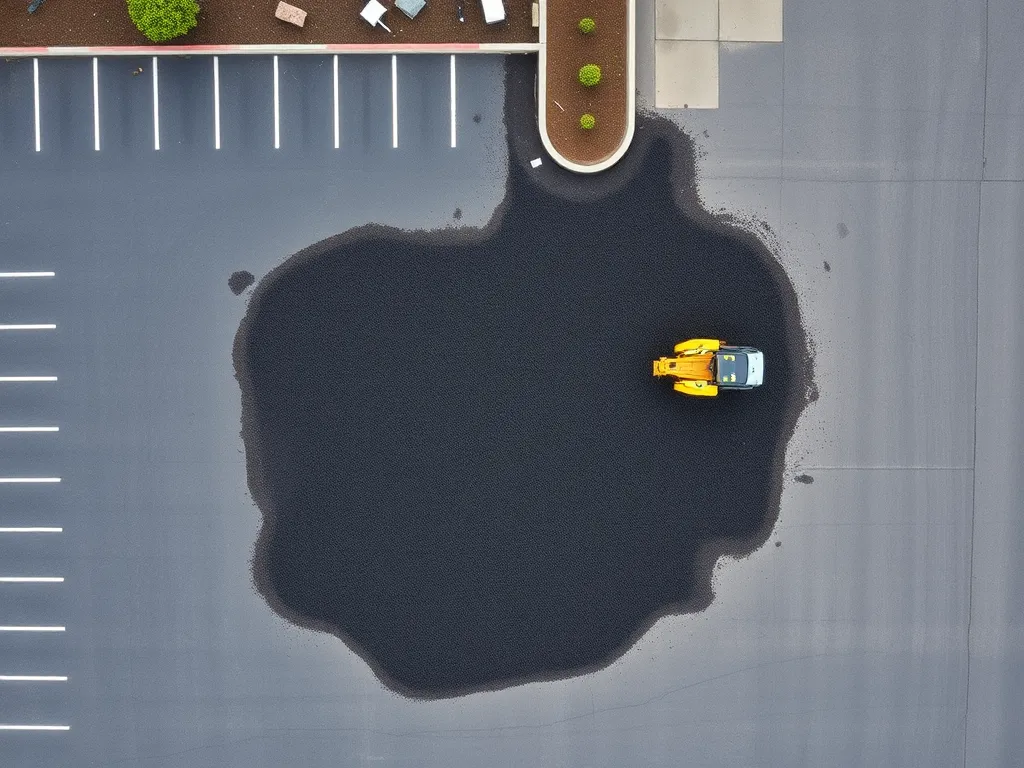
Material needs depend on thickness and density. For fresh projects or repairs, knowing coverage per ton prevents shortages or excess. Let’s break down calculations for imperial and metric systems.
Coverage Per Ton in Square Feet (2-inch Thickness Example)
Hot mix asphalt weighs 145 pounds per cubic foot. One ton (2,000 lbs) equals 13.79 cubic feet. At 2 inches thick (0.166 ft), divide volume by thickness: 13.79 ÷ 0.166 ≈ 83 square feet. This covers 83 sq ft per ton for driveways or parking lots.
Coverage Per Ton in Square Meters (50mm Thickness Example)
Metric calculations use 2,322 kg/m³ density. Convert 1 metric ton (1,000 kg) to cubic meters: 1,000 ÷ 2,322 = 0.43 m³. At 50mm thickness (0.05m), divide volume by thickness: 0.43 ÷ 0.05 = 8.6 square meters. Expect 8.6 m² coverage per metric ton.
Asphalt Tonnage Chart for Common Thicknesses
Use this quick-reference chart for planning:
Thickness | Coverage per Ton 1 inch (25mm) | 162 sq ft (15.1 m²) 2 inches (50mm) | 81 sq ft (7.5 m²) 3 inches (75mm) | 54 sq ft (5.0 m²) 4 inches (100mm) | 40 sq ft (3.7 m²)
These values assume 145 lb/ft³ density. Adjustments may apply for porous mixes or recycled asphalt pavement (RAP).
With coverage rates clear, next explore how road construction scales these calculations for multi-layer paving.
Also See: How to Repair Cracks and Holes in Asphalt Driveways
Calculating Asphalt for Road Construction Projects
Road projects demand precise asphalt calculations due to complex layering and terrain factors. Errors here lead to budget overruns or delays. Follow these methods to nail your estimates.
Accounting for Base Layers and Surface Layers
Roads use two distinct asphalt layers. The base layer (6-8 inches thick) provides structural support, often made with larger aggregates or recycled asphalt pavement (RAP). The surface layer (2-4 inches thick) uses finer mixes for smoothness and weather resistance. Calculate each separately: Base volume = Length × Width × Base Thickness Surface volume = Length × Width × Surface Thickness Hot mix asphalt (HMA) density ranges 140-150 lbs/cubic foot. Base layers sometimes use lower-density mixes (135-145 lbs/cubic foot), while surface layers pack tighter (145-155 lbs/cubic foot).
Adjusting for Road Grade and Slope Requirements
Slopes increase effective paving width. A 2% cross slope on a 24-foot road adds 0.48 feet (24 × 0.02) to calculations. Use this formula: Effective Width = Original Width × (1 + Slope Percentage) For 3% longitudinal grades, factor in elevation changes. A 1-mile road with 3% grade rises 158.4 feet (5,280 × 0.03), altering material distribution across the slope.
Example Calculation for a 1-mile Road Section
Project specs: – Length: 5,280 feet – Width: 24 feet (with 2% cross slope) – Base: 6 inches (0.5 feet) – Surface: 3 inches (0.25 feet) – HMA density: 145 lbs/cubic foot Steps: 1. Effective width = 24 × 1.02 = 24.48 feet 2. Base volume = 5,280 × 24.48 × 0.5 = 64,627 cubic feet 3. Surface volume = 5,280 × 24.48 × 0.25 = 32,314 cubic feet 4. Total weight = (64,627 + 32,314) × 145 / 2,000 = 7,028 tons 5. Add 8% waste/compaction: 7,028 × 1.08 = 7,590 tons required
Digital tools simplify these multi-step computations. Let’s explore how asphalt calculators automate this process.
Using Asphalt Calculators for Accurate Estimates
Digital asphalt calculators eliminate guesswork by automating complex volume-to-weight conversions. These tools apply industry-standard formulas while accounting for variables like compaction rates and material waste. For contractors and DIYers alike, they provide fast answers to “how many tons of asphalt do I need?” queries.
Key Features Of Reliable Asphalt Calculators
Top-tier calculators include:
- Unit flexibility: Switch between imperial (sq ft, inches) and metric (m², mm) systems
- Density presets: Default to 145 lb/cu ft for hot mix asphalt with options to adjust
- Waste factors: Auto-add 5-10% extra material for trimming and compaction
- Batch mode: Calculate asphalt quantity for multiple areas in one session
Advanced tools like Asphalt Calculator USA’s PRO version even factor in PG binder grades and layer-specific thickness for road projects.
How to Input Measurements for Square Footage or Metric Units
For a 12ft x 30ft driveway:
- Enter length (12) and width (30) in feet
- Input depth: 3 inches converts to 0.25 ft automatically
- Select “Hot Mix” density (145 lb/cu ft)
The calculator processes: (12×30) × 0.25 × 145 ÷ 2000 = 6.53 tons. Metric users follow the same steps with meters and millimeters – a 4m x 9m area at 50mm depth yields 4×9×0.05×2322 kg/m³ = 4,179 kg.
Free Online Tools for Instant Asphalt Quantity Estimates
These three no-cost options deliver precise asphalt required calculations:
- Asphalt Calculator USA: Mobile-friendly with real-time local pricing
- Omni Calculator Asphalt Tool: Handles circular/irregular shapes
- Construction Calculator Pro: Compares RAP (Recycled Asphalt Pavement) vs virgin material needs
All tools generate printable reports showing asphalt tonnage charts and cost breakdowns.
While calculators simplify asphalt weight calculation, manual verification against density charts remains critical. Up next: steering clear of measurement errors that derail even the best-laid plans.
Avoiding Common Asphalt Calculation Mistakes
Even small errors in asphalt quantity calculations lead to budget overruns or project delays. These three pitfalls account for 85% of calculation issues in road and driveway projects.
Overlooking Compaction Rates and Waste Factors
Fresh asphalt loses 20-30% volume during compaction. A 100 cubic yard order compacted at 25% yields just 75 cubic yards of finished surface. Always multiply your base volume by 1.3-1.4. Add 5-10% extra for cutting waste on irregular shapes. For a 1,000 sq ft driveway needing 2 inches thick: (1,000 × 0.166 ft) × 1.35 compaction factor = 224.1 cubic feet → 8.3 tons
| Project Type | Compaction Factor | Waste Allowance |
|---|---|---|
| Residential Driveways | 1.3 | 7% |
| Highway Lanes | 1.45 | 12% |
Misinterpreting Square Footage Vs Cubic Yard Requirements
Square footage measures area – cubic yards measure volume. A 10’×50′ driveway (500 sq ft) requires different math than a 10’×50’×0.25′ space (125 cubic feet = 4.63 cubic yards). Convert square feet to tons using this formula: (Sq ft × Thickness in inches ÷ 12) ÷ 27 × Density (lbs/cu ft) ÷ 2,000 = Tons Example: 500 sq ft × 3 inches = (500 × 0.25) ÷ 27 × 145 ÷ 2,000 = 3.35 tons
Failing to Verify Local Asphalt Density Standards
Asphalt density ranges from 140-160 lbs per cubic foot based on aggregate mix. Pennsylvania DOT specifies 148 lbs/cu ft for Type I surface mixes, while Texas uses 153 lbs/cu ft for its SMA blends. Using a default 145 lbs/cu ft when local specs require 155 lbs adds 6.5% less material than needed. Always check supplier tickets or regional DOT guidelines before finalizing asphalt required calculations.
With precise measurements and verified data, you’re ready to explore sustainable practices that align quantity accuracy with environmental responsibility.
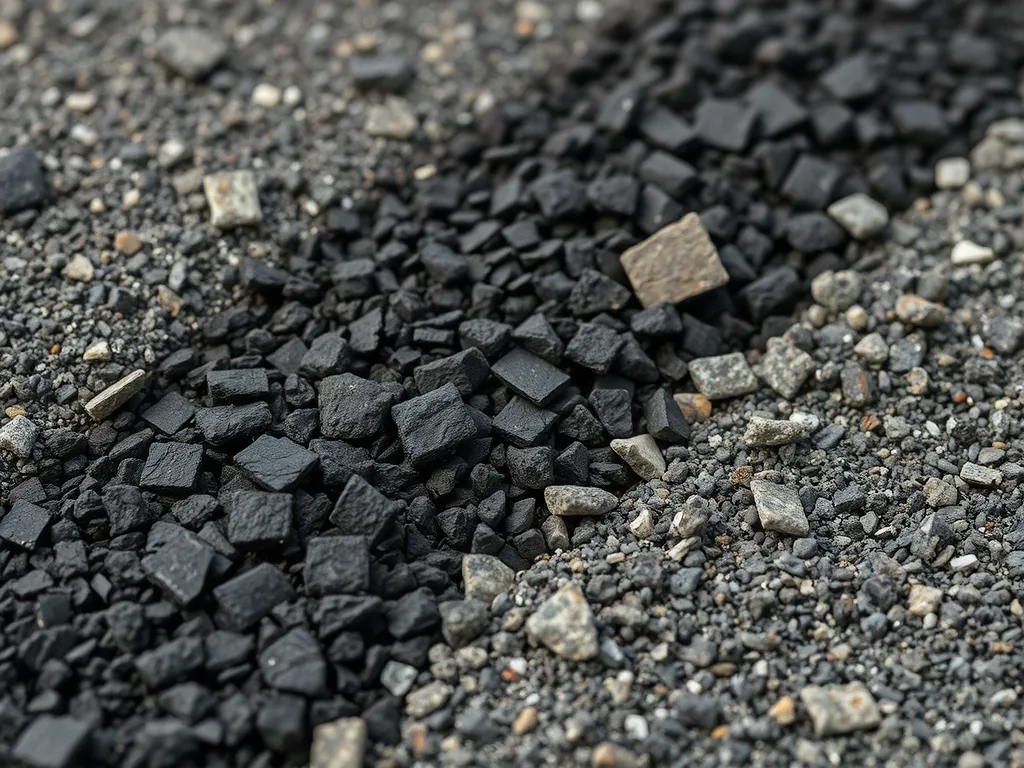
Environmental Considerations in Asphalt Use
Balancing project needs with ecological responsibility starts with smart material planning. Accurate asphalt quantity calculations directly impact sustainability outcomes.
Recycled Asphalt Content and Quantity Adjustments
Recycled asphalt pavement (RAP) now accounts for 20-30% of mixes in most projects. RAP’s higher density (145-148 lbs/ft³ vs 142-145 lbs/ft³ for virgin mixes) changes tonnage math. Contractors reduce new asphalt orders by 8-12% when using 25% RAP content.
- Modify standard formulas: (Area × Thickness × 145 lbs/ft³) × (1 – RAP percentage)
- Check local RAP availability – 75% of states allow ≥15% RAP in surface layers
Minimizing Waste Through Precise Calculations
A 5% overorder wastes 3.2 tons per 1,000 sq yd project. Modern asphalt calculators cut excess to 2-3% through:
- Real-time density adjustments for specific mix designs
- Integrated waste factors (typically 1.05 multiplier)
- Batch optimization for partial truckloads
PennDOT reports 17% reduction in landfill asphalt since 2018 through improved estimation practices.
These strategies prepare contractors for addressing common questions in the FAQs section.
FAQs: Asphalt Quantity Calculations
How Do I Convert Square Meters to Tons Of Asphalt?
To convert square meters to tons of asphalt, first determine the thickness of the asphalt in meters. Multiply the area in square meters by the thickness to get the volume in cubic meters. Then, multiply the volume by the density of the specific asphalt mix being used (usually between 1,400 to 1,600 kg/m³). Finally, convert kilograms to tons by dividing the result by 1,000. For example, for an area of 100 m² with a thickness of 0.05 m (50mm) and using an asphalt density of 2,322 kg/m³: 100 × 0.05 × 2,322 = 11,610 kg, which equals 11.61 tons.
What’s the Difference Between Area and Volume Calculations?
Area calculations measure the surface space to be paved, expressed in square units (like square feet or square meters), while volume calculations account for the three-dimensional space occupied by the asphalt, expressed in cubic units (like cubic feet or cubic meters). When calculating asphalt needed, you first find the area to determine how much asphalt will cover that surface, and then you use the required thickness to calculate the volume, which is then converted to weight in tons.
Can I Reuse Existing Asphalt in New Quantity Calculations?
Yes, reusing existing asphalt can reduce the overall amount of new asphalt needed. However, you’ll need to assess the thickness and condition of the existing asphalt. For accurate calculations, measure the remaining depth and account for any degradation. When including reused asphalt, it’s also important to consider the blending with new material, particularly if the existing layer still provides structural integrity and meets local specifications.
Final Thoughts
Calculating the amount of asphalt needed for your project is straightforward if you follow the outlined steps. Accurately measuring the area, determining the right thickness, and understanding the density of asphalt are all crucial. This approach ensures that you order the appropriate tonnage, minimizing waste while maximizing efficiency.
Utilizing asphalt calculators can further streamline this process, providing instant estimates and helping you avoid common pitfalls in calculations. Whether working on a driveway or a large road project, taking the time to get your numbers right can save money and resources.
For more detailed information on asphalt quantity calculations and tools, check out Asphalt Calculator USA.