
How to Calculate Asphalt Tonnage
Published on: January 20, 2026 | Last Updated: April 14, 2025
Written By: George Voss
Calculating asphalt tonnage determines how much material you need for paving projects using three key factors: area size, layer thickness, and mix density. Precise measurements prevent overordering (saving up to 15% on costs) or underordering (avoiding project delays). The formula requires converting inches or centimeters to feet/meters, multiplying by density (typically 145 lb/ft³ or 2,300 kg/m³), and adjusting for compaction rates.
This guide breaks down the standard calculation formula, coverage per ton for driveways or parking lots, and step-by-step methods for square feet or cubic yards. Learn how Hot Mix Asphalt (HMA) differs from Cold Mix in tonnage needs, why compaction adds 5-10% to estimates, and how digital tools simplify conversions. Get exact numbers for your project while reducing waste and environmental impact.
Contents
- Understanding Asphalt Density and Core Formula
- How Much Area Does 1 Ton Of Asphalt Cover?
- Step-by-step Asphalt Tonnage Calculation
- Using Asphalt Tonnage Calculators
- Types Of Asphalt Mixtures and Their Impact on Tonnage
- Best Practices for Accurate Calculations
- Asphalt Tonnage Calculation FAQs
- Closing Thoughts
- Useful References for You:
Understanding Asphalt Density and Core Formula
Asphalt tonnage calculations pivot on material density. This physical property dictates how much mass fits into a given volume. Industry standards use 145 lb/ft³ (2322 kg/m³) for compacted hot mix asphalt. Actual density varies with mix type and aggregate size, so always confirm specifications with your supplier.
What is The Formula for Calculating Asphalt Tonnage?
The asphalt tonnage formula ties together volume and density. Units must match—mixed measurements cause errors. Calculations differ for US customary and metric systems.
Standard Asphalt Tonnage Formula
For US projects using feet and pounds:
- Tonnage = (Length (ft) × Width (ft) × Depth (in) × 145 lb/ft³) ÷ 2000
- Divide by 2000 to convert pounds to tons
- Example: A 20ft × 30ft driveway at 3″ depth requires (20×30×3×145)/2000 = 13.05 tons
Metric Formula for Asphalt Tonnage
For meter-based calculations:
- Tonnage = Length (m) × Width (m) × Thickness (m) × 2322 kg/m³
- Divide by 1000 to get metric tons
- Example: A 10m × 5m path at 0.075m thickness needs 10×5×0.075×2322/1000 = 8.7 tons
Having your math right is half the battle. But how do these numers translate to real-world coverage? Let’s see how much ground one ton can cover based on typical installs.
How Much Area Does 1 Ton Of Asphalt Cover?
Know how space links to weight. Use math to find out what 1 ton can pave. This helps plan jobs and cut waste.
Coverage Per Square Foot/inch
1 ton (2,000 lbs) covers 6.9 sq.ft at 2″ thick. Why? Asphalt weighs 145 lbs per cubic foot. Use this rule: area = weight / (density × thickness). For 1″ thick, 2,000 / (145 × 1) = 13.8 sq.ft. Thicker layers mean less space covered. For 3″ thick: 2,000 / (145 × 3) = 4.6 sq.ft.
Coverage Per Square Yard
1 ton covers 0.77 sq.yd at 2″ thick. How? 1 sq.yd = 9 sq.ft. Take the 6.9 sq.ft from above and divide by 9. Or use yard math: 2,000 lbs / (145 lbs/cu.ft × 2″) = 6.9 sq.ft → 0.77 sq.yd. Note: Mix type changes density. Hot mix (140-150 lbs/cu.ft) may shift these numbers by ±5%.
Next, learn step-by-step ways to turn your site’s size into tons needed.
Step-by-step Asphalt Tonnage Calculation
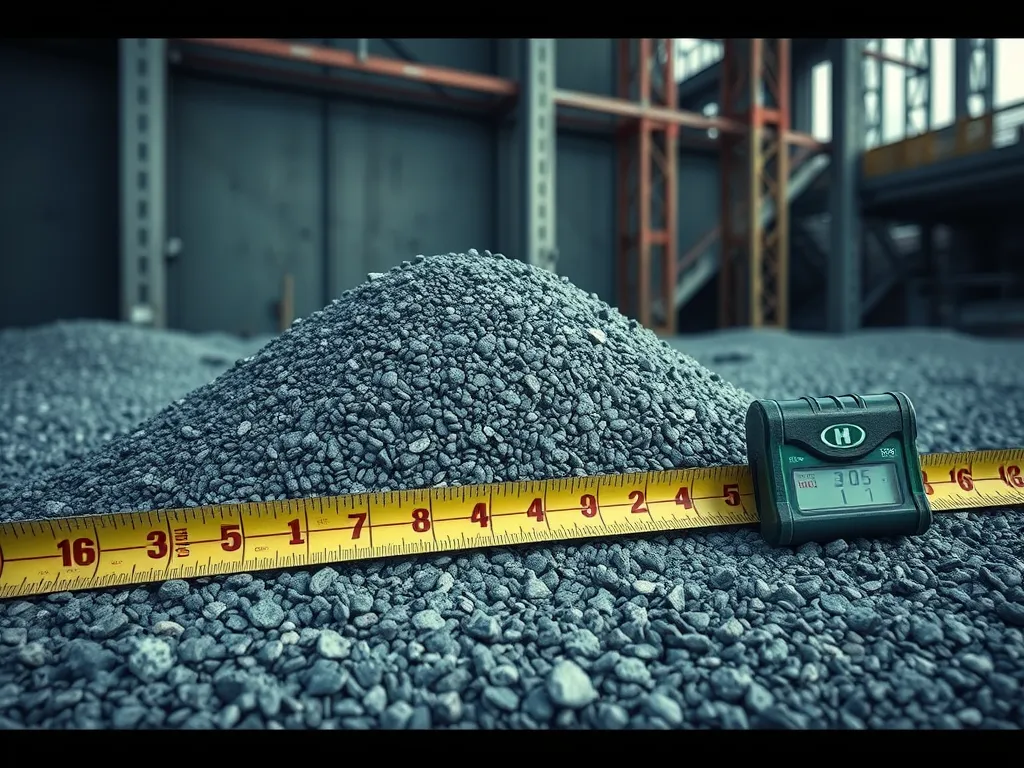
Two methods dominate when figuring out how to measure asphalt tonnage: starting with square feet or cubic yards. Both rely on precise measurements paired with industry-standard density values. Let’s break down each process.
Calculating From Square Feet
Projects like driveways or parking lots often use square footage for estimating. Follow these three steps to convert linear dimensions into tons.
Step 1: Measure Surface Area
Multiply length by width to get square footage. For irregular shapes, split into rectangles. Example: A 50 ft x 20 ft driveway equals 1,000 sq ft.
Step 2: Determine Thickness
Convert thickness from inches to feet by dividing by 12. Four inches becomes 0.33 ft. Multiply this by square footage: 1,000 sq ft x 0.33 ft = 330 cubic ft.
Step 3: Apply Density and Convert to Tons
Multiply cubic feet by 145 lbs/cubic ft (standard density). 330 x 145 = 47,850 lbs. Divide by 2,000 to get tons: 47,850 / 2,000 = 23.9 tons. Round up to 24 tons for safety margins.
Calculating From Cubic Yards
For projects using pre-measured cubic yards – like bulk deliveries – skip volume conversions. Use this streamlined method.
Converting Cubic Yards to Tons
Multiply cubic yards by 2.025 (compacted HMA density). Ten cubic yards becomes 10 x 2.025 = 20.25 tons. Verify supplier density specs – warm mix might drop to 1.98 tons/cubic yard.
Mastered manual computations? Digital tools simplify the process further. Next, we’ll explore how asphalt tonnage calculators reduce errors while handling complex shapes.
Also See: Impact Of Temperature on Asphalt Application
Using Asphalt Tonnage Calculators
Online tools speed up asphalt tonnage math. They cut errors and handle complex unit swaps. Pick calculators built for road work or paving jobs.
Key Features Of Reliable Asphalt Calculators
Top tools share core traits:
- Input fields for length, width, depth
- Auto-swap between feet, yards, meters
- Mix type presets (HMA, WMA, CMA)
- Density tables from ASTM D692/D693
Free vs. Premium Calculator Tools
Free web calculators work for small jobs. A 20x30ft drive needs basic math. Premium tools ($50-$200/year) add perks:
| Feature | Free | Paid |
|---|---|---|
| Project save/reuse | No | Yes |
| Live support | No | Yes |
| Custom mix rates | No | Yes |
How to Convert Square Feet to Tons With a Calculator
Plug in three numbers:
- Surface area (ft²)
- Depth (inches)
- Mix density (lbs/cu.ft)
Example: 500ft² x 3in x 145lbs/ft³ = 9.06 tons. Tools auto-divide by 2000 for tonnage.
Mix type changes the game. Hot, cold, or warm asphalt each tweak your final numbers.
Types Of Asphalt Mixtures and Their Impact on Tonnage
Asphalt mix type changes weight per yard. Each blend uses rock, sand, and binder in set ratios. These ratios shift density. Pick the right mix to nail your tonnage math.
Hot Mix Asphalt Calculations
Hot mix asphalt (HMA) works for roads and driveways. It weighs 145 lbs per cubic foot when packed. Use this in your asphalt tonnage formula:
Tonnage = (Area x Thickness x 145) / 2,000
Example: 1,000 sq ft area x 0.25 ft depth x 145 lbs = 36,250 lbs. Divide by 2,000 to get 18.1 tons. HMA needs heat to pour. Heat loss can add 2-3% more mix for full cover.
Cold Mix Asphalt Considerations
Cold mix stays workable at low temps. Used for pothole fixes. Lower density: 135 lbs per cubic foot. Adjust your asphalt tonnage per square yard math:
| Mix Type | Lbs per Cubic Foot | Tons per 100 Sq Ft (3″ thick) |
|---|---|---|
| Cold | 135 | 3.4 |
| Hot | 145 | 3.6 |
Cold mix needs 5-7% extra volume for loose fill gaps.
Warm Mix Asphalt Adjustments
Warm mix (WMA) uses less heat than HMA. Saves fuel but may weigh 142 lbs per cubic foot. Check plant specs before using the asphalt tonnage calculator. Example: 2,000 sq ft lot with 4″ depth:
2,000 x (4/12) x 142 / 2,000 = 47.3 tons. WMA cuts CO2 by 15-20%, but keep density shifts in mind.
Mix choice sets your base numbers. Next, learn how to tweak for real-world factors like pack rates and job waste.
Best Practices for Accurate Calculations
Sharp math skills matter, but real-world asphalt jobs need more. Build in room for site quirks and green goals to nail your numbers.
Accounting for Compaction and Waste
Fresh asphalt loses 10-15% volume when packed down. Add 5-10% extra tons to cover this squeeze. Use this tweaked formula: (Area x Depth x Density) ÷ 2000 x 1.10. For odd shapes or slopes, map zones with a laser level. Track truck spills and trim waste – most jobs toss 2-5% extra.
Environmental Considerations in Asphalt Projects
Recycled asphalt (RAP) cuts new mix needs by 30%. Update your density math: RAP weighs 120-130 lbs/ft³ vs virgin hot mix’s 145 lbs/ft³. Plan for porous asphalt (18% air voids) with 10% more base stone. Cold mix saves fuel but needs 12% more tons due to lower density. Check local rules – some states tax excess waste over 5%.
Got your tons sorted? Let’s crack the code on which asphalt type fits your job – hot, cold, or warm mix each change the game.
Asphalt Tonnage Calculation FAQs
How Do I Convert Square Feet to Tons?
To convert square feet to tons, you first need to calculate the volume of asphalt required by multiplying the area (in square feet) by the thickness (in feet). After finding the volume in cubic feet, multiply it by the density of asphalt (typically 145 lbs/cubic foot for hot mix). Finally, divide the total weight in pounds by 2,000 to convert to tons. The formula is:
Tons = (Area (sq.ft) × Thickness (ft) × Density (lbs/cu.ft)) / 2,000
Is There a Free Calculator for Metric Conversions?
Yes, there are several free online calculators available for converting asphalt measurements from metric to standard units and vice versa. These tools typically allow users to input dimensions in meters and thickness in centimeters while automatically providing tonnage estimates based on standard asphalt densities.
What Tools Work Best for Hot Mix Tonnage?
For calculating hot mix asphalt tonnage, digital calculators specifically designed for asphalt work are ideal. These tools often include features tailored to hot mix specifications, such as density inputs and options for thickness adjustments. Additionally, physical tools like measuring tapes, scales, and calculators will assist in accurate on-site measurements.
How Does Asphalt Density Affect Results?
Asphalt density significantly impacts tonnage calculations since different mixtures can have varied densities. For instance, hot mix asphalt typically has a density of around 145 lbs/cubic foot, while cold mix may be as low as 135 lbs/cubic foot. Ensuring you have the correct density for your specific asphalt type is critical, as using incorrect values can lead to underestimating or overestimating the required tonnage for a project.
Closing Thoughts
Calculating asphalt tonnage can seem complex, but breaking it into manageable steps simplifies the process. By understanding density and applying the appropriate formulas, you can accurately gauge how much asphalt you need for your project. Whether you’re working with hot, cold, or warm mix asphalt, each type influences your tonnage calculations differently.
Utilizing reliable asphalt calculators streamlines your calculations and ensures precision. Remember to account for factors like compaction and waste to avoid surprises later. For ongoing guidance and expertise, check out Asphalt Calculator USA for comprehensive resources and tools.
Useful References for You:
- Roberts, F. L., Kandhal, P. S., Brown, E. R., Lee, D. Y., & Kennedy, T. W. (1996). Hot Mix Asphalt Materials, Mixture Design, and Construction (2nd ed.). National Asphalt Pavement Association (NAPA).
- ASPHALT TONNAGE CALCULATOR
- How to calculate total asphalt tonnage and price – PavePro
- Asphalt Macadam Blacktop Tonnage Slide Rule Calculator | eBay
- Paving and Asphalt Calculator – DRYCO

