How to Bond Concrete to Asphalt: A Step-by-step Guide
Published on: January 18, 2026 | Last Updated: April 14, 2025
Written By: George Voss
Bonding concrete to asphalt requires adhesives, mechanical anchors, or concrete overlays to create a strong connection between these two materials. The process works for driveways, walkways, or repairs where asphalt meets concrete slabs. Key steps include surface preparation, choosing the right bonding agent (like epoxy resins or polymer-based glues), and managing expansion gaps to prevent cracks.
This guide explains three proven methods: chemical adhesives, steel dowels, and overlay installations. You’ll learn which materials work best for each technique, how thick the concrete should be (minimum 4 inches for overlays), and costs ranging from $3-$10 per square foot. We’ll also cover common issues like water damage and temperature shifts that can break the bond.
Contents
- Introduction to Concrete-asphalt Bonding
- Key Bonding Methods for Asphalt and Concrete
- Essential Materials for Bonding
- Preparation &Amp; Installation Process
- Common Challenges &Amp; Solutions
- Cost Considerations
- Environmental &Amp; Durability Factors
- FAQs: Bonding Concrete to Asphalt
- Closing Thoughts
- Additional Resources for You:
Introduction to Concrete-asphalt Bonding
Bonding concrete to asphalt requires addressing two materials with distinct properties. Asphalt flexes under temperature shifts, while concrete remains rigid. Effective bonding bridges these behaviors, creating stable transitions between surfaces.
Why Proper Bonding Matters
Weak bonds lead to cracks, potholes, or separation within 2-5 years. Proper adhesion prevents trip hazards on walkways and structural failures at driveway transitions. A failed bond allows water penetration – 1 gallon can erode 10 sq ft of base material in freeze-thaw cycles. Bond strength must exceed 200 psi for vehicle areas.
Common Applications (Driveways, Walkways, Repairs)
Three scenarios demand reliable bonding:
- Driveway aprons: Bonded zones where asphalt meets garage slabs handle 3,000-5,000 lbs daily
- Pathway transitions: Concrete curb ramps glued to asphalt prevent shifting under foot traffic
- Patching: Concrete fills in cracked asphalt surfaces require 95%+ surface contact
Over 40% of municipal road repairs now use concrete-asphalt bonding for cost savings up to $18 per sq yd versus full replacements.
With applications defined, let’s examine methods that create lasting bonds between these materials.
Key Bonding Methods for Asphalt and Concrete
Overlay Installation Techniques
Placing fresh concrete directly atop asphalt requires strategic layering. Use a minimum 4-inch concrete slab to prevent cracking under weight. Clean asphalt surfaces thoroughly—pressure wash at 3,000 PSI to remove debris. Apply a latex-modified bonding agent (1 gallon per 100 sq ft) before pouring. This method works best for driveways needing structural upgrades without asphalt removal. Ensure proper slope alignment (1-2% grade) to prevent water pooling.
Mechanical Anchoring With Dowels/pins
Steel dowels or rebar pins create physical links between materials. Drill 1-inch diameter holes 6 inches deep into asphalt at 12-inch intervals. Insert 12-inch epoxy-coated dowels, leaving 6 inches exposed for concrete embedment. This approach handles shear forces in high-traffic zones like truck loading areas. Use stainless steel pins in freeze-thaw regions to resist corrosion. Always verify asphalt thickness exceeds 3 inches for secure anchoring.
Chemical Bonding Agents &Amp; Adhesives
Epoxy resins like Sikadur 31 or polymer-based glues such as Loctite PL Premium form molecular bonds. Apply adhesives at 50-90°F for peak performance. Coverage rates vary: epoxy spreads 200 sq ft per gallon, while polyurethane covers 150 sq ft. Texturize asphalt with shot blasting (CSP 3-4 profile) before adhesive application. Pour concrete within 20 minutes of glue placement for maximum stick. These agents excel in repair zones under 10 sq ft.
Proper material selection directly impacts bond strength—let’s examine top-performing compounds and tools needed for lasting results.

Essential Materials for Bonding
Strong bonds need the right tools. Pick products made for asphalt-concrete links. Focus on key items: sticky agents, gap fillers, prep tools, and thick slabs.
Recommended Bonding Compounds
Glues made for roads work best. These stick wet concrete to dry asphalt. They handle heat shifts and heavy loads.
Epoxy Resins vs. Polymer-Based Adhesives
Epoxy (two-part glue) grips fast but costs more ($1.20/sq ft). Polymer glue bends with heat ($0.50/sq ft). Use epoxy for driveways. Polymer suits walkways.
Expansion Joint Fillers
Foam strips stop cracks where slabs meet. Pick 3/4″ thick foam for driveways. Silicone sealant fills thin gaps (1/4″ max).
Surface Preparation Materials
Clean first. Use power washers (3000 PSI min). Fix holes with asphalt patch mix. Scrub oil spots with trisodium phosphate (TSP).
Thickness Requirements for Concrete Overlays
Pour 4″ thick for cars. Walkways need 3″. Thin slabs (under 2″) crack. Add wire mesh if slab is 5″+.
With materials set, focus shifts to step-by-step install steps.
Also See: How to Bind Asphalt Millings: Simple Techniques
Preparation &Amp; Installation Process
Proper technique determines whether bonded surfaces withstand traffic, weather, and time. Follow these steps to create lasting connections between concrete and asphalt.
Step 1: Surface Preparation
Asphalt must be structurally sound and contaminant-free. Skip this stage, and you risk delamination within months.
Cleaning & Degreasing Asphalt
Pressure wash asphalt at 3,000 PSI minimum. Remove oil stains with trisodium phosphate (TSP) solutions. Let surfaces dry 24 hours—moisture weakens epoxy bonds by 40%.
Repairing Existing Asphalt Damage
Fill cracks wider than 1/4″ with hot rubberized asphalt crack filler. Compact potholes using cold patch mixes. Grind uneven areas with a scarifier to create flat planes.
Step 2: Applying Bonding Agents
Brush epoxy primers like Sikadur 31 or polymer-modified asphalt emulsions onto prepared surfaces. Work in 4×4 ft sections—most adhesives set within 20 minutes at 70°F. Achieve 100% coverage; gaps become failure points.
Step 3: Pouring &Amp; Forming Concrete
Use 4,000 PSI concrete with air entrainment for freeze-thaw resistance. Build forms 1/2″ above asphalt to account for slab lift. For driveways, maintain 4″ minimum thickness over asphalt substrates.
Handling Self-Leveling Concrete
Mix self-leveling overlays to honey-like consistency. Pour within 15 minutes of mixing. Use spiked rollers to eliminate bubbles—each void reduces bond strength by 15%.
Step 4: Curing &Amp; Joint Management
Apply curing compounds immediately after finishing. Maintain 70°F temperatures for 7 days—rapid drying causes shrinkage cracks. Cut control joints every 8-10 ft using 1/4″ blades. Seal joints with silicone caulk to block water infiltration.
Even flawless installation faces challenges. Temperature shifts and moisture demand proactive solutions—let’s explore common issues next.
Common Challenges &Amp; Solutions
Preventing Moisture Infiltration
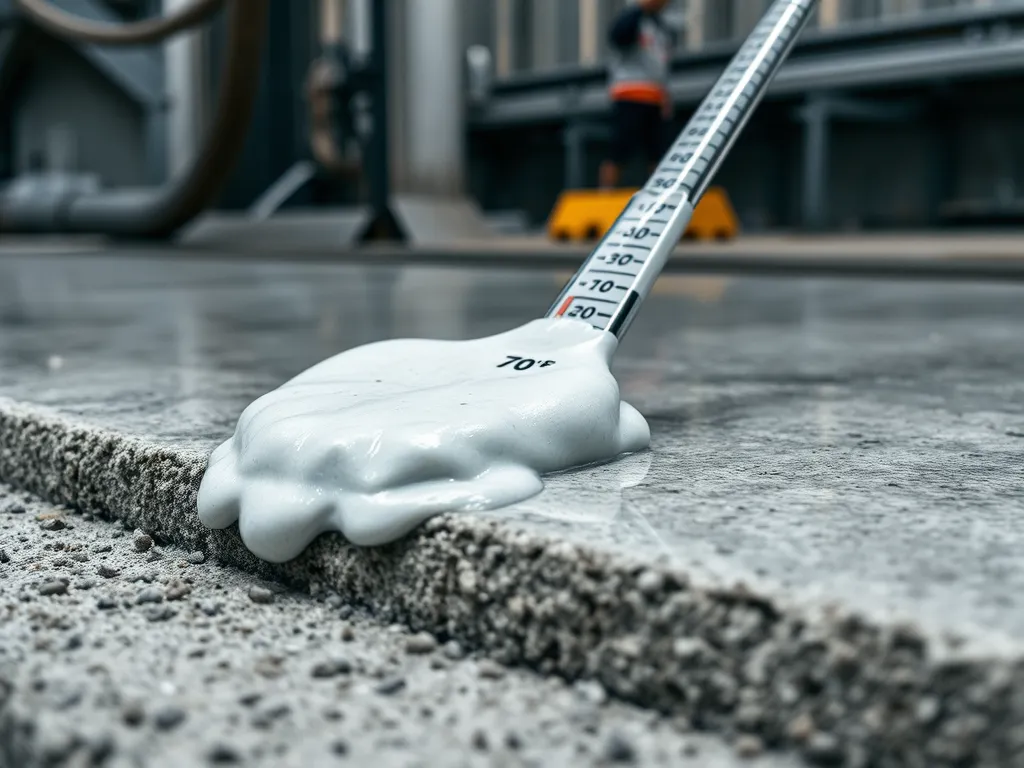
Water seeping between materials breaks bonds within 6-12 months. Apply 100% silicone sealant along edges or use asphalt emulsion slurry (1:1 mix with sand) as a moisture barrier. Ensure 2% slope for drainage. For driveways, install French drains 18-24″ deep within 3 feet of the transition zone.
Managing Thermal Expansion Differences
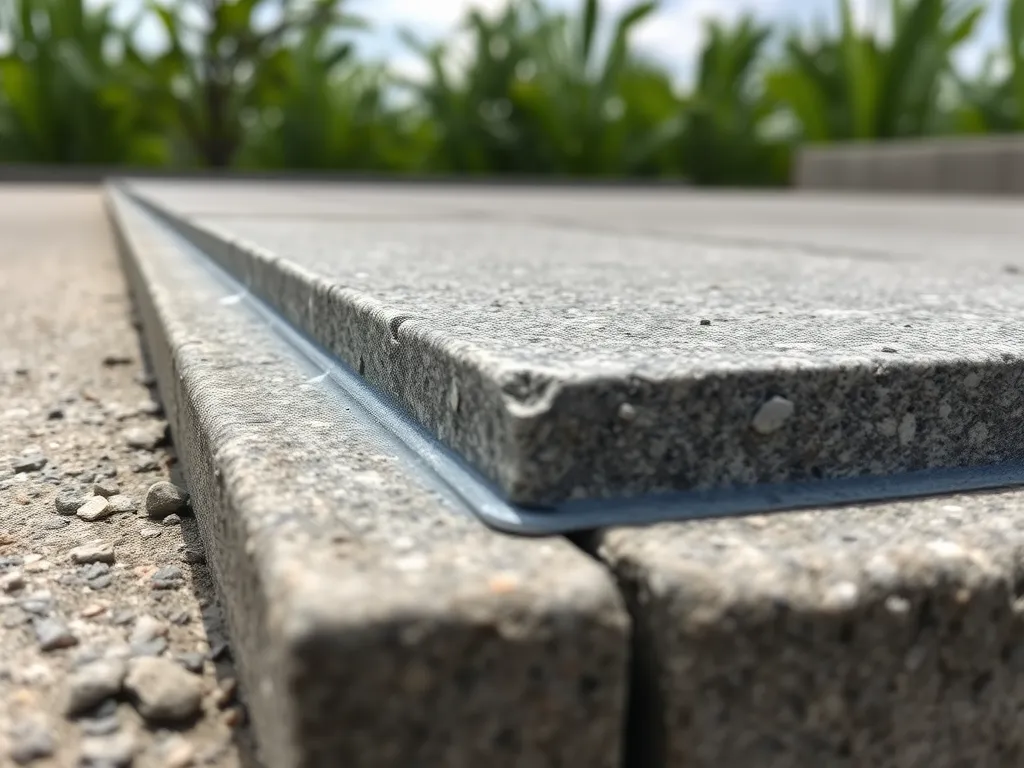
Asphalt expands 1.5-2 times more than concrete per 10°F temperature rise. Allow 1/4″ gap per 10 linear feet between materials. Use flexible joint fillers rated for -20°F to 120°F performance ranges.
When to Use Expansion Joints
Install expansion joints every 12-15 feet in bonded areas. Choose preformed neoprene or cork-rubber strips 3/4″ thick. For driveways, position joints perpendicular to traffic flow at 45° angles.
Avoiding Adhesion Failures
Surface prep accounts for 80% of bonding success. Achieve 3.5-4.5 mil surface profile on asphalt using shot blasting. Apply epoxy primers like Sikadur 31CF at 25-35 sq ft per gallon. Maintain 65°F minimum during curing for 300+ PSI bond strength.
Transition Zone Best Practices
Reinforce joints with 12″ wide fiberglass mesh (6″ each side) or #4 rebar dowels spaced 18″ apart. For driveways, taper concrete thickness from 6″ to 4″ over 3 feet. Use methyl methacrylate adhesives in temperatures below 50°F for reliable bonding asphalt to concrete slabs.
Properly addressing these challenges prepares your project for accurate cost analysis. Next, we’ll break down material and labor expenses for bonded surfaces.
Cost Considerations
Budget planning requires analyzing three key factors when bonding concrete to asphalt. Material choices, labor fees, and future upkeep all impact total project expenses.
Material Cost Breakdown
Bonding agents range from $0.50-$3.50 per sq.ft based on product type:
- Epoxy resins: $2.50-$3.50/sq.ft (high-strength options like Sikadur 31)
- Polymer-based adhesives: $1.20-$2.00/sq.ft (Loctite PL Premium)
- Expansion joint filler: $0.30-$1.00/linear foot
- Surface prep materials: $0.20-$0.50/sq.ft (degreasers, patching compounds)
Concrete overlays add $4-$8/sq.ft depending on thickness requirements (minimum 2″ for driveways).
Labor Vs. DIY Expense Comparison
Professional installation costs $8-$15/sq.ft versus $3-$7/sq.ft for DIY:
- Contractors include equipment fees ($200-$500/day for concrete saws)
- DIY tools: pressure washer ($50 rental), angle grinder ($40), trowels ($25)
Improper adhesive application creates 30% higher repair costs within 2 years.
Long-term Maintenance Costs
Properly bonded surfaces last 15-25 years with these upkeep expenses:
- Sealant reapplication: $0.15-$0.30/sq.ft every 2-3 years
- Joint filler replacement: $1.50-$3.00/linear foot every 5-7 years
- Crack repairs: $1.00-$4.00 per linear foot as needed
Neglected thermal expansion management can triple maintenance costs after 10 years.
With cost factors clarified, let’s examine how environmental conditions affect bonded surface performance.
Environmental &Amp; Durability Factors
Bonding concrete to asphalt requires balancing structural performance with long-term resilience. Let’s examine how weather patterns, material choices, and installation quality impact bonded surfaces.
Weather Resistance Considerations
Temperature swings between -20°F and 120°F create stress at concrete-asphalt joints. Asphalt expands 1.5 times more than concrete per degree Fahrenheit – use 3/4″ expansion joints every 10 feet. Polymer-modified adhesives withstand freeze-thaw cycles better than standard epoxy, maintaining 400+ psi bond strength after 50+ cycles (ASTM C882).
Eco-friendly Bonding Options
Low-VOC epoxy resins (under 100 g/L) meet LEED standards while providing 300 psi shear strength. Recycled asphalt millings in concrete overlays reduce virgin aggregate use by 30%. Bio-based curing compounds decrease VOC emissions by 65% compared to petroleum alternatives.
| Material | CO2 Reduction | Cost/SF |
|---|---|---|
| Recycled binder | 40% | $1.20 |
| Bio-epoxy | 55% | $1.80 |
| Fly ash concrete | 25% | $0.90 |
Expected Lifespan Of Bonded Surfaces
Properly bonded concrete-asphalt joints last 15-25 years. Mechanical anchoring adds 7-10 years versus adhesive-only methods. In northern climates, thermal cracking reduces lifespan to 8-12 years without heated joint filler. Annual sealcoating extends service life by 30%.
With durability factors addressed, let’s examine common installation challenges and proven solutions.
FAQs: Bonding Concrete to Asphalt
Can Asphalt Sealer Improve Bonding?
Yes, applying an asphalt sealer can enhance bonding by creating a smoother surface that reduces porosity. This helps the bonding agents adhere more effectively to the asphalt, resulting in a stronger bond with the concrete layer. However, ensure the sealer is adequately cured before applying any bonding agents.
Is Anchoring to Asphalt Reliable?
Anchoring to asphalt can be reliable if done correctly. Using proper methods such as inserting dowels or rebar pins can provide the necessary structural support. It is crucial, however, to ensure that the asphalt layer is adequately thick and in good condition to support the added load.
Can You Directly Pour Concrete Over Asphalt?
While it is possible to pour concrete directly over asphalt, it is recommended to use bonding agents and prepare the asphalt surface properly. This preparation includes cleaning, repairing damage, and applying a bonding compound to enhance adhesion. Direct pouring without these precautions can lead to adhesion failures and cracking.
Closing Thoughts
Successfully bonding concrete to asphalt requires careful planning and execution. From selecting the right bonding agents to ensuring proper surface preparation, each step plays a vital role in achieving long-lasting results. Remember, failure to address these elements can lead to adhesion issues or early deterioration of your surface.
Consider common challenges, such as moisture infiltration and managing temperature fluctuations. Using expansion joints and quality materials can mitigate these risks effectively. Understanding the associated costs, including materials and labor, also helps in making informed decisions that fit your budget.
For more detailed information on bonding concrete to asphalt and other asphalt-related topics, visit Asphalt Calculator USA. Equip yourself with the resources you need to succeed in your next project.
Additional Resources for You:
- The Asphalt Institute. (2007). MS-4: The Asphalt Handbook. Lexington, KY: Asphalt Institute.
- Can You Put Asphalt Over Concrete? – Asphalt Driveway Paving
- Can You Put Asphalt Over Concrete?
- Adhesive for concrete and asphalt – TexasBowhunter.com Community Discussion Forums
- r/Concrete on Reddit: Pouring concrete over asphalt.