
How Much Does a Cubic Yard Of Asphalt Weigh?
Published on: January 13, 2026 | Last Updated: April 14, 2025
Written By: George Voss
A cubic yard of asphalt weighs 2,300 to 3,000 pounds. This range depends on the mix’s aggregates (crushed stone, sand), binder content (asphalt cement), and compaction level. Knowing this weight helps estimate transport costs (roughly $2.50-$5 per ton-mile) and calculate material needs for driveways, roads, or parking lots.
This article explains how asphalt weight works. We’ll break down standard weights, calculation methods, and variations between hot mix, cold mix, and recycled asphalt. You’ll also learn how asphalt compares to concrete and gravel, plus tips for planning project quantities and budgets.
Contents
Typical Weight Of a Cubic Yard Of Asphalt
Contractors use cubic yards to measure asphalt quantities for paving projects. Weight directly affects material costs, truck loads, and installation methods. Let’s break down the numbers.
Standard Weight Range for Fresh Asphalt
Fresh asphalt typically weighs 2,400 to 3,000 pounds per cubic yard. That’s 1.2 to 1.5 tons based on standard mix designs used in road construction. Hot mix asphalt (HMA) – the most common type – averages 145 lbs per cubic foot. At 27 cubic feet in a yard, this aligns with the 3,000–4,050 lb range before adjusting for air voids and compaction.
Factors Influencing Asphalt Weight Per Cubic Yard
Four elements determine final weight: Aggregate type: Dense granite adds 10-15% more weight than lightweight limestone. Binder content: Bitumen (asphalt cement) weighs 60-65 lbs per cubic foot – lighter than stone. Mixes with 5-7% binder weigh less than those with 4%. Compaction: Properly compacted asphalt reaches 92-98% density, increasing weight by 8-12% versus loose material. Moisture: Wet asphalt adds 3-5% temporary weight until evaporation occurs.
These variables explain why a cubic yard of asphalt millings weighs 1,800–2,200 lbs, while fresh HMA hits 3,000+ lbs. Temperature changes during installation can alter density by 2-3%.
With standard weights established, let’s explore how to calculate exact quantities for your project.
Calculating Asphalt Weight Per Cubic Yard
Accurate weight calculations prevent project delays and budget overruns. Use bulk density formulas and real-world adjustments for precise estimates.
Bulk Density Formula for Asphalt
Asphalt’s bulk density ranges from 135 to 155 pounds per cubic foot (PCF). The formula: Weight = Volume × Density. Fresh hot mix asphalt (HMA) averages 145 PCF. Density shifts with aggregate size (coarse vs. fine), binder type (PG 64-22 vs. PG 76-16), and compaction methods (Steel-wheel roller vs. vibratory plate).
Step-by-step Calculation Example
- Multiply cubic yards by 27 to convert to cubic feet: 1 yd³ × 27 = 27 ft³
- Multiply volume by density: 27 ft³ × 145 lbs/ft³ = 3,915 lbs
- Adjust for compaction (add 3-5%): 3,915 lbs × 1.04 = 4,071.6 lbs
Converting Cubic Yards to Tons or Pounds
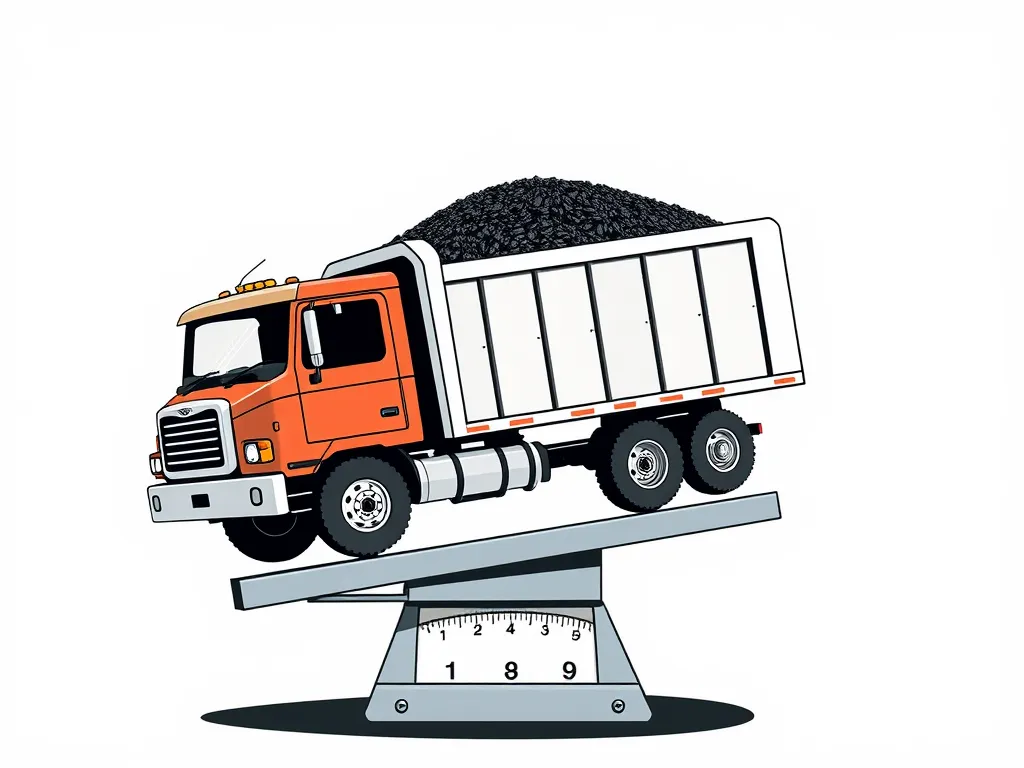
1 cubic yard of asphalt weighs 4,050–4,400 pounds (2.025–2.2 tons). To convert:
- Pounds to tons: Divide by 2,000 (4,050 lbs ÷ 2,000 = 2.025 tons)
- For partial loads: 0.5 yd³ × 4,050 lbs = 2,025 lbs (1.01 tons)
Contractors order by tonnage—10 cubic yards require ~20.25 tons at 2.025 tons/yd³.
Actual weight varies by mix design. Cold patch asphalt weighs 10-15% less than HMA. Compacted millings often hit 3,800–4,000 lbs/yd³. Up next: how recycled asphalt and specialty mixes change these numbers.
Weight Variations by Asphalt Type
Asphalt weight shifts based on mix design, production methods, and material condition. These variations affect project planning, trucking needs, and structural support requirements.
Hot Mix Asphalt Vs. Cold Mix Asphalt
Hot mix asphalt (HMA), the standard for roads, weighs 4,050-4,500 lbs per cubic yard. Made at 300°F with PG (Performance Graded) binders and Superpave-tested aggregates, its density comes from high heat compaction. Cold mix asphalt, used for temporary patches, weighs 3,500-3,800 lbs due to lower binder content and no heat-driven compaction.
Recycled or Crushed Asphalt Weight
Recycled asphalt averages 3,000-3,400 lbs per cubic yard. Crushed material contains air gaps from processing, reducing density by 15-20% versus fresh HMA. Contractors favor it for base layers, saving $8-$15 per ton compared to new mixes.
Broken Asphalt Vs. Fresh Asphalt Weight
Weathered or broken asphalt weighs 2,800-3,200 lbs per cubic yard. Aging degrades the bitumen binder, while cracks and voids lower mass. Fresh asphalt retains full density (4,050+ lbs) until oxidation or mechanical damage occurs.
Asphalt Millings Weight per Cubic Yard
Millings – shredded pavement from road grinding – clock in at 3,100-3,300 lbs. One cubic yard covers 100-120 sq ft at 2” thickness. Their angular shape creates interlock, reducing rutting in driveways while cutting material costs by 30-40%.
With weight variances clarified, let’s examine how asphalt stacks up against concrete and gravel.
Also See: Hot Mix Asphalt Installation Process: A Quick Guide
Comparison to Other Materials
Knowing how materials stack up helps contractors choose the right option for projects. Weight impacts everything from trucking needs to structural support.
Asphalt Vs. Concrete Weight Per Cubic Yard
Fresh asphalt weighs 2,400-3,000 pounds per cubic yard. Concrete ranges from 3,500-4,000 pounds. The difference stems from concrete’s larger aggregates and cement binder. For example, a 10-yard load of concrete adds 35,000-40,000 pounds versus 24,000-30,000 for asphalt.
| Material | Weight per Cubic Yard |
|---|---|
| Asphalt | 2,400-3,000 lbs |
| Concrete | 3,500-4,000 lbs |
Asphalt Vs. Gravel Weight Differences
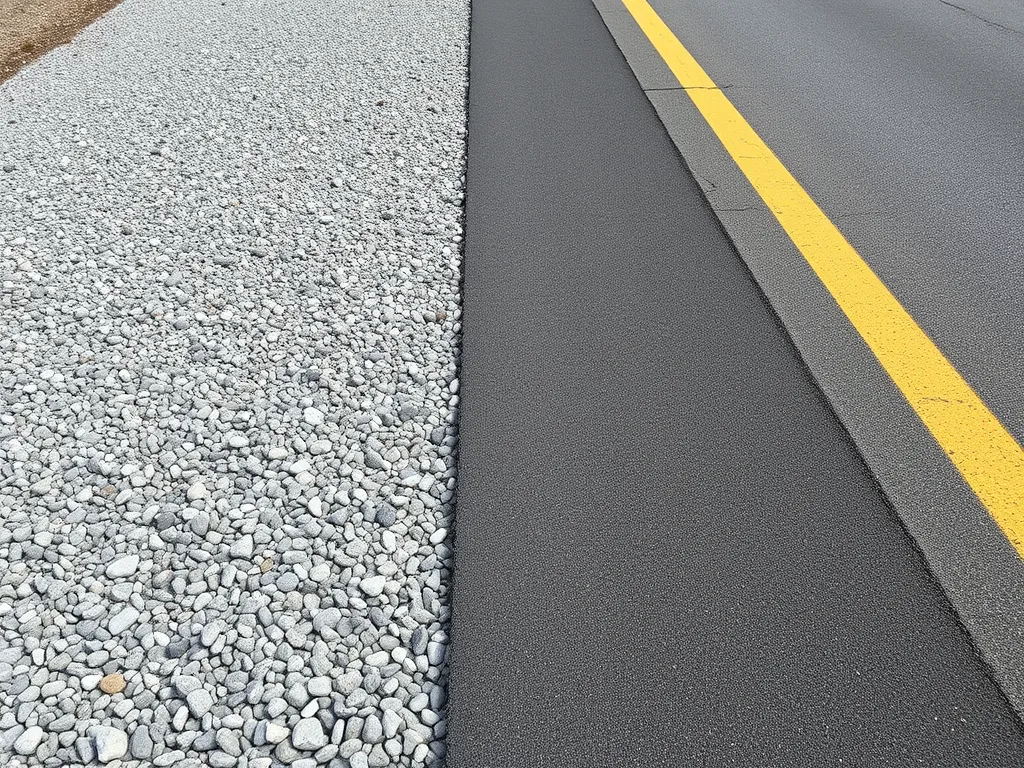
Gravel sits lighter at 2,200-2,700 pounds per cubic yard. Its loose structure creates voids, lowering density. Compacted asphalt’s bitumen binder fills gaps, boosting weight. Though gravel costs less upfront, it needs frequent regrading. Asphalt offers long-term stability despite higher initial weight.
For projects needing precise volume-to-weight ratios, these differences influence truck counts. Ten cubic yards of gravel might require two trips for a 12-ton truck. The same volume of fresh asphalt could push limits, needing three trips.
Next, let’s explore how weight ties to coverage rates for driveways or parking lots.
Coverage and Project Planning
Know the weight of asphalt per cubic yard to plan how much you need. Heavy loads mean more trucks or trips. Light loads may mean less cost but lower strength.
Square Footage Covered Per Cubic Yard
One cubic yard covers 108 sq ft at 3” depth. Thinner layers cover more area. Thicker layers need more asphalt. Use this formula:
| Thickness | Coverage |
|---|---|
| 2 inches | 162 sq ft |
| 3 inches | 108 sq ft |
| 4 inches | 81 sq ft |
For a 2” thick path, 1 cubic yard fills 162 sq ft. For a 4” road base, it covers 81 sq ft. Adjust depth based on traffic load and soil type.
Estimating Quantities for Paving Projects
First, find the area (length x width). Multiply by depth in feet (divide inches by 12). Convert cubic feet to cubic yards (divide by 27).
Example: A 500 sq ft drive at 3” depth:
- 500 sq ft x 0.25 ft (3”) = 125 cubic ft
- 125 ÷ 27 = 4.63 cubic yards
- 4.63 cubic yards x ~3,915 lbs (weight per yard) = 18,126 lbs (9.06 tons)
Check your mix’s bulk density. Hot mix weighs 140-150 lbs per cubic foot. Cold mix is lighter at 125-135 lbs. Recycled asphalt drops to 120-130 lbs.
Now that you know how to plan quantities, let’s break down how weight affects your budget.
Cost Considerations
Knowing the weight of asphalt per cubic yard directly affects project budgets. Weight determines material needs, delivery logistics, and final expenses.
Price Range Per Cubic Yard
Fresh asphalt costs $80 to $160 per cubic yard, depending on mix type and location. Hot mix asphalt (HMA) averages $100-$140 per cubic yard, while cold mix may drop to $80-$120. Crude oil prices, aggregate quality, and regional demand create price swings. Recycled asphalt sells for 20-40% less but weighs 15-25% less than fresh HMA due to air gaps in millings.
Weight Impact on Transportation Costs
Freight charges often use ton-mile rates. A cubic yard of asphalt weighs 2,400 to 3,200 pounds (1.2-1.6 tons). Trucking costs average $0.50 to $1.00 per ton-mile. Hauling 10 cubic yards of HMA (16 tons) 50 miles could cost $400 to $800. Heavier mixes like SMA (stone matrix asphalt) add 10-15% to transport fees. Ordering from local plants cuts fuel surcharges and axle weight fines.
Accurate weight calculations prevent overpaying for materials or trucks. Next, explore how different asphalt types change weight values for precise estimates.
Frequently Asked Questions (FAQs)
How Much Does a Cubic Yard Of Asphalt Weigh?
A cubic yard of asphalt typically weighs between 2,300 and 3,000 pounds, depending on factors such as the mix design and compaction level.
How Much Does Broken Asphalt Weigh Per Cubic Yard?
Broken asphalt, often referred to as weathered or aging asphalt, generally weighs between 2,800 and 3,200 pounds per cubic yard. This variation is due to the degradation of the bitumen binder and the presence of cracks and voids.
How to Calculate Weight for Recycled Asphalt?
To calculate the weight of recycled asphalt, you can use the formula: Weight = Volume × Density. Recycled asphalt typically weighs between 3,000 and 3,400 pounds per cubic yard, depending on the density of the crushed material and air gaps from processing.
Key Takeaways and Summary
Understanding the weight of a cubic yard of asphalt is vital for accurate project planning. On average, freshly mixed asphalt weighs between 2,200 to 2,400 pounds per cubic yard. Factors such as asphalt type, moisture content, and aggregate materials can influence this weight.
Contractors should also consider weight variations across different asphalt types—like hot mix compared to cold mix. Knowing these differences helps with transportation logistics and cost control. Other materials, such as concrete and gravel, weigh differently, impacting material choices based on project requirements.
For precise calculations and to estimate quantities effectively, utilize tools and resources like the ones offered by Asphalt Calculator USA. This ensures your paving projects are efficient and cost-effective.

