
How is Asphalt Laid? A Step-by-step Guide
Published on: January 7, 2026 | Last Updated: April 14, 2025
Written By: George Voss
Asphalt laying involves installing pavement through precise layering of compacted materials and hot asphalt mix (typically 300-350°F). Crews use pavers to distribute the mix and steel drum rollers to compress it into durable surfaces. The process requires sub-base preparation with crushed stone, selecting the right asphalt type (like PG 64-22 polymer-modified binder or Superpave mixes), and achieving 92-96% compaction density. Workers wear heat-resistant gloves and steel-toe boots while operating equipment like tack coat sprayers and vibratory rollers.
This guide breaks down the seven-stage asphalt installation process used for driveways and roads. Learn how graders establish a 1-2% slope for drainage and why compacted base layers need 6-8 inches of crushed stone. Compare hot mix asphalt (HMA) costs ($100-$200 per ton) to cold mix alternatives. Discover how recycled asphalt pavement (RAP) now makes up 15-30% of new mixes. Get tips on paver speeds (10-20 feet per minute) and roller pass counts for optimal results.
Contents
- Essential Preparations Before Laying Asphalt
- Step-by-step Asphalt Installation Process
- Tools and Equipment for Professional Asphalt Laying
- Asphalt Layer Construction in Road Projects
- Cost Factors for Asphalt Jobs
- Environmental Impact Of Asphalt Production and Installation
- Frequently Asked Questions About Asphalt Laying
- Closing Thoughts
- Additional Resources for You:
Essential Preparations Before Laying Asphalt
Strong starts set up success. Prep work shapes how long your pave job lasts. Skip steps here, risk cracks or dips in weeks.
Sub-base Prep and Grading
Clear the site. Remove grass, rocks, or old pave. Lay 6-12 inches of crushed stone. Pack it tight with a roller till it hits 95% density. Grade slopes 1-2% for water flow. This base stops dips and holds weight from cars or trucks.
Picking the Right Asphalt Mix
Hot mix (HMA) rules roads. Made at 300°F, it binds well in heat. Cold mix fills holes in winter but wears fast. Warm mix (WMA) cuts fumes and costs 5-10% less. For driveways, HMA with PG 64-22 binder resists cracks. Recycled blends add ground-up old pave to new mix, saving up to 30% cash.
Spraying Tack Coat for Stick
This thin glue bonds old to new. Made of liquid bitumen, it’s sprayed at 0.05 gallons per square yard. Let it set 1-2 hours till sticky. Miss spots, and layers may split under load. Use a distri truck for even coats. No tack, no grip.
With the base set and glue dry, crews roll in gear to lay hot mix. Time to shape the pave.
Once prepped, the pave team shifts to the main task: turning raw mix into smooth blacktop.
Step-by-step Asphalt Installation Process
Proper asphalt laying needs skill and the right steps. Each phase builds a strong, long-lasting surface.
Step 1: Site Preparation and Sub-base Compaction
Clear the site of dirt, plants, or old pavement. Compact the soil with a roller to 95% density. Add crushed stone (6-8 inches thick) as a base. This layer stops cracks and holds weight.
Ensuring Proper Drainage and Slope
Slope the base at 1-2% for water flow. Use laser tools to check grade. Add drains if needed to stop pools.
Step 2: Applying the Binder Layer (Base Asphalt)
Spread binder mix (coarse rock + bitumen) at 2-4 inches thick. Roll it to 280°F for bonding. This layer acts as the road’s spine, taking heavy loads.
Step 3: Laying and Spreading Hot Mix Asphalt
Pour hot mix (300°F) from trucks. Keep mix above 250°F to stay workable. This top layer has fine sand for a smooth finish.
Using Pavers for Even Distribution
Pavers spread mix at 2-3 inches thick. Adjust screeds to control depth. Sensors keep the grade flat (±1/8 inch per 10 feet).
Step 4: Compacting With Rollers
Steel drum rollers press the mix 3-5 times. Hit 92-96% density. Check with nuclear gauges. Avoid over-rolling to prevent cracks.
Step 5: Final Smoothing and Edging
Fix seams with hand irons. Trim edges for clean lines. Seal joints to block water. Use infrared heaters for patch blends.
Step 6: Curing and Cooling Period
Let asphalt cool for 24-72 hours. Wait 3 days for cars, 7 days for trucks. Cold temps slow cure time by 50%.
With the base set, the next focus shifts to tools that shape the road’s life.
Tools and Equipment for Professional Asphalt Laying
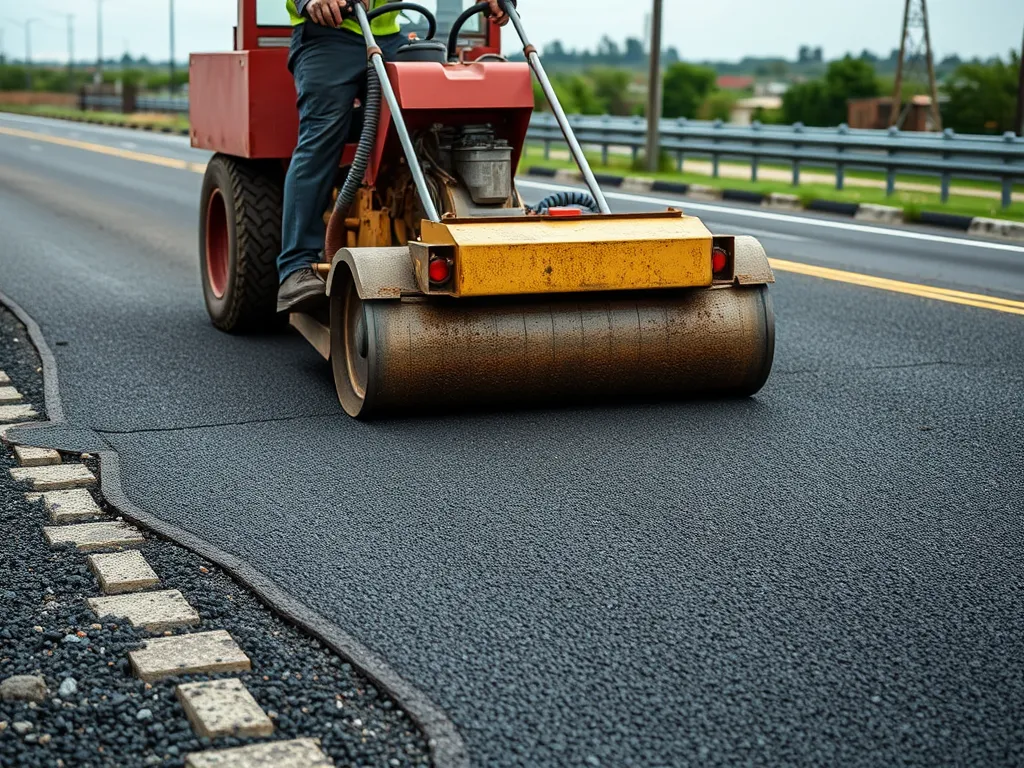
Quality asphalt installation demands specific machinery. Each tool plays a vital role in achieving a smooth, long-lasting surface. From initial spreading to final compaction, having the right kit impacts project success.
Asphalt Pavers
Asphalt pavers lay hot mix at temps around 300°F. This machinery spreads mix uniformly using augers and screeds. Truck-mounted units handle major highways, while compact pavers work on driveways. Modern pavers adjust mat width from 8ft to 30ft, placing up to 1,000 tons daily. Proper paver speed (3-15 ft/min) maintains mix density during installation.
Steel Drum Rollers
Rollers compact freshly laid mix to 92-96% density. Static steel drum units weigh 8-12 tons for initial compression. Vibratory models add 2,500-4,000 VPM for final air void reduction. Operators make 4-8 passes per lane, monitoring surface temps above 175°F. Roller patterns avoid marks while achieving 7-10% air voids for optimal strength.
Tack Coat Sprayers
These units apply asphalt emulsion between layers at 0.05-0.15 gal/sq yd. Truck-mounted spray bars cover 12ft widths in single passes. Digital controls maintain 60-70°F fluid temps for uniform bonding. Proper tack application boosts interlayer adhesion by 300% compared to dry joints.
Aggregate Spreaders
Spreaders distribute crushed stone for sub-bases at 4-8 inch depths. Box spreaders handle ¾” aggregate at 50-100 tons/hr rates. Radial stackers build uniform base layers critical for drainage. Proper aggregate gradation (3/4” to #4 sieve) gets compacted to 95% Proctor density before asphalt placement.
Having this kit allows crews to install roads lasting 15-20 years. Up next: how these tools build distinct strata in multi-layer road projects.
Also See: Asphalt and Local Weather Patterns: What to Know
Asphalt Layer Construction in Road Projects
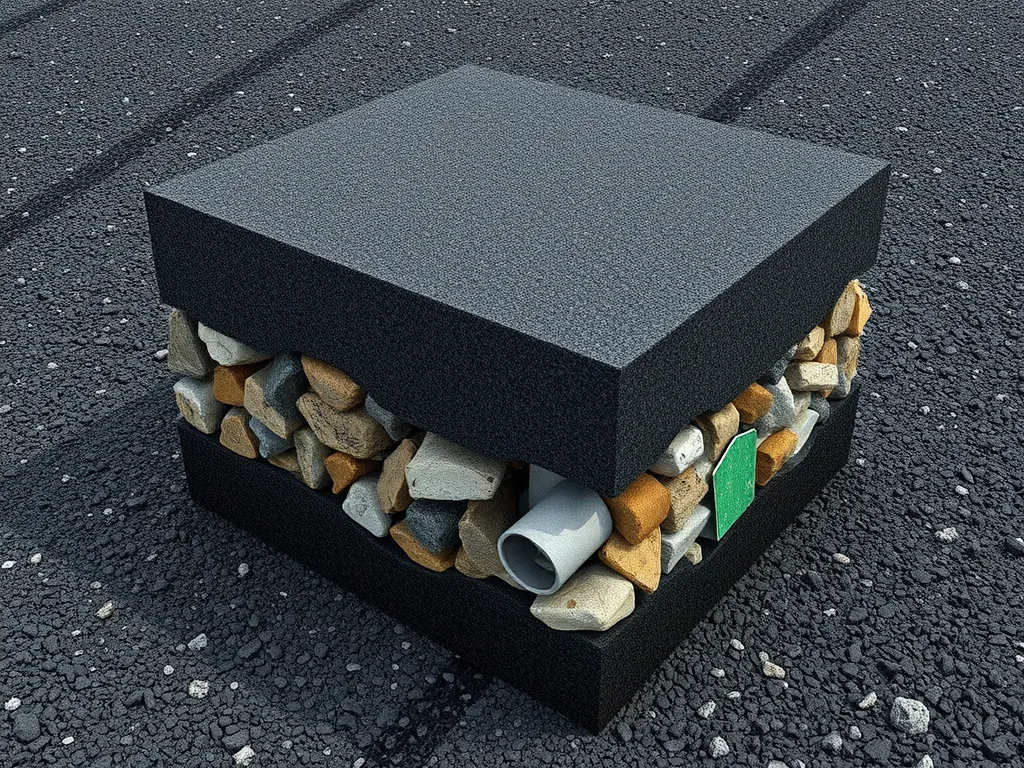
Road builds use four key layers. Each plays a set role. These layers form a strong, long-life path for cars and trucks.
Subgrade Layer
The subgrade is the packed dirt under all layers. Crews test soil strength first. Weak spots get fixed with lime or cement. This layer must drain well and hold shape. Compaction hits 95% density to stop sinking.
Base Layer (Crushed Stone)
Crushed stone forms the base. This 4-8 inch layer spreads weight wide. Gravel size ranges from 3/4″ to 2″. Proper slope (1-2%) lets rain flow off. Rollers pack it tight. Geotextile fabric may be added in soft soils.
Binder Layer
This middle asphalt layer takes heavy loads. Made with PG 64-22 binder and 3/4″ rock, it bonds base to top. Laid at 275°F, it’s 2-4 inches thick. Steel drum rollers press it to 92% density. Gaps let heat pass through.
Surface Layer
The top layer uses fine mix for smooth rides. Small stones (1/2″ max) mix with PG 76-28 binder. Laid at 300°F, it’s 1.5-3 inches thick. Pneumatic rollers seal gaps. Up to 30% RAP (recycled old asphalt) cuts costs by $15/ton.
Road crews check each layer with nuclear gauges. These tools test density live. Now let’s break down what these steps cost for homes and big jobs.
Cost Factors for Asphalt Jobs
A 20×20 asphalt drive (400 sq.ft.) runs $1,200-$2,800. Costs hinge on local rates, mix type, and prep work. Hot mix asphalt (HMA) – made from 95% rock and 5% liquid asphalt – costs $3-$7 per sq.ft. laid at 2-3 inches thick. This price covers base layers, labor, and gear like pavers and rollers.
Average Cost Of a 20×20 Asphalt Driveway
For a basic 400 sq.ft. drive: – $1,400: Thin 1.5″ coat over old blacktop – $2,400: Full 3″ build with 6″ stone base – Add $300-$800 for complex slopes or poor soil fixes. Cold mix asphalt costs 20% less but lasts half as long as hot mix.
What Changes Asphalt Price Tags
Five key cost drivers: 1. Base work: Adding 6″ crushed stone base adds $1.50/sq.ft. 2. Mix type: Polymer-modified HMA costs 30% more than standard 3. Job size: Small drives (under 500 sq.ft.) pay 15% more per sq.ft. 4. Season: Winter paving needs warm mix additives ($0.50/sq.ft. extra) 5. Compaction: Sites needing extra roller passes add $40/hour labor
Steep slopes eat 10% more mix due to thicker edges. Tack coat spray rates matter too – using 0.05 gal/sq.yd vs 0.03 gal adds $60 to a mid-size job.
While costs guide choices, green options now blend savings with eco-smarts…
Environmental Impact Of Asphalt Production and Installation
Asphalt paving affects the earth. New methods cut harm while keeping roads strong. We now use old asphalt in new mixes and pick options with less carbon than concrete.
Recycled Materials in Modern Asphalt Mixes
Over 90% of old asphalt gets reused. RAP (Recycled Asphalt Pavement) mixes with new rock and glue (bitumen). This saves 30-50% in new material costs. Hot mix plants heat RAP to 300°F, bonding it into fresh blacktop. Roads made with RAP last as long as virgin asphalt but use less oil-based glue.
Comparing Carbon Footprint to Concrete/pavers
Asphalt beats concrete in CO2. Making one ton of asphalt emits 50kg CO2. Concrete emits 100kg. Why? Asphalt needs 300°F heat vs. 1500°F for cement. Plus, asphalt roads can be laid thin (2-3 inches) vs. concrete (6 inches). Pavers need more truck trips (higher fuel use) and lack RAP options. A 1-mile asphalt road emits 400 tons CO2 vs. 700 tons for concrete.
Ready to fix your drive? Next, we answer top questions on asphalt installs.
Frequently Asked Questions About Asphalt Laying
How Do They Lay Asphalt Roads?
Asphalt roads are laid using a combination of site preparation, sub-base compaction, the application of various asphalt layers, and careful compaction to ensure durability. The process involves heavy machinery that distributes and compresses the asphalt mix to form a solid driving surface.
What Material is Put Down Before Asphalt?
Before asphalt is laid, a sub-base material such as crushed stone or gravel is typically provided to ensure stability and proper drainage. This base layer must be compacted to a certain density to support the weight of the asphalt and vehicles.
Can Asphalt Be Laid Directly on Dirt?
It’s generally not recommended to lay asphalt directly on dirt. A proper base of crushed stone or gravel is essential for supporting the asphalt and preventing cracks and dips in the future.
How Thick Should Residential Asphalt Be?
For residential driveways, the recommended thickness of asphalt is typically between 2 to 3 inches, while commercial projects may require thicker layers to withstand heavier traffic loads.
What is the Purpose Of a Tack Coat?
The tack coat is a thin layer of paving asphalt applied between existing and new asphalt layers to promote adhesion. It’s vital for ensuring that the layers bond properly, thus enhancing the overall durability and lifespan of the pavement.
How Long Does Asphalt Take to Cure?
The curing time for asphalt can vary, but generally, it takes about 24 to 72 hours to cool enough for light vehicle traffic. Full curing, allowing heavier traffic, may take several days to a week depending on the thickness of the layers and weather conditions.
Closing Thoughts
Laying asphalt is a process that demands precision and attention to detail. From initial preparations to final curing, each step plays a vital role in ensuring a smooth, durable surface. Proper grading, selecting the right mix, and applying a tack coat for adhesion are foundational tasks. Each stage in the installation, including the binder layer and the hot mix application, requires specialized tools and equipment for optimal results.
Understanding the costs, environmental impacts, and benefits of asphalt can guide you in making informed decisions for your paving project. Whether it’s a driveway or a road, asphalt offers longevity and functionality.
For more detailed information and resources about asphalt laying, visit Asphalt Calculator USA.
Additional Resources for You:
- Roberts, F. L., Kandhal, P. S., Brown, E. R., Lee, D. Y., & Kennedy, T. W. (1996). Hot Mix Asphalt Materials, Mixture Design, and Construction (2nd ed.). National Asphalt Pavement Association (NAPA).
- What is the installation asphalt laying procedure? – Quora
- Asphalt Pavement Installation: Our 7-Step Process Explained – Sureseal Pavement [Staging]
- The Paving Process – YouTube
- How to Install Asphalt: 10 Steps (with Pictures) – wikiHow

