
Hot Mix Asphalt Vs Cold Mix Asphalt: Key Differences, Costs, and Applications
Published on: January 2, 2026 | Last Updated: April 14, 2025
Written By: George Voss
Hot mix asphalt (HMA) and cold mix asphalt (CMA) serve different purposes in road construction and repair. HMA is heated to 300-350°F during production, creating durable surfaces for highways and driveways that last 15-20 years. CMA uses emulsified asphalt (a blend of bitumen and water) and can be applied cold, making it ideal for temporary pothole fixes in winter or remote areas. While HMA costs $100-$200 per ton installed, CMA runs $30-$50 per ton but requires more frequent repairs. The choice depends on traffic needs, weather, and budget.
This article compares HMA and CMA across seven key factors. Learn how production methods affect performance, when to use each material, and cost differences per project size. We’ll break down durability tests, environmental impacts, and answer common questions about asphalt selection.
Contents
- What is Hot Mix Asphalt (HMA)?
- What is Cold Mix Asphalt (CMA)?
- Key Differences Between HMA and CMA
- Primary Applications Of Hot Mix Asphalt
- Primary Applications Of Cold Mix Asphalt
- Cost Comparison: Hot Mix Vs Cold Mix Asphalt
- Durability and Longevity
- Environmental Considerations
- Frequently Asked Questions (FAQs)
- Closing Thoughts
- Useful References for You:
What is Hot Mix Asphalt (HMA)?
Hot mix asphalt remains the top choice for projects needing lasting performance under heavy loads. Its structural integrity comes from precise blending of materials at elevated temps.
Definition and Composition
HMA combines two core components: mineral aggregates (95%) coated with liquid asphalt cement (5%). The mix uses graded stones for load distribution. Bitumen acts as the glue binding particles into solid pavement layers.
Production Process and Temperature Range
Plants heat aggregates to 300-350°F before mixing with heated bitumen. This liquefies the binder for full stone coating. Drum plants produce 200-800 tons daily. Batch plants handle smaller custom orders. Both maintain mix temps above 275°F during transport.
Common Binders and Aggregates Used
PG (Performance-Graded) binders like PG 64-22 dominate US road projects. Crushed granite, limestone, or recycled concrete serve as primary aggregates. Superpave mix designs optimize stone size distribution based on traffic loads. High-RAP (Recycled Asphalt Pavement) mixes now integrate 30% reused materials without losing strength.
While HMA dominates high-stress projects, cold mix offers unique benefits for quick fixes. Let’s examine its cold-process counterpart.
What is Cold Mix Asphalt (CMA)?
Cold mix asphalt offers a practical solution for projects requiring flexibility and quick fixes without high heat. Unlike hot mix, CMA works in low-temp conditions and stays workable for months.
Definition and Composition
CMA combines aggregates (crushed stone, sand) with bitumen binders emulsified or cutback with solvents. Cutback asphalt uses petroleum distillates to keep bitumen fluid at ambient temps. Additives like lime or anti-stripping agents boost moisture resistance. Up to 30% recycled asphalt pavement (RAP) integrates into some mixes, lowering costs.
Production Process and Storage
Plants blend materials at temps below 50°F, avoiding the 300°F+ heat of HMA. Aggregates mix with emulsified bitumen or cutback asphalt in batch plants. No reheating is needed before use. CMA stays pliable in bags or stockpiles for 6-12 months, making it ideal for off-season storage. This contrasts with HMA’s 2-4 hour usability window post-production.
Types Of Cold Mix Asphalt
Three main CMA varieties suit distinct applications:
- Polymer-Modified: Contains polymers for better binding in wet conditions. Used for potholes in rainy climates.
- Standard: Basic mix for temporary patches. Costs $25-$40 per ton, 35% cheaper than HMA.
- High-Performance: Includes fiber additives for structural repairs. Handles light traffic for 6-12 months.
Specialty products like QPR (Quick Patch Repair) merge CMA’s convenience with HMA-like durability using warm mix tech.
With CMA’s role clarified, let’s contrast its traits against hot mix in critical categories.

Key Differences Between HMA and CMA
Composition and Material Variations
HMA blends stone, sand, and bitumen (a thick black glue). CMA swaps hot bitumen for cold binders like cutbacks or emulsions. These binders let CMA stay workable without heat. HMA uses sharp, clean stones for strength. CMA may have smaller stones or reused asphalt chunks.
Production Temperature Requirements
HMA cooks at 300-350°F to melt bitumen. Plants burn fuel to keep mix hot. CMA skips heating. Workers mix stones and cold binders at air temps. This cuts energy use but limits bond strength.
Installation Process and Equipment
HMA needs heavy gear: hot trucks, pavers, and steel rollers. Crews must lay it fast before it cools. CMA pours from bags or trucks with basic tools. Hand tamps or small rollers pack it down. No rush—just fill, pat, and go.
Curing Time and Immediate Usability
HMA hardens as it cools. Roads can open in 2-4 hours. CMA takes days to cure fully. Water in cold binders must evaporate. You can drive on CMA patches right off, but they’ll soften if hit too soon.
Performance in Different Weather Conditions
HMA handles heat waves (-40°F to 150°F with PG binders). CMA cracks below 20°F or melts above 100°F. HMA lasts 15+ years on highways. CMA lasts 6-12 months in potholes before rework.
Next, we’ll break down where each mix works best—from busy highways to quick road fixes.
Also See: Deicing Strategies for Asphalt Roads: Keep Them Safe
Primary Applications Of Hot Mix Asphalt
Hot mix asphalt (HMA) dominates projects requiring strength and long-term performance. Its 300-350°F production temperature creates a dense, stable material that outperforms cold mix in structural integrity. Let’s break down where HMA shines.
High-traffic Road Construction
Interstates, highways, and airport runways rely on HMA for heavy-load handling. PG 64-22 binders – performance-graded for specific climates – combine with angular aggregates in Superpave mixes to resist rutting under 40-ton trucks. HMA’s 20+ year lifespan in these scenarios makes cold mix alternatives impractical for primary roadways.
Driveways and Parking Lots
Homeowners and businesses choose HMA for driveways needing curb appeal and durability. Surface mixes with 3/8-inch minus aggregates create smooth finishes resistant to oil stains and freeze-thaw cycles. Unlike cold patch asphalt, HMA won’t degrade when temperatures hit 100°F or plunge below freezing.
Permanent Repairs and Resurfacing
Road crews use HMA for mill-and-fill operations, removing 2 inches of damaged pavement before laying fresh mix. Tack coats ensure bond strength between layers, while 1.5-3 inch overlays restore surfaces for 8-12 years. Cold mix vs hot mix debates end here – only HMA provides lasting fixes for alligator cracks or base failures.
While HMA excels in these permanent setups, cold mix asphalt fills critical gaps where immediate fixes or temporary solutions rule. Let’s explore those scenarios next.
Primary Applications Of Cold Mix Asphalt
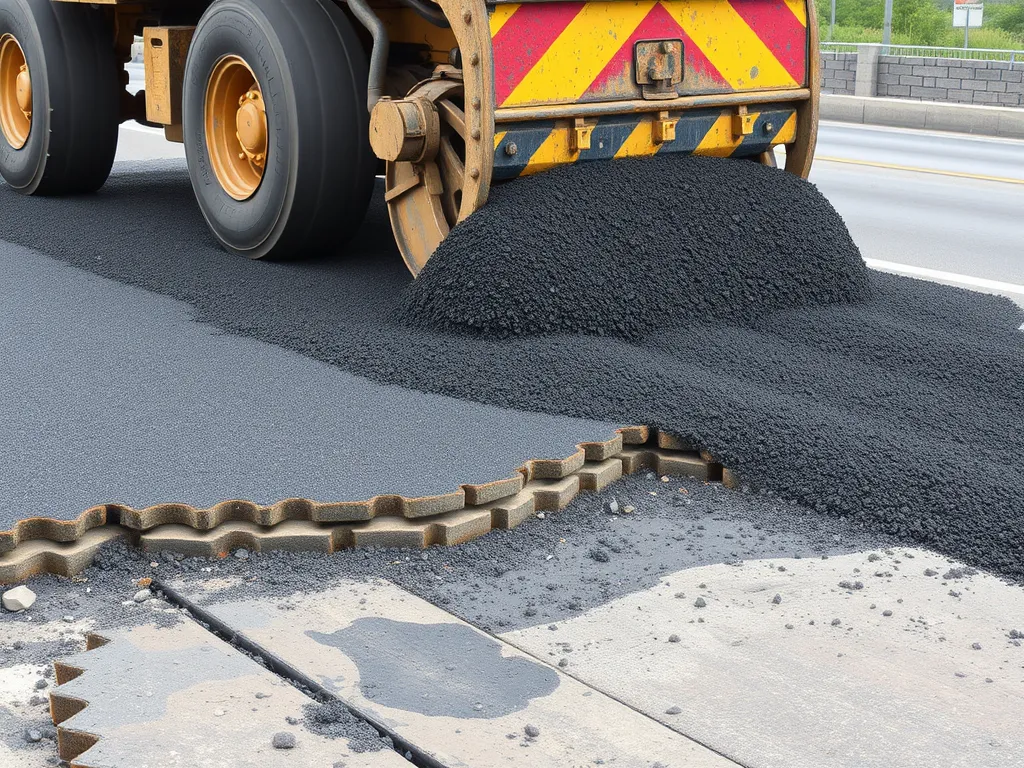
Cold mix asphalt fills critical gaps in road maintenance where traditional hot mix falls short. Its flexibility in low-temp conditions and quick installation makes it a go-to for specific scenarios demanding rapid fixes or temporary solutions.
Emergency Pothole Repairs
Road crews rely on cold mix for urgent pothole fixes in rain, snow, or sub-50°F weather. Unlike hot asphalt (requiring 300°F+ temps), CMA bonds using cationic emulsifiers that activate without heat. A 50-pound bag can fill a 2’x2’ cavity in minutes, holding up for 6-12 months until permanent HMA repairs.
Temporary Road Patches
Municipalities stockpile cold mix for short-term fixes on highways and bridges. Its ability to stay workable for months allows crews to tackle frost heaves or utility cuts before final paving. Adding 2% hydrated lime boosts cohesion, letting patches survive 3-6 months of daily traffic at 35-45 mph speeds.
Low-traffic or Rural Road Maintenance
Gravel roads and farm lanes with under 500 cars/day gain from CMA’s affordability. Rural projects save $18-$25/ton vs HMA by avoiding plant hauling costs. Modified mixes with 6-8% bitumen content handle light trucks, lasting 2-4 years in areas without heavy loads.
While cold mix solves immediate needs, long-term road performance hinges on material choice. Up next: how costs stack up when balancing quick fixes against lasting results.
Cost Comparison: Hot Mix Vs Cold Mix Asphalt
Project budgets demand precise cost analysis when choosing between hot mix asphalt (HMA) and cold mix asphalt (CMA). Price variations stem from material quality, labor needs, and project timelines.
Material Costs Per Ton/square Yard
HMA averages $100-$150 per ton due to high-grade aggregates and polymer-modified binders. CMA runs $50-$80 per ton using lower-grade materials and emulsified asphalt. Coverage differs too: one ton of HMA covers 80-100 square yards at 2-inch thickness, while CMA covers 60-80 square yards due to compaction variances.
| Type | Cost per Ton | Coverage (sq yd) |
|---|---|---|
| HMA | $100-$150 | 80-100 |
| CMA | $50-$80 | 60-80 |
Installation and Labor Expenses
HMA requires specialized crews, asphalt pavers, and steel-wheel rollers, adding $3-$7 per square foot. CMA needs minimal equipment – often hand tools or small tampers – cutting labor costs to $1-$3 per square foot. Weather impacts HMA work: crews must operate above 50°F, while CMA installs year-round.
Long-term Value Vs Short-term Savings
HMA offers 15-20 years of service with proper maintenance, justifying higher upfront costs. CMA lasts 1-3 years before needing replacement, suitable for temporary fixes. High-traffic roads using CMA require 3x more repairs over a decade compared to HMA. Lifecycle cost analysis shows HMA projects save 40-60% over 20 years versus repeated CMA applications.
While cost factors guide initial decisions, durability plays an equal role in total project success. Next, explore how each material performs under stress and weather extremes.
Durability and Longevity
Road surfaces face distinct challenges based on traffic volume, weather patterns, and usage types. Performance gaps between hot mix vs cold mix asphalt become clear when evaluating how these materials hold up over time.
HMA Lifespan in Heavy-duty Use
Hot mix asphalt (HMA) withstands 15-20 years under heavy traffic when installed correctly. High-density PG 64-22 binders bond tightly with granite or limestone aggregates during heating at 300-350°F. This creates rigid pavements resistant to rutting from trucks or buses. HMA retains structural integrity in climates with freeze-thaw cycles due to its low void content (3-5% air pockets).
CMA Performance in Temporary Scenarios
Cold mix asphalt (CMA) lasts 6-24 months, designed for quick fixes rather than permanent solutions. Emulsified bitumen (5-9% content) mixed with smaller aggregates allows CMA to set without heat. While usable below 40°F, prolonged sun exposure softens the material. Heavy rain erodes uncompacted patches faster than HMA surfaces. Stockpile storage up to 6 months makes CMA ideal for emergency pothole repairs on rural roads.
Maintenance Requirements for Both Types
HMA needs sealcoating every 3-5 years to prevent oxidation-driven cracks. Minor fissures require infrared patching to avoid water infiltration. CMA demands more frequent attention – temporary patches degrade 50% faster under daily traffic loads. Cold mix repairs in snowy regions might need monthly inspections post-installation. Rework costs run $1.50-$3.50 per square foot for CMA versus $0.75-$1.20 for HMA over 10 years.
While longevity differs between cold mix vs hot mix asphalt, both play roles in infrastructure upkeep. Up next: how production methods impact ecological footprints.
Environmental Considerations
Both hot mix asphalt (HMA) and cold mix asphalt (CMA) impact ecosystems differently. Their production methods and material lifecycles create distinct environmental trade-offs.
Energy Consumption in HMA Production
HMA requires heating aggregates and bitumen to 300-350°F during production. This process burns 6-8 gallons of fuel per ton of asphalt. Plants using PG 64-22 binders (common in HMA) consume 500,000-1 million BTU/hour. Natural gas or diesel fuels release 12-18 pounds of CO₂ per ton of mix. High energy use limits HMA production to daytime hours in many regions due to air quality regulations.
Carbon Footprint Of CMA Manufacturing
CMA avoids heat through emulsified binders. Production emits 15-20 kg CO₂ per ton – 30% less than HMA. But additives like cutback asphalt release volatile organic compounds (VOCs). A typical CMA batch uses 4-6% emulsified bitumen versus 5-7% PG binder in HMA. Cold plants operate at ambient temperatures, eliminating combustion emissions but relying on chemical stabilizers.
Recyclability and Sustainability Factors
HMA leads with 95-100% recyclability. RAP (reclaimed asphalt pavement) replaces 10-30% of virgin aggregates in new HMA. CMA mixtures allow 15-25% RAP integration but degrade faster, requiring more frequent replacements. Warm mix asphalt (WMA) – a hybrid option – cuts HMA production temps by 50°F, reducing emissions by 20%. Both types meet LEED points for recycled content when using ≥30% RAP.
These environmental impacts directly affect project costs and regulatory compliance – key factors explored in our cost comparison section.
Frequently Asked Questions (FAQs)
Which is Better, Hot Mix Asphalt or Cold Mix Asphalt?
The choice between hot mix asphalt (HMA) and cold mix asphalt (CMA) depends on the specific project requirements, including traffic levels, weather conditions, budget, and intended use. HMA is generally better for high-traffic areas and permanent installations, while CMA is suited for temporary fixes in cooler temperatures.
What Are the Disadvantages Of Hot Mix Asphalt?
Hot mix asphalt can be more expensive than cold mix, requires specialized equipment for installation, and is not suitable for very cold or wet conditions, as it must be applied at high temperatures.
Is a Hot Asphalt Patch Better Than a Cold Asphalt Patch?
Yes, typically, hot asphalt patches offer better durability and longevity compared to cold patches. However, cold patches can be more practical for quick, temporary repairs in adverse conditions.
What Are the Pros and Cons Of Hot Mix Vs Cold Mix Asphalt?
Hot mix asphalt provides excellent durability and performance for long-term applications but is costlier and temperature-sensitive during installation. Cold mix asphalt is more affordable and easier to apply in varying conditions but does not last as long and requires more frequent repairs.
What is the Cost Difference Between HMA and CMA?
Hot mix asphalt generally costs between $100-$150 per ton, while cold mix asphalt typically ranges from $50-$80 per ton. However, the installation and long-term value often favor HMA, especially for high-traffic applications.
What Are the Disadvantages Of Cold Mix Asphalt?
Cold mix asphalt generally has a shorter lifespan, requiring more frequent repairs than hot mix. It may also perform poorly in extreme weather conditions, especially in very cold temperatures.
How Do I Make Cold Mix Asphalt?
Cold mix asphalt can be produced by combining aggregates with emulsified asphalt binders or cutback asphalt. The mixture can be blended in a batch plant at ambient temperatures without heating, allowing for easy application.
What is the Price Range for Hot Mix Asphalt?
The price range for hot mix asphalt typically falls between $100 and $150 per ton, depending on various factors such as material quality and local market conditions.
What is the Price Range for Cold Mix Asphalt?
The price range for cold mix asphalt usually varies between $50 and $80 per ton, making it a more affordable option for temporary repairs compared to hot mix.
Closing Thoughts
When deciding between hot mix asphalt (HMA) and cold mix asphalt (CMA), consider your project’s specific needs. HMA offers durability and a longer lifespan, making it ideal for high-traffic areas and permanent repairs. In contrast, CMA serves well for quick fixes and low-traffic situations, providing a convenient solution for pothole repairs.
Cost is a significant factor, with HMA generally requiring a higher upfront investment compared to CMA. However, HMA’s longevity often justifies the expense over time. Environmental implications also play a role, as both types have distinct energy profiles and recyclability factors.
Ultimately, the choice between HMA and CMA hinges on factors like climate, budget, and intended use. For comprehensive insights and tools to assist in your asphalt-related decisions, visit Asphalt Calculator USA.
Useful References for You:
- Lavin, P. (2003). Asphalt Pavements: A Practical Guide to Design, Production, and Maintenance for Engineers and Architects. London: Taylor & Francis.
- Six Key Differences Between Hot Mix Asphalt and Cold …
- What are the differences between hot asphalt and cold asphalt? – Quora
- Hot Mix Asphalt vs. Cold Mix Asphalt – Infinity Galaxy
- What’s the Difference Between Hot Mix and Cold Mix Asphalt?

